Opinion - (2025) Volume 10, Issue 4
Received: 01-Jul-2025, Manuscript No. PE-26-179290;
Editor assigned: 03-Jul-2025, Pre QC No. P-179290;
Reviewed: 17-Jul-2025, QC No. Q-179290;
Revised: 22-Jul-2025, Manuscript No. Q-179290;
Published:
29-Jul-2025
, DOI: 10.37421/2472-1042.2025.10.293
Citation: Youssef, Omar Ben. ”Pharmacoeconomics: Optimizing Combination Drug Therapy Value.” Pharmacoeconomics 10 (2025):293.
Copyright: © 2025 Youssef B. Omar This is an open-access article distributed under the terms of the Creative Commons Attribution License, which permits unrestricted use, distribution and reproduction in any medium, provided the original author and source are credited.
The pharmacoeconomic evaluation of combination drug therapies is a critical undertaking in modern healthcare, aimed at optimizing the allocation of limited resources and ensuring value for money. This process delves into assessing the cost-effectiveness, budget impact, and overall economic benefit of using multiple drugs in conjunction, particularly for chronic conditions requiring long-term management. As the landscape of medicine shifts towards personalized approaches, pharmacoeconomic models are increasingly required to be tailored to specific patient subgroups and their varying responses to treatment, reflecting the growing complexity of therapeutic strategies. The integration of real-world evidence (RWE) into these assessments offers a more comprehensive understanding of how combination therapies perform in routine clinical practice, moving beyond the controlled environments of randomized controlled trials to better capture patient heterogeneity and real-world treatment patterns. Beyond direct medical costs, a thorough economic evaluation of novel combination drug therapies must encompass indirect costs, such as productivity losses and the burden on caregivers, to provide a complete picture of the societal value derived from these interventions. The dynamic nature of medical knowledge and therapeutic guidelines necessitates ongoing pharmacoeconomic reassessments of established combination regimens. This adaptability allows models to incorporate new clinical data and evolving payer perspectives, ensuring their continued relevance in healthcare decision-making. Understanding patient preferences and utility values is an indispensable element when evaluating combination therapies. Incorporating patient-reported outcomes and quality-of-life measures provides a more holistic perspective on the true value of a treatment, extending beyond purely clinical endpoints. Developing innovative pharmacoeconomic tools, including advanced simulation models and machine learning techniques, is essential for accurately predicting the long-term cost-effectiveness of complex combination drug strategies, thereby aiding in the anticipation of future resource demands and the identification of optimal treatment pathways. Budget impact analyses are paramount for healthcare payers who need to assess the financial feasibility of adopting new combination drug therapies, taking into account current prescribing habits and projected uptake rates. The increasing prevalence of combination therapies, driven by advancements in areas like oncology and infectious diseases, mandates sophisticated evaluation methods to discern the incremental value and costs attributable to each component of the therapeutic combination. Ethical considerations are intrinsically linked to pharmacoeconomic evaluations, particularly concerning equitable access to high-cost treatments. Balancing clinical effectiveness with affordability and fairness is crucial for responsible resource distribution.
The pharmacoeconomic impact of combining drugs is a crucial area for optimizing healthcare resource allocation, focusing on cost-effectiveness, budget impact, and value for money, especially for chronic diseases. The evolution toward personalized medicine also demands that pharmacoeconomic models be adapted to account for patient subgroups and differential treatment responses. The incorporation of real-world evidence (RWE) into the pharmacoeconomic assessments of combination therapies provides a more nuanced understanding of treatment effectiveness and costs than traditional randomized controlled trials. This data, derived from everyday clinical practice, can more accurately reflect patient diversity and actual treatment patterns, leading to more robust and applicable economic evaluations. When considering novel combination drug therapies, economic factors are of paramount importance. This includes not only the direct medical expenditures but also the indirect costs associated with lost productivity and the burden on caregivers. A comprehensive assessment is necessary to fully capture the societal value of these interventions. The rapid evolution of therapeutic guidelines and the continuous emergence of new evidence require frequent pharmacoeconomic reassessments of existing combination drug regimens. Models must be flexible enough to integrate new clinical trial data and changing payer viewpoints to remain relevant for decision-making. In the evaluation of combination drug therapies, a critical component is the understanding of patient preferences and utility values. The inclusion of patient-reported outcomes (PROs) and measures of quality of life offers a more comprehensive view of treatment value that extends beyond clinical outcomes. The development of advanced pharmacoeconomic tools, such as sophisticated simulation models and machine learning approaches, is vital for forecasting the long-term cost-effectiveness of intricate combination drug strategies. These methodologies can assist in anticipating future resource requirements and identifying the most effective treatment pathways. Budget impact analyses are essential for payers tasked with evaluating the financial implications of implementing new combination drug therapies. These analyses consider the potential effects on healthcare budgets based on current prescribing patterns and the projected adoption rates of new treatments. The growing complexity in drug development, particularly in fields such as oncology and infectious diseases, has spurred the increased use of combination therapies. Their pharmacoeconomic evaluation necessitates advanced methodologies to clearly delineate the incremental value and costs associated with each drug within the combination. Ethical considerations are integral to the pharmacoeconomic assessment of combination therapies, especially concerning the equitable distribution of expensive treatments. The allocation of healthcare resources must strike a balance between clinical efficacy, financial feasibility, and fairness. The selection of an appropriate comparator is a critical factor in the pharmacoeconomic studies of combination therapies, as it directly influences the accurate determination of incremental benefits and costs. The choice of comparison, whether against the standard of care, monotherapy, or other relevant combinations, requires careful justification grounded in clinical practice and existing evidence.
Pharmacoeconomic evaluations are essential for optimizing the use of combination drug therapies, focusing on cost-effectiveness, budget impact, and value for money. These evaluations are increasingly complex due to personalized medicine, the integration of real-world evidence, and the consideration of societal costs. Adaptable models are needed to incorporate new data and evolving payer perspectives. Patient preferences and ethical considerations, such as equitable access, are also vital components. Advanced tools like simulation models and machine learning are being developed for more accurate long-term predictions. The careful selection of comparators is crucial for accurate assessment. Ultimately, these evaluations aim to ensure that healthcare resources are allocated efficiently and effectively to maximize patient benefit while managing costs.
None
None
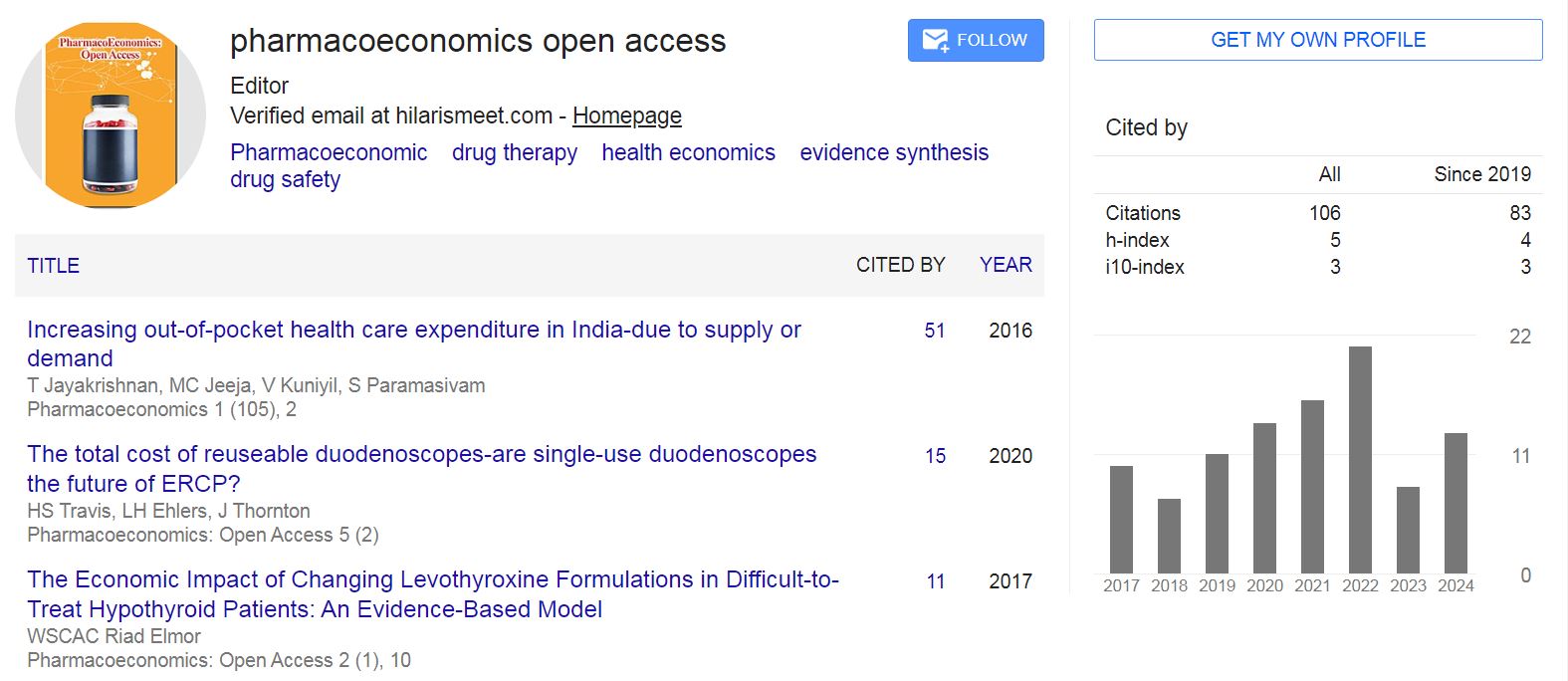
Pharmacoeconomics: Open Access received 106 citations as per Google Scholar report