Perspective - (2025) Volume 10, Issue 4
Received: 01-Jul-2025, Manuscript No. PE-26-179293;
Editor assigned: 03-Jul-2025, Pre QC No. P-179293;
Reviewed: 17-Jul-2025, QC No. Q-179293;
Revised: 22-Jul-2025, Manuscript No. R-179293;
Published:
29-Jul-2025
, DOI: 10.37421/2472-1042.2025.10.295
Citation: Park, Min-Jae. ”Pharmacoeconomics: Guiding Healthcare Value And Access.” Pharmacoeconomics 10 (2025):295.
Copyright: © 2025 Park M. This is an open-access article distributed under the terms of the Creative Commons Attribution License, which permits unrestricted use, distribution and reproduction in any medium, provided the original author and source are credited.
Pharmacoeconomics has emerged as a cornerstone in the intricate process of formulary decision-making, providing robust evidence-based assessments that guide the inclusion of both new and established pharmaceutical agents. Health systems and payers increasingly rely on these evaluations to meticulously balance clinical effectiveness, safety profiles, and associated costs, thereby facilitating optimal resource allocation and ultimately enhancing patient outcomes. By systematically dissecting the costs and consequences of various therapeutic interventions, pharmacoeconomic analyses furnish critical insights that inform decisions regarding formulary placement, directly impacting patient access and the overall affordability of medications [1].
The specialized field of pharmacoeconomics plays a vital role in the strategic placement of novel oncology drugs on formularies. It employs rigorous methods such as cost-effectiveness analyses (CEAs) and budget impact models to substantiate or challenge the inclusion of expensive cancer therapies. The findings consistently underscore the indispensable nature of clear and transparent pharmacoeconomic evidence, fostering productive dialogue between pharmaceutical manufacturers and formulary committees to achieve mutually advantageous agreements [2].
Furthermore, the integration of real-world evidence (RWE) into pharmacoeconomic models presents both significant challenges and substantial opportunities for refining formulary decision-making processes. RWE offers the potential to present a more authentic portrayal of a drug's efficacy and safety in real-world clinical settings, thus bolstering the credibility and reliability of economic evaluations. Consequently, there is a growing emphasis on developing standardized methodologies to guarantee the quality and interoperability of RWE utilized in these pivotal healthcare decisions [3].
The application of multi-criteria decision analysis (MCDA) represents a sophisticated approach within pharmacoeconomic evaluations for formulary committees. MCDA uniquely enables the simultaneous consideration of a diverse array of criteria that extend beyond mere cost-effectiveness, encompassing crucial factors such as clinical benefit, the severity of the disease being treated, and individual patient preferences. This methodology has demonstrated its capacity to facilitate more comprehensive and equitable formulary decisions, particularly within complex and challenging therapeutic domains [4].
The dynamic and ever-evolving pharmaceutical landscape, particularly concerning pricing and reimbursement strategies, is profoundly shaped by the insights derived from pharmacoeconomic evidence. Pharmacoeconomic models are instrumental in the negotiation of drug prices and in articulating the distinct value proposition of new medications across varied healthcare systems. This necessitates the development of adaptable economic models capable of accommodating the inherent variations in healthcare settings and diverse patient demographics [5].
Within the specialized domain of orphan drugs, pharmacoeconomic data offers critical contributions to formulary management. Evaluating therapies for rare diseases, characterized by small patient populations and often limited alternative treatment options, presents unique challenges. Pharmacoeconomic methodologies are consequently adapted to meticulously assess the value proposition of these high-cost, low-volume therapeutic agents [6].
Beyond the purely economic considerations, the ethical dimensions of pharmacoeconomic decision-making in formulary management warrant careful exploration. Cost-effectiveness analyses can raise complex questions pertaining to distributive justice and the equitable distribution of healthcare resources. Consequently, there is a strong advocacy for enhanced transparency and broader public engagement in formulary decisions to ensure that economic evaluations align with prevailing societal values and fundamental ethical principles [7].
Budget impact models exert a discernible influence on formulary decisions, particularly for newly introduced biologic therapies. These models project the financial implications of a drug's adoption on the overall healthcare system's budget, directly impacting its inclusion or exclusion from formularies, especially when clinical benefits are modest. The importance of employing realistic assumptions and conducting thorough sensitivity analyses within these budget impact models cannot be overstated [8].
Adapting pharmacoeconomic evaluations to the specific context of managed care formularies in emerging markets presents a distinct set of challenges and requires a tailored approach. Factors such as lower healthcare expenditures, differing disease prevalences, and the variability in data availability mandate the development of contextually relevant economic models. This necessitates practical guidance for creating assessments that are both meaningful and achievable within these unique settings [9].
Finally, the increasing prominence of patient-reported outcomes (PROs) in pharmacoeconomic assessments is reshaping formulary decision-making. Incorporating PROs offers a more holistic perspective on a drug's value, capturing benefits that might not be evident through traditional clinical endpoints. The development and application of robust methodologies for collecting and analyzing PRO data are therefore essential for comprehensive economic evaluations [10].
Pharmacoeconomics is instrumental in guiding formulary decision-making by providing evidence-based evaluations of drug value, helping health systems and payers balance clinical outcomes, safety, and cost for optimal resource allocation and patient well-being. These analyses systematically assess costs and consequences of therapeutic options, directly influencing formulary inclusion and thereby affecting access and affordability [1].
The impact of pharmacoeconomic evaluations on the formulary placement of novel oncology drugs is significant, with cost-effectiveness analyses and budget impact models used to justify or question the inclusion of high-cost cancer therapies. Clear and transparent pharmacoeconomic evidence is crucial for productive discussions and agreements between manufacturers and formulary committees [2].
The integration of real-world evidence (RWE) into pharmacoeconomic models for formulary decisions offers both challenges and opportunities. RWE can provide a more accurate depiction of drug effectiveness and safety in routine practice, enhancing the reliability of economic evaluations, and emphasizing the need for standardized methodologies for quality and comparability [3].
Multi-criteria decision analysis (MCDA) is applied in pharmacoeconomic evaluations to allow formulary committees to consider multiple criteria beyond cost-effectiveness, such as clinical benefit, disease severity, and patient preferences, leading to more comprehensive and equitable formulary decisions, especially in complex therapeutic areas [4].
Pharmacoeconomic evidence significantly influences the evolving landscape of pharmaceutical pricing and reimbursement, with models used to negotiate prices and define the value of new drugs in various healthcare systems. Adaptable economic models are essential to account for variations in healthcare settings and patient populations [5].
Pharmacoeconomic considerations are particularly relevant for orphan drugs in formulary decision-making, addressing the challenges of evaluating therapies for rare diseases with small patient populations and limited treatment options. Methodologies are adapted to assess the value of these high-cost, low-volume treatments [6].
The ethical dimensions of pharmacoeconomic decision-making in formulary management are explored, highlighting how cost-effectiveness analyses can raise issues of distributive justice and equity. Transparency and public engagement are advocated to align economic considerations with societal values and ethical principles [7].
Budget impact models play a role in formulary decisions for new biologic therapies by projecting the cost to the healthcare system, influencing inclusion or exclusion, especially when clinical benefits are incremental. The study stresses the need for realistic assumptions and sensitivity analyses in these models [8].
Adapting pharmacoeconomic evaluations for managed care formularies in emerging markets involves considering factors like lower healthcare spending, different disease prevalences, and data availability. This requires tailored economic models and practical guidance for feasible assessments in these settings [9].
Patient-reported outcomes (PROs) are increasingly integrated into pharmacoeconomic evaluations for formulary decisions, offering a more complete understanding of drug value by capturing benefits beyond traditional clinical endpoints. Robust methods for PRO data collection and analysis are crucial for economic assessments [10].
Pharmacoeconomics is fundamental to formulary decision-making, offering evidence-based assessments of drug value to balance cost, clinical effectiveness, and safety. This ensures optimal resource allocation and patient outcomes. Specialized evaluations, including cost-effectiveness analyses and budget impact models, are critical for novel and high-cost therapies, particularly in oncology and for orphan drugs. The integration of real-world evidence and patient-reported outcomes enhances the reliability and comprehensiveness of these economic assessments. Multi-criteria decision analysis provides a framework for considering diverse factors beyond cost. Ethical considerations, such as distributive justice, are also paramount. Adapting these models for emerging markets and evolving pharmaceutical pricing requires flexible approaches. Ultimately, pharmacoeconomic evidence guides pricing, reimbursement, and formulary inclusion, impacting healthcare access and value.
None
None
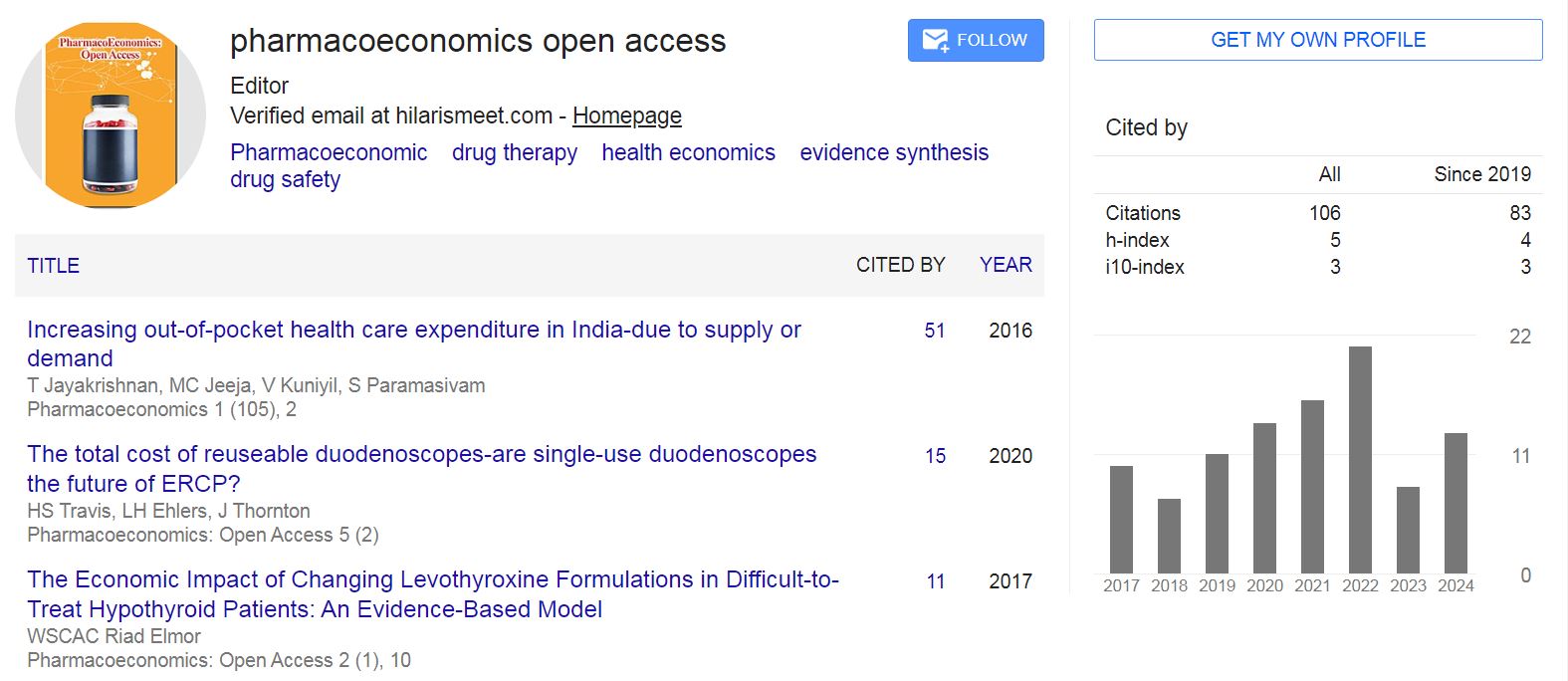
Pharmacoeconomics: Open Access received 106 citations as per Google Scholar report