Commentary - (2025) Volume 12, Issue 2
Received: 01-Apr-2025, Manuscript No. ijn-26-183971;
Editor assigned: 03-Apr-2025, Pre QC No. P-183971;
Reviewed: 17-Apr-2025, QC No. Q-183971;
Revised: 22-Apr-2025, Manuscript No. R-183971;
Published:
29-Apr-2025
, DOI: 10.37421/2376-0281.2025.12.626
Citation: OConnell, James. "Personalized MS Rehabilitation: A Multidisciplinary Approach." Int J Neurorehabilitation Eng 12 (2025):626.
Copyright: © 2025 OConnell J. This is an open-access article distributed under the terms of the Creative Commons Attribution License, which permits unrestricted use, distribution and reproduction in any medium, provided the original author and source are credited.
Multiple Sclerosis (MS) rehabilitation is a complex and evolving field, demanding a multidisciplinary approach to address the diverse challenges faced by individuals with this condition. A comprehensive overview of current rehabilitation strategies highlights the personalized nature of treatment plans, which are essential for managing the wide spectrum of MS symptoms. These symptoms can encompass motor, sensory, cognitive, and psychological difficulties, necessitating tailored interventions to maximize functional independence and enhance overall quality of life [1].
Within the broad scope of MS rehabilitation, physiotherapy plays a pivotal role in enhancing physical function and recovery. Research into exercise-based interventions demonstrates the efficacy of aerobic training, strength training, balance exercises, and flexibility programs in mitigating common MS-related issues such as fatigue and mobility impairments. The emphasis is on developing exercise regimens that are specifically adapted to individual disease severity and unique needs, advocating for a progressive and adaptive approach to therapy [2].
Occupational therapy is another crucial component, focusing on improving the ability of individuals with MS to engage in daily living activities and participate meaningfully in their communities. Occupational therapists assist in developing adaptive strategies, recommending assistive devices, and modifying environments to foster independence and alleviate the care burden. This approach is vital for addressing both the physical and cognitive impairments that can hinder participation in everyday tasks [3].
Cognitive dysfunction is a prevalent challenge for individuals with MS, and targeted rehabilitation strategies are essential for managing these deficits. Various approaches, including memory enhancement techniques, attention training, and problem-solving exercises, have shown effectiveness in improving cognitive performance. The integration of cognitive rehabilitation within a broader rehabilitation program is recommended to ensure a holistic approach to patient care [4].
Speech and swallowing disorders, such as dysarthria and dysphagia, can significantly impact communication and nutrition in individuals with MS. Speech-language pathology interventions are critical for addressing these issues, advocating for early assessment and targeted therapies to maintain optimal communication and safe swallowing. This proactive approach can enhance quality of life and reduce the risk of complications like aspiration [5].
The psychological well-being of individuals with MS is profoundly affected by the condition, with common challenges including depression, anxiety, and persistent fatigue. Psychological interventions, such as cognitive behavioral therapy (CBT), mindfulness-based practices, and support groups, offer effective strategies for managing these mental health concerns. Integrating psychological care into the overall rehabilitation framework is paramount for comprehensive support [6].
Technological advancements are increasingly shaping the landscape of MS rehabilitation, offering innovative tools and platforms. Telehealth, virtual reality, and wearable sensors are being explored for their potential to improve accessibility, engagement, and personalization of rehabilitation programs. These technologies can provide novel methods for monitoring patient progress and delivering interventions remotely, potentially overcoming geographical barriers and enhancing patient outcomes [7].
Fatigue is a particularly debilitating symptom in MS, significantly impacting daily functioning and quality of life. Effective management strategies encompass both pharmacological and non-pharmacological approaches. Energy conservation techniques, tailored exercise plans, and pacing strategies are key components of individualized fatigue management plans designed to align with a patient's lifestyle and specific symptom profile [8].
The concept of neuroplasticity offers a promising framework for MS rehabilitation, focusing on the brain's inherent ability to reorganize and adapt. Targeted therapies can be employed to promote neural reorganization and facilitate functional recovery, harnessing the brain's capacity to compensate for neurological damage. Consistent and appropriate rehabilitation interventions are understood to yield long-term benefits in this regard [9].
Central to effective MS rehabilitation is a patient-centered approach, which prioritizes shared decision-making, collaborative goal setting, and the active involvement of individuals with MS in their treatment journey. Rehabilitation programs that are aligned with a patient's personal values, preferences, and life roles are more likely to achieve greater adherence and lead to improved outcomes, underscoring the importance of individualized care [10].
The field of Multiple Sclerosis (MS) rehabilitation is characterized by its multifaceted nature, aiming to address the broad array of symptoms and functional impairments experienced by individuals with the condition. A comprehensive review of current practices emphasizes the necessity of personalized treatment plans that are designed to manage motor, sensory, cognitive, and psychological challenges effectively. The ultimate goal of these interventions is to maximize functional independence and significantly improve the quality of life for those affected by MS [1].
Physiotherapy is a cornerstone of MS rehabilitation, with a particular focus on exercise-based interventions. Research confirms the benefits of various forms of exercise, including aerobic and strength training, balance exercises, and flexibility programs, in managing common MS symptoms like fatigue and improving mobility. The development of tailored exercise regimens, which consider individual disease severity and specific patient needs, is strongly advocated for, promoting a progressive and adaptable approach to physical therapy [2].
Occupational therapy plays a vital role in enabling individuals with MS to maintain their independence in daily living activities and enhance their participation in social and vocational roles. Occupational therapists provide strategies for adaptation, recommend assistive devices, and guide environmental modifications to support autonomy and reduce the burden of care. This discipline addresses both physical and cognitive challenges that may impede engagement in meaningful activities [3].
Cognitive rehabilitation is a critical area of focus in MS care, given the prevalence of cognitive dysfunction among patients. Interventions such as memory strategies, attention training, and problem-solving techniques have been shown to improve cognitive performance. Integrating these cognitive strategies within a broader rehabilitation program ensures that the holistic needs of individuals with MS are met comprehensively [4].
Speech and swallowing disorders are significant concerns for individuals with MS, affecting communication and nutrition. Speech-language pathology services are essential for assessing and treating conditions like dysarthria and dysphagia. Early intervention is crucial for maintaining effective communication and safe swallowing, thereby improving overall quality of life and reducing risks such as aspiration [5].
The psychological impact of MS, including depression, anxiety, and fatigue, requires dedicated attention within rehabilitation programs. Psychological interventions, such as cognitive behavioral therapy (CBT), mindfulness, and support groups, are effective in managing these mental health challenges. The integration of psychological support into the broader rehabilitation framework is essential for holistic patient care [6].
Technological innovations are increasingly being utilized to enhance MS rehabilitation. Tools like telehealth, virtual reality, and wearable sensors are being explored for their capacity to increase accessibility, improve engagement, and personalize rehabilitation programs. These technologies offer new ways to monitor progress and deliver interventions remotely, potentially overcoming geographical barriers and leading to improved patient outcomes [7].
Fatigue is a pervasive and often debilitating symptom in MS, necessitating effective management strategies. A review of non-pharmacological interventions highlights the importance of energy conservation techniques, appropriate exercise, and pacing strategies. The development of individualized fatigue management plans, tailored to each patient's unique lifestyle and symptom profile, is emphasized as crucial for successful management [8].
The principles of neuroplasticity are being increasingly applied in MS rehabilitation. This approach leverages the brain's ability to reorganize itself and form new neural connections to promote functional recovery. Rehabilitation therapies are designed to harness this inherent capacity for adaptation, aiming to compensate for neurological damage and achieve long-term functional improvements [9].
A patient-centered approach is fundamental to effective MS rehabilitation. This involves empowering individuals with MS through shared decision-making, collaborative goal setting, and active participation in their rehabilitation journey. Ensuring that rehabilitation programs align with patients' personal values, preferences, and life roles is key to fostering adherence and achieving optimal outcomes [10].
Rehabilitation for Multiple Sclerosis (MS) is a multidisciplinary and personalized process addressing a wide range of symptoms including motor, sensory, cognitive, and psychological challenges. Key interventions include physiotherapy for physical function, occupational therapy for daily living, and speech-language pathology for communication and swallowing disorders. Cognitive rehabilitation and psychological support, such as CBT and mindfulness, are also vital. Emerging technologies like telehealth and virtual reality are enhancing accessibility and personalization. Effective management of fatigue through energy conservation and exercise is crucial. The principles of neuroplasticity guide therapies aimed at promoting neural reorganization. A patient-centered approach, emphasizing shared decision-making and individual goals, is paramount for successful outcomes.
None
None
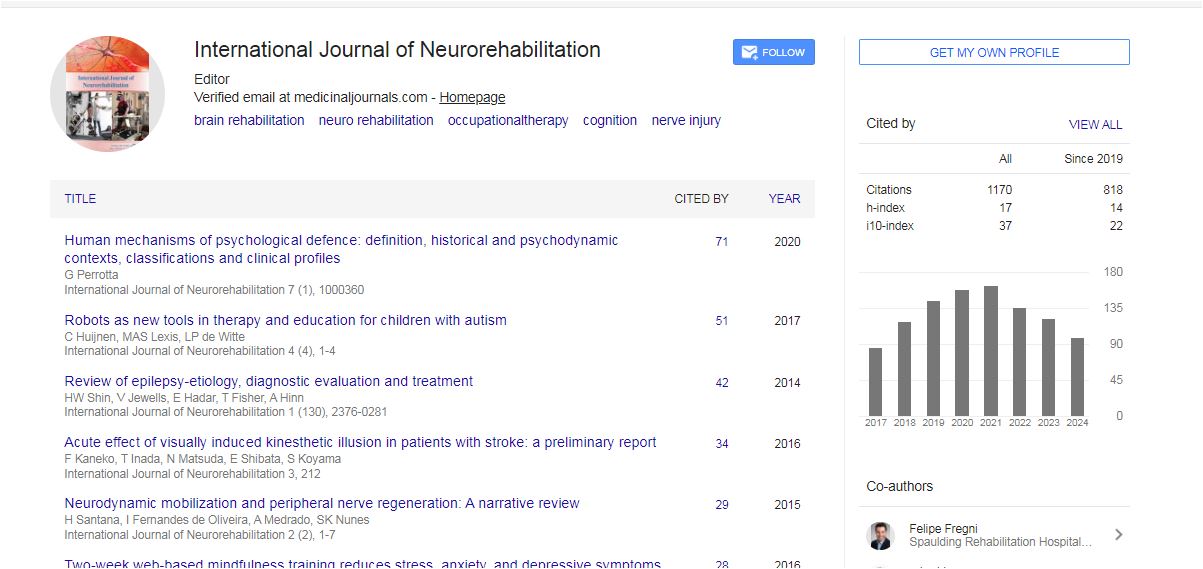
International Journal of Neurorehabilitation received 1078 citations as per Google Scholar report