Perspective - (2025) Volume 10, Issue 2
Received: 02-Mar-2025, Manuscript No. PE-26-179252;
Editor assigned: 04-Mar-2025, Pre QC No. P-179252;
Reviewed: 18-Mar-2025, QC No. Q-179252;
Revised: 24-Mar-2025, Manuscript No. R-179252;
Published:
31-Mar-2025
, DOI: 10.37421/2472-1042.2025.10.276
Citation: Petrova, Elena. ”Personalized Medicine: Economic Value and Accessibility.” Pharmacoeconomics 10 (2025):276.
Copyright: © 2025 Petrova E. This is an open-access article distributed under the terms of the Creative Commons Attribution License, which permits unrestricted use, distribution and reproduction in any medium, provided the original author and source are credited.
Personalized medicine represents a paradigm shift in healthcare, promising improved patient outcomes through treatments tailored to individual characteristics [1].
However, the economic evaluation of such individualized approaches presents unique challenges that necessitate the adaptation of traditional cost-utility analysis frameworks. This includes the crucial need for robust data collection on treatment response variability and the incorporation of patient-reported outcomes to fully capture the value of these therapies [1].
The authors emphasize that despite potentially higher upfront costs, personalized medicine can be justified by reduced healthcare resource utilization and enhanced quality of life, making it a worthwhile consideration for healthcare systems [1].
Understanding the economic implications of pharmacogenomic testing is paramount for its successful integration into clinical practice. This involves examining the cost-effectiveness of using genetic profiles to guide drug selection and dosing in specific patient populations, where reductions in adverse drug reactions and treatment failures can lead to significant downstream savings [2].
The application of decision-analytic modeling is essential for evaluating personalized cancer therapies, particularly in incorporating differential treatment response rates and survival benefits to accurately reflect the value of targeted agents [3].
For certain cancer subtypes, personalized approaches have demonstrated a favorable cost-effectiveness profile compared to traditional chemotherapy, offering a more precise and potentially more valuable treatment strategy [3].
The challenge of assessing the value of precision diagnostics in routine healthcare is also a significant area of focus. Methodologies for incorporating the costs and benefits of genetic tests that inform personalized treatment decisions are crucial for demonstrating the economic advantages of these technologies [4].
A comprehensive approach, considering incremental diagnostic yield and impact on clinical management, is essential for this assessment [4].
The economic impact of companion diagnostics in guiding targeted therapies for rare diseases is another vital consideration. By identifying eligible patient subgroups, these diagnostics optimize treatment efficacy and reduce exposure to ineffective therapies, thus improving overall cost-effectiveness by ensuring expensive treatments are administered only to those most likely to benefit [5].
The application of real-world evidence (RWE) in the pharmacoeconomic evaluation of personalized medicine is increasingly important. RWE can provide valuable insights into treatment effectiveness and resource utilization in diverse patient populations, complementing traditional clinical trial data and informing payer decisions [6].
Ethical and economic considerations in personalized drug development are interconnected. The increasing focus on individualized treatments impacts R&D investment strategies and market access, with robust cost-effectiveness evidence being paramount for demonstrating value to payers and ensuring patient accessibility [7].
Specialized pharmacoeconomic modeling approaches are required for gene therapies, which often involve high upfront costs and potentially curative effects. These models must capture long-term benefits, quality-of-life improvements, and potential disease prevention when assessing the value of gene-based personalized interventions [8].
The use of patient-reported outcomes (PROs) in the cost-effectiveness analysis of personalized interventions is critical for a comprehensive value assessment, as PROs provide essential insights into patient experiences and preferences, reflecting the patient's perspective on treatment benefit and quality of life [9].
Finally, the integration of machine learning and artificial intelligence in pharmacoeconomic modeling for personalized medicine promises to enhance the prediction of treatment response and patient outcomes, leading to more accurate and efficient cost-effectiveness evaluations and optimizing resource allocation [10].
Personalized medicine, while holding immense promise for enhancing patient outcomes, introduces complex challenges to traditional cost-utility analyses [1].
This necessitates the adaptation of existing economic evaluation frameworks to accurately assess the value of individualized treatments. Key to this adaptation is the collection of robust data on the variability of treatment responses among patients and the integral inclusion of patient-reported outcomes to capture the full spectrum of treatment benefits [1].
The authors highlight that although initial investment costs for personalized medicine might be higher, the potential for reduced healthcare resource utilization and significant improvements in quality of life can provide a strong economic justification, rendering it a valuable consideration for modern healthcare systems [1].
A thorough understanding of the economic implications associated with pharmacogenomic testing is indispensable for its seamless integration into clinical practice. Such understanding involves a detailed examination of the cost-effectiveness of employing genetic profiles to guide therapeutic decisions, including drug selection and optimal dosing, particularly within specific patient cohorts [2].
The analysis consistently suggests that despite the initial expenditure on testing, the subsequent reduction in adverse drug reactions and treatment failures can translate into substantial long-term financial savings and improved health outcomes, thereby bolstering the overall value proposition of these genetic insights [2].
Research into personalized cancer therapies increasingly employs decision-analytic modeling, emphasizing the critical importance of integrating differential treatment response rates and survival benefits into these models to accurately quantify the value of targeted agents [3].
The findings from such studies indicate that for specific cancer subtypes, personalized treatment strategies can exhibit a more favorable cost-effectiveness profile when contrasted with conventional chemotherapy, thereby presenting a more precise and potentially more advantageous therapeutic approach [3].
Addressing the assessment of value for precision diagnostics within routine healthcare settings is another significant area of investigation. This involves reviewing established methodologies for incorporating both the costs and the myriad benefits derived from genetic tests that inform personalized treatment decisions [4].
The authors advocate for a comprehensive assessment approach that considers the incremental diagnostic yield alongside the direct impact on clinical management strategies to convincingly demonstrate the economic advantages offered by these advanced diagnostic technologies [4].
The economic ramifications of companion diagnostics, particularly in facilitating targeted therapies for rare diseases, are also a focal point of discussion. These diagnostics play a crucial role in identifying specific patient subgroups who are most likely to benefit from particular treatments, thereby optimizing treatment efficacy and minimizing exposure to therapies that are unlikely to be effective [5].
While companion diagnostics introduce an additional cost, their ability to ensure that expensive targeted treatments are administered only to the most appropriate candidates can significantly enhance the overall cost-effectiveness of care [5].
The integration of real-world evidence (RWE) into the pharmacoeconomic evaluation of personalized medicine is an evolving but vital area. RWE offers valuable real-world insights into treatment effectiveness and patterns of resource utilization across diverse patient populations, serving as a crucial complement to data generated from controlled clinical trials [6].
This evidence-based approach is fundamental for accurately understanding the incremental value of personalized strategies in everyday clinical practice and for informing critical decisions made by healthcare payers [6].
Ethical considerations are intrinsically linked with the economic aspects of personalized drug development. The growing emphasis on individualized treatments profoundly influences R&D investment strategies and the pathways to market access for these novel therapies [7].
Consequently, the authors underscore that the generation of robust cost-effectiveness evidence is paramount to effectively demonstrate the value of these specialized therapies to payers, which is essential for ensuring their accessibility to patients who could benefit from them [7].
The application of pharmacoeconomic models to gene therapies presents unique challenges and opportunities due to their advanced nature, often characterized by high upfront costs and potentially curative long-term effects [8].
These treatments necessitate specialized modeling approaches capable of capturing the full scope of benefits, including long-term health gains, substantial quality-of-life improvements, and the potential for preventing disease progression or recurrence when evaluating the overall value of these gene-based personalized interventions [8].
The indispensable role of patient-reported outcomes (PROs) in the cost-effectiveness analysis of personalized interventions is a recurring theme. PROs provide critical qualitative and quantitative insights into patient experiences, preferences, and perceived benefits, which are essential for a comprehensive value assessment of treatments that are specifically tailored to individual patient needs [9].
The inclusion of PROs ensures that economic evaluations accurately reflect the patient's perspective on treatment efficacy and overall quality of life [9].
The convergence of machine learning and artificial intelligence with pharmacoeconomic modeling for personalized medicine is a promising frontier. These sophisticated analytical tools have the potential to significantly improve the prediction of treatment responses and individual patient outcomes, thereby enabling more accurate and efficient cost-effectiveness evaluations [10].
This advanced modeling approach holds substantial promise for optimizing resource allocation within healthcare systems and accelerating the widespread adoption of personalized therapeutic strategies [10].
Personalized medicine, while promising improved patient outcomes, presents unique challenges for cost-utility analysis. Traditional economic frameworks are being adapted to assess the value of individualized treatments by incorporating data on response variability, patient-reported outcomes, and long-term effects. Despite higher upfront costs, these treatments can be justified by reduced healthcare utilization and improved quality of life. Pharmacogenomic testing, precision diagnostics, and companion diagnostics are crucial for guiding personalized therapies, with analyses showing their cost-effectiveness through reduced adverse events and optimized treatment selection. Decision-analytic modeling and real-world evidence are vital tools for evaluating these approaches, particularly for cancer therapies and rare diseases. Ethical and economic considerations are intertwined, emphasizing the need for robust cost-effectiveness data for market access and patient accessibility. Advanced modeling techniques, including machine learning and AI, are enhancing the accuracy and efficiency of economic evaluations for personalized medicine, including gene therapies. The inclusion of patient-reported outcomes is essential for a comprehensive value assessment from the patient's perspective. Overall, personalized medicine strategies, when rigorously evaluated, offer a valuable and increasingly justifiable approach to healthcare.
None
None
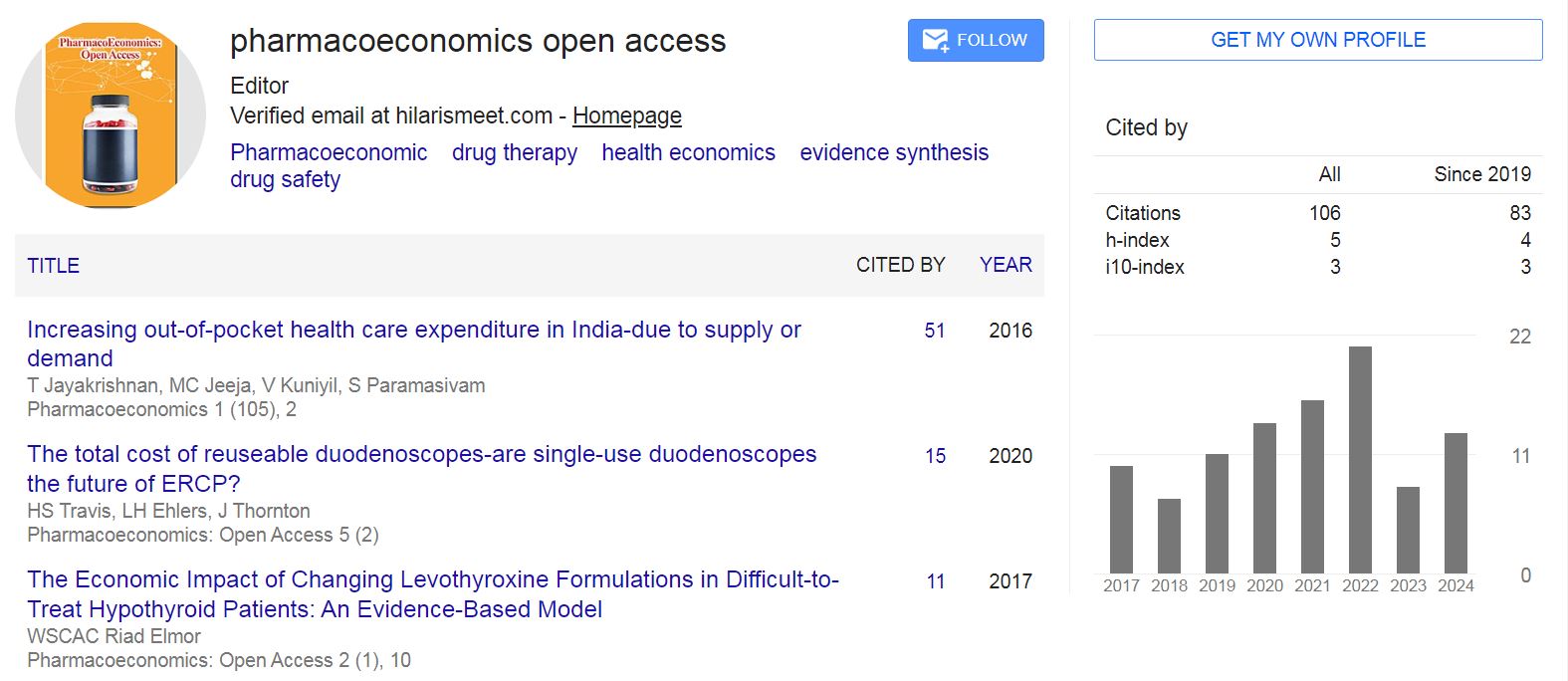
Pharmacoeconomics: Open Access received 106 citations as per Google Scholar report