Commentary - (2025) Volume 10, Issue 6
Received: 03-Nov-2025, Manuscript No. JPNM-26-188032;
Editor assigned: 05-Nov-2025, Pre QC No. P-188032;
Reviewed: 17-Nov-2025, QC No. Q-188032;
Revised: 24-Nov-2025, Manuscript No. R-188032;
Published:
29-Nov-2025
, DOI: 10.37421/2472-100X.2025.10.376
Citation: Torres, Miguel. ”Pediatric Iron Deficiency Anemia: A Comprehensive Approach.” J Pediatr Neurol Med 10 (2025):376.
Copyright: © 2025 Torres M. This is an open-access article distributed under the terms of the Creative Commons Attribution License, which permits unrestricted use, distribution and reproduction in any medium, provided the original author and source are credited.
Iron deficiency anemia (IDA) remains a significant global health issue in children, impacting cognitive development and overall well-being. This article highlights the importance of early screening and timely nutritional interventions, primarily focusing on iron supplementation, as well as the role of other micronutrients like vitamin B12 and folate. It underscores the need for evidence-based guidelines and tailored approaches considering socioeconomic factors and local dietary patterns [1].
This study examines the effectiveness of different iron formulations in treating IDA in infants. It found that liquid ferrous sulfate was highly effective but associated with gastrointestinal side effects, while iron polymaltose complex showed comparable efficacy with better tolerance. The research emphasizes individualized treatment based on infant tolerance and parental adherence [2].
Addressing micronutrient deficiencies beyond iron is crucial for comprehensive pediatric anemia management. This systematic review highlights the synergistic roles of vitamin B12, folate, and vitamin C in iron absorption and red blood cell formation. It suggests that combined nutritional counseling and supplementation can lead to more robust outcomes [3].
The impact of maternal nutritional status during pregnancy on the risk of IDA in newborns is significant. This prospective cohort study demonstrates a strong correlation between maternal iron deficiency and increased incidence of anemia in infants during the first year of life. It emphasizes the importance of prenatal nutritional screening and supplementation [4].
This article explores the challenges and opportunities of implementing iron fortification programs in vulnerable pediatric populations. It discusses the efficacy of staple food fortification in reducing IDA prevalence but also highlights potential barriers related to cost, accessibility, and cultural acceptance. Recommendations for sustainable and effective fortification strategies are provided [5].
The gut microbiome plays an emerging role in nutrient absorption and overall health, including iron metabolism. This review synthesizes current research on how alterations in gut bacteria can influence iron status in children and explores potential probiotic-based interventions for anemia. It suggests a novel avenue for therapeutic development [6].
Understanding the genetic factors influencing iron metabolism can help identify children at higher risk for anemia. This study investigates the association between specific genetic polymorphisms and iron deficiency in a pediatric cohort. It points towards personalized screening strategies based on genetic predisposition [7].
This paper provides a comprehensive overview of the diagnostic challenges in pediatric anemia, particularly differentiating iron deficiency from other causes. It emphasizes the importance of a thorough clinical history, physical examination, and appropriate laboratory tests, including iron studies and hemoglobin electrophoresis, for accurate diagnosis [8].
The integration of community-based health programs is vital for reaching underserved populations with nutritional interventions for anemia. This qualitative study explores the perspectives of healthcare providers and community members on the barriers and facilitators of anemia prevention programs in rural settings. It advocates for culturally sensitive and participatory approaches [9].
This research investigates the long-term neurodevelopmental outcomes of children treated for severe iron deficiency anemia in infancy. It highlights that while prompt treatment can reverse some deficits, persistent cognitive and behavioral challenges may remain, emphasizing the critical window of opportunity for intervention during early life [10].
Iron deficiency anemia (IDA) is a pervasive global health concern affecting children, with significant implications for their cognitive development and general well-being. This review underscores the critical need for early screening and prompt nutritional interventions, with a primary emphasis on iron supplementation. It also acknowledges the supportive roles of other essential micronutrients, such as vitamin B12 and folate, in managing IDA. The authors stress the importance of adhering to evidence-based guidelines and adopting tailored strategies that account for socioeconomic factors and prevailing local dietary habits [1].
This study conducted an examination of the comparative effectiveness of various iron formulations used in the treatment of IDA among infants. Key findings indicated that liquid ferrous sulfate was highly efficacious but often accompanied by gastrointestinal disturbances. Conversely, iron polymaltose complex demonstrated comparable therapeutic benefits with improved patient tolerance. The research advocates for treatment plans that are individualized, considering both the infant's tolerance and the caregivers' adherence to the regimen [2].
Beyond iron, addressing other micronutrient deficiencies is recognized as a paramount component of holistic pediatric anemia management. This systematic review elucidates the complementary actions of vitamin B12, folate, and vitamin C in enhancing iron absorption and facilitating red blood cell production. It posits that a combined approach involving nutritional counseling and targeted supplementation can yield more substantial and sustained positive health outcomes [3].
The nutritional status of mothers during pregnancy exerts a considerable influence on the susceptibility of newborns to IDA. This prospective cohort study established a robust association between maternal iron deficiency and an elevated incidence of anemia in infants within their first year of life. Consequently, the study highlights the imperative for prenatal nutritional screening and the timely administration of supplements [4].
This article delves into the complexities and potential benefits associated with the implementation of iron fortification programs, particularly within vulnerable pediatric demographics. While acknowledging the effectiveness of fortifying staple foods in curbing the prevalence of IDA, the authors also identify potential obstacles such as cost, accessibility, and cultural acceptance. Guidance is offered for developing strategies that are both sustainable and effective in the long term [5].
The gut microbiome is emerging as a significant factor in nutrient absorption and overall health, with a notable influence on iron metabolism. This review consolidates the current body of research examining how alterations in the composition of gut bacteria can affect iron status in children. It also explores the potential of probiotic-based interventions as a novel therapeutic strategy for anemia [6].
An understanding of the genetic underpinnings of iron metabolism is pivotal in identifying children who are at a heightened risk of developing anemia. This study specifically investigated the relationship between certain genetic polymorphisms and the occurrence of iron deficiency in a pediatric population. The findings suggest the feasibility of implementing personalized screening approaches based on an individual's genetic predisposition [7].
This paper offers a thorough examination of the diagnostic hurdles encountered in pediatric anemia, with a particular focus on distinguishing iron deficiency from other causative factors. It underscores the critical importance of a detailed clinical history, a comprehensive physical examination, and the judicious use of laboratory tests, including iron studies and hemoglobin electrophoresis, for achieving an accurate diagnosis [8].
The integration of community-based health initiatives is indispensable for extending the reach of nutritional interventions for anemia to underserved communities. This qualitative research explores the viewpoints of healthcare professionals and community members regarding the challenges and enablers of anemia prevention programs in rural environments. It strongly advocates for the adoption of culturally sensitive and participatory methodologies [9].
This research examines the long-term consequences on neurodevelopment in children who were treated for severe iron deficiency anemia during infancy. The findings indicate that while early and prompt treatment can mitigate some developmental deficits, residual cognitive and behavioral impairments may persist. This underscores the critical importance of timely interventions during the early developmental stages of life [10].
Iron deficiency anemia (IDA) remains a significant global health issue in children, impacting cognitive development. Early screening and nutritional interventions, particularly iron supplementation, are crucial. Other micronutrients like vitamin B12 and folate also play a role, and strategies must consider socioeconomic and local dietary factors. Different iron formulations have varying efficacy and tolerability, necessitating individualized treatment. Addressing deficiencies beyond iron, such as vitamins B12, folate, and C, can enhance outcomes. Maternal nutritional status during pregnancy is linked to infant anemia risk, highlighting the need for prenatal care. Iron fortification of staple foods can reduce IDA prevalence, though challenges exist. The gut microbiome's role in iron metabolism is an emerging area, with potential probiotic interventions. Genetic factors can influence iron deficiency risk, suggesting personalized screening. Accurate diagnosis of pediatric anemia requires thorough clinical assessment and appropriate lab tests. Community-based programs are vital for reaching underserved populations, requiring culturally sensitive approaches. Long-term neurodevelopmental outcomes after infantile IDA treatment can be affected, emphasizing the importance of early intervention.
None
None
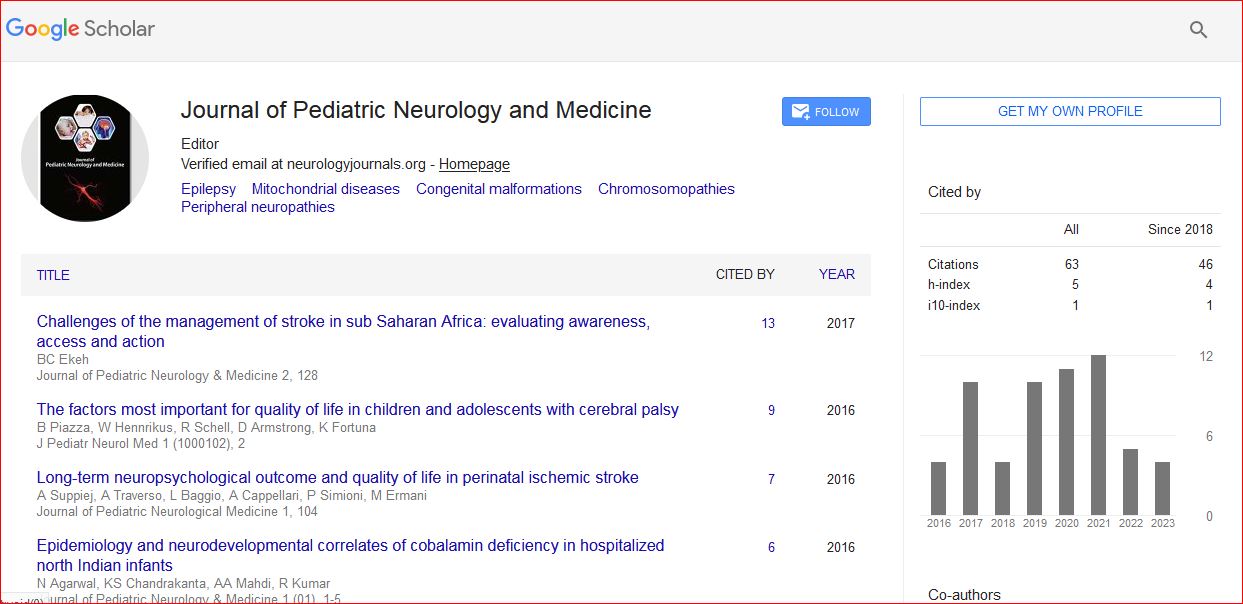
Journal of Pediatric Neurology and Medicine received 68 citations as per Google Scholar report