Opinion - (2025) Volume 10, Issue 6
Received: 03-Nov-2025, Manuscript No. JPNM-26-185750;
Editor assigned: 05-Nov-2025, Pre QC No. P-185750;
Reviewed: 17-Nov-2025, QC No. Q-185750;
Revised: 24-Nov-2025, Manuscript No. R-185750;
Published:
29-Nov-2025
, DOI: 10.37421/2472-100X.2025.10.374
Citation: Ivanova, Elena. ”Pediatric Anxiety and Depression: Early Detection, Comprehensive Care.” J Pediatr Neurol Med 10 (2025):374.
Copyright: © 2025 Ivanova E. This is an open-access article distributed under the terms of the Creative Commons Attribution License, which permits unrestricted use, distribution and reproduction in any medium, provided the original author and source are credited.
Pediatric anxiety and depression represent significant and increasingly recognized mental health concerns in young populations. Early identification through consistent screening protocols is paramount for effective intervention and management. Understanding the nuances of developmental variations across different age groups is crucial for accurately recognizing symptom presentations. The management of these conditions typically involves a comprehensive, multimodal approach, integrating psychotherapy with pharmacological interventions when deemed appropriate. Supportive family involvement is a cornerstone of treatment, fostering resilience and improving overall outcomes for affected children. Furthermore, school-based interventions play a vital role in creating supportive environments and facilitating early detection and support. School psychologists are uniquely positioned to identify mental health challenges in children and implement timely interventions within the educational setting. This involves utilizing effective screening tools and establishing collaborative networks with parents and mental health professionals to ensure seamless continuity of care. Cognitive Behavioral Therapy (CBT) has emerged as a highly effective treatment modality for childhood anxiety disorders, offering structured techniques to address maladaptive thoughts and behaviors. The core principles of CBT, including exposure therapy and cognitive restructuring, can be adapted to suit the developmental needs of pediatric populations. Pharmacological treatment for pediatric depression necessitates a carefully considered decision-making process, with expert consensus statements guiding the evidence base for antidepressant medications. Careful patient selection, individualized dosing, and vigilant monitoring for efficacy and potential side effects are critical components of safe and effective pharmacotherapy. The mental health of parents significantly influences the mental health outcomes of their children, particularly concerning anxiety and depression. Family-based interventions that prioritize parental well-being are therefore essential for improving the mental health of children. Adolescent depression presents with distinct characteristics that often differ from adult presentations, requiring tailored treatment strategies that acknowledge the unique neurobiological and developmental factors at play. The trajectory of depressive symptoms in adolescence is a subject of ongoing research, with longitudinal studies providing valuable insights into predictors of persistence and remission, informing more effective treatment approaches. The integration of mental health services within primary care settings offers a promising avenue for increasing access to care for pediatric anxiety and depression, streamlining services and fostering interdisciplinary collaboration for improved patient outcomes. Pediatric anxiety and depression are increasingly recognized mental health challenges. Early identification through consistent screening, understanding developmental variations, and recognizing symptom presentations across age groups is crucial. Management often involves a multimodal approach, combining psychotherapy (such as cognitive behavioral therapy) with pharmacological interventions when indicated. Supportive family involvement and school-based interventions play a significant role in fostering resilience and improving outcomes. [1] This study highlights the critical role of school psychologists in early detection of anxiety and depression in children. It outlines effective screening tools and immediate intervention strategies implemented within the school setting, emphasizing collaboration with parents and mental health professionals to ensure continuity of care. [2] Cognitive Behavioral Therapy (CBT) has demonstrated significant efficacy in treating childhood anxiety disorders. This article reviews the core principles of CBT for pediatric populations, including exposure therapy and cognitive restructuring, and provides practical guidance for clinicians on adapting CBT techniques for different age groups and symptom profiles. [3] Pharmacological treatment for pediatric depression is a complex decision-making process. This expert consensus statement discusses the evidence base for antidepressant medications in children and adolescents, emphasizing the importance of careful patient selection, individualized dosing, and close monitoring for efficacy and potential side effects. [4] This systematic review and meta-analysis examines the impact of parental mental health on child mental health outcomes, specifically in relation to anxiety and depression. Findings underscore the significance of family-based interventions that address parental well-being as a means to improve the mental health of children. [5] Adolescent depression presents with unique challenges, often differing from adult presentations. This article explores the neurobiological underpinnings of adolescent depression and discusses tailored treatment approaches, including psychotherapeutic and pharmacological strategies, that consider the developmental stage. [6] This research investigates the impact of digital media use on pediatric anxiety and depression. It examines both the potential risks and benefits, offering insights into how to promote healthy technology habits and mitigate negative effects on young people's mental well-being. [7] Understanding the early signs of anxiety in toddlers and preschoolers is crucial for timely intervention. This article provides developmental guidelines for recognizing age-appropriate anxiety and differentiating it from normative developmental fears, offering strategies for parents and caregivers. [8] This longitudinal study tracks the development of depressive symptoms in a cohort of adolescents and examines factors associated with persistence and remission. It provides valuable insights into the trajectory of adolescent depression and informs treatment approaches aimed at achieving lasting recovery. [9] The integration of mental health services within primary care settings offers a promising approach to addressing pediatric anxiety and depression. This article discusses the benefits and challenges of this integrated model, providing recommendations for effective implementation and interdisciplinary collaboration. [10]
The recognition of pediatric anxiety and depression as pressing mental health issues necessitates a proactive approach centered on early identification through consistent screening efforts. It is imperative to grasp the spectrum of developmental variations and to adeptly identify symptom presentations across diverse age cohorts to ensure timely and appropriate intervention. The management paradigm for these conditions typically embraces a multimodal strategy, judiciously combining psychotherapeutic interventions, such as Cognitive Behavioral Therapy (CBT), with pharmacological treatments when clinically indicated. The active involvement and support of the family unit are fundamental in cultivating resilience and enhancing therapeutic outcomes for children experiencing these challenges. Furthermore, the implementation of school-based interventions is pivotal in creating supportive educational ecosystems and facilitating the early detection and management of mental health concerns. School psychologists are strategically positioned to serve as frontline identifiers of anxiety and depression in children, deploying effective screening methodologies and initiating prompt interventions within the school milieu. This role extends to fostering robust collaborations with parents and mental health specialists to guarantee an uninterrupted continuum of care for young individuals. Cognitive Behavioral Therapy (CBT) has demonstrated substantial effectiveness in addressing childhood anxiety disorders, equipping clinicians with a framework of core principles, including exposure therapy and cognitive restructuring, that can be personalized to the distinct needs of pediatric patients. The pharmacotherapy for pediatric depression represents a complex clinical decision, guided by expert consensus statements that delineate the evidence base for antidepressant medications in children and adolescents. This approach underscores the critical importance of meticulous patient selection, tailored dosing strategies, and continuous monitoring for both therapeutic efficacy and potential adverse effects. The mental health status of parents exerts a considerable influence on the mental health trajectories of their children, particularly concerning the development and progression of anxiety and depression. Consequently, family-centered interventions that prioritize parental well-being are indispensable for improving the overall mental health of children. Adolescent depression presents with a unique constellation of symptoms and challenges, often diverging from adult manifestations, thereby demanding tailored therapeutic modalities that account for the specific neurobiological and developmental characteristics of this life stage. Research into the longitudinal progression of depressive symptoms during adolescence is ongoing, with studies providing crucial insights into the factors that predict symptom persistence or remission, thereby informing more effective and enduring treatment strategies. The strategic integration of mental health services into primary pediatric care settings represents a highly promising strategy for broadening access to mental health support for children grappling with anxiety and depression, thereby streamlining service delivery and fostering essential interdisciplinary teamwork for enhanced patient well-being. [1] The critical role of school psychologists in the early detection and intervention for pediatric anxiety and depression is underscored by the need for effective screening tools and rapid intervention strategies within schools. Collaboration with parents and mental health professionals is emphasized to ensure continuity of care. [2] Cognitive Behavioral Therapy (CBT) is recognized for its significant efficacy in treating childhood anxiety disorders, with a focus on core principles like exposure therapy and cognitive restructuring, adaptable for various age groups and symptom profiles. [3] Pharmacological treatment for pediatric depression requires a complex decision-making process, guided by evidence for antidepressant medications in children and adolescents, prioritizing careful selection, individualized dosing, and close monitoring for efficacy and side effects. [4] Parental mental health is a significant factor influencing child mental health outcomes, particularly for anxiety and depression. Family-based interventions focusing on parental well-being are highlighted as crucial for improving children's mental health. [5] Adolescent depression exhibits unique characteristics compared to adult presentations, necessitating tailored treatment approaches that consider neurobiological factors and developmental stages, encompassing both psychotherapeutic and pharmacological strategies. [6] The impact of digital media use on pediatric anxiety and depression is being investigated, examining potential risks and benefits to promote healthy technology habits and mitigate negative effects on youth mental well-being. [7] Early identification of anxiety in toddlers and preschoolers is vital, with a need for developmental guidelines to recognize age-appropriate anxiety and differentiate it from normal fears, providing strategies for parents and caregivers. [8] Longitudinal studies are tracking depressive symptoms in adolescents to identify predictors of persistence and remission, offering insights into the trajectory of adolescent depression and informing treatment aimed at lasting recovery. [9] Integrating mental health care into pediatric primary care settings is presented as a beneficial model for addressing pediatric anxiety and depression, discussing implementation challenges and recommending interdisciplinary collaboration. [10]
Pediatric anxiety and depression are critical mental health challenges requiring early identification through screening and a comprehensive understanding of developmental variations. Management typically involves a multimodal approach combining psychotherapy, such as CBT, with pharmacological interventions when necessary. Supportive family involvement and school-based interventions are crucial for fostering resilience and improving outcomes. School psychologists play a key role in early detection and intervention within schools, collaborating with parents and other professionals. CBT is an effective treatment for childhood anxiety, adapted for different age groups. Pharmacotherapy for pediatric depression requires careful patient selection, dosing, and monitoring. Parental mental health significantly impacts children's well-being, emphasizing the importance of family-based interventions. Adolescent depression has unique characteristics requiring tailored treatments. Digital media use is being studied for its impact on youth mental health. Early recognition of anxiety in young children is vital, with strategies for parents. Longitudinal studies are informing treatment for adolescent depression by understanding symptom trajectories. Integrating mental health services into primary care settings offers a promising approach for increased access and collaboration.
None
None
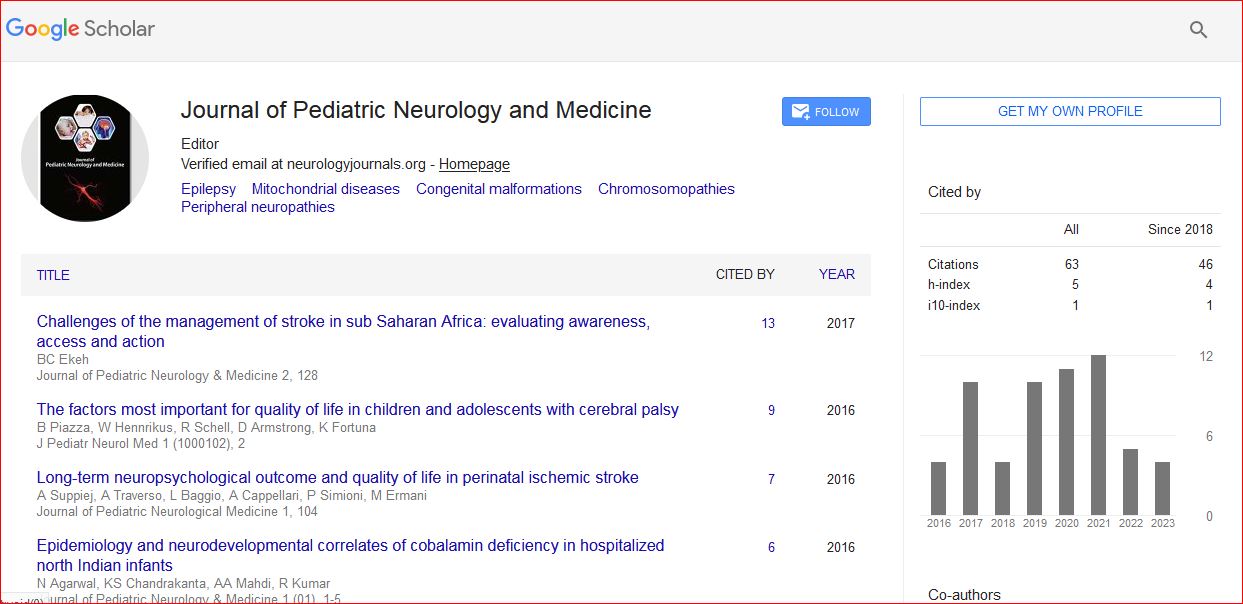
Journal of Pediatric Neurology and Medicine received 68 citations as per Google Scholar report