Brief Report - (2025) Volume 10, Issue 6
Received: 03-Nov-2025, Manuscript No. JPNM-26-185744;
Editor assigned: 05-Nov-2025, Pre QC No. P-185744;
Reviewed: 19-Nov-2025, QC No. Q-185744;
Revised: 24-Nov-2025, Manuscript No. R-185744;
Published:
29-Nov-2025
, DOI: 10.37421/2472-100X.2025.10.381
Citation: ElHaddad, Karim. ”Pediatric Allergy-Immunology: Advancing Diagnosis and Treatment.” J Pediatr Neurol Med 10 (2025):381.
Copyright: © 2025 ElHaddad K. This is an open-access article distributed under the terms of the Creative Commons Attribution License, which permits unrestricted use, distribution and reproduction in any medium, provided the original author and source are credited.
Recent advancements in pediatric allergy and immunology are significantly enhancing diagnostic accuracy and therapeutic efficacy for a range of conditions. Novel biomarkers are improving the early identification of allergic diseases, allowing for more timely and targeted interventions in children, leading to improved patient outcomes [1].
The role of the gut microbiome in pediatric immune development and allergic sensitization is a rapidly evolving area of research. Dysbiosis in early life has been strongly linked to an increased risk of developing allergies, prompting investigations into microbial modulation [2].
Biologics have revolutionized the treatment of severe allergic and immune-mediated diseases in children. Agents targeting key inflammatory pathways have demonstrated significant efficacy in managing complex conditions, offering a more targeted approach than traditional therapies [3].
The field of oral immunotherapy (OIT) for food allergies has seen substantial progress. OIT is a proven method for inducing tolerance to specific food allergens, thereby reducing the risk of severe reactions upon accidental exposure and improving the lives of affected children [4].
Precision medicine approaches are fundamentally transforming the diagnosis and management of pediatric allergic diseases. This involves leveraging a deeper understanding of genetic predispositions, environmental exposures, and individual immune profiles to tailor treatment strategies for each child [5].
Eosinophilic esophagitis (EoE) is a chronic immune-mediated esophageal disease that significantly impacts children's quality of life. Recent advances in diagnosis include standardized criteria and potential biomarkers, alongside evolving treatment strategies beyond simple dietary elimination [6].
The understanding of primary immunodeficiencies (PIDs) has expanded considerably, leading to earlier diagnosis and improved management strategies for affected children. Advances in genetic testing are crucial for identifying the underlying genetic defects that cause these complex conditions [7].
The development of new diagnostic tools, such as multiplex allergen-specific IgE testing and component-resolved diagnostics, is enhancing the precision of allergy diagnosis in children. These technologies allow for the identification of sensitization to specific allergenic proteins, guiding management strategies effectively [8].
Asthma management in children continues to evolve with the introduction of new therapeutic agents and a greater emphasis on personalized treatment. Biologics targeting inflammatory pathways are proving effective in managing severe and difficult-to-treat pediatric asthma, improving overall control [9].
The understanding of anaphylaxis in children has improved significantly, leading to better diagnostic criteria and more refined management guidelines. Novel approaches for epinephrine auto-injector design and accessibility are being explored to ensure prompt treatment during emergencies [10].
Recent advancements in pediatric allergy and immunology are significantly enhancing diagnostic accuracy and therapeutic efficacy, with novel biomarkers improving early identification of allergic diseases and allowing for timely interventions [1].
The understanding of the gut microbiome's role in pediatric immune development and allergic sensitization is a rapidly evolving area. Dysbiosis in early life is strongly linked to an increased risk of allergies, and research is exploring interventions like probiotics and fecal microbiota transplantation to modulate the immune response [2].
Biologics have revolutionized the treatment of severe allergic and immune-mediated diseases in children. Agents targeting IgE, IL-4, IL-5, and IL-13 have demonstrated significant efficacy in managing conditions like severe asthma and atopic dermatitis, offering better symptom control and quality of life [3].
The field of oral immunotherapy (OIT) for food allergies has seen significant progress, with OIT being a proven method for inducing tolerance and reducing the risk of severe reactions. Advances include optimized dosing regimens and improved strategies for managing adverse reactions [4].
Precision medicine approaches are transforming the diagnosis and management of pediatric allergic diseases by leveraging a deeper understanding of genetic predispositions, environmental exposures, and individual immune profiles to tailor treatment strategies, moving away from a one-size-fits-all approach [5].
Eosinophilic esophagitis (EoE) in children is being better understood, with recent advances in diagnosis including standardized endoscopic and histological criteria, as well as the identification of blood eosinophil counts as a potential biomarker. Treatment strategies are evolving beyond dietary elimination with new targeted therapies [6].
The understanding of primary immunodeficiencies (PIDs) has expanded considerably, leading to earlier diagnosis and improved management strategies. Advances in genetic testing, such as whole-exome and whole-genome sequencing, are crucial for identifying underlying genetic defects, while gene therapy is emerging as a promising alternative for specific PIDs [7].
New diagnostic tools in pediatric allergy, like multiplex allergen-specific IgE testing and component-resolved diagnostics, enhance diagnostic precision. These technologies help identify sensitization to specific allergenic proteins, predicting reaction severity and guiding management, including immunotherapy [8].
Asthma management in children continues to evolve with new therapeutic agents and a greater emphasis on personalized treatment. Biologics targeting inflammatory pathways are effective in severe asthma, and advances in inhaler technology improve medication adherence and effectiveness [9].
The understanding of anaphylaxis in children has improved, leading to better diagnostic criteria and management guidelines. Novel approaches for epinephrine auto-injector design and accessibility are being explored, and research into biomarkers and adjunctive therapies is ongoing to mitigate severe reactions [10].
Recent advancements in pediatric allergy and immunology are significantly improving diagnosis and treatment. Novel biomarkers and genetic testing aid in early identification of diseases and primary immunodeficiencies. The gut microbiome's role in immune development is a focus for new microbiome-based therapies. Biologics offer targeted treatments for severe allergic conditions like asthma and atopic dermatitis. Oral immunotherapy is a proven method for inducing tolerance in food allergies. Precision medicine tailors treatments based on individual profiles, while new diagnostic tools like component-resolved diagnostics enhance allergy assessment. Eosinophilic esophagitis management is evolving with targeted therapies. Anaphylaxis management is also improving with better guidelines and potential new tools. Overall, these developments lead to more personalized, effective, and higher-quality care for children with allergic and immune-mediated diseases.
None
None
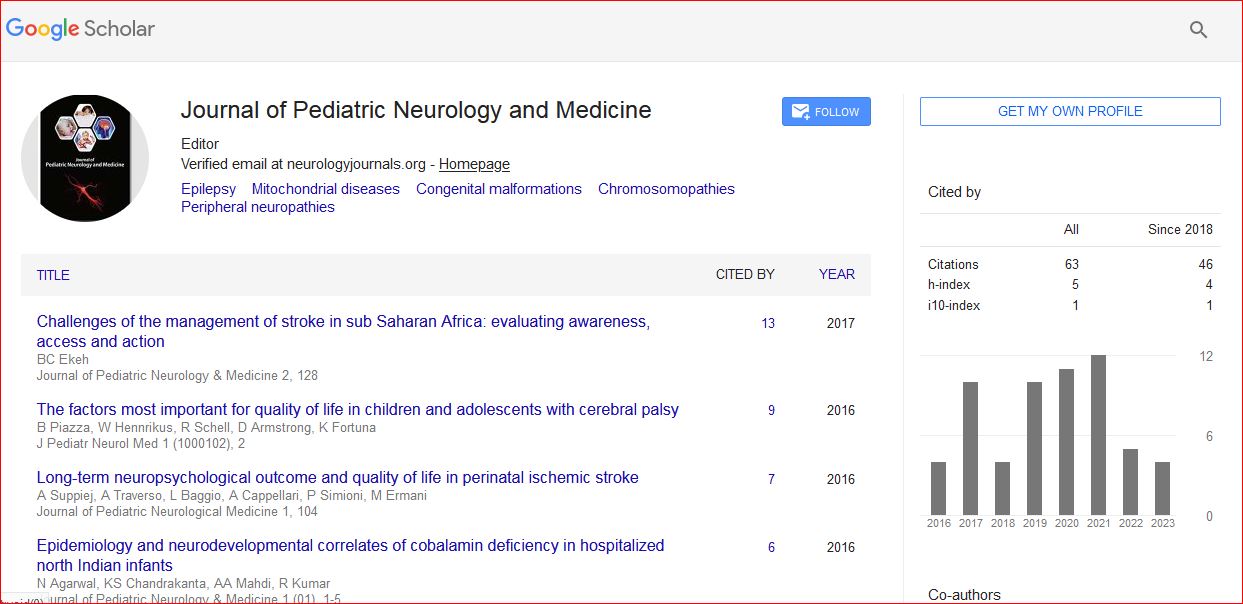
Journal of Pediatric Neurology and Medicine received 68 citations as per Google Scholar report