Brief Report - (2025) Volume 10, Issue 3
Received: 01-May-2025, Manuscript No. PE-26-179276;
Editor assigned: 05-May-2025, Pre QC No. P-179276;
Reviewed: 19-May-2025, QC No. Q-179276;
Revised: 22-May-2025, Manuscript No. R-179276;
Published:
29-May-2025
, DOI: 10.37421/2472-1042.2025.10.282
Citation: Al-Farsi, Noor. ”Patient-Reported Outcomes in Pharmacoeconomic Evaluation.” Pharmacoeconomics 10 (2025):282.
Copyright: © 2025 Al-Farsi N. This is an open-access article distributed under the terms of the Creative Commons Attribution License, which permits unrestricted use, distribution and reproduction in any medium, provided the original author and source are credited.
Patient-reported outcomes (PROs) have become increasingly indispensable in pharmacoeconomic studies, offering a direct gauge of how medical treatments influence patients' health, well-being, and daily capabilities. These outcomes, gathered directly from individuals through validated instruments, provide essential insights into treatment efficacy that extend beyond traditional clinical endpoints. The integration of PROs into pharmacoeconomic evaluations enables a more holistic appreciation of value by incorporating patient perspectives on symptomology, functional status, quality of life, and satisfaction with treatment. This approach enhances the relevance and applicability of economic models, ensuring that healthcare decisions are aligned with what is truly important to patients, as emphasized by the Department of Health Outcomes Research for evidence-based decision-making in healthcare [1].
This study delves into the inherent challenges and promising opportunities associated with incorporating patient-reported outcome measures (PROMs) into cost-effectiveness analyses (CEAs) within the field of pharmacoeconomics. It underscores the critical necessity for standardized methodologies in the collection, analysis, and interpretation of PRO data to guarantee the comparability and robustness of economic models. The authors explore a variety of PRO instruments and their suitability for different disease areas, stressing the importance of selecting measures that are relevant, reliable, and valid for the specific context. Furthermore, the article addresses the complexities involved in assigning economic value to PRO data, particularly when attempting to translate subjective patient experiences into quantifiable utility measures like quality-adjusted life-years (QALYs) [2].
The development and validation of a novel patient-reported outcome measure specifically designed to capture the impact of pharmacological interventions on daily living activities are examined in this research. The study meticulously details the multi-stage process of questionnaire design, encompassing item generation, cognitive debriefing with participants, and rigorous psychometric testing to ensure its efficacy. The pharmacoeconomic implications are thoughtfully discussed, with a focus on how this new PRO instrument can offer more sensitive and specific measures of treatment benefit, thereby refining cost-utility analyses. A significant emphasis is placed on the importance of patient engagement throughout the entire development process, ensuring the measure accurately reflects real-world patient experiences [3].
A systematic review critically appraises the utilization of health-related quality of life (HRQoL) measures, a key category of PROs, within economic evaluations of oncology drugs. This review identifies commonly employed HRQoL instruments, assesses their psychometric properties, and evaluates the methodologies used for integrating HRQoL data into pharmacoeconomic models. A notable finding is the variability in reporting standards and the subsequent need for more consistent application of PRO guidelines. The authors suggest that enhanced PRO integration has the potential to lead to more precise assessments of the overall value of cancer therapies, effectively balancing clinical efficacy with the patient experience [4].
The application of digital PROs (ePROs) in longitudinal pharmacoeconomic studies is investigated, evaluating their advantages over conventional paper-based data collection methods. The research highlights the benefits of ePROs, including real-time data acquisition, a reduction in recall bias, and improved patient adherence to data reporting. Additionally, the article addresses the technical hurdles and implementation challenges inherent in deploying ePRO systems and their consequential effects on cost-effectiveness modeling. The study asserts that ePROs can significantly enhance both the efficiency and accuracy of PRO data collection, ultimately contributing to the generation of more robust pharmacoeconomic evidence [5].
Methodological considerations for the analysis of PRO data within pharmacoeconomic studies are the central focus of this research, particularly addressing issues of missing data and data heterogeneity. The authors propose the use of advanced statistical techniques designed to ensure that economic models accurately represent the patient experience. They discuss how different analytical approaches can influence the estimation of cost-effectiveness ratios and provide recommendations for best practices in PRO data analysis. These recommendations are intended to support more reliable decision-making processes in the allocation of healthcare resources [6].
The utility of patient-reported symptoms in pharmacoeconomic evaluations of treatments for chronic pain is explored in this study. The authors demonstrate how symptom severity scores, along with their impact on daily functioning as captured through validated PRO instruments, can be effectively translated into meaningful economic outcomes. The research underscores the importance of incorporating symptom burden into cost-effectiveness analyses to provide a more patient-centered perspective on treatment value. The findings suggest that interventions that successfully manage pain symptoms offer a superior return on investment from an economic standpoint [7].
This article discusses the pivotal role of patient-reported adverse events (AEs) in the construction of pharmacoeconomic models, emphasizing their critical contribution to assessing the true cost and overall value of medications. It points out that while clinical trials often document AEs, their actual impact on patient adherence, quality of life, and the utilization of healthcare resources is paramount for accurate economic evaluations. The authors advocate for the systematic collection and integration of patient-reported AE data into pharmacoeconomic models to facilitate a more comprehensive assessment of the risk-benefit profile of treatments [8].
A framework for the judicious selection of appropriate patient-reported outcome measures (PROMs) for pharmacoeconomic studies is presented by the authors, strongly emphasizing the need for alignment with specific study objectives, the target patient population, and the relevant disease context. The proposed framework carefully considers essential aspects such as the validity, reliability, interpretability, and the potential burden associated with different PROMs. Its aim is to guide researchers in choosing PROMs that yield data that is both meaningful and economically relevant, thereby contributing to the development of more robust and credible health economic evaluations [9].
The impact of patient preferences, as captured through stated preference methods, on the perceived value of pharmacological interventions is investigated in this study. It highlights how understanding what patients prioritize most in terms of treatment outcomes and potential side effects can significantly refine economic models and enhance decision-making processes. The authors argue that integrating patient preferences directly into pharmacoeconomic studies, in conjunction with traditional PROs, provides a more complete and nuanced understanding of value from the patient's perspective [10].
Patient-reported outcomes (PROs) are becoming increasingly essential in pharmacoeconomic studies, serving as a direct measure of how treatments affect patients' health, well-being, and daily functioning. These outcomes, collected directly from patients using validated instruments, offer crucial insights into treatment effectiveness beyond conventional clinical endpoints. Incorporating PROs into pharmacoeconomic evaluations leads to a more comprehensive understanding of value by capturing patient perspectives on symptoms, functional status, quality of life, and treatment satisfaction, thereby enhancing the relevance and applicability of economic models to ensure healthcare decisions align with patient priorities. The Department of Health Outcomes Research advocates for rigorous PRO measurement to support evidence-based healthcare decision-making [1].
This study explores the challenges and opportunities associated with integrating patient-reported outcome measures (PROMs) into cost-effectiveness analyses (CEAs) within pharmacoeconomics. It highlights the necessity of standardized methodologies for collecting, analyzing, and interpreting PRO data to ensure the comparability and robustness of economic models. The authors discuss various PRO instruments and their suitability for different disease areas, emphasizing the selection of relevant, reliable, and valid instruments. Furthermore, the article addresses the complexities of assigning economic value to PRO data, particularly in translating subjective patient experiences into quantifiable utility measures like quality-adjusted life-years (QALYs) [2].
The development and validation process of a novel patient-reported outcome measure designed to assess the impact of pharmacological interventions on daily living activities are detailed in this research. The study outlines a multi-stage approach to questionnaire design, including item generation, cognitive debriefing, and psychometric testing. Pharmacoeconomic implications are considered, focusing on how the new PRO instrument can provide more sensitive and specific measures of treatment benefit, thereby refining cost-utility analyses. The crucial role of patient engagement throughout the development is underscored [3].
A systematic review critically evaluates the use of health-related quality of life (HRQoL) measures, a key type of PRO, in economic evaluations of oncology drugs. It identifies common HRQoL instruments, assesses their psychometric properties, and examines how HRQoL data are incorporated into pharmacoeconomic models. The review points out variability in reporting standards and emphasizes the need for more consistent application of PRO guidelines. The authors suggest that improved PRO integration can lead to more accurate assessments of the overall value of cancer therapies, considering both clinical efficacy and patient experience [4].
The application of digital PROs (ePROs) in longitudinal pharmacoeconomic studies is examined, along with their advantages over traditional paper-based methods. The research discusses benefits such as real-time data collection, reduced recall bias, and improved patient adherence. It also addresses the technical and implementation challenges of ePRO systems and their implications for cost-effectiveness modeling, concluding that ePROs can enhance the efficiency and accuracy of PRO data in generating robust pharmacoeconomic evidence [5].
Methodological considerations for the analysis of PRO data in pharmacoeconomic studies, particularly concerning missing data and heterogeneity, are the focus of this research. The authors propose advanced statistical techniques to ensure economic models accurately reflect the patient experience. They analyze the impact of different analytical approaches on estimated cost-effectiveness ratios and offer recommendations for best practices in PRO data analysis to support reliable decision-making in healthcare resource allocation [6].
This study investigates the utility of patient-reported symptoms in pharmacoeconomic evaluations of chronic pain management treatments. It illustrates how symptom severity scores and their impact on daily functioning, captured via validated PRO instruments, can be translated into economic outcomes. The research highlights the significance of including symptom burden in cost-effectiveness analyses to provide a more patient-centered view of treatment value, suggesting that interventions effectively managing pain symptoms offer better value for money [7].
The role of patient-reported adverse events (AEs) in pharmacoeconomic modeling is discussed, emphasizing their importance in assessing the true cost and value of medications. The article notes that while clinical trials capture AEs, their impact on patient adherence, quality of life, and healthcare resource utilization is crucial for economic evaluations. The authors advocate for systematic collection and integration of patient-reported AE data into pharmacoeconomic models for a comprehensive risk-benefit assessment [8].
A framework for selecting appropriate patient-reported outcome measures (PROMs) for pharmacoeconomic studies is presented, stressing the need for alignment with study objectives, target population, and disease context. The framework considers aspects like validity, reliability, interpretability, and PROM burden, aiming to guide researchers in choosing PROMs that yield meaningful and economically relevant data for more robust health economic evaluations [9].
The impact of patient preferences, as assessed through stated preference methods, on the perceived value of pharmacological interventions is explored. The study highlights how understanding patient priorities regarding treatment outcomes and side effects can refine economic models and improve decision-making. The authors argue that integrating patient preferences directly into pharmacoeconomic studies, alongside traditional PROs, provides a more complete picture of value from a patient's perspective [10].
Patient-reported outcomes (PROs) are crucial in pharmacoeconomic studies, providing direct patient insights into treatment impact on health, well-being, and daily life. Integrating PROs enhances the comprehensiveness and relevance of economic evaluations by capturing patient perspectives on symptoms, quality of life, and satisfaction, thereby ensuring healthcare decisions align with patient priorities. Studies explore challenges and opportunities in using PROMs in cost-effectiveness analyses, emphasizing standardized methodologies and appropriate instrument selection. Research also details the development and validation of new PRO measures and critically appraises their use in specific therapeutic areas like oncology. The adoption of digital PROs (ePROs) offers advantages in real-time data collection and reduced bias, though implementation challenges exist. Methodological advancements in analyzing PRO data, particularly addressing missingness and heterogeneity, are vital for accurate economic modeling. Patient-reported symptoms and adverse events are increasingly incorporated to provide a more patient-centered view of treatment value and risk-benefit assessments. Frameworks for selecting appropriate PROMs and integrating patient preferences are essential for robust health economic evaluations.
None
None
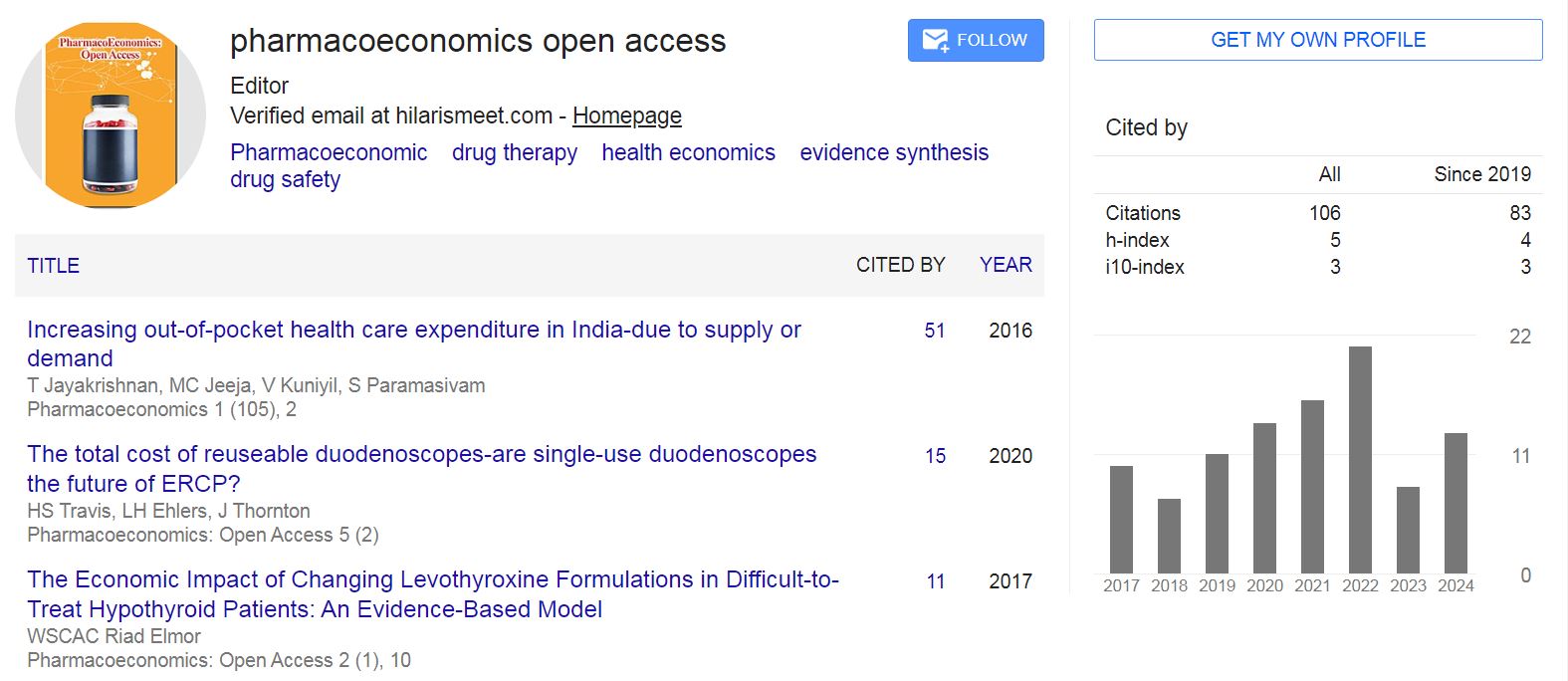
Pharmacoeconomics: Open Access received 106 citations as per Google Scholar report