Opinion - (2025) Volume 10, Issue 6
Received: 01-Dec-2025, Manuscript No. jomp-26-185135;
Editor assigned: 03-Dec-2025, Pre QC No. P-185135;
Reviewed: 17-Dec-2025, QC No. Q-185135;
Revised: 22-Dec-2025, Manuscript No. R-185135;
Published:
29-Dec-2025
, DOI: 10.37421/2576-3857.2025.10.337
Citation: Fujimoto, Hiroko. ”Overcoming T-cell Exhaustion: A Tumor Microenvironment Challenge.” J Oncol Med and Pract 10 (2025):337.
Copyright: © 2025 Fujimoto H. This is an open-access article distributed under the terms of the Creative Commons Attribution License, which permits unrestricted use, distribution and reproduction in any medium, provided the original author and source are credited.
T-cell exhaustion represents a significant obstacle to achieving effective anti-tumor immunity in the context of solid tumors. This phenomenon is characterized by a state of T-cell dysfunction that arises from chronic antigen stimulation and the immunosuppressive tumor microenvironment (TME) [1].
Understanding the intricate mechanisms that drive T-cell exhaustion is paramount for the development of novel and more potent cancer immunotherapies [1].
The pancreatic cancer TME, for instance, has been shown to harbor profound T-cell dysfunction, largely attributed to sustained signaling from the PD-1/PD-L1 axis, which impairs T-cell effector functions [2].
Consequently, strategies aimed at blocking this pathway have demonstrated potential in restoring T-cell activity and represent a promising therapeutic avenue for patients with pancreatic cancer [2].
Metabolic reprogramming emerges as a fundamental hallmark of T-cell exhaustion within solid tumors. Chronic exposure to antigens and inflammatory signals within the TME drastically alters T-cell metabolism, tilting the balance towards catabolic pathways and compromising essential processes like oxidative phosphorylation [3].
Identifying and modulating these specific metabolic targets is crucial for enhancing anti-tumor T-cell immunity [3].
Furthermore, epigenetic modifications play a pivotal role in the establishment and perpetuation of the exhausted T-cell phenotype. Alterations in chromatin landscape and DNA methylation patterns are intricately linked to the stable expression of inhibitory receptors and the silencing of critical effector genes within exhausted T cells [4].
The potential to reverse these epigenetic changes with targeted drugs offers a compelling therapeutic strategy [4].
The tumor microenvironment itself is a dynamic and complex ecosystem that profoundly dictates T-cell function and ultimately influences the success of anti-tumor immunity. A diverse array of cellular and molecular components within the TME, including immunosuppressive cells and stromal elements, actively contribute to the induction of T-cell exhaustion [5].
Within this complex TME, specific exhaustion markers like TIM-3 have been identified as critical indicators of T-cell hyporesponsiveness in solid tumors, particularly in melanoma. The synergistic blockade of both PD-1 and TIM-3 has shown significant promise in preclinical models by enhancing anti-tumor T-cell responses and improving tumor control [6].
Chronic inflammatory conditions within the TME are also implicated in driving T-cell exhaustion. Specific cytokines, such as IL-10 and TGF-β, have been demonstrated to impair T-cell effector functions and promote exhaustion, suggesting that targeting these immunosuppressive cytokines could be a viable strategy to bolster immunotherapy efficacy [7].
Another key player in shaping the immunosuppressive TME is the ectonucleotidase CD39, which degrades extracellular ATP. Elevated expression of CD39 on T cells is consistently associated with T-cell exhaustion and diminished anti-tumor immunity, presenting CD39 inhibition as a potential novel therapeutic approach [8].
The influence of gut microbiota on systemic anti-tumor immunity and T-cell function within the TME is an area of growing recognition. Specific gut microbial compositions can significantly modulate T-cell exhaustion, thereby impacting the efficacy of cancer immunotherapies, and suggest microbiome modulation as a complementary therapeutic strategy [9].
Finally, the heterogeneity of T-cell exhaustion across different solid tumor types is a critical consideration for therapeutic development. Analyzing the transcriptional profiles of exhausted T cells reveals distinct exhaustion signatures tied to tumor histology and immune infiltrate, underscoring the necessity for personalized therapeutic approaches targeting T-cell exhaustion [10].
T-cell exhaustion is a major impediment to effective anti-tumor immunity in solid tumors, characterized by T-cell dysfunction arising from chronic antigen exposure and the immunosuppressive tumor microenvironment (TME) [1].
Elucidating the multifaceted mechanisms underlying T-cell exhaustion is fundamental for advancing cancer immunotherapy [1].
In pancreatic cancer, the TME is marked by significant T-cell dysfunction, primarily driven by persistent PD-1/PD-L1 signaling that compromises T-cell effector functions [2].
Targeting the PD-1/PD-L1 axis has shown efficacy in restoring T-cell activity, positioning it as a valuable therapeutic strategy for pancreatic cancer patients [2].
Metabolic reprogramming is a cornerstone of T-cell exhaustion in solid tumors. Within the TME, chronic antigen stimulation and inflammatory signals induce alterations in T-cell metabolism, favoring catabolic pathways and hindering oxidative phosphorylation [3].
The identification of specific metabolic targets for modulation is key to enhancing anti-tumor T-cell immunity [3].
Epigenetic modifications are instrumental in establishing and maintaining the exhausted T-cell phenotype. Changes in chromatin structure and DNA methylation patterns in exhausted T cells lead to the stable expression of inhibitory receptors and the suppression of effector genes, suggesting epigenetic drugs as a means to reverse these alterations [4].
The TME is a complex milieu where cellular and molecular components, including suppressive immune cells and stromal elements, contribute significantly to T-cell exhaustion and shape anti-tumor immunity [5].
TIM-3, a recognized exhaustion marker in T cells within solid tumors, plays a crucial role in T-cell hyporesponsiveness, as observed in melanoma. Combined blockade of PD-1 and TIM-3 has demonstrated synergistic enhancement of anti-tumor T-cell responses in preclinical settings [6].
Chronic inflammation within the TME contributes to T-cell exhaustion, with cytokines like IL-10 and TGF-β impairing T-cell effector functions. Targeting these immunosuppressive cytokines is proposed as a strategy to reverse exhaustion and improve immunotherapy outcomes [7].
CD39, an ectonucleotidase that degrades extracellular ATP, significantly contributes to the immunosuppressive TME. High CD39 expression on T cells is linked to exhaustion and diminished anti-tumor immunity, suggesting CD39 inhibition as a potential therapeutic avenue [8].
The influence of gut microbiota on systemic anti-tumor immunity and T-cell function within the TME is increasingly appreciated. Specific gut microbial compositions can modulate T-cell exhaustion, affecting immunotherapy efficacy, and highlight the potential of microbiome modulation as a complementary strategy [9].
Understanding the heterogeneity of T-cell exhaustion across diverse solid tumors is vital for therapeutic design. Transcriptional profiling reveals distinct exhaustion signatures related to tumor histology and immune infiltrate, emphasizing the need for personalized approaches to target T-cell exhaustion [10].
T-cell exhaustion is a critical hurdle in achieving effective anti-tumor immunity within solid tumors. This phenomenon is driven by complex mechanisms within the tumor microenvironment (TME), including inhibitory receptors, metabolic dysregulation, and epigenetic alterations. Research highlights the role of PD-1/PD-L1 signaling in pancreatic cancer, metabolic reprogramming in solid tumors, and epigenetic modifications in establishing T-cell exhaustion. Specific markers like TIM-3 and CD39 are implicated in T-cell hyporesponsiveness, while chronic inflammation and immunosuppressive cytokines contribute to this state. The TME's heterogeneity and the influence of gut microbiota further complicate T-cell function. Strategies to overcome T-cell exhaustion involve combinatorial therapies targeting immune checkpoints, metabolic pathways, epigenetic modifiers, and immunosuppressive cytokines, as well as exploring the potential of microbiome modulation and personalized therapeutic approaches.
None
None
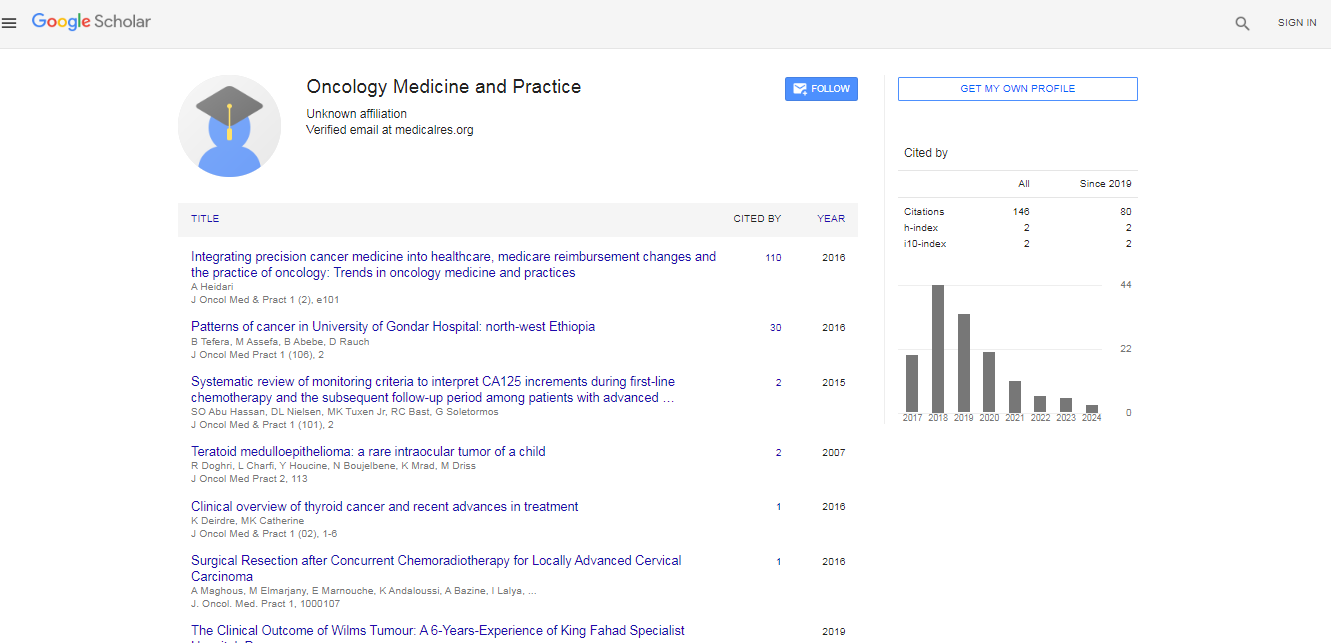
Journal of Oncology Medicine & Practice received 142 citations as per Google Scholar report