Short Communication - (2025) Volume 10, Issue 2
Received: 01-Apr-2025, Manuscript No. jcct-26-183208;
Editor assigned: 03-Apr-2025, Pre QC No. P-183208;
Reviewed: 17-Apr-2025, QC No. Q-183208;
Revised: 22-Apr-2025, Manuscript No. R-183208;
Published:
29-Apr-2025
, DOI: 10.37421/2577-0535.2025.9.306
Citation: Alvarez, Carlos M.. ”Overcoming Barriers: Enhancing Cancer Trial Participation and Retention.” J Cancer Clin Trials 10 (2025):306.
Copyright: © 2025 Alvarez M. Carlos This is an open-access article distributed under the terms of the Creative Commons Attribution License, which permits unrestricted use, distribution and reproduction in any medium, provided the original author and source are credited.
Patient recruitment and retention represent significant hurdles in the landscape of cancer clinical trials, fundamentally impacting the timely completion and overall validity of critical research endeavors. These challenges are multifaceted, encompassing patient awareness and comprehension of trial protocols, logistical barriers such as travel demands and time commitments, established physician referral patterns, and the inherent perception of risks versus potential benefits. Retention efforts are further complicated by the emergence of treatment side effects, disease progression in participants, and the continuous need for sustained engagement from both patients and dedicated trial staff. Addressing these pervasive issues necessitates the implementation of comprehensive strategies that prioritize robust patient education, proactive community outreach initiatives, streamlining of trial logistics to minimize burden, and the cultivation of strong, trusting patient-provider relationships to foster a supportive environment for trial participation [1].
This exploration delves into the critical role of effective patient-provider communication in the process of cancer trial enrollment. It underscores how clear, empathetic, and informative communication concerning trial objectives, associated risks, and potential benefits can serve to demystify the complex enrollment process for patients and their families, thereby fostering increased trust and a greater willingness to participate. Conversely, instances of poor communication or a fundamental lack of understanding can act as significant deterrents, impeding broader patient involvement. The research emphatically emphasizes the imperative for healthcare professionals to be thoroughly informed and to actively engage patients in genuine shared decision-making processes, thereby empowering them in their treatment choices [2].
A deep understanding of the barriers from the patient's unique perspective is absolutely crucial for developing effective recruitment strategies. This paper meticulously examines the practical and emotional challenges that cancer patients often face when considering participation in clinical trials. Key factors identified as major obstacles include the substantial burden of travel required, the significant time away from work and family responsibilities, understandable fears surrounding unknown side effects, and a general lack of widespread awareness regarding the availability of relevant trials. The research compellingly suggests that improvements in accessibility, the provision of financial support for travel and accommodation, and an increase in community-based trial options hold significant potential for enhancing overall recruitment rates [3].
Furthermore, the influence of institutional and systemic factors on patient recruitment in oncology trials warrants careful examination. This article highlights physician bias, insufficient clinician training in the intricacies of trial enrollment, the presence of limited research infrastructure in certain healthcare centers, and the inherent complexity of trial protocols themselves as significant impediments to broader participation. The paper strongly advocates for enhanced integration of clinical trials into the standard framework of routine cancer care, improved and ongoing training for healthcare teams regarding trial participation, and the simplification of protocol designs to facilitate more widespread and equitable patient involvement [4].
Retention in cancer trials is a complex and often delicate issue, frequently linked to the efficacy of the treatment being investigated and the overall well-being of the patient throughout the study period. This particular research meticulously investigates the intricate relationship between the occurrence of treatment side effects, the patient's reported outcomes, and the likelihood of trial discontinuation. It posits that proactive management of adverse events, the provision of personalized support tailored to individual needs, and consistent, clear communication regarding trial progress can significantly improve patient adherence and substantially reduce dropout rates. A thorough understanding of patient expectations and the provision of adequate, ongoing support throughout the entire trial duration are identified as critical success factors [5].
This article specifically concentrates on the development and implementation of strategies aimed at enhancing patient engagement and retention in long-term cancer trials, which present unique challenges due to their extended duration. It strongly emphasizes the paramount importance of building strong rapport with participants and maintaining consistent, open communication channels throughout the entirety of the trial. The study thoroughly explores the effective utilization of digital tools, the invaluable role of patient navigators, and the establishment of community-based support systems designed to keep patients informed, motivated, and closely connected to the trial team, ultimately serving to reduce attrition rates and ensure study integrity [6].
The critical issue of diversity and inclusivity within the patient populations enrolled in cancer trials continues to represent a significant and persistent challenge. This paper rigorously examines how various demographic and socioeconomic factors, including socioeconomic status, race, ethnicity, and geographic location, can profoundly impact both recruitment and retention outcomes. It powerfully highlights the urgent need for the development and implementation of targeted outreach programs and culturally sensitive approaches to ensure that the results of cancer clinical trials are truly generalizable to all populations affected by this disease. Addressing the pervasive health disparities in trial participation is not merely desirable, but absolutely paramount for achieving equitable and effective cancer research [7].
This research meticulously investigates the profound impact that targeted patient education and comprehensive awareness campaigns can have on enhancing recruitment into cancer clinical trials. It convincingly suggests that providing accessible and easily understandable information about clinical trials, their fundamental purpose, and the potential benefits they offer can significantly empower patients to consider them as a viable and valuable treatment option. The study strongly advocates for the adoption of multi-channel communication strategies, encompassing robust online resources, active engagement with patient advocacy groups, and direct, personalized outreach by dedicated research staff to maximize reach and impact [8].
This paper thoroughly examines the complex ethical considerations that are inherent in the processes of patient recruitment and retention for cancer trials. It engages in a detailed discussion of key principles such as informed consent, the paramount importance of ensuring patient autonomy, and the critical need for protecting vulnerable populations from potential exploitation. The study unequivocally emphasizes the vital significance of complete transparency in disclosing all potential risks and benefits associated with trial participation, and crucially, ensuring that patients are never coerced or unduly influenced into participation. Maintaining the highest ethical standards is therefore identified as an indispensable requirement for both successful recruitment and sustained, committed patient involvement throughout the trial [9].
The utilization of cutting-edge technology and innovative approaches to significantly improve both patient recruitment and retention in cancer clinical trials is thoroughly explored in this article. It discusses the immense potential of advanced digital platforms, the application of artificial intelligence for more precise patient matching, and the implementation of remote monitoring techniques to effectively alleviate logistical burdens for both patients and trial coordinators. The research compellingly highlights how these technological advancements can streamline complex processes, significantly enhance communication efficacy, and ultimately have the potential to substantially increase participation rates and improve adherence in cancer trials, leading to more robust and reliable research outcomes [10].
Patient recruitment and retention in cancer clinical trials are recognized as substantial obstacles that can impede the timely and valid completion of vital research. The complexities arise from various factors, including patients' awareness and understanding of trial processes, logistical challenges such as travel and time commitments, the influence of physician referral patterns, and the perceived balance of risks and benefits. Ensuring patient retention is further complicated by the presence of treatment side effects, disease progression, and the continuous need for active engagement from both participants and the research team. To effectively address these multifaceted issues, a comprehensive approach is required, focusing on enhancing patient education, implementing widespread community outreach, optimizing trial logistics for reduced burden, and fostering strong, supportive patient-provider relationships [1].
This study critically examines the pivotal role of effective patient-provider communication in the context of cancer trial enrollment. It emphasizes that clear, empathetic, and comprehensive communication regarding the trial's objectives, potential risks, and anticipated benefits can significantly demystify the process for patients and their families, leading to increased trust and a higher likelihood of participation. Conversely, inadequate communication or a lack of patient comprehension can serve as a substantial deterrent. The findings strongly advocate for healthcare professionals to be well-informed and actively involved in shared decision-making, empowering patients in their choices [2].
Understanding the barriers from the patient's perspective is paramount for successful trial recruitment. This paper delves into the practical and emotional difficulties encountered by cancer patients when considering trial participation. Identified obstacles include the significant burden of travel, the necessity of time away from work and family, apprehension regarding unknown side effects, and a general lack of awareness about available trials. The research suggests that enhancing accessibility, providing financial assistance for travel and accommodation, and increasing the availability of community-based trial options can effectively boost recruitment efforts [3].
Institutional and systemic factors significantly influence patient recruitment in oncology trials. This article highlights impediments such as physician bias, inadequate clinician training in trial enrollment procedures, limited research infrastructure in certain centers, and the complexity of trial protocols. The paper proposes that integrating clinical trials more effectively into routine cancer care, enhancing training for healthcare teams, and simplifying protocol designs are essential steps to broaden participation [4].
Patient retention in cancer trials is a complex issue closely linked to treatment effectiveness and patient well-being. This research investigates the connection between treatment side effects, patient-reported outcomes, and trial discontinuation. It indicates that proactive management of adverse events, personalized patient support, and transparent communication about trial progress can substantially improve adherence and reduce dropout rates. Understanding patient expectations and providing adequate support throughout the trial are crucial elements for successful retention [5].
This article focuses on strategies to improve patient engagement and retention in lengthy cancer trials. It highlights the importance of establishing rapport and maintaining consistent communication over the trial's duration. The study explores the use of digital tools, patient navigators, and community support systems to keep participants informed and connected to the research team, thereby minimizing attrition [6].
The challenge of ensuring diversity and inclusivity in cancer trial patient populations remains significant. This paper analyzes how factors such as socioeconomic status, race, ethnicity, and geographic location can affect recruitment and retention. It stresses the need for targeted outreach and culturally sensitive approaches to ensure that trial results are applicable to all cancer patient demographics. Addressing health disparities in trial participation is essential for equitable research outcomes [7].
This research explores the impact of patient education and awareness initiatives on cancer clinical trial recruitment. It suggests that providing clear and accessible information about trials, their purpose, and benefits empowers patients to consider them as a treatment option. The study recommends multi-channel communication strategies, including online resources, patient advocacy groups, and direct engagement by research staff, to enhance awareness and participation [8].
This paper addresses the ethical considerations intrinsic to patient recruitment and retention in cancer trials, including informed consent, patient autonomy, and the protection of vulnerable individuals. It underscores the necessity of transparency regarding risks and benefits and ensuring that participation is voluntary and not coerced. Upholding ethical standards is vital for both recruitment success and long-term patient commitment [9].
The utilization of technology and innovative methods to enhance recruitment and retention in cancer trials is examined in this article. It discusses the potential of digital platforms, AI for patient matching, and remote monitoring to reduce logistical burdens. The research indicates that these technologies can streamline processes, improve communication, and potentially increase participation and adherence in cancer trials, leading to more effective research [10].
Patient recruitment and retention in cancer clinical trials face significant hurdles, including awareness, logistics, physician referral, and perceived risks versus benefits. Effective communication between patients and providers is crucial, as is understanding patient-reported barriers like travel and time. Institutional factors such as physician bias and complex protocols also impede participation. Retention is influenced by treatment side effects and patient well-being, necessitating proactive management and support. Strategies to enhance engagement, such as digital tools and community support, are important for long-term trials. Ensuring diversity and inclusivity across various demographic groups is vital for generalizable results. Patient education and awareness campaigns empower individuals to consider trials, while ethical considerations like informed consent and patient autonomy must be prioritized. Technological advancements offer promising solutions for streamlining processes and improving participation.
None
None
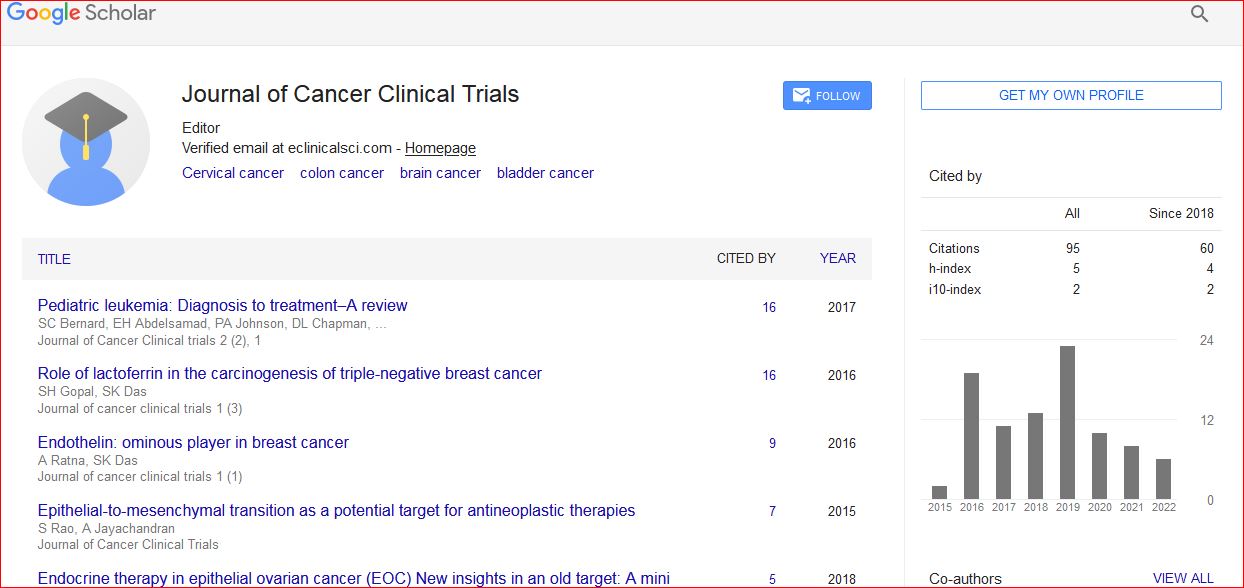
Journal of Cancer Clinical Trials received 95 citations as per Google Scholar report