Perspective - (2025) Volume 10, Issue 3
Received: 01-May-2025, Manuscript No. PE-26-179282;
Editor assigned: 05-May-2025, Pre QC No. P-179282;
Reviewed: 19-May-2025, QC No. Q-179282;
Revised: 22-May-2025, Manuscript No. R-179282;
Published:
29-May-2025
, DOI: 10.37421/2472-1042.2025.10.287
Citation: McAllister, Daniel. ”Orphan Drugs: Economic Evaluation, Access, and Ethics.” Pharmacoeconomics 10 (2025):287.
Copyright: © 2025 McAllister D. This is an open-access article distributed under the terms of the Creative Commons Attribution License, which permits unrestricted use, distribution and reproduction in any medium, provided the original author and source are credited.
The economic evaluation of orphan drugs for rare diseases presents a complex challenge, necessitating a delicate balance between the substantial development costs and the inherently limited patient populations, all while addressing the critical and urgent need for effective therapeutic interventions. Methodologies such as cost-effectiveness analysis (CEA) and budget impact analysis (BIA) are central to understanding these economic dynamics, alongside crucial ethical considerations surrounding drug pricing, which often come under intense scrutiny in this specialized field. The evolving landscape increasingly explores value-based pricing models and innovative reimbursement strategies, aiming to facilitate patient access to these vital treatments while simultaneously acknowledging the broader societal value they bring to individuals and communities affected by rare conditions. Furthermore, the generation of evidence beyond traditional clinical trials, particularly through real-world evidence (RWE), plays an indispensable role in post-market evaluations and the sustained accessibility of orphan drugs, ensuring ongoing assessment and adaptation of their value and impact. [1] Conducting rigorous cost-effectiveness analyses (CEAs) for orphan drugs introduces unique methodological hurdles that warrant careful consideration. These challenges stem from the inherent difficulties in accurately estimating disease progression, anticipating treatment outcomes, and quantifying quality-of-life impacts, primarily due to the small sample sizes characteristic of rare diseases and the scarcity of long-term data. To navigate these complexities, researchers discuss the strategic use of surrogate endpoints, which can serve as proxies for clinical outcomes, and underscore the vital importance of patient advocacy groups in contributing invaluable data and nuanced perspectives that might otherwise be overlooked. Consequently, there is a clear and emphasized need for health technology assessment (HTA) bodies to adopt flexible and adaptive decision-making frameworks that can accommodate the unique characteristics of orphan drug evaluations. [2] The financial ramifications associated with ensuring access to orphan drugs are profound and carry significant weight, particularly for healthcare systems tasked with managing their budgets. This research specifically examines the considerable budget impact that the introduction of novel orphan drugs can exert, simultaneously exploring a variety of risk-sharing agreements and managed entry agreements as potential, viable solutions for effectively managing the inherent financial uncertainties. In light of these complexities, the authors strongly advocate for the cultivation of collaborative approaches, fostering partnerships between pharmaceutical manufacturers, healthcare payers, and importantly, the patients themselves, to collectively ensure both sustainable access and the equitable distribution of these often life-saving therapies. [3] A critical appraisal of the concept of value-based pricing for orphan drugs reveals its multifaceted nature and inherent complexities. This assessment scrutinizes how the 'value' of a treatment for a rare disease is not solely defined by clinical benefits but encompasses a broader spectrum, including patient-reported outcomes, the reduction of caregiver burden, and significant societal impacts that extend beyond the individual patient. To address this, the authors propose robust frameworks designed to assess value that deliberately transcend traditional cost-effectiveness metrics, instead focusing on the profound unmet needs of rare disease patients and the intrinsic, immeasurable value of extending or significantly improving life for individuals afflicted with these conditions. [4] The pivotal role of real-world evidence (RWE) in the economic evaluation of orphan drugs is increasingly being recognized and embraced across the healthcare landscape. This study thoughtfully explores the multifaceted ways in which RWE can effectively supplement and enrich data derived from traditional clinical trials. By providing invaluable insights into long-term effectiveness, safety profiles, and resource utilization within the context of routine clinical practice, RWE offers a more pragmatic and comprehensive understanding of a drug's impact. Despite acknowledging the challenges inherent in collecting and analyzing RWE for rare diseases, such as data fragmentation and potential biases, the authors underscore its significant potential to critically inform reimbursement decisions and guide effective post-market surveillance strategies. [5] The ethical dimensions intrinsically linked to orphan drug pricing and patient access are a subject of considerable debate and scrutiny. This article meticulously examines the inherent tension that exists between the critical need to incentivize pharmaceutical innovation through pricing, and the equally pressing ethical imperative to ensure that life-saving treatments are both affordable and readily accessible to all individuals who require them, regardless of their economic circumstances. The authors engage with various ethical frameworks that can be employed to evaluate drug access and strongly advocate for enhanced transparency in both pricing strategies and reimbursement processes. [6] This research undertakes an exploration of innovative reimbursement models specifically designed for orphan drugs, moving deliberately beyond the limitations of traditional fee-for-service payment structures. It critically examines emerging models such as performance-based reimbursement, subscription-based approaches, and conditional coverage contingent upon demonstrated treatment outcomes. A central theme highlighted by the authors is the paramount importance of fostering robust collaboration among all relevant stakeholders in the meticulous design and successful implementation of these novel models, with the dual aims of ensuring equitable patient access and promoting the long-term sustainability of healthcare systems. [7] Investigating the impact of orphan drug designation on critical areas such as research and development (R&D) investment and subsequent market access is a key focus of this article. It undertakes a thorough analysis of how various regulatory incentives, including extended market exclusivity periods and expedited review processes, significantly influence both the development pipeline and the commercialization strategies for therapies targeting rare diseases. The authors thoughtfully discuss the potential for unintended consequences arising from these incentives and emphasize the necessity of adopting a carefully balanced approach that effectively stimulates innovation without imposing undue financial burdens on healthcare systems or patients. [8] This particular study places a significant emphasis on incorporating the patient perspective into the comprehensive economic evaluation of orphan drugs. It forcefully argues for the critical importance of integrating patient-reported outcomes, nuanced assessments of quality of life, and the often-overlooked impact on caregivers directly into economic modeling frameworks. The authors strongly advocate for substantially increased patient engagement within health technology assessment (HTA) processes and broader decision-making forums, ensuring that the true value of orphan drugs is accurately captured, comprehensively understood, and appropriately reflected in policy and practice. [9] Addressing the crucial issue of sustainability within the orphan drug market is the central focus of this paper, examining the intricate interplay between persistently high drug prices, the inherently limited patient populations, and the potential for market failure. The authors meticulously discuss various strategic approaches designed to ensure the long-term availability and affordability of orphan drugs, encompassing avenues such as enhanced international collaboration, more effective price negotiations with manufacturers, and the provision of targeted incentives aimed at encouraging continued investment in vital research and development efforts. [10]
The economic evaluation of orphan drugs for rare diseases is a multifaceted undertaking that requires sophisticated analytical tools and a nuanced understanding of unique market dynamics. Key methodologies employed in this field include cost-effectiveness analysis (CEA), which assesses the value of a health intervention relative to its cost, and budget impact analysis (BIA), which estimates the financial consequences for a healthcare system. These analyses are essential for informing decisions about drug pricing and reimbursement. Ethical considerations are paramount, particularly concerning the affordability and accessibility of treatments for vulnerable patient populations. To address these challenges, innovative approaches such as value-based pricing models and flexible reimbursement strategies are being developed and implemented to ensure that patients can access needed therapies while acknowledging the societal value of these treatments. The role of real-world evidence (RWE) is also increasingly critical, providing essential data for post-market evaluations and supporting sustained market access. [1] Specific challenges arise when conducting cost-effectiveness analyses (CEAs) for orphan drugs due to inherent limitations in data availability and sample sizes. Estimating disease progression, treatment effectiveness, and quality-of-life improvements can be difficult given the rarity of these conditions. The use of surrogate endpoints and the valuable input from patient advocacy groups are discussed as important strategies to overcome these methodological obstacles. Furthermore, health technology assessment (HTA) bodies are encouraged to adopt more adaptive and flexible frameworks to accommodate the unique characteristics of orphan drug evaluations, ensuring that evidence generation and appraisal processes are fit for purpose. [2] The significant financial implications of orphan drug access for healthcare systems are a major concern. This research delves into the budget impact of introducing new orphan drugs and explores the potential of risk-sharing agreements and managed entry agreements as mechanisms to manage financial uncertainties. Collaborative efforts among manufacturers, payers, and patients are highlighted as crucial for achieving sustainable access and equitable distribution of these high-cost, life-saving medications, fostering a shared responsibility for their availability. [3] Value-based pricing for orphan drugs is critically appraised, acknowledging that value extends beyond clinical efficacy to encompass patient-reported outcomes, caregiver burden reduction, and broader societal impact. The authors propose frameworks that move beyond traditional cost-effectiveness metrics to capture a more comprehensive understanding of a treatment's value, particularly for rare diseases with significant unmet needs. This approach aims to ensure that pricing reflects the full spectrum of benefits conferred by these therapies. [4] Real-world evidence (RWE) plays a vital supplementary role in the economic evaluation of orphan drugs, offering insights into long-term effectiveness, safety, and resource utilization in routine clinical practice. While acknowledging challenges in data collection and analysis for rare diseases, RWE's potential to inform reimbursement decisions and post-market surveillance is underscored. This evidence can provide a more pragmatic and complete picture of a drug's value and impact in real-world settings. [5] The ethical considerations surrounding orphan drug pricing and access are complex, balancing the need to incentivize innovation with the imperative of equitable access. This article examines the tension between these two goals and discusses various ethical frameworks for evaluating drug access. Greater transparency in pricing and reimbursement processes is advocated to ensure fair and just distribution of these essential treatments. [6] Innovative reimbursement models for orphan drugs are explored as alternatives to traditional fee-for-service approaches. These include performance-based reimbursement, subscription models, and conditional coverage based on outcomes. Collaboration among manufacturers, payers, and patients is deemed essential for the successful design and implementation of these novel models, ensuring both patient access and system sustainability in the face of high drug costs. [7] The impact of orphan drug designation on R&D investment and market access is analyzed, focusing on how regulatory incentives like market exclusivity and expedited review influence development and commercialization. The authors discuss the potential for unintended consequences and stress the importance of a balanced approach that stimulates innovation without creating undue financial burdens on healthcare systems or patients. [8] Incorporating the patient perspective into the economic evaluation of orphan drugs is crucial for accurately capturing their value. This study highlights the importance of including patient-reported outcomes, quality of life, and caregiver impact in economic models. Greater patient engagement in health technology assessment (HTA) processes is advocated to ensure that the multifaceted value of orphan drugs is recognized and reflected in decision-making. [9] The sustainability of orphan drug markets is examined, considering the interplay of high prices, small patient populations, and market failure risks. Strategies for ensuring long-term availability and affordability are discussed, including international collaboration, price negotiations, and incentives for continued research and development, aiming for a robust and enduring market that serves patient needs. [10]
The economic evaluation of orphan drugs for rare diseases involves complex challenges related to high development costs, small patient populations, and the urgent need for effective treatments. Methodologies like cost-effectiveness analysis (CEA) and budget impact analysis (BIA) are crucial, alongside ethical considerations of drug pricing. Value-based pricing models and innovative reimbursement strategies are emerging to improve patient access and acknowledge societal value. Real-world evidence (RWE) is increasingly important for post-market evaluations. Methodological challenges in CEA for orphan drugs include small sample sizes and limited long-term data, with surrogate endpoints and patient advocacy groups offering valuable support. Budget impact analyses explore risk-sharing and managed entry agreements to manage financial uncertainties, emphasizing collaborative approaches. Value-based pricing aims to encompass broader benefits beyond clinical outcomes, including patient-reported outcomes and societal impact. RWE supplements clinical trials, offering insights into long-term effectiveness and safety. Ethical debates focus on balancing innovation incentives with equitable access, advocating for pricing and reimbursement transparency. Innovative reimbursement models like performance-based payments and subscription models are being explored, requiring stakeholder collaboration. Orphan drug designation's impact on R&D and market access is analyzed, with a call for balanced regulatory incentives. Patient perspectives, including quality of life and caregiver impact, are vital for economic evaluations, promoting greater patient engagement. Ensuring market sustainability involves strategies like international collaboration and price negotiations to guarantee long-term availability and affordability.
None
None
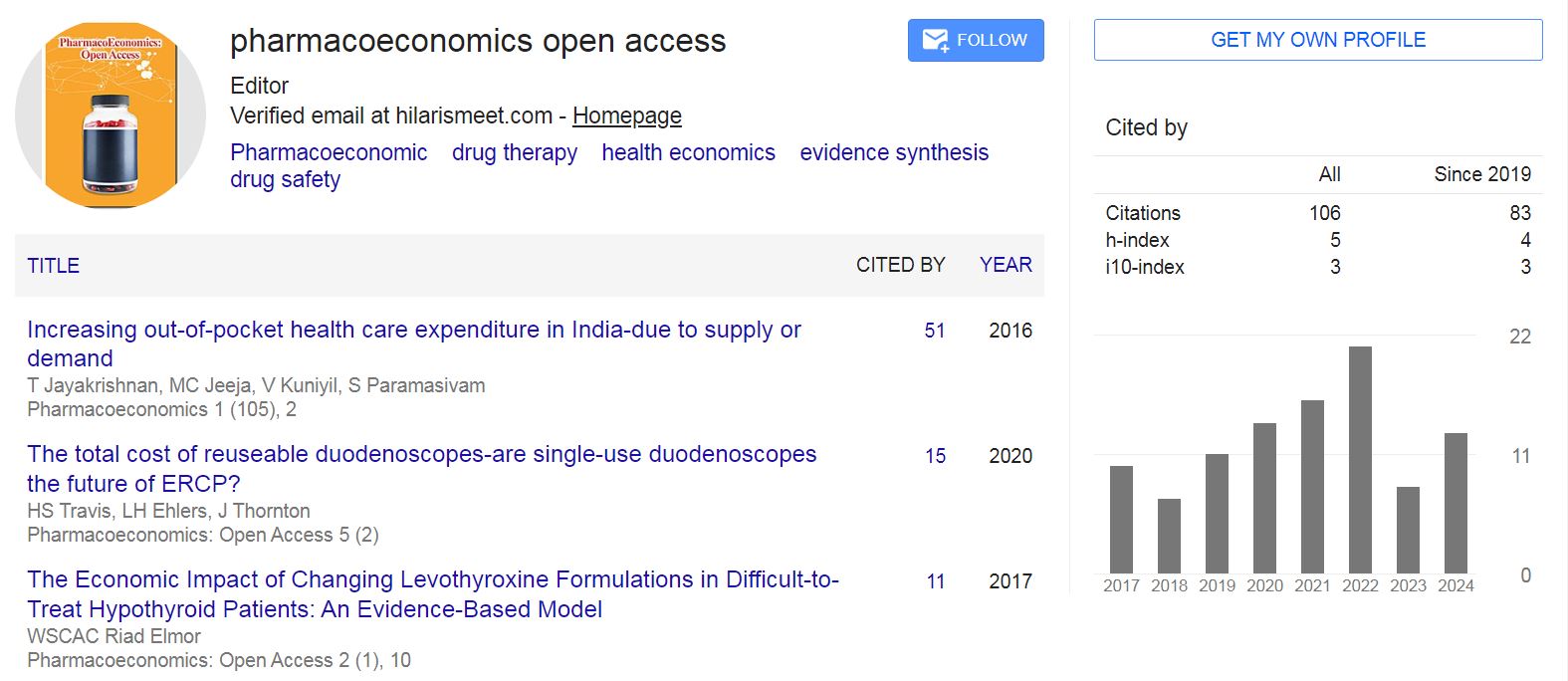
Pharmacoeconomics: Open Access received 106 citations as per Google Scholar report