Commentary - (2025) Volume 10, Issue 3
Received: 01-May-2025, Manuscript No. PE-26-179280;
Editor assigned: 05-May-2025, Pre QC No. P-179280;
Reviewed: 19-May-2025, QC No. Q-179280;
Revised: 22-May-2025, Manuscript No. R-179280;
Published:
29-May-2025
, DOI: 10.37421/2472-1042.2025.10.286
Citation: Lewandowska, Katarzyna. ”Orphan Drug Economics: Challenges, Value, And Access.” Pharmacoeconomics 10 (2025):286.
Copyright: © 2025 Lewandowska K. This is an open-access article distributed under the terms of the Creative Commons Attribution License, which permits unrestricted use, distribution and reproduction in any medium, provided the original author and source are credited.
The economic evaluation of orphan drugs for rare diseases presents a complex landscape, marked by unique challenges that often necessitate the development of innovative approaches. These challenges stem primarily from the inherent characteristics of rare diseases, such as limited patient populations and the substantial investment required for drug development. Consequently, such evaluations frequently grapple with critical issues related to cost-effectiveness, the overall budget impact on healthcare systems, and ensuring equitable patient access to these vital therapies, all of which profoundly influence reimbursement decisions and the subsequent clinical adoption of these drugs. Beyond the direct medical expenditures, the considerable societal burden associated with rare diseases, encompassing a range of indirect costs, also warrants thorough consideration within comprehensive economic assessments. [1] Central to determining the true value of orphan drugs are cost-effectiveness thresholds. In the context of rare diseases, it is often argued that these thresholds may require adaptation. Such adjustments would aim to more accurately reflect the severity of the condition and the profound potential for significant improvements in a patient's quality of life, even if the absolute health gains achieved are relatively smaller when compared to those seen in more common diseases. This adaptive approach acknowledges the distinct nature of rare disease treatment. [2] Budget impact analyses are an indispensable tool for healthcare systems striving to allocate their limited financial resources judiciously. For orphan drugs, these analyses must meticulously consider projected uptake rates, the estimated total patient population that could benefit, and importantly, any potential long-term cost savings or offsets that might arise from avoiding more expensive interventions or prolonged institutionalization. A thorough budget impact assessment is crucial for fiscal responsibility. [3] Patient-reported outcomes (PROs) and quality-adjusted life-years (QALYs) are increasingly recognized as vital metrics for capturing the full spectrum of value that orphan drugs deliver. For rare diseases, where incremental QALY gains might appear modest yet represent life-altering improvements for affected individuals, robust data collection on PROs becomes paramount. This detailed data is essential for justifying the often high prices of these drugs and securing necessary patient access. [4] The principle of 'value-based pricing' is particularly germane and increasingly relevant for orphan drugs. This innovative pricing model seeks to directly link the price of a drug to the demonstrable clinical benefits and the overall societal value it confers upon patients and the healthcare system. It offers a promising potential solution to the persistent pricing dilemma encountered in the rare disease arena, where traditional cost-plus models may prove insufficient. [5] Real-world evidence (RWE) plays an increasingly critical role in the post-market evaluation of orphan drugs. RWE can provide invaluable data concerning long-term effectiveness, safety profiles, and actual economic outcomes observed across diverse patient populations in routine clinical practice. This empirical data is instrumental in refining earlier economic models and informing future reimbursement decisions, ensuring that policy is based on actual performance. [6] The ethical considerations surrounding the pricing and accessibility of orphan drugs are undeniably significant and warrant deep reflection. A delicate balance must be struck between incentivizing innovation and recouping the substantial development costs incurred by pharmaceutical companies, and upholding the fundamental principles of equity and fairness for patients who suffer from rare diseases. Achieving this balance requires careful deliberation and transparent decision-making processes. [7] Innovative financing mechanisms, such as annuity payments or outcome-based agreements, are actively being explored as strategic approaches to effectively manage the considerable financial risks intrinsically associated with high-cost orphan drugs. These novel models are designed to more closely align the payments made by healthcare systems with the actual, demonstrable benefits realized by patients and the broader healthcare system, fostering a more sustainable funding model. [8] The inherent scarcity of data characteristic of rare diseases poses a significant hurdle for conducting robust and reliable economic evaluations. To overcome these data limitations and provide the best possible evidence base for informed decision-making, specialized methodologies such as Bayesian meta-analysis and extrapolation techniques are frequently employed. These advanced statistical approaches are crucial for drawing meaningful conclusions from limited datasets. [9] From an economic perspective, incorporating the societal viewpoint is absolutely crucial when evaluating orphan drugs. This broad perspective must encompass the consideration of indirect costs, which can be substantial and include factors such as lost productivity due to illness, the significant burden placed on caregivers, and the profound impact on families. These costs are often particularly pronounced in the context of chronic and debilitating rare diseases, necessitating a holistic economic assessment. [10]
The economic evaluation of orphan drugs for rare diseases is characterized by distinct challenges, often requiring innovative methodologies due to limited patient cohorts and high development expenses. These evaluations commonly address cost-effectiveness, budget impact, and patient access, directly influencing reimbursement and clinical uptake. The societal burden of rare diseases, extending beyond direct medical costs, is also a critical factor in comprehensive economic assessments. [1] Cost-effectiveness thresholds are pivotal in assessing the value of orphan drugs. For rare diseases, these thresholds may necessitate adaptation to accurately reflect the severity of the condition and the potential for substantial quality-of-life improvements, even if absolute health gains are smaller compared to common diseases. Such adaptation recognizes the unique context of rare disease treatments. [2] Budget impact analyses are essential for healthcare systems managing limited resources. For orphan drugs, these analyses must carefully consider projected utilization, the total affected patient population, and potential long-term savings or offsets from avoiding more expensive alternatives or institutional care. A thorough budget impact study is vital for resource allocation. [3] Patient-reported outcomes (PROs) and quality-adjusted life-years (QALYs) are increasingly employed to capture the full value of orphan drugs. In rare diseases, where incremental QALY gains may be modest yet profoundly impactful for individuals, robust PRO data collection is paramount for justifying drug pricing and ensuring patient access. [4] The concept of value-based pricing is especially pertinent for orphan drugs. This approach links drug pricing to demonstrated clinical benefits and societal value, offering a potential resolution to pricing challenges in rare diseases where traditional cost-plus models may be inadequate. [5] Real-world evidence (RWE) plays a crucial role in the post-market assessment of orphan drugs. RWE provides data on long-term effectiveness, safety, and economic outcomes in real-world patient populations, aiding in the refinement of economic models and informing future reimbursement decisions. [6] Ethical considerations surrounding orphan drug pricing and access are substantial. Balancing the need for innovation and cost recovery with principles of equity and fairness for rare disease patients requires careful deliberation and transparent decision-making processes to ensure responsible resource allocation. [7] Innovative financing mechanisms, such as annuity payments or outcome-based agreements, are being explored to manage the financial risks associated with high-cost orphan drugs. These models aim to align payments with the actual benefits realized by patients and the healthcare system, promoting sustainable access. [8] The scarcity of data in rare diseases presents a significant challenge for robust economic evaluations. Methodologies like Bayesian meta-analysis and extrapolation techniques are utilized to surmount these data limitations, providing the best possible evidence for informed decision-making regarding orphan drug access and reimbursement. [9] The societal perspective is critical in the economic evaluation of orphan drugs. This includes accounting for indirect costs such as lost productivity, caregiver burden, and family impact, which are often substantial for chronic and debilitating rare diseases, necessitating a comprehensive economic analysis. [10]
The economic evaluation of orphan drugs for rare diseases faces significant challenges due to small patient populations and high development costs, impacting cost-effectiveness, budget impact, and patient access. Adapting cost-effectiveness thresholds and utilizing patient-reported outcomes and quality-adjusted life-years are crucial for assessing value. Budget impact analyses are essential for healthcare systems, considering projected uptake and long-term cost savings. Value-based pricing and innovative financing models like outcome-based agreements are explored to address pricing and affordability dilemmas. Real-world evidence is vital for post-market evaluation, while ethical considerations of equity and fairness guide pricing and access decisions. Addressing data scarcity through advanced methodologies and incorporating societal costs are key to robust economic assessments.
None
None
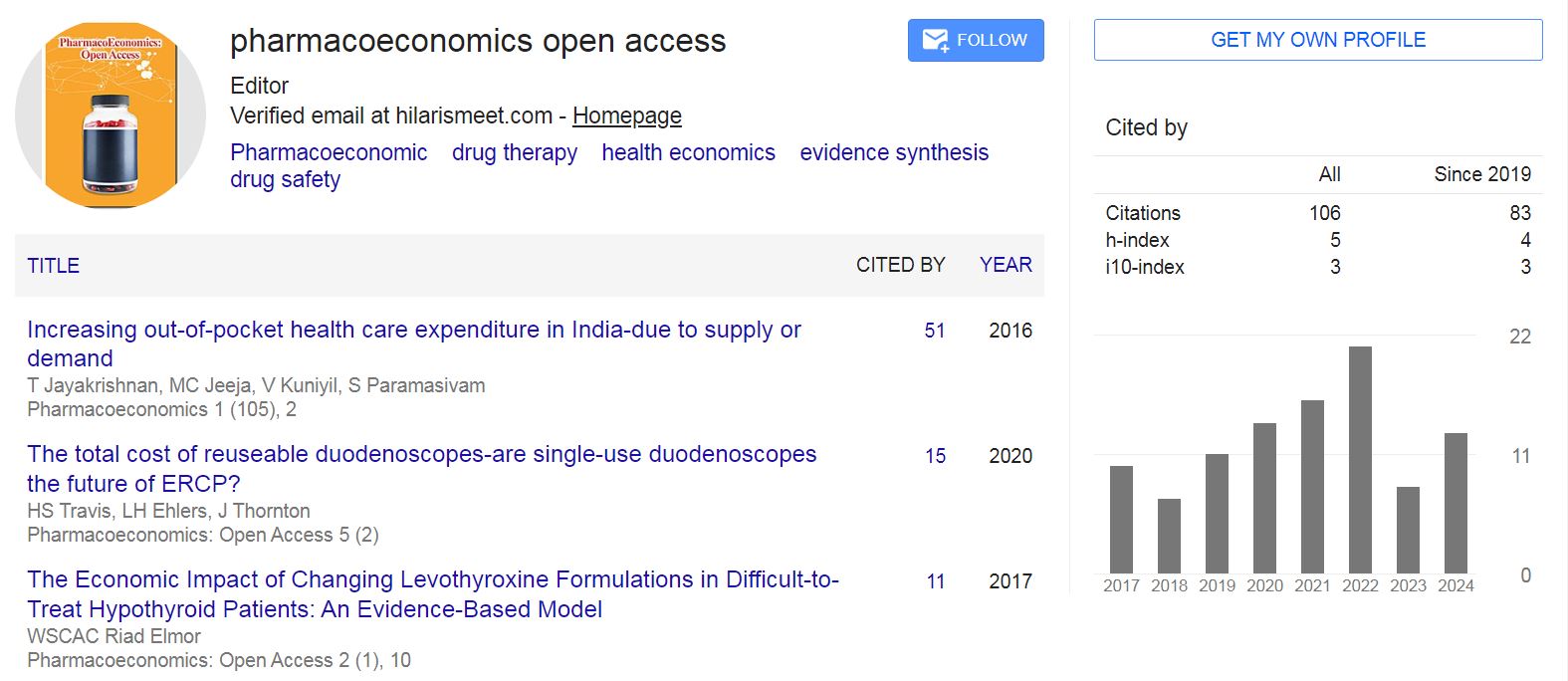
Pharmacoeconomics: Open Access received 106 citations as per Google Scholar report