Brief Report - (2025) Volume 14, Issue 6
Received: 03-Nov-2025, Manuscript No. mcce-26-190206;
Editor assigned: 05-Nov-2025, Pre QC No. P-190206;
Reviewed: 19-Nov-2025, QC No. Q-190206;
Revised: 24-Nov-2025, Manuscript No. R-190206;
Published:
29-Nov-2025
, DOI: 10.37421/2470-6965.2025.14.440
Citation: Novak, Katarina. ”Optimizing Seasonal Malaria Chemoprevention: Strategic Implementation.” Malar Contr Elimination 14 (2025):440.
Copyright: © 2025 Novak K. This is an open-access article distributed under the terms of the Creative Commons Attribution License, which permits unrestricted use, distribution and reproduction in any medium, provided the original author and source are credited.
Optimizing seasonal malaria chemoprevention (SMC) strategies requires a nuanced approach, tailoring interventions to local transmission patterns to maximize impact and combat drug resistance. This involves understanding the precise timing of peak malaria seasons, identifying high-risk populations, and ensuring equitable access to treatment, often facilitated by community health workers. Innovations in drug delivery and monitoring, alongside robust data collection for adaptive program adjustments, are crucial for maximizing the effectiveness of SMC programs. [1] Understanding the epidemiology of malaria transmission, particularly the duration and intensity of seasonal peaks, is fundamental to designing effective SMC programs. Precise mapping of high-risk areas and granular data on population movement are essential for targeted interventions and resource allocation, ensuring that SMC reaches those most in need before and during the transmission season. This epidemiological understanding forms the bedrock of successful SMC planning and implementation. [2] The role of community health workers (CHWs) in delivering seasonal malaria chemoprevention is paramount. Empowering and training CHWs to administer antimalarial treatments, conduct community outreach, and report data ensures wider geographical coverage and timely intervention, overcoming barriers to access in remote and underserved areas. Their direct engagement with communities is indispensable. [3] Drug resistance remains a significant threat to the efficacy of SMC. Continuous monitoring of drug resistance markers and patterns is essential. Strategic drug selection and rotation, informed by resistance surveillance data, are critical to preserving the effectiveness of current antimalarial regimens and delaying the emergence of resistance. Proactive measures are vital. [4] The integration of digital tools for data management and program monitoring can significantly enhance the efficiency and effectiveness of SMC. Mobile health applications for data entry by CHWs, real-time dashboards for program managers, and predictive analytics can facilitate timely decision-making and adaptive management of SMC campaigns. Technology offers powerful solutions. [5] Ensuring equitable access to SMC is a fundamental challenge that requires targeted strategies. These strategies must address geographical barriers, socioeconomic factors, and cultural beliefs that may impede uptake. Community engagement and tailored communication approaches are vital to promote understanding and acceptance of SMC interventions across diverse populations. Inclusivity is key. [6] Adaptive management of SMC programs necessitates a continuous feedback loop between program implementation, data collection, and strategic adjustments. Real-time monitoring of coverage, adherence, and potential adverse events allows for rapid course correction and optimization of campaign logistics. Responsiveness is crucial for success. [7] The evaluation of SMC impact extends beyond parasite reduction to include assessments of its effect on anemia, severe malaria outcomes, and broader child health indicators. Comprehensive impact assessments are vital for demonstrating the value of SMC and informing future investment decisions. A holistic view is necessary. [8] Understanding the perceptions and acceptability of SMC among caregivers and communities is crucial for sustained program success. Addressing concerns, providing clear information, and involving community leaders in program planning can significantly improve adherence and coverage rates. Community buy-in is essential. [9] The cost-effectiveness of SMC is a critical consideration for resource-limited settings. Analyzing the costs associated with different implementation models and comparing them against the benefits in terms of averted malaria cases and associated morbidity and mortality is essential for advocating for continued funding and strategic investment. Economic viability underpins sustainability. [10]
Seasonal malaria chemoprevention (SMC) strategies are optimized by tailoring the timing, dosage, and coverage of antimalarial drugs to local transmission patterns. This involves a deep understanding of the precise timing of peak malaria seasons, the identification of high-risk populations, and the assurance of equitable access to treatment, frequently facilitated by community health workers. Crucial for maximizing impact and combating drug resistance are innovations in drug delivery and monitoring, coupled with robust data collection for adaptive program adjustments. [1] A foundational element in designing effective SMC programs lies in understanding the epidemiology of malaria transmission, particularly the duration and intensity of seasonal peaks. Precise mapping of high-risk areas and granular data on population movement are indispensable for targeted interventions and efficient resource allocation, ensuring that SMC reaches those most vulnerable before and during the transmission season. [2] The pivotal role of community health workers (CHWs) in the delivery of seasonal malaria chemoprevention cannot be overstated. Equipping and training CHWs to administer antimalarial treatments, conduct essential community outreach, and provide accurate data reporting guarantees broader geographical coverage and ensures timely interventions, effectively overcoming access barriers in remote and underserved regions. [3] Drug resistance continues to pose a significant threat to the effectiveness of SMC. Constant surveillance of drug resistance markers and prevailing patterns is paramount. Strategic selection and rotation of antimalarial drugs, guided by resistance surveillance data, are indispensable for maintaining the efficacy of current regimens and actively delaying the emergence of resistance. [4] The incorporation of digital tools for data management and program oversight can markedly improve the efficiency and overall effectiveness of SMC initiatives. The use of mobile health applications for data entry by CHWs, coupled with real-time dashboards for program managers and the application of predictive analytics, facilitates prompt decision-making and enables adaptive management of SMC campaigns. [5] Achieving equitable access to SMC is a core challenge that demands strategic approaches. These must actively address geographical impediments, socioeconomic disparities, and cultural beliefs that might hinder program uptake. Robust community engagement and thoughtfully designed communication strategies are vital to foster understanding and acceptance of SMC interventions across diverse demographic groups. [6] Adaptive management within SMC programs hinges on a continuous feedback mechanism linking program execution, data acquisition, and strategic modifications. Real-time tracking of coverage rates, adherence levels, and any potential adverse events enables swift corrective actions and the optimization of campaign logistics for improved outcomes. [7] The assessment of SMC's impact goes beyond merely reducing parasite loads; it encompasses evaluations of its effects on anemia, severe malaria incidents, and broader child health metrics. Comprehensive impact assessments are crucial for substantiating the value of SMC and guiding future financial commitments and strategic investments. [8] Comprehending the perceptions and levels of acceptability of SMC among caregivers and communities is integral to achieving sustained program success. Effectively addressing community concerns, disseminating clear and accurate information, and involving local leaders in program planning are key strategies that can substantially enhance adherence and coverage rates. [9] The cost-effectiveness of SMC presents a vital consideration, particularly for regions with limited resources. A thorough analysis of the costs associated with various implementation models, weighed against the benefits derived from averted malaria cases and the reduction in associated morbidity and mortality, is essential for advocating for ongoing financial support and strategic resource allocation. [10]
Seasonal malaria chemoprevention (SMC) is a critical public health intervention that requires strategic implementation to maximize its impact. Optimizing SMC involves tailoring drug timing, dosage, and coverage to local malaria transmission patterns. Understanding the epidemiology of malaria, including seasonal peaks and high-risk areas, is fundamental for effective program design and resource allocation. Community health workers play a vital role in delivering SMC, ensuring wider coverage and timely interventions, especially in remote areas. Combating drug resistance through continuous monitoring and strategic drug selection is essential for maintaining program efficacy. The integration of digital tools for data management and monitoring enhances program efficiency and allows for adaptive management. Ensuring equitable access and community engagement are crucial for sustained success, addressing barriers related to geography, socioeconomics, and cultural beliefs. Comprehensive impact evaluations, extending beyond parasite reduction to broader health indicators, are necessary to demonstrate SMC's value. Ultimately, the cost-effectiveness of SMC strategies is a key factor for resource allocation and continued investment in malaria control efforts.
None
None
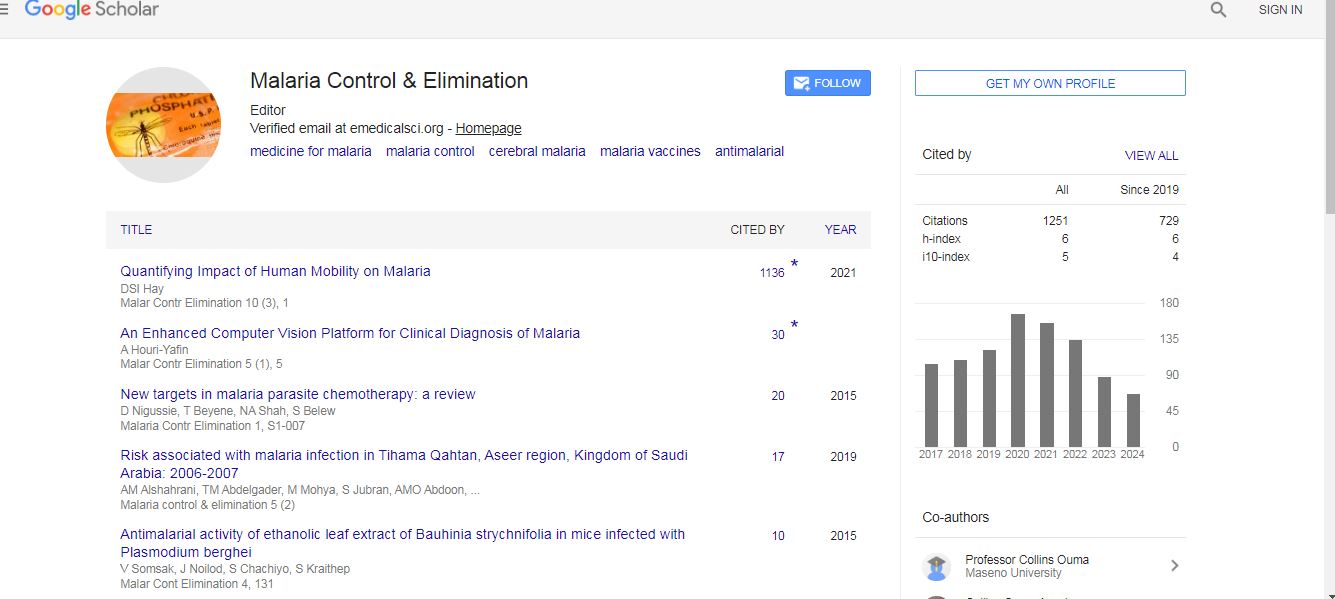
Malaria Control & Elimination received 1187 citations as per Google Scholar report