Commentary - (2025) Volume 14, Issue 3
Received: 01-Jun-2025, Manuscript No. idse-26-182805;
Editor assigned: 03-Jun-2025, Pre QC No. P-182805;
Reviewed: 17-Jun-2025, QC No. Q-182805;
Revised: 23-Jun-2025, Manuscript No. R-182805;
Published:
30-Jun-2025
, DOI: 10.37421/2168-9768.2025.14.489
Citation: Petrova, Elena. ”Optimizing Agricultural Drainage for
Sustainable Yields.” Irrigat Drainage Sys Eng 14 (2025):489.
Copyright: © 2025 Petrova E. This is an open-access article distributed under the terms of the Creative Commons Attribution License, which permits unrestricted use,
distribution and reproduction in any medium, provided the original author and source are credited.
The effective design and management of agricultural drainage systems are fundamental to enhancing land productivity and minimizing adverse environmental consequences. Understanding the interplay of hydrological principles, soil characteristics, and climatic factors is crucial for selecting appropriate drainage techniques, including open ditches, tile drains, and controlled drainage systems. These systems are vital for efficient water removal, prevention of waterlogging, and conservation of soil resources, with ongoing management focusing on maintaining functionality and adapting to environmental shifts [1].
Controlled drainage plays a significant role in improving water quality by reducing nutrient and sediment loads from agricultural runoff. By strategically managing water levels in subsurface drainage, these systems can effectively sequester nutrients, thereby mitigating the risk of eutrophication in downstream water bodies. The successful implementation of controlled drainage relies heavily on site-specific design and adaptive management practices to maximize its environmental benefits [2].
Advancements in technology are increasingly being applied to drainage system management, particularly in the use of machine learning algorithms. These algorithms are proving effective in predicting subsurface drainage performance under diverse climatic and soil conditions. Such predictive capabilities allow for optimized system design and management, enabling more accurate forecasts of water table depth and drainage flow rates for proactive intervention [3].
Drainage systems in sensitive ecosystems, such as peatlands, present unique management challenges. Long-term studies have illuminated the complexities of balancing agricultural drainage needs with the imperative to conserve peatland hydrology and their vital carbon sequestration functions. This necessitates adaptive management strategies tailored to the specific characteristics of these environments [4].
For heavy clay soils, which are prone to waterlogging, various surface drainage techniques offer potential solutions. Comparative analyses of methods like open ditches, mole drains, and surface grading highlight their differing efficacies in water removal, soil aeration, and crop yield. These evaluations provide practical insights for selecting and implementing suitable surface drainage strategies for challenging soil types [5].
A non-invasive approach to assessing the structural integrity and performance of subsurface drainage systems is emerging through hydro-geophysical characterization. Techniques such as electrical resistivity tomography (ERT) and ground-penetrating radar (GPR) enable the evaluation of drainage system conditions without excavation, identifying blockages and optimizing maintenance schedules with greater efficiency than traditional methods [6].
The escalating impacts of climate change are profoundly influencing the design and management of drainage systems. Alterations in precipitation patterns, marked by increased intensity and frequency of extreme weather events, demand adaptive strategies for drainage infrastructure. This underscores the necessity for resilient designs and flexible management approaches to navigate the uncertainties introduced by a changing climate [7].
The integration of sustainable practices into drainage engineering is gaining traction, particularly through the use of bio-based materials. Research into these materials for the construction and maintenance of drainage systems indicates their potential to enhance water quality, reduce greenhouse gas emissions, and improve biodiversity within drained landscapes, advocating for eco-friendly solutions [8].
The selection of appropriate subsurface drainage pipe materials is critical for the long-term effectiveness of drainage systems. Hydraulic performance, clogging potential, and durability are key factors evaluated in research that compares different materials, providing valuable data for engineers and designers in subsurface drainage projects [9].
Modern spatial technologies are revolutionizing the mapping and monitoring of drainage networks. The integration of remote sensing and GIS provides a more accurate means of cataloging drainage systems, assessing their condition, and supporting effective management planning, showcasing the transformative potential of these tools in drainage engineering [10].
The optimization of agricultural land productivity and the mitigation of environmental impacts are intrinsically linked to the effective design and management of both surface and subsurface drainage systems. This endeavor necessitates a deep comprehension of hydrological principles, soil properties, and prevailing climatic conditions to judiciously select appropriate drainage techniques, such as open ditches, tile drains, and controlled drainage. Meticulous system design ensures efficient water removal, thereby preventing waterlogging and fostering the conservation of soil resources, while continuous management strategies are oriented towards preserving system functionality, adapting to evolving environmental circumstances, and minimizing any negative ecological ramifications [1].
This scholarly work scrutinizes the multifaceted role of controlled drainage in achieving significant improvements in water quality, primarily through the reduction of nutrient and sediment loads originating from agricultural lands. It underscores how the judicious manipulation of water levels within subsurface drainage systems can lead to the effective sequestration of nutrients, consequently diminishing the risks of eutrophication in adjacent water bodies. The research firmly emphasizes the critical importance of site-specific design considerations and adaptive management protocols for maximizing the ecological advantages conferred by controlled drainage [2].
The application of advanced machine learning algorithms for the precise prediction of subsurface drainage performance under a spectrum of climatic and soil conditions is thoroughly examined. This research compellingly demonstrates the latent potential of these sophisticated tools to refine the design and management of drainage systems by furnishing more accurate forecasts concerning water table depth and drainage flow rates. Such predictive capabilities empower proactive interventions, thereby preventing potential crop damage and substantially reducing environmental impacts [3].
The long-term performance characteristics and the associated environmental footprint of drainage systems implemented within peatlands are rigorously investigated. This study brings to light the considerable challenges inherent in managing water tables within these ecologically sensitive ecosystems, aiming to strike a delicate balance between the drainage requirements for agriculture and the imperative conservation of peatland hydrology and their inherent carbon sequestration potential. The research strongly advocates for the adoption of adaptive management strategies that meticulously consider the distinctive attributes of peatland environments [4].
Investigating the efficacy of various surface drainage techniques for the effective management of waterlogging in heavy clay soils constitutes the focus of this paper. It presents a comparative analysis of the performance of open ditches, mole drains, and surface grading in terms of their water removal rates, impact on soil aeration, and subsequent crop yield responses. The findings derived from this research offer practical and actionable guidance for the selection and implementation of appropriate surface drainage solutions tailored for challenging soil types [5].
This investigative effort delves into the hydro-geophysical characterization of subsurface drainage systems with the objective of ass essing their structural integrity and overall performance. It explores the utility of advanced techniques like electrical resistivity tomography (ERT) and ground-penetrating radar (GPR) for the non-invasive evaluation of drainage system conditions. This approach facilitates the identification of potential blockages and supports the optimization of maintenance schedules, offering significant advantages over conventional diagnostic methods for drainage system issues [6].
The research undertaken herein examines the profound impact of climate change on the intricate design and management paradigms of drainage systems. This study highlights how significant shifts in precipitation patterns, characterized by an increase in both the intensity and frequency of extreme weather events, fundamentally necessitate the adoption of adaptive strategies for drainage infrastructure. It further articulates the pressing need for more resilient designs and flexible management approaches capable of effectively coping with the inherent uncertainties presented by a dynamically changing climate [7].
This work critically evaluates the substantial environmental benefits that can be derived from the judicious utilization of bio-based materials in the construction and ongoing maintenance of drainage systems. It thoroughly explores how the incorporation of sustainable materials can significantly contribute to improvements in water quality, a reduction in greenhouse gas emissions, and an enhancement of biodiversity within landscapes subjected to drainage. The study strongly champions the integration of eco-friendly practices throughout the domain of drainage engineering [8].
A comprehensive analysis of the hydraulic performance exhibited by different subsurface drainage pipe materials, operating under a variety of soil conditions, is presented. This evaluation meticulously assesses critical factors such as flow capacity, propensity for clogging, and overall durability, with the ultimate aim of informing the selection of optimal materials for ensuring the long-term effectiveness of drainage systems. The research furnishes invaluable data for professionals engaged in drainage engineering and design projects [9].
This study investigates the integration of sophisticated remote sensing and Geographic Information System (GIS) technologies for the precise mapping and diligent monitoring of both surface and subsurface drainage networks. It effectively demonstrates how these powerful tools can substantially enhance the accuracy of drainage system inventories, facilitate the thorough assessment of their current condition, and provide robust support for effective management planning. The research unequivocally highlights the transformative potential that spatial technologies hold for the advancement of drainage engineering [10].
Effective agricultural drainage is essential for maximizing crop yields and protecting the environment. This involves understanding hydrological and soil conditions to choose appropriate techniques like open ditches and tile drains. Advanced methods, including machine learning and hydro-geophysical assessments, are improving drainage system design and maintenance. Controlled drainage is highlighted for its water quality benefits, particularly in nutrient reduction. Managing drainage in sensitive ecosystems like peatlands requires adaptive strategies. Climate change necessitates resilient drainage designs. The use of sustainable bio-based materials is also being explored. Research compares different pipe materials for performance and durability, while remote sensing and GIS are revolutionizing drainage network management. Ultimately, optimizing drainage systems requires a holistic approach considering technical, environmental, and climatic factors for sustainable agricultural practices.
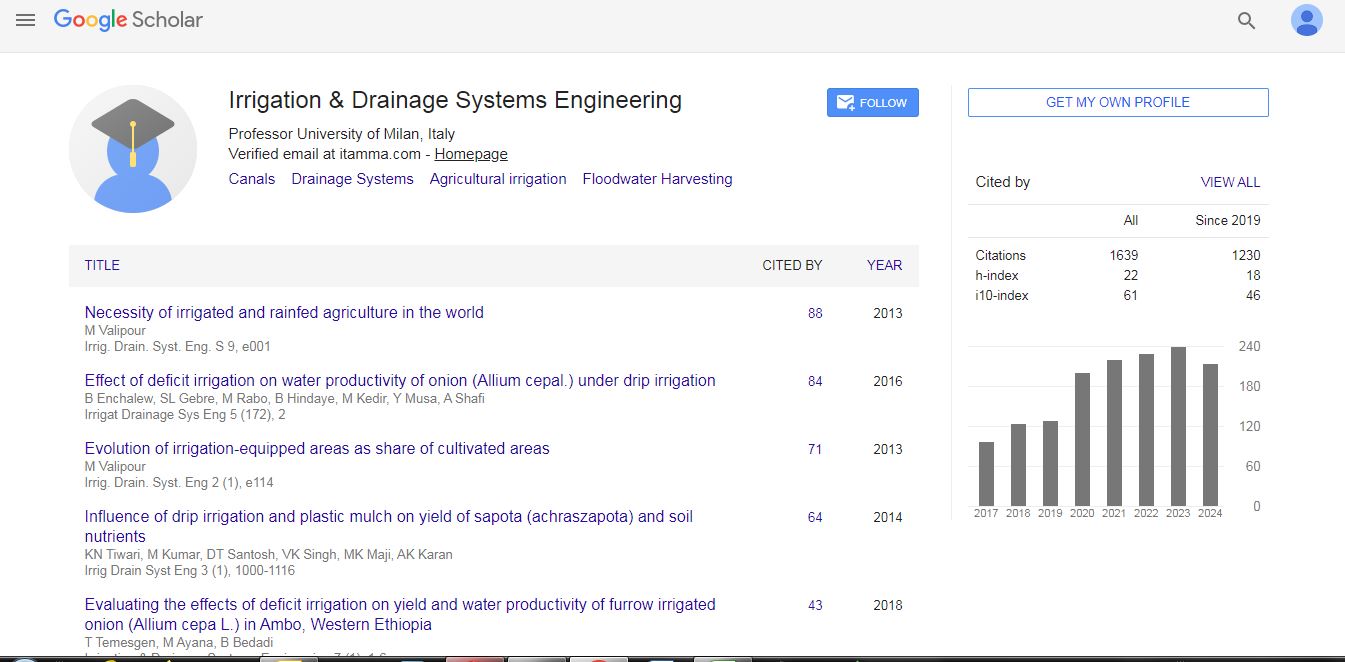
Irrigation & Drainage Systems Engineering received 835 citations as per Google Scholar report