Opinion - (2025) Volume 10, Issue 3
Received: 01-May-2025, Manuscript No. PE-26-179278;
Editor assigned: 05-May-2025, Pre QC No. P-179278;
Reviewed: 19-May-2025, QC No. Q-179278;
Revised: 22-May-2025, Manuscript No. R-179278;
Published:
29-May-2025
, DOI: 10.37421/2472-1042.2025.10.284
Citation: Romano, Isabella. ”Oncology Drug Development: Pharmacoeconomic Challenges and Solutions.” Pharmacoeconomics 10 (2025):284.
Copyright: © 2025 Romano I. This is an open-access article distributed under the terms of the Creative Commons Attribution License, which permits unrestricted use, distribution and reproduction in any medium, provided the original author and source are credited.
The field of oncology drug development is confronting a complex array of pharmacoeconomic challenges that necessitate careful consideration from the earliest stages of research and development. The journey from novel discovery to patient access is increasingly shaped by economic realities, demanding a proactive approach to cost-effectiveness and budget impact assessments to secure regulatory approval and facilitate market entry. Early integration of pharmacoeconomic principles is becoming paramount for navigating the intricate landscape of oncology drug development. This involves a thorough understanding of the economic value a new therapy brings, balanced against the financial constraints of healthcare systems and the affordability for patients. The evolving pharmaceutical market, particularly in oncology, is characterized by high treatment costs and a growing demand for evidence demonstrating value. This shift requires developers to move beyond traditional efficacy and safety metrics to encompass economic outcomes that resonate with payers and healthcare decision-makers. Health technology assessments (HTAs) play a pivotal role in this process, serving as a gatekeeper for reimbursement decisions. These assessments rigorously evaluate the clinical and economic benefits of new drugs, often requiring robust data on cost-effectiveness and budget impact to support their recommendations. Generating real-world evidence (RWE) has emerged as a critical component in pharmacoeconomic evaluations. RWE can complement data from clinical trials by offering insights into the effectiveness, safety, and economic consequences of treatments in diverse patient populations and real-world clinical settings, thereby strengthening the evidence base for value assessments. Innovative pricing strategies are also being explored and implemented to align the cost of novel oncology therapies with their demonstrated value. These strategies aim to create a more sustainable model for both pharmaceutical innovation and healthcare system viability, ensuring that breakthroughs are accessible. Payers, in their role as stewards of healthcare resources, are increasingly sophisticated in their demand for economic evidence. This includes a requirement for comprehensive cost-effectiveness analyses that extend beyond traditional measures to incorporate patient-reported outcomes and broader societal benefits. Value-based pricing and outcome-based agreements represent emerging tools designed to bridge the gap between the perceived value of a drug and its associated cost. These models tie reimbursement to tangible patient outcomes, incentivizing the delivery of high-value care. The advent of precision medicine in oncology, while offering unprecedented therapeutic targetedness, introduces its own set of pharmacoeconomic considerations. The development of therapies for smaller patient subgroups necessitates careful patient selection and biomarker validation to justify potentially high per-patient costs. Ultimately, the successful development and market access of novel oncology drugs hinge on a deep and early engagement with pharmacoeconomics, transforming it from a post-launch evaluation tool to an integral part of the entire drug development lifecycle. [1] Developing novel oncology drugs involves significant pharmacoeconomic challenges. Early consideration of cost-effectiveness and budget impact is crucial for regulatory approval and market access. This involves rigorous health technology assessments, real-world evidence generation, and innovative pricing strategies to balance innovation with affordability for healthcare systems and patients. [2] Payers are increasingly demanding robust economic evidence for reimbursement of high-cost cancer therapies. This necessitates comprehensive cost-effectiveness analyses that consider a broad range of outcomes, including quality-adjusted life-years (QALYs) and patient-reported outcomes. Value-based pricing and outcome-based agreements are emerging as tools to align drug value with cost. [3] The integration of real-world data (RWD) and real-world evidence (RWE) is becoming vital in pharmacoeconomic evaluations for oncology drugs. RWD/RWE can complement clinical trial data by providing insights into long-term effectiveness, safety, and economic impact in diverse patient populations and clinical settings, thereby informing budget impact models and decision-making. [4] Precision medicine in oncology, while promising, presents unique pharmacoeconomic challenges due to targeted therapies for smaller patient populations. Developing cost-effective strategies requires careful patient selection, biomarker validation, and demonstration of significant clinical benefit to justify high treatment costs. [5] The role of pharmacoeconomics is shifting from post-launch evaluation to influencing early-stage drug development. Incorporating economic considerations during preclinical and early clinical phases can help prioritize promising candidates, optimize trial design for economic endpoints, and prepare for market access challenges. [6] Budget impact analysis is critical for understanding the financial consequences of adopting new oncology drugs within healthcare systems. This involves estimating the incremental costs and potential savings associated with the introduction of a new therapy over a defined period, considering factors like drug acquisition costs, administration, and management of toxicities. [7] The high cost of immunotherapy and targeted agents in oncology necessitates robust comparative effectiveness research to demonstrate added value over existing treatments. Pharmacoeconomic models must accurately capture the long-term benefits, including potential cures and extended survival, alongside the associated costs of care. [8] Patient access to innovative oncology drugs is influenced by pharmacoeconomic evidence and payer policies. Understanding how different health systems evaluate drug value and make coverage decisions is essential for pharmaceutical companies to successfully navigate market access. [9] The development of companion diagnostics alongside targeted oncology therapies has significant pharmacoeconomic implications. Identifying patients most likely to benefit from a specific treatment can improve the efficiency of healthcare spending and enhance the value proposition of both the drug and the diagnostic. [10] Harnessing artificial intelligence (AI) in pharmacoeconomic modeling for oncology drug development offers opportunities for more sophisticated and dynamic analyses. AI can help identify optimal treatment pathways, predict patient outcomes, and refine cost-effectiveness models, ultimately supporting evidence-based decision-making. [1] The evolving landscape of oncology drug development is inextricably linked to pharmacoeconomic considerations, requiring early and integrated strategies to ensure both innovation and accessibility. Key to this evolution is the rigorous assessment of cost-effectiveness and budget impact, essential steps for gaining regulatory approval and securing market access. This proactive approach involves sophisticated health technology assessments and the strategic generation of real-world evidence to substantiate a therapy's value. Furthermore, the implementation of innovative pricing models is becoming vital to strike a balance between encouraging groundbreaking research and maintaining affordability for healthcare systems and patients. Payers' increasing demand for robust economic evidence underscores the necessity for comprehensive analyses that account for a wide spectrum of outcomes, including quality-adjusted life-years (QALYs) and patient-reported data. Emerging value-based and outcome-based pricing agreements are designed to directly link a drug's cost to its real-world performance and benefit to patients. The integration of real-world data (RWD) and real-world evidence (RWE) is a significant development, offering deeper insights into long-term effectiveness and economic impact across diverse patient groups and clinical settings. Precision medicine, while transformative, presents unique pharmacoeconomic hurdles, demanding precise patient selection and clear demonstrations of clinical benefit to justify high treatment costs. Pharmacoeconomics is transitioning from a post-launch function to an influential force in early drug development, guiding candidate prioritization and trial design. Budget impact analyses are fundamental tools for forecasting the financial consequences of new oncology drug adoptions, encompassing acquisition costs, administration, and toxicity management. The high cost of modern oncologic agents, such as immunotherapies and targeted drugs, necessitates robust comparative effectiveness research to confirm their added value over existing options. Navigating the complex global market access environment for oncology drugs requires a deep understanding of pharmacoeconomic evidence and diverse payer policies. Companion diagnostics, when developed alongside targeted therapies, offer significant pharmacoeconomic advantages by identifying patients most likely to respond, thereby optimizing healthcare spending. The application of artificial intelligence (AI) in pharmacoeconomic modeling promises more dynamic and predictive analyses, enhancing the ability to identify optimal treatment pathways and refine cost-effectiveness assessments. [2] Developing novel oncology drugs involves significant pharmacoeconomic challenges. Early consideration of cost-effectiveness and budget impact is crucial for regulatory approval and market access. This involves rigorous health technology assessments, real-world evidence generation, and innovative pricing strategies to balance innovation with affordability for healthcare systems and patients. [3] Payers are increasingly demanding robust economic evidence for reimbursement of high-cost cancer therapies. This necessitates comprehensive cost-effectiveness analyses that consider a broad range of outcomes, including quality-adjusted life-years (QALYs) and patient-reported outcomes. Value-based pricing and outcome-based agreements are emerging as tools to align drug value with cost. [4] The integration of real-world data (RWD) and real-world evidence (RWE) is becoming vital in pharmacoeconomic evaluations for oncology drugs. RWD/RWE can complement clinical trial data by providing insights into long-term effectiveness, safety, and economic impact in diverse patient populations and clinical settings, thereby informing budget impact models and decision-making. [5] Precision medicine in oncology, while promising, presents unique pharmacoeconomic challenges due to targeted therapies for smaller patient populations. Developing cost-effective strategies requires careful patient selection, biomarker validation, and demonstration of significant clinical benefit to justify high treatment costs. [6] The role of pharmacoeconomics is shifting from post-launch evaluation to influencing early-stage drug development. Incorporating economic considerations during preclinical and early clinical phases can help prioritize promising candidates, optimize trial design for economic endpoints, and prepare for market access challenges. [7] Budget impact analysis is critical for understanding the financial consequences of adopting new oncology drugs within healthcare systems. This involves estimating the incremental costs and potential savings associated with the introduction of a new therapy over a defined period, considering factors like drug acquisition costs, administration, and management of toxicities. [8] The high cost of immunotherapy and targeted agents in oncology necessitates robust comparative effectiveness research to demonstrate added value over existing treatments. Pharmacoeconomic models must accurately capture the long-term benefits, including potential cures and extended survival, alongside the associated costs of care. [9] Patient access to innovative oncology drugs is influenced by pharmacoeconomic evidence and payer policies. Understanding how different health systems evaluate drug value and make coverage decisions is essential for pharmaceutical companies to successfully navigate market access. [10] The development of companion diagnostics alongside targeted oncology therapies has significant pharmacoeconomic implications. Identifying patients most likely to benefit from a specific treatment can improve the efficiency of healthcare spending and enhance the value proposition of both the drug and the diagnostic. [1] Harnessing artificial intelligence (AI) in pharmacoeconomic modeling for oncology drug development offers opportunities for more sophisticated and dynamic analyses. AI can help identify optimal treatment pathways, predict patient outcomes, and refine cost-effectiveness models, ultimately supporting evidence-based decision-making. [2]
Developing novel oncology drugs presents substantial pharmacoeconomic challenges that require early and consistent attention throughout the research and development pipeline. Ensuring that new therapies are not only clinically effective but also cost-effective and financially viable for healthcare systems is paramount for their successful integration and patient accessibility. This necessitates a strategic approach that encompasses rigorous health technology assessments, the systematic generation of real-world evidence, and the development of innovative pricing strategies to align the value of groundbreaking treatments with affordability. [1] Payers are increasingly requiring comprehensive economic data to justify the reimbursement of expensive cancer therapies. This demand translates into a need for detailed cost-effectiveness analyses that consider a wide array of outcomes, such as quality-adjusted life-years (QALYs) and patient-reported outcomes, to fully capture the value proposition of new drugs. Emerging models like value-based pricing and outcome-based agreements are gaining traction as mechanisms to ensure that drug costs reflect their demonstrated clinical and economic benefits. [2] The role of real-world data (RWD) and real-world evidence (RWE) in pharmacoeconomic evaluations for oncology drugs is becoming indispensable. RWD and RWE provide critical insights into the long-term effectiveness, safety profiles, and economic impact of treatments in diverse patient populations and varied clinical settings, thereby enriching budget impact models and informing crucial decision-making processes for market access and reimbursement. [3] Precision medicine in oncology, while a significant advancement, introduces unique pharmacoeconomic considerations, especially when dealing with targeted therapies designed for smaller patient cohorts. The economic feasibility of these approaches hinges on meticulous patient selection based on biomarkers and a clear demonstration of substantial clinical benefit that justifies the potentially high costs associated with these specialized treatments. [4] Pharmacoeconomics is undergoing a significant shift in its application, moving from a predominantly post-launch evaluation role to actively influencing the early stages of drug development. By incorporating economic considerations during preclinical and initial clinical phases, pharmaceutical companies can better prioritize promising drug candidates, optimize clinical trial designs to capture relevant economic endpoints, and proactively prepare for the complex challenges of market access. [5] Budget impact analysis serves as a critical tool for understanding the financial implications of adopting new oncology drugs within healthcare systems. This analysis involves projecting the incremental costs and potential savings associated with introducing a new therapy over a specific timeframe, taking into account factors such as drug acquisition costs, administration expenses, and the management of treatment-related toxicities. [6] The high costs associated with novel cancer therapies, particularly immunotherapies and targeted agents, underscore the importance of robust comparative effectiveness research. Such research is essential to demonstrate the added value of these treatments over existing therapeutic options. Pharmacoeconomic models must be sophisticated enough to accurately quantify long-term benefits, including potential cures and extended survival, alongside the comprehensive costs of ongoing care. [7] Patient access to innovative oncology drugs is profoundly influenced by the strength of pharmacoeconomic evidence and the specific policies adopted by payers. A thorough understanding of how various health systems evaluate the value of drugs and make coverage decisions is essential for pharmaceutical manufacturers aiming to successfully navigate the complex global market access landscape for their products. [8] The development of companion diagnostics in conjunction with targeted oncology therapies carries significant pharmacoeconomic implications. By enabling the precise identification of patients most likely to respond to a specific treatment, companion diagnostics can lead to more efficient allocation of healthcare resources and enhance the overall value proposition of both the drug and its accompanying diagnostic tool. [9] The application of artificial intelligence (AI) in pharmacoeconomic modeling for oncology drug development presents exciting opportunities for more advanced and adaptable analyses. AI can assist in identifying optimal treatment pathways, predicting patient outcomes with greater accuracy, and refining cost-effectiveness models, thereby providing robust support for evidence-based decision-making in the development and deployment of new cancer therapies. [10]
Developing oncology drugs faces significant pharmacoeconomic challenges, requiring early focus on cost-effectiveness and budget impact for regulatory approval and market access. Rigorous health technology assessments, real-world evidence generation, and innovative pricing strategies are crucial to balance innovation with affordability. Payers demand robust economic data, leading to comprehensive cost-effectiveness analyses incorporating outcomes like QALYs and patient-reported data. Value-based and outcome-based agreements are emerging to align drug value with cost. Real-world data and evidence are vital for understanding long-term impacts. Precision medicine presents unique economic challenges requiring precise patient selection. Pharmacoeconomics is shifting to influence early drug development. Budget impact analysis is key for understanding financial consequences. High costs of new therapies necessitate comparative effectiveness research. Patient access is driven by pharmacoeconomic evidence and payer policies. Companion diagnostics improve economic efficiency. AI offers advanced pharmacoeconomic modeling capabilities.
None
None
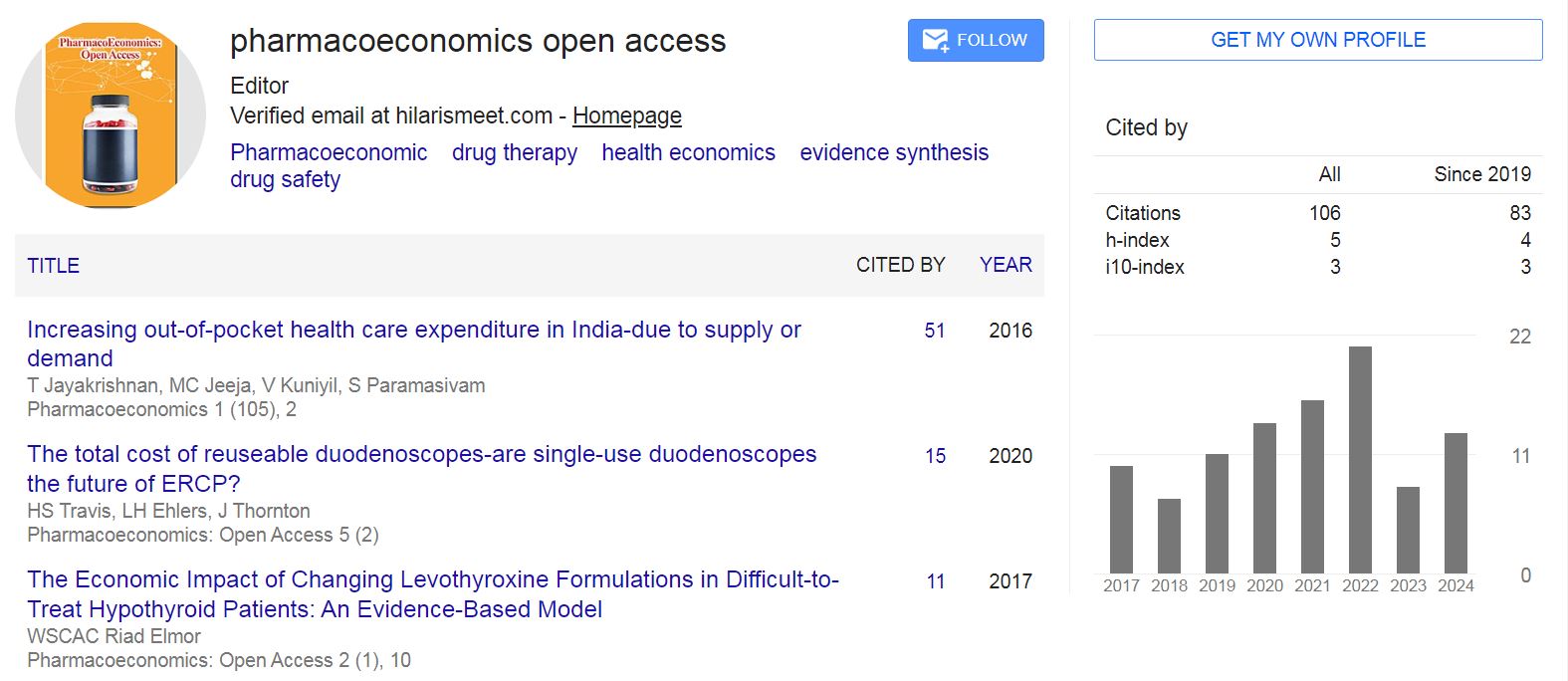
Pharmacoeconomics: Open Access received 106 citations as per Google Scholar report