Perspective - (2025) Volume 14, Issue 2
Received: 01-Jun-2025, Manuscript No. jms-25-172634;
Editor assigned: 03-Jun-2025, Pre QC No. P-172634;
Reviewed: 17-Jun-2025, QC No. Q-172634;
Revised: 23-Jun-2025, Manuscript No. R-172634;
Published:
30-Jun-2025
, DOI: 10.37421/2167-0943.2024.13.407
Citation: Marchand, Solène. ”Nutrition’s Impact: Health, Aging, Global Challenges.” J Metabolic Synd 14 (2025):407.
Copyright: © 2025 Marchand S. This is an open-access article distributed under the terms of the Creative Commons Attribution License, which permits unrestricted use,
distribution and reproduction in any medium, provided the original author and source are credited.
Plant-based diets are increasingly recognized for their diverse health benefits, notably reducing the risk of chronic diseases such as cardiovascular disease, type 2 diabetes, certain cancers, and obesity. Embracing a plant-centric eating pattern, rich in fruits, vegetables, whole grains, legumes, and nuts, can significantly improve various health markers and effectively support disease prevention. The fundamental aspect here is maintaining balance and ensuring an adequate intake of all essential nutrients to fully realize these benefits[1].
The gut microbiome, an intricate community of microorganisms, holds a pivotal role in human health, with its composition profoundly influenced by dietary choices. Dietary fibers, prebiotics, and probiotics are crucial components for maintaining a healthy gut, which in turn impacts crucial functions like metabolism, immunity, and even mental health. Understanding this complex interplay enables the development of targeted nutritional strategies aimed at optimizing both gut health and overall well-being[2].
Precision nutrition, often referred to as personalized nutrition, marks a new frontier in health optimization. This approach involves tailoring dietary recommendations to an individual's unique genetic makeup, specific lifestyle, and distinct gut microbiome. Moving beyond generalized dietary advice, this method aims to provide more effective and highly targeted interventions for preventing and managing diet-related diseases, recognizing that a universal approach to nutrition simply isn't effective for everyone[3].
A critical global health challenge is the triple burden of malnutrition, which encompasses undernutrition, widespread micronutrient deficiencies, and the rising rates of overweight/obesity. This syndemic is deeply linked with unsustainable food systems that often fail to provide healthy, accessible, and affordable nutrition for all populations. Addressing this multifaceted issue necessitates a holistic transformation across food production, distribution, and consumption practices to promote both human health and the health of the planet[4].
Ultra-processed foods (UPFs) represent a growing concern in global nutrition due to their widespread consumption and strong associations with adverse health outcomes, including obesity, type 2 diabetes, and cardiovascular diseases. These industrially formulated foods, characterized by high levels of unhealthy ingredients, contribute significantly to poor dietary quality and frequently displace more nutritious whole foods. Implementing effective policies and public health initiatives is crucial to mitigate their negative impact on population health[5].
Regular exercise combined with proper nutrition serves as the foundation for preventing and treating numerous chronic diseases. These lifestyle factors operate synergistically, working together to improve metabolic health, help maintain a healthy body weight, strengthen the immune system, and effectively reduce inflammation throughout the body. Integrating consistent physical activity with a balanced diet is absolutely essential for achieving long-term health and successful disease management[6].
Globally, maternal and child malnutrition continues to be a critical public health issue, marked by a pervasive double burden that includes both undernutrition and overweight/obesity. This dual challenge underscores the inherent complexity of ensuring food security and high-quality diets, ultimately affecting crucial developmental outcomes and increasing susceptibility to non-communicable diseases later in life. Effective interventions must be designed to address both ends of this malnutrition spectrum comprehensively[7].
Nutrition plays an undeniably critical role in maintaining cognitive functions throughout the aging process. Dietary patterns rich in antioxidants, omega-3 fatty acids, and specific vitamins and minerals are consistently associated with better cognitive health and a reduced risk of cognitive decline and neurodegenerative diseases. Prioritizing whole, unprocessed foods like fruits, vegetables, fish, and nuts can significantly support optimal brain health as individuals advance in age[8].
Sarcopenia, defined as the age-related loss of muscle mass and strength, significantly impacts physical function and overall quality of life among the elderly population. Both proper nutrition, particularly an adequate protein intake, and consistent resistance exercise are crucial strategies for mitigating sarcopenia and actively preserving muscle health. These combined interventions can markedly improve physical performance, reduce the incidence of frailty, and ultimately support a healthier aging process[9].
Food addiction, characterized by compulsive food-seeking and consumption despite experiencing negative consequences, presents a significant challenge in the current understanding and treatment of obesity. Research suggests that certain highly palatable, ultra-processed foods may indeed trigger addictive-like behaviors, influencing neural reward pathways in ways similar to substance abuse. Recognizing food addiction as a distinct phenomenon can lead to more effective strategies for weight management and crucial public health interventions[10].
Nutrition profoundly influences human health across various domains. Plant-based diets, for instance, are gaining recognition for their ability to reduce the risk of chronic diseases such as cardiovascular disease, type 2 diabetes, certain cancers, and obesity, thereby improving overall health markers [1]. A crucial element in this landscape is the gut microbiome, a complex community of microorganisms whose composition is highly susceptible to dietary influences. Maintaining a healthy gut, through adequate dietary fibers, prebiotics, and probiotics, is fundamental for metabolic function, immune response, and even mental health [2]. Understanding this intricate relationship allows for targeted nutritional strategies to optimize well-being.
Moving beyond generic dietary recommendations, precision nutrition, or personalized nutrition, offers a new pathway for health optimization by tailoring dietary advice to an individualâ??s unique genetic makeup, lifestyle, and gut microbiome. This approach promises more effective and targeted interventions for preventing and managing diet-related diseases, acknowledging that nutritional needs are highly individual [3]. However, global nutrition faces significant hurdles, including the triple burden of malnutrition. This encompasses widespread undernutrition, persistent micronutrient deficiencies, and the growing epidemic of overweight and obesity, a syndemic intricately linked to unsustainable food systems. A holistic transformation of food production and consumption is essential to address these challenges and promote both human and planetary health [4].
A major contributor to poor dietary quality and adverse health outcomes is the increasing consumption of Ultra-processed foods (UPFs). These industrially formulated products, often high in unhealthy ingredients, are strongly associated with obesity, type 2 diabetes, and cardiovascular diseases, and they frequently displace more nutritious whole foods from diets. Public health policies are necessary to mitigate their negative impact [5]. On a more positive note, the synergistic roles of regular exercise and proper nutrition are cornerstones for preventing and treating numerous chronic diseases. These lifestyle factors work together to improve metabolic health, manage body weight, bolster the immune system, and reduce inflammation, underscoring the importance of consistent physical activity alongside a balanced diet for long-term health [6].
Maternal and child malnutrition remains a pressing global public health issue, characterized by a pervasive double burden of both undernutrition and overweight/obesity. This complex challenge impacts developmental outcomes and increases susceptibility to non-communicable diseases later in life, highlighting the need for comprehensive interventions that address both ends of the malnutrition spectrum [7]. As individuals age, nutrition takes on a critical role in maintaining cognitive functions. Dietary patterns rich in antioxidants, omega-3 fatty acids, and specific vitamins and minerals are linked to better cognitive health and a reduced risk of cognitive decline and neurodegenerative diseases. Emphasizing whole, unprocessed foods like fruits, vegetables, fish, and nuts can notably support brain health [8].
Beyond cognitive health, aging populations also face challenges like sarcopenia, the age-related loss of muscle mass and strength, which significantly impacts physical function and quality of life. Adequate protein intake and resistance exercise are crucial for mitigating sarcopenia, preserving muscle health, and improving physical performance, thus supporting healthy aging [9]. A distinct, yet related, challenge in public health and obesity treatment is food addiction. This condition, marked by compulsive food-seeking and consumption despite negative consequences, suggests that certain highly palatable, ultra-processed foods may trigger addictive-like behaviors by influencing neural reward pathways similar to substance abuse. Recognizing this phenomenon can lead to more effective strategies for weight management and public health interventions [10].
Plant-based diets offer significant health benefits, reducing the risk of chronic diseases like cardiovascular disease, type 2 diabetes, certain cancers, and obesity, by promoting a balanced intake of fruits, vegetables, whole grains, and legumes. The intricate relationship between diet and the gut microbiome highlights its pivotal role in human health, affecting metabolism, immunity, and mental well-being through dietary fibers, prebiotics, and probiotics. Moving towards personalized health, precision nutrition tailors dietary advice to an individual's unique genetic makeup, lifestyle, and gut microbiome, aiming for more effective prevention and management of diet-related diseases. Globally, malnutrition presents a complex challenge, manifested as a triple burden of undernutrition, micronutrient deficiencies, and overweight/obesity, often exacerbated by unsustainable food systems. A related concern is the widespread consumption of Ultra-processed foods (UPFs), which are strongly linked to adverse health outcomes such as obesity and type 2 diabetes, displacing healthier whole foods and necessitating public health interventions. Beyond diet, the synergistic roles of regular exercise and proper nutrition are cornerstones in preventing and treating numerous chronic diseases, enhancing metabolic health, strengthening the immune system, and reducing inflammation. Maternal and child malnutrition, a pervasive double burden of undernutrition and overweight, further complicates global public health, impacting developmental outcomes. As people age, nutrition becomes critical for maintaining cognitive functions, with diets rich in antioxidants and omega-3 fatty acids associated with better brain health. Similarly, proper nutrition, especially adequate protein, combined with resistance exercise, is crucial for mitigating sarcopenia, the age-related loss of muscle mass, thereby supporting physical function and healthy aging. Finally, food addiction, involving compulsive food-seeking behavior, presents a significant hurdle in addressing obesity, as highly palatable ultra-processed foods may trigger addictive-like responses.
None
None
Indexed at, Google Scholar, Crossref
Indexed at, Google Scholar, Crossref
Indexed at, Google Scholar, Crossref
Indexed at, Google Scholar, Crossref
Indexed at, Google Scholar, Crossref
Indexed at, Google Scholar, Crossref
Indexed at, Google Scholar, Crossref
Indexed at, Google Scholar, Crossref
Indexed at, Google Scholar, Crossref
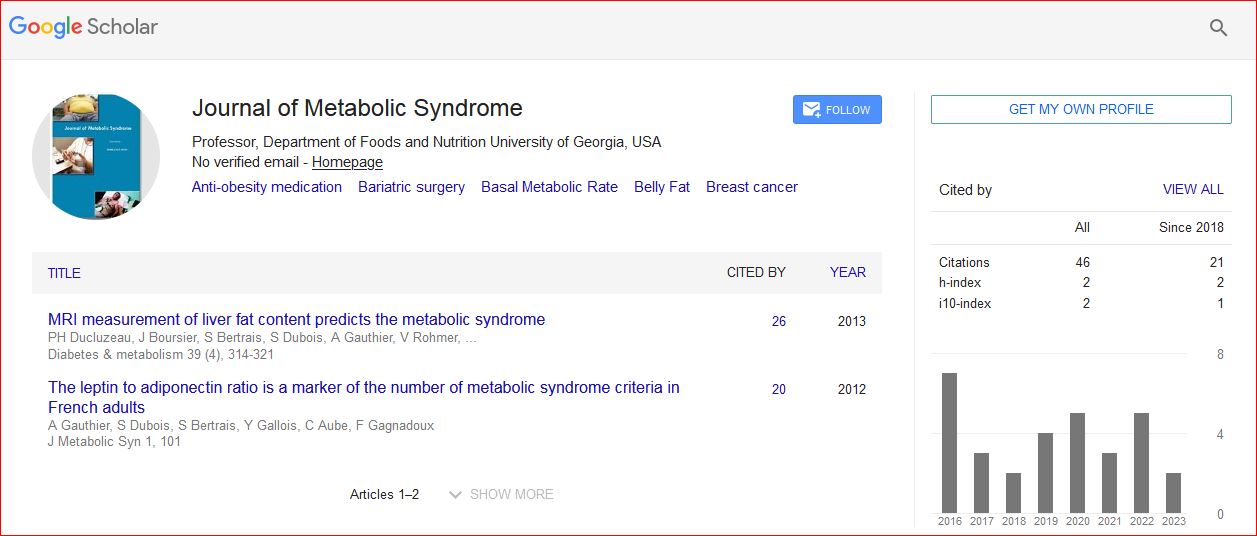
Journal of Metabolic Syndrome received 48 citations as per Google Scholar report