Brief Report - (2025) Volume 10, Issue 6
Received: 01-Dec-2025, Manuscript No. jdcm-26-182221;
Editor assigned: 03-Dec-2025, Pre QC No. P-182221;
Reviewed: 17-Dec-2025, QC No. Q-182221;
Revised: 22-Dec-2025, Manuscript No. R-182221;
Published:
29-Dec-2025
, DOI: 10.37421/2475-3211.2025.10.339
Citation: Benali, Zohra. "Nutrition: Key For Preventing Diabetic Complications." J Diabetic Complications Med 10 (2025):339.
Copyright: © 2025 Benali Z. This is an open-access article distributed under the terms of the Creative Commons Attribution License, which permits unrestricted use, distribution and reproduction in any medium, provided the original author and source are credited.
This review highlights how specific nutritional interventions can significantly impact the development and progression of diabetic complications, emphasizing the role of micronutrients, macronutrients, and dietary patterns in managing hyperglycemia, oxidative stress, inflammation, and endothelial dysfunction, all key drivers of complications like nephropathy, retinopathy, and neuropathy. Personalized nutritional strategies are presented as a crucial component of comprehensive diabetes care [1].
The Mediterranean diet, rich in fruits, vegetables, whole grains, and healthy fats, is shown to be particularly beneficial in reducing the risk of microvascular and macrovascular complications in individuals with type 2 diabetes. This study elucidates the mechanisms, including improved glycemic control and reduced inflammation, that contribute to these protective effects [2].
This research explores the complex relationship between vitamin D status and diabetic complications. It suggests that adequate vitamin D levels may play a role in mitigating inflammation and improving insulin sensitivity, thereby potentially reducing the risk of nephropathy and cardiovascular issues in diabetic patients. Supplementation strategies are discussed in light of current evidence [3].
The impact of omega-3 fatty acids on diabetic nephropathy is investigated here. Findings suggest that omega-3 supplementation can exert beneficial effects by reducing proteinuria, inflammation, and oxidative stress, thus offering a potential therapeutic avenue for protecting kidney function in diabetic individuals [4].
This article examines the role of antioxidants, such as vitamins C and E, and other phytochemicals, in combating oxidative stress associated with diabetes. It highlights how these compounds can protect against cellular damage, potentially delaying the onset and progression of diabetic retinopathy and neuropathy [5].
The therapeutic potential of resistant starch in managing diabetes is explored. This fiber-rich carbohydrate source can improve glycemic control, enhance insulin sensitivity, and positively influence gut microbiota, contributing to a reduced risk of both microvascular and macrovascular complications [6].
This meta-analysis investigates the effect of magnesium supplementation on diabetic complications. Results suggest a beneficial role of magnesium in improving glycemic control and reducing the risk of neuropathy and cardiovascular events, highlighting its importance in diabetes management [7].
The role of dietary fiber in preventing diabetic complications is critically reviewed. Adequate fiber intake is associated with improved glycemic control, reduced lipid profiles, and enhanced satiety, all of which contribute to a lower risk of microvascular and macrovascular complications [8].
This paper focuses on the impact of polyphenol-rich foods on diabetic retinopathy. It suggests that the antioxidant and anti-inflammatory properties of polyphenols can help protect retinal vasculature and reduce the risk of vision-threatening complications [9].
The contribution of protein intake to diabetic complication risk is examined. This review emphasizes the importance of adequate, but not excessive, protein intake for maintaining muscle mass and supporting metabolic health, and how imbalances can influence kidney function and cardiovascular risk [10].
Specific nutritional interventions are highlighted for their significant impact on the development and progression of diabetic complications. These interventions encompass micronutrients, macronutrients, and varied dietary patterns, all crucial for managing hyperglycemia, oxidative stress, inflammation, and endothelial dysfunction, which are central drivers of conditions such as nephropathy, retinopathy, and neuropathy. The importance of personalized nutritional strategies as an integral part of comprehensive diabetes care is strongly emphasized [1].
The Mediterranean diet, characterized by its abundance of fruits, vegetables, whole grains, and healthy fats, has demonstrated substantial benefits in lowering the incidence of microvascular and macrovascular complications among individuals diagnosed with type 2 diabetes. The underlying mechanisms contributing to these protective effects are elucidated, including improvements in glycemic control and a reduction in systemic inflammation [2].
A complex interplay exists between vitamin D status and the occurrence of diabetic complications. Current research suggests that maintaining adequate vitamin D levels may be instrumental in attenuating inflammation and enhancing insulin sensitivity. This, in turn, could potentially decrease the risk of developing nephropathy and cardiovascular issues in diabetic patients, with ongoing discussions around optimal supplementation strategies based on emerging evidence [3].
Investigative findings on the effects of omega-3 fatty acids in the context of diabetic nephropathy indicate promising therapeutic potential. Supplementation with omega-3 fatty acids has been shown to confer advantageous effects by diminishing proteinuria, inflammation, and oxidative stress, thereby offering a viable approach to preserving kidney function in individuals with diabetes [4].
The crucial role of antioxidants, including vitamins C and E, alongside various phytochemicals, in the fight against diabetes-associated oxidative stress is thoroughly examined. These compounds are recognized for their capacity to protect against cellular damage, potentially leading to a delay in the onset and progression of diabetic retinopathy and neuropathy [5].
The therapeutic advantages offered by resistant starch in the management of diabetes are explored. As a fiber-rich carbohydrate source, resistant starch contributes to improved glycemic control, heightened insulin sensitivity, and a favorable modulation of gut microbiota. These effects collectively lead to a reduced risk of both microvascular and macrovascular complications [6].
A systematic review and meta-analysis have investigated the impact of magnesium supplementation on diabetic complications. The findings strongly suggest a beneficial role for magnesium in enhancing glycemic control and mitigating the risk of neuropathy and cardiovascular events, underscoring its significance in the overall management of diabetes [7].
A critical review of dietary fiber intake and its association with the prevention of diabetic complications reveals significant benefits. Sufficient fiber consumption is consistently linked to better glycemic control, improvements in lipid profiles, and increased satiety, all of which are key factors in reducing the likelihood of both microvascular and macrovascular complications [8].
This paper specifically addresses the impact of polyphenol-rich foods on the development of diabetic retinopathy. It posits that the inherent antioxidant and anti-inflammatory properties of polyphenols can serve to protect the retinal vasculature, thereby lowering the risk of experiencing vision-threatening complications [9].
The examination of protein intake in relation to the risk of diabetic complications emphasizes the necessity of balanced protein consumption. Adequate protein levels are vital for maintaining muscle mass and supporting overall metabolic health, while excessive or insufficient intake can negatively impact kidney function and increase cardiovascular risk [10].
Nutritional strategies play a pivotal role in managing and preventing diabetic complications. This includes the importance of micronutrients, macronutrients, and specific dietary patterns like the Mediterranean diet. Key components such as antioxidants, omega-3 fatty acids, vitamin D, dietary fiber, resistant starch, magnesium, and polyphenols offer protective benefits by reducing inflammation, oxidative stress, and improving glycemic control. Protein intake also contributes to metabolic health and kidney function. Personalized nutritional approaches are essential for comprehensive diabetes care, aiming to mitigate risks of nephropathy, retinopathy, neuropathy, and cardiovascular issues.
None
None
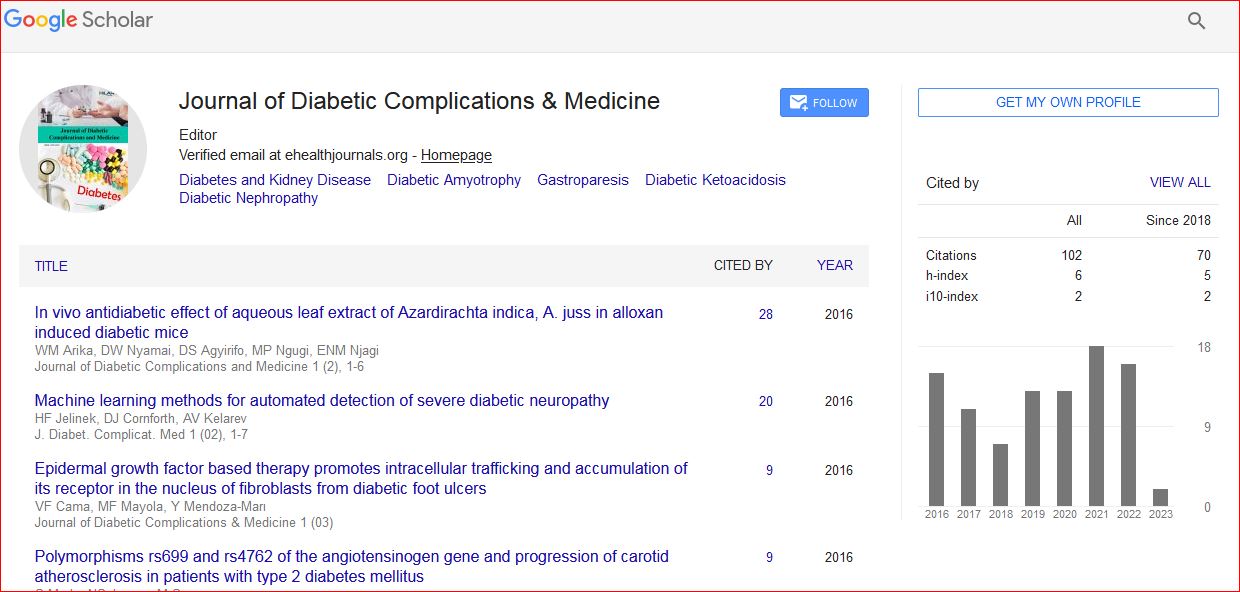
Journal of Diabetic Complications & Medicine received 102 citations as per Google Scholar report