Short Communication - (2025) Volume 14, Issue 2
Received: 01-Jun-2025, Manuscript No. jms-25-172636;
Editor assigned: 03-Jun-2025, Pre QC No. P-172636;
Reviewed: 17-Jun-2025, QC No. Q-172636;
Revised: 23-Jun-2025, Manuscript No. R-172636;
Published:
30-Jun-2025
, DOI: 10.37421/2167-0943.2024.13.409
Citation: Fairweather, Isla. ”Nutrition: Core to Health, Gut, and Future.” J Metabolic Synd 14 (2025):409.
Copyright: © 2025 Fairweather I. This is an open-access article distributed under the terms of the Creative Commons Attribution License, which permits unrestricted use,
distribution and reproduction in any medium, provided the original author and source are credited.
This review delves into the complex interplay between the human gut microbiome and overall health, emphasizing how nutritional intake shapes microbial composition. It highlights the gut's role in nutrient metabolism, immune regulation, and its connection to various diseases, suggesting that targeted dietary interventions can positively influence health outcomes through microbial modulation[1].
This guide offers medical professionals a comprehensive look at plant-based diets, underscoring their benefits for preventing and managing chronic diseases such as heart disease, type 2 diabetes, and certain cancers. It discusses the nutritional adequacy of well-planned plant-based eating patterns and provides practical advice for patient counseling[2].
This umbrella review synthesizes extensive research on ultra-processed foods, concluding that higher consumption is consistently linked to adverse health outcomes, including increased risk of obesity, cardiovascular disease, type 2 diabetes, and all-cause mortality. It emphasizes the need for public health strategies to reduce the intake of these foods[3].
This article explores the Mediterranean Diet's role in preventing chronic diseases. It underscores the diet's emphasis on plant-based foods, healthy fats, and moderate consumption of fish and poultry, correlating it with reduced risks of cardiovascular disease, certain cancers, neurodegenerative disorders, and metabolic syndrome, attributing these benefits to its anti-inflammatory and antioxidant properties[4].
This piece outlines the emerging field of precision nutrition, which leverages individual biological variations, including genetics, gut microbiome, and lifestyle, to provide tailored dietary recommendations. It envisions a future where personalized dietary advice optimizes health outcomes and disease prevention more effectively than generic guidelines[5].
This review details vitamin D's critical role beyond bone health, specifically focusing on its functions as an immunomodulator. It explains how vitamin D influences both innate and adaptive immune responses, highlighting its potential in preventing and mitigating autoimmune diseases, infections, and inflammatory conditions, emphasizing the importance of adequate levels for robust immune function[6].
This systematic review and meta-analysis assesses the effectiveness of various lifestyle-based interventions in preventing childhood obesity. It concludes that comprehensive programs integrating diet, physical activity, and behavioral changes are most impactful in reducing the risk and prevalence of obesity among children, emphasizing the need for early and sustained interventions[7].
This article provides a comprehensive overview of sustainable food systems, examining their environmental, social, and economic dimensions. It argues for the necessity of transitioning towards food systems that prioritize ecological health, social equity, and economic viability to ensure long-term food security and human well-being, suggesting various strategies for achieving these goals[8].
This systematic review and meta-analysis investigates the relationship between macronutrient intake (carbohydrates, fats, and proteins) and cardiometabolic health and mortality. It consolidates findings from prospective studies, providing evidence-based insights into how different macronutrient compositions in the diet affect cardiovascular disease risk, metabolic disorders, and overall longevity[9].
This narrative review explores the significant connection between nutrition and mental health. It discusses how dietary patterns, specific nutrients, and the gut-brain axis influence mood, cognitive function, and the risk of mental health disorders like depression and anxiety. The article advocates for nutritional interventions as a complementary approach to traditional mental health treatments[10].
The complex interplay between the human gut microbiome and overall health is a central focus in contemporary nutritional science. Research thoroughly explores how nutritional intake profoundly shapes the microbial composition within the gut, thereby influencing critical physiological processes such as nutrient metabolism and immune regulation. This deep connection extends to the development and progression of various diseases, strongly suggesting that carefully targeted dietary interventions possess the capacity to positively influence health outcomes through the precise modulation of the microbial ecosystem [1]. Complementing this macro-level understanding, the burgeoning field of precision nutrition aims to provide highly tailored dietary recommendations. This innovative approach leverages individual biological variations, encompassing genetics, the unique characteristics of the gut microbiome, and distinct lifestyle factors. The vision is to establish a future where personalized dietary advice can optimize health outcomes and significantly enhance disease prevention far more effectively than broad, generic nutritional guidelines [5].
Diverse dietary patterns exert distinct and significant effects on human health and disease susceptibility. Plant-based diets, for example, are widely recognized for their comprehensive benefits in both preventing and managing a spectrum of chronic diseases, including cardiovascular disease, type 2 diabetes, and specific types of cancer. These eating patterns, when well-planned, are nutritionally adequate, and medical professionals are increasingly guided on how to provide practical advice for patient counseling to adopt them effectively [2]. Similarly, the Mediterranean Diet stands out for its well-documented role in chronic disease prevention. This dietary approach, characterized by its strong emphasis on plant-based foods, healthy fats, and the moderate consumption of fish and poultry, is consistently correlated with reduced risks of cardiovascular disease, certain cancers, neurodegenerative disorders, and metabolic syndrome. These profound benefits are largely attributed to the diet's inherent anti-inflammatory and antioxidant properties [4]. Conversely, there is a consistent and alarming link between higher consumption of ultra-processed foods and a range of adverse health outcomes. These include an increased risk of obesity, cardiovascular disease, type 2 diabetes, and all-cause mortality, underscoring the critical need for robust public health strategies specifically designed to reduce the pervasive intake of these detrimental foods [3].
Beyond broader dietary frameworks, the specific roles of individual nutrients and the overall balance of macronutrients are crucial for maintaining optimal health. Vitamin D, for instance, demonstrates a critical functional role far beyond its traditional association with bone health, specifically acting as a powerful immunomodulator. It significantly influences both innate and adaptive immune responses, thereby highlighting its potential in preventing and mitigating autoimmune diseases, infections, and various inflammatory conditions. Maintaining adequate levels of Vitamin D is thus emphasized as fundamental for robust immune function [6]. Furthermore, research meticulously investigates the relationship between macronutrient intakeâ??specifically carbohydrates, fats, and proteinsâ??and its profound effects on cardiometabolic health and overall mortality. A systematic review and meta-analysis consolidates findings from numerous prospective studies, offering compelling, evidence-based insights into precisely how different macronutrient compositions within the diet can impact cardiovascular disease risk, metabolic disorders, and ultimately, overall human longevity [9].
Addressing pressing public health challenges, such as the rising global concern of childhood obesity, necessitates multifaceted and effective interventions. A comprehensive systematic review and meta-analysis concludes that the most impactful approaches involve integrated programs that combine dietary modifications, increased physical activity, and targeted behavioral changes. Such holistic interventions are shown to be highly effective in reducing both the risk and prevalence of obesity among children, clearly emphasizing the critical need for early and sustained efforts in this area [7]. Moving beyond individual health to broader societal well-being, the concept of sustainable food systems provides a comprehensive overview of their environmental, social, and economic dimensions. This perspective strongly advocates for the necessary transition towards food systems that explicitly prioritize ecological health, foster social equity, and ensure long-term economic viability. The overarching goal is to guarantee future food security and enhance human well-being, suggesting various strategic approaches for achieving these multifaceted and vital objectives [8].
An increasingly significant area of focus is the profound connection between nutrition and mental health. This narrative review highlights how intricate dietary patterns, the presence of specific key nutrients, and the complex interactions within the gut-brain axis collectively influence mood regulation, cognitive function, and the overall risk of developing various mental health disorders, including depression and anxiety. This growing body of evidence strongly advocates for the thoughtful integration of nutritional interventions as a valuable complementary approach alongside traditional mental health treatments, recognizing the powerful impact that food choices can have on neurological and psychological well-being [10].
Nutrition is foundational for human health, impacting everything from gut microbiome composition to mental well-being. Studies highlight the critical interplay between dietary intake and the gut microbiome, which influences nutrient metabolism, immune function, and disease susceptibility. Specific eating patterns, like plant-based diets and the Mediterranean Diet, consistently show benefits in preventing and managing chronic conditions such as heart disease, type 2 diabetes, and certain cancers, often due to their anti-inflammatory and antioxidant properties. Conversely, a high intake of ultra-processed foods is directly linked to adverse health outcomes, including increased risks of obesity, cardiovascular disease, and all-cause mortality, underscoring the need for public health interventions. Beyond general guidelines, the emerging field of precision nutrition aims to tailor dietary recommendations based on individual biological variations, including genetics and the gut microbiome, for optimized health and disease prevention. Essential nutrients like Vitamin D play crucial roles beyond bone health, acting as immunomodulators and influencing both innate and adaptive immune responses. Comprehensive lifestyle interventions, integrating diet, physical activity, and behavioral changes, are vital for preventing childhood obesity. Furthermore, the composition of macronutrient intake profoundly affects cardiometabolic health and longevity. Addressing nutrition also extends to mental health, where dietary patterns and specific nutrients significantly influence mood, cognitive function, and the risk of mental health disorders. Ultimately, the transition towards sustainable food systems is essential to support long-term food security, ecological health, and overall human well-being.
None
None
Indexed at, Google Scholar, Crossref
Indexed at, Google Scholar, Crossref
Indexed at, Google Scholar, Crossref
Indexed at, Google Scholar, Crossref
Indexed at, Google Scholar, Crossref
Indexed at, Google Scholar, Crossref
Indexed at, Google Scholar, Crossref
Indexed at, Google Scholar, Crossref
Indexed at, Google Scholar, Crossref
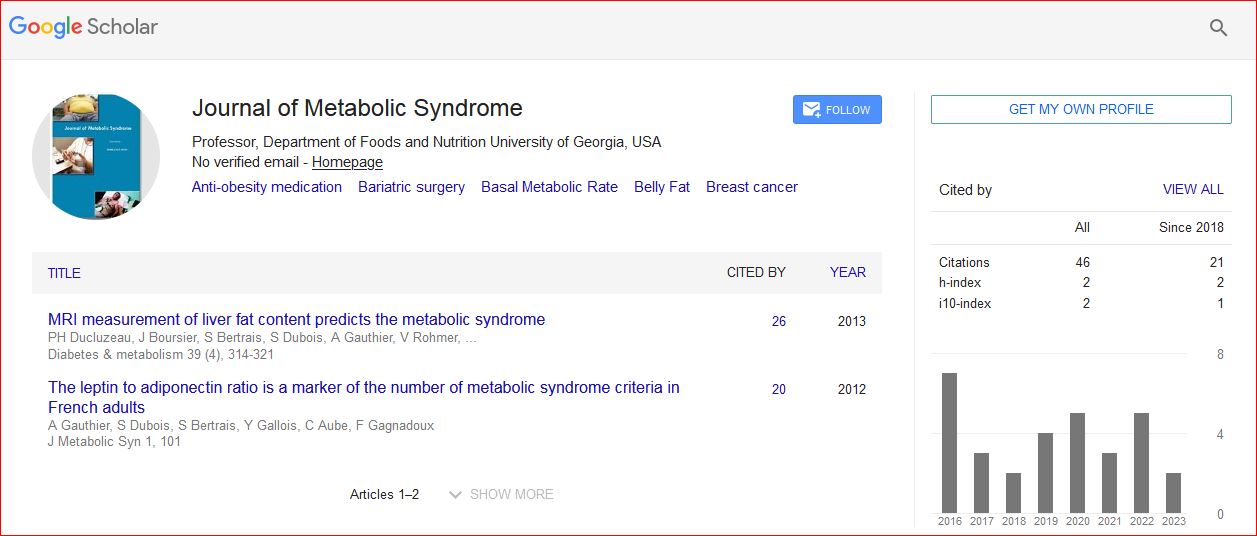
Journal of Metabolic Syndrome received 48 citations as per Google Scholar report