Brief Report - (2025) Volume 14, Issue 5
Received: 01-Oct-2025, Manuscript No. jhoa-26-187837;
Editor assigned: 03-Oct-2025, Pre QC No. P-187837;
Reviewed: 17-Oct-2025, QC No. Q-187837;
Revised: 22-Oct-2025, Manuscript No. R-187837;
Published:
29-Oct-2025
, DOI: 10.37421/2167-1095.2025.14.537
Citation: Lefevre, Monique. ”Nurses’ Essential Role in Hypertension Management.” J Hypertens 14 (2025):537.
Copyright: © 2025 Lefevre M. This is an open-access article distributed under the terms of the Creative Commons Attribution License, which permits unrestricted use, distribution and reproduction in any medium, provided the original author and source are credited.
Nurses are indispensable in the comprehensive management of hypertension, extending their responsibilities far beyond the simple administration of medications. Their role is foundational in empowering patients through meticulous education on critical lifestyle modifications, encompassing dietary adjustments, regular physical activity, effective weight management strategies, and techniques for stress reduction. This multifaceted approach ensures that patients are well-equipped to manage their condition actively [1].
Furthermore, nurses are central to the ongoing monitoring of blood pressure, diligently assessing patient adherence to prescribed treatment plans. Their keen observation skills allow them to identify and address potential barriers that may impede effective hypertension management, ensuring that therapeutic goals are met [1].
This continuous engagement fostered by nurses is instrumental in cultivating a strong sense of self-efficacy among patients, which in turn leads to improved long-term blood pressure control and a significant reduction in overall cardiovascular risk [1].
Studies have specifically highlighted the remarkable effectiveness of nurse-led interventions in achieving better blood pressure control, particularly in patients with resistant hypertension. The integrated approach, characterized by regular follow-up appointments and personalized educational strategies, empowers patients to take greater ownership of their health [2].
This enhanced patient empowerment translates into a better ability to adhere to complex medication regimens, ultimately resulting in significant and measurable reductions in both systolic and diastolic blood pressure readings [2].
The integration of advanced technology, including telehealth platforms and mobile health applications, by nurses further amplifies their capacity to enhance hypertension management. These innovative tools facilitate remote patient monitoring, enable timely feedback to be provided, and offer personalized support, effectively bridging geographical distances and improving patient engagement [3].
This technological integration is especially beneficial for patients residing in underserved areas, where access to healthcare services may be limited, thereby promoting more equitable management of hypertension [3].
Nurses also play a critical role in ensuring medication adherence among hypertensive patients. They are vital in educating patients about their prescriptions, proactively addressing potential side effects, simplifying complex medication schedules, and employing sophisticated techniques such as motivational interviewing to overcome adherence barriers [4].
This comprehensive approach by nurses ensures that treatment is consistently followed, leading to more effective and sustained management of hypertension [4].
Moreover, nurses possess a unique ability to recognize and manage hypertension in specific, vulnerable populations, including pregnant women and the elderly. Their capacity to deliver tailored advice, vigilantly monitor for potential complications, and meticulously coordinate care pathways is crucial for optimizing health outcomes in these groups [5].
Nurses play an indispensable role in the comprehensive management of hypertension, extending their responsibilities far beyond the simple administration of medications. Their expertise is vital in educating patients on crucial lifestyle modifications such as diet, exercise, weight management, and stress reduction. Through diligent monitoring of blood pressure and assessment of treatment adherence, nurses identify and address barriers to effective management, fostering patient self-efficacy and improving long-term control to reduce cardiovascular risk [1].
Research underscores the significant effectiveness of nurse-led interventions in improving blood pressure control, particularly for individuals with resistant hypertension. By implementing an integrated approach that includes regular follow-ups and customized education, nurses empower patients to better manage their condition and adhere to complex medication regimens, leading to substantial reductions in both systolic and diastolic blood pressure [2].
The strategic incorporation of technology, such as telehealth and mobile health applications, by nurses has demonstrably enhanced hypertension management. These digital tools facilitate remote monitoring, provide timely feedback, and offer personalized support, effectively overcoming geographical barriers and boosting patient engagement, especially for those in underserved communities [3].
Nurses are also pivotal in ensuring medication adherence for hypertensive patients. They are essential in educating patients about their prescriptions, addressing any potential side effects, simplifying treatment regimens, and utilizing motivational interviewing techniques to overcome obstacles, thereby ensuring consistent and effective therapeutic engagement [4].
Furthermore, nurses are adept at recognizing and managing hypertension within specific and vulnerable populations, such as pregnant women and the elderly. Their ability to provide targeted advice, monitor for complications, and coordinate care is paramount in ensuring optimal health outcomes for these groups [5].
Reviews of evidence-based nursing interventions for hypertension management emphasize the need for standardized training and ongoing professional development for nurses. This commitment to continuous learning is crucial for optimizing their contribution to improving blood pressure control and mitigating cardiovascular morbidity [6].
Nurse-led self-management support programs have shown a significant impact on hypertension control. These programs equip patients with the necessary knowledge and skills to actively participate in their own care, resulting in improved blood pressure readings and an enhanced overall quality of life [7].
Crucially, nurses contribute significantly to addressing the social determinants of health that influence hypertension management. By identifying and mitigating factors like socioeconomic status, access to healthy food, and the availability of safe living environments, nurses play a vital role in achieving equitable blood pressure control [8].
Effective communication strategies are a cornerstone of nursing practice in hypertension patient education. Clear, empathetic, and culturally sensitive communication builds trust, ensures patient comprehension, and promotes active engagement in treatment plans [9].
Finally, nurses are integral members of multidisciplinary teams managing hypertension. Their collaborative efforts with physicians, dietitians, and pharmacists ensure a comprehensive, patient-centered care plan, leading to improved treatment outcomes and reduced healthcare expenditures [10].
Nurses play a critical and multifaceted role in hypertension management. They are instrumental in patient education regarding lifestyle modifications, medication adherence, and self-management. Nurses utilize technology like telehealth to enhance monitoring and support, particularly in underserved areas. Their work extends to managing hypertension in vulnerable populations and addressing social determinants of health. Effective communication and collaboration within multidisciplinary teams are key aspects of their contribution, ultimately leading to improved blood pressure control and reduced cardiovascular risk.
None
None
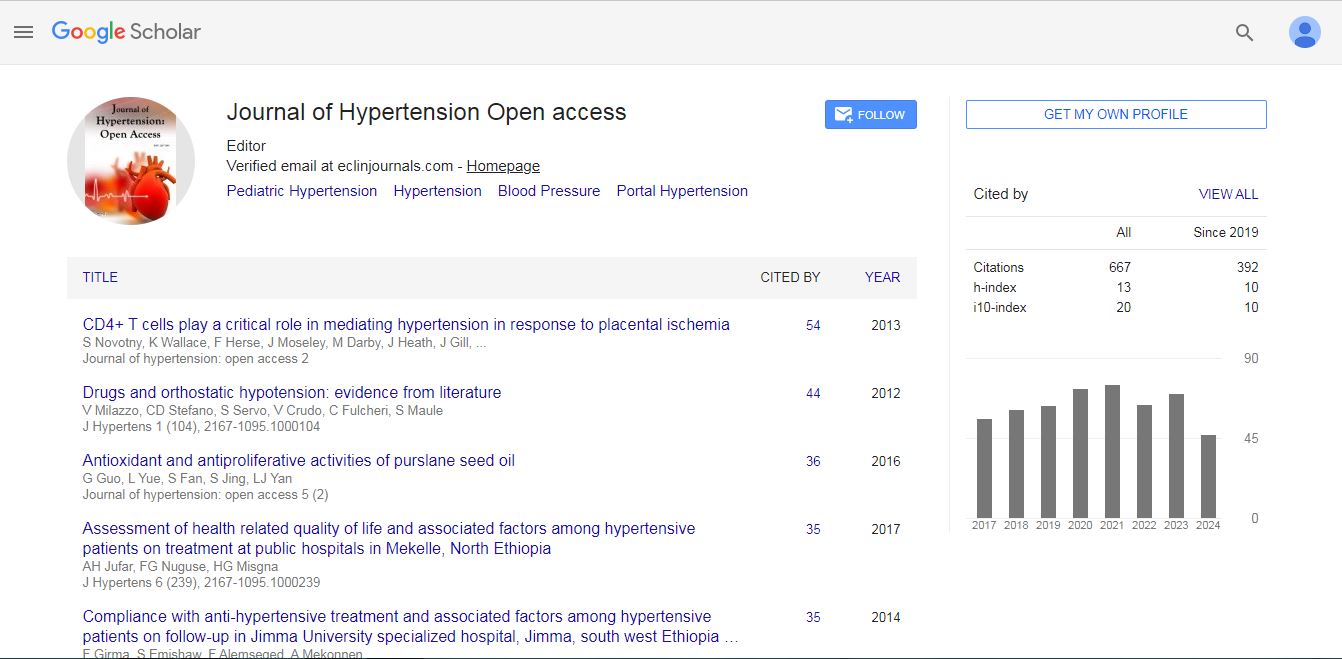
Journal of Hypertension: Open Access received 614 citations as per Google Scholar report