Perspective - (2025) Volume 14, Issue 6
Received: 01-Dec-2025, Manuscript No. jhoa-26-187883;
Editor assigned: 03-Dec-2025, Pre QC No. P-187883;
Reviewed: 17-Dec-2025, QC No. Q-187883;
Revised: 22-Dec-2025, Manuscript No. R-187883;
Published:
29-Dec-2025
, DOI: 10.37421/2167-1095.2025.14.556
Citation: Kuznetsova, Daria. ”Nurses: Core Pillars of Hypertension Management.” J Hypertens 14 (2025):556.
Copyright: © 2025 Kuznetsova D. This is an open-access article distributed under the terms of the Creative Commons Attribution License, which permits unrestricted use, distribution and reproduction in any medium, provided the original author and source are credited.
Nurses are indispensable in the comprehensive management of hypertension, offering a spectrum of care that extends far beyond direct clinical interventions. Their multifaceted roles encompass patient education, diligent monitoring of treatment adherence, and the provision of crucial support for lifestyle modifications aimed at blood pressure control. Early detection through systematic screening initiatives is a primary function, as is the reinforcement of prescribed treatment plans. Nurses are adept at identifying and addressing the various barriers that patients encounter in adhering to medication regimens and engaging in effective self-management strategies. The continuous, personalized support that nurses provide is paramount in helping patients achieve and sustain target blood pressure levels, thereby significantly reducing their risk of cardiovascular complications. Within diverse community settings, community health nurses play a pivotal role in addressing hypertension. Through proactive outreach programs, personalized home visits, and targeted patient education initiatives, these nurses equip individuals with the necessary knowledge and practical skills to effectively manage their blood pressure. By actively addressing the social determinants of health that influence health outcomes and by fostering robust community engagement, community health nurses make substantial contributions to reducing the overall prevalence of hypertension and mitigating its associated health problems. The integration of modern technology into nursing practice has demonstrably enhanced the capacity for effective hypertension management. Telehealth platforms and sophisticated mobile health applications empower nurses to remotely monitor patient status, deliver timely and relevant feedback, and disseminate personalized educational content. This technologically driven approach significantly improves the accessibility of healthcare services, offers robust support for patient self-management, and ultimately contributes to better blood pressure control, particularly for individuals residing in remote areas or those facing mobility challenges. Promoting essential lifestyle modifications is a cornerstone of nursing interventions in hypertension management. This includes guiding patients through necessary dietary adjustments and encouraging regular physical activity. Nurses provide evidence-based counseling, collaborate with patients to establish achievable goals, and offer ongoing support to help them overcome obstacles to adopting healthier habits. Educating patients about the benefits of the DASH diet, the importance of sodium restriction, and the positive impact of consistent exercise are fundamental nursing responsibilities that profoundly influence blood pressure control. Patient education, as delivered by skilled nurses, forms the bedrock of successful hypertension management. Nurses possess the expertise to simplify complex medical information, provide clear explanations of medication regimens, and emphasize the critical importance of regular blood pressure monitoring. By empowering patients with a thorough understanding of their condition, treatment options, and potential complications, nurses foster a sense of active participation in their own care, leading to improved adherence and better health outcomes. Nurses play a critical role in the identification and management of resistant hypertension, a challenging clinical scenario. This involves conducting thorough and comprehensive patient assessments, meticulously reviewing medication adherence patterns, and actively seeking to identify potential secondary causes of elevated blood pressure. Their deep understanding of a patient's medical history, lifestyle factors, and individual circumstances enables them to tailor treatment strategies effectively and collaborate seamlessly with physicians to achieve optimal patient outcomes. The scope of practice for advanced practice nurses in hypertension management is continuously expanding, enabling them to provide comprehensive and specialized care. This includes the ability to diagnose hypertension, initiate and adjust pharmacotherapy, and lead long-term follow-up care for patients. These highly trained nurses are particularly well-equipped to manage complex hypertensive patients, thereby improving access to expert care and enhancing overall patient outcomes. Nurses are instrumental in addressing the unique needs of specific populations when managing hypertension, such as pregnant women and older adults, where particular considerations are essential. They deliver tailored educational interventions, vigilantly monitor for conditions like gestational hypertension or preeclampsia, and adapt care plans to accommodate age-related physiological changes and the complexities of polypharmacy, ensuring that management is both safe and highly effective. The psychosocial dimensions of hypertension management are a significant area of focus for nurses. They provide vital emotional support, diligently assess patients for stress and anxiety associated with their condition, and guide individuals on effective coping mechanisms. Recognizing and proactively addressing these psychological factors is indispensable for enhancing patients' overall well-being and improving their sustained adherence to prescribed treatment regimens. Nurses are at the forefront of implementing evidence-based guidelines for hypertension management in clinical practice. They possess the crucial ability to translate complex clinical recommendations into practical, patient-centered care strategies, ensuring that interventions are current, effective, and aligned with the latest scientific evidence. Ongoing professional development for nurses in the field of hypertension is absolutely vital to upholding the highest standards of care and consistently improving patient health outcomes.
Nurses are integral to the multifaceted process of hypertension management, extending their influence beyond direct clinical duties to encompass vital patient education, meticulous monitoring of treatment adherence, and robust support for lifestyle modifications. Their expertise is crucial for early detection through screening programs and for reinforcing the importance of prescribed treatment plans. Furthermore, nurses are adept at identifying and addressing the barriers that impede medication adherence and effective self-management. The consistent, individualized support they offer is indispensable for achieving and maintaining optimal blood pressure levels, thereby significantly mitigating cardiovascular risk. In community health settings, nurses are central to addressing hypertension across diverse populations. Their proactive outreach efforts, coupled with home visits and comprehensive patient education, empower individuals with the knowledge and skills necessary for effective blood pressure management. By tackling the social determinants of health and fostering community engagement, these nurses play a significant role in reducing hypertension prevalence and its associated complications. The incorporation of technology into nursing practice has significantly advanced hypertension management capabilities. Telehealth platforms and mobile health applications enable nurses to conduct remote patient monitoring, provide timely feedback, and deliver personalized educational content. This innovative approach enhances access to care, supports patient self-management, and can lead to improved blood pressure control, especially for individuals in remote locations or those with mobility impairments. Nurses are essential in advocating for and facilitating lifestyle modifications crucial for hypertension management, including dietary adjustments and increased physical activity. They provide evidence-based counseling, work collaboratively with patients to set attainable goals, and offer continuous support to overcome challenges. Educating patients about the DASH diet, the critical need for sodium restriction, and the benefits of regular exercise represents a core nursing responsibility that directly impacts blood pressure control. Patient education delivered by nurses is a foundational element for successful hypertension management. Nurses excel at simplifying complex medical information, clarifying medication schedules, and explaining the significance of consistent monitoring. By empowering patients with knowledge about their condition, treatment, and potential risks, nurses foster active engagement in their healthcare journey, which is directly linked to improved adherence. Nurses contribute significantly to the identification and management of resistant hypertension through thorough patient assessments, careful review of medication adherence, and the investigation of potential secondary causes. Their in-depth understanding of patient history and lifestyle factors allows for the development of personalized treatment strategies and effective collaboration with physicians to optimize patient outcomes. The role of advanced practice nurses in hypertension management continues to evolve, offering comprehensive care services that include diagnosis, treatment initiation, and ongoing patient follow-up. These nurses are equipped to manage patients with complex hypertensive conditions, initiate or adjust drug therapies, and lead multidisciplinary care teams, thereby enhancing access to specialized care and improving patient results. Nurses are vital in managing hypertension within specific patient groups, such as pregnant women and older adults, who present unique management considerations. They provide specialized education, monitor for conditions like gestational hypertension or preeclampsia, and adapt care plans to account for age-related physiological changes and polypharmacy, ensuring safe and effective care. The psychosocial aspects of hypertension management are frequently addressed by nurses. They offer crucial emotional support, assess for stress and anxiety related to the condition, and guide patients in developing effective coping strategies. Acknowledging and managing these psychological factors is essential for improving overall patient well-being and enhancing treatment adherence. Nurses are key facilitators in the application of evidence-based guidelines for hypertension management. They bridge the gap between clinical recommendations and practical patient care, ensuring that interventions are current and effective. Continuous professional development for nurses in this domain is critical for maintaining high standards of care and achieving better patient outcomes.
Nurses play a critical and multifaceted role in hypertension management, encompassing patient education, adherence monitoring, and lifestyle modification support. They are instrumental in early detection, treatment reinforcement, and identifying barriers to self-management. Community health nurses engage diverse populations through outreach and education, while technology integration enhances remote monitoring and personalized care. Nurses promote healthy lifestyles through evidence-based counseling and education on diets like DASH and exercise. Patient education by nurses simplifies medical information and fosters active participation. They also contribute to managing resistant hypertension and cater to special populations like pregnant women and older adults. Psychosocial support and the implementation of evidence-based guidelines are further key contributions, all aimed at improving patient outcomes and reducing cardiovascular risk.
None
None
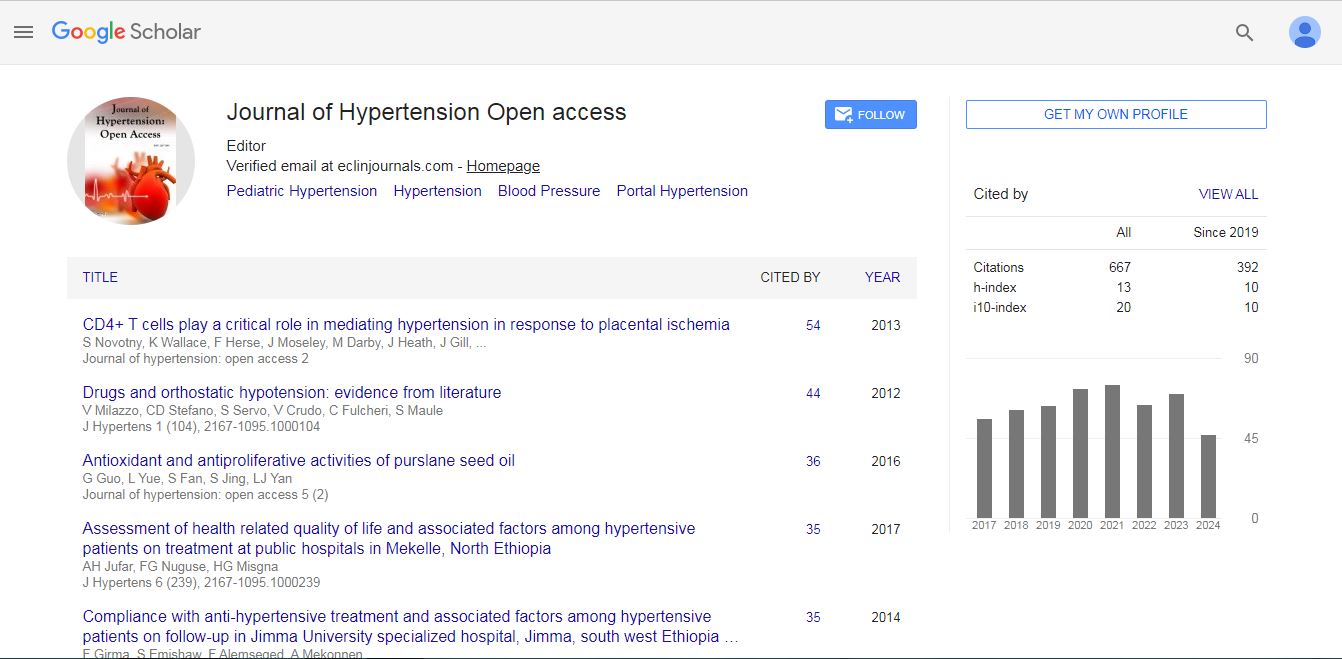
Journal of Hypertension: Open Access received 614 citations as per Google Scholar report