Review Article - (2025) Volume 9, Issue 2
Received: 04-Mar-2025, Manuscript No. jeh-25-161989;
Editor assigned: 06-Mar-2025, Pre QC No. P-161989;
Reviewed: 14-Mar-2025, QC No. Q-161989;
Revised: 21-Mar-2025, Manuscript No. R-161989;
Published:
28-Mar-2025
, DOI: 10.37421/2684-4923.2025.9.259
Citation: Venturi, Sebastiano. “Nuclear Power Plants and Wars: New Suspected Radioactive Risk Factors.” J Environ Hazard 9 (2025): 259.
Copyright: © 2025 Venturi S. This is an open-access article distributed under the terms of the Creative Commons Attribution License, which permits unrestricted use, distribution and reproduction in any medium, provided the original author and source are credited.
In times of danger of severe international conflicts with fear of the use of atomic weapons and accidents in nuclear power plants, a so-called "Disaster Medicine" has been created to reduce the damage in affected populations and territories. Radionuclide contamination in terrestrial ecosystems has nowadays reached a dangerous level. The most frequent and studied artificial radionuclides are iodine (131-I) and cesium (137-Cs and 134-Cs), which are both on the rise in the world. In humans, these elements are captured and metabolized by the thyroid, pancreas, mammary and salivary glands, cerebrospinal fluid and brain, thymus and numerous other organs and excrete with stool and urine. In organs, these radionuclides are a serious danger that can cause cancers and through inflammatory, carcinogenic and necrotic mechanisms also thyroiditis, pancreatitis and functional deficiencies as well as diabetes melli tus, hypothyroidism and mental damage. The Author reports autoradiographic and scintigraphic studies describing some, little-known, damage to organs caused by radionuclides and in particular, pancreatic and thyroid cancer, pancreatitis, thyroiditis and diabetes mellitus, whose incidence rate is gradually rising worldwide. Controversy on Low-Dose Radiations damage is also reported (Figures 1-3).
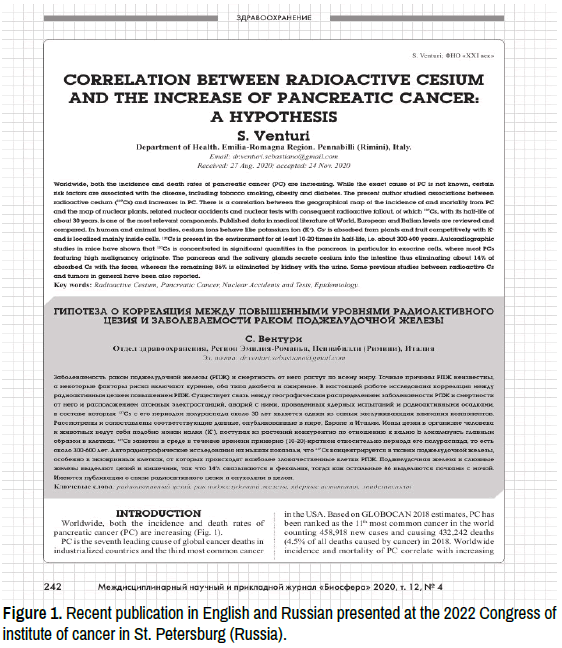
Figure 1. Recent publication in English and Russian presented at the 2022 Congress of institute of cancer in St. Petersburg (Russia).
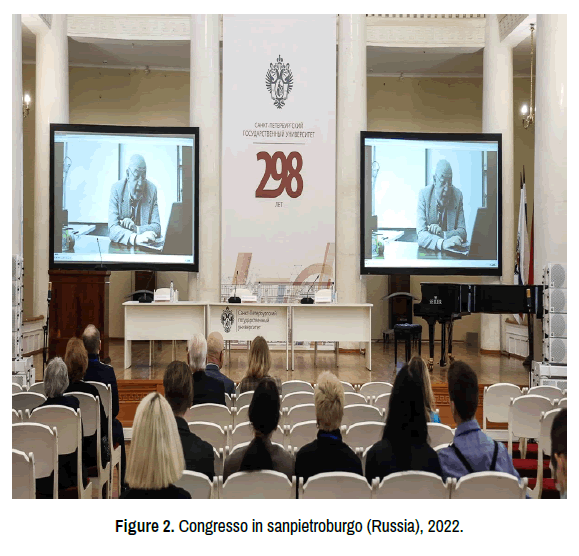
Figure 2. Congresso in sanpietroburgo (Russia), 2022.
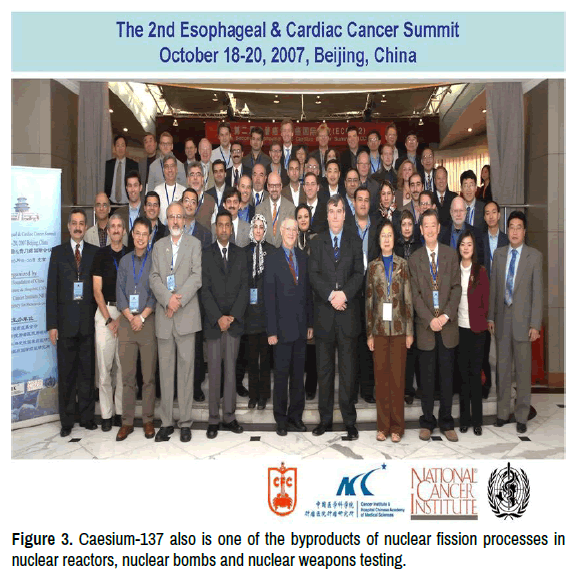
Figure 3. Caesium-137 also is one of the byproducts of nuclear fission processes in nuclear reactors, nuclear bombs and nuclear weapons testing.
• Ceasium undergoes radioactive decay by emission of beta particles and relatively strong gamma radiation to Barium-137m.
• Cesium-137 decay has a half-life of 30.07 years.
• Both the electron and gamma emissions are highly ionising radiation (Figure 4).
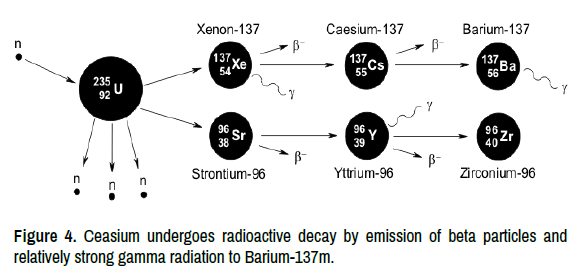
Figure 4. Ceasium undergoes radioactive decay by emission of beta particles and relatively strong gamma radiation to Barium-137m.
Radioactive clouds also reached Eastern Europe, Finland and Scandinavia with gradually decreasing levels of contamination, also touching Italy, France, Germany, Switzerland, Austria and the Balkans, up to parts of the eastern coast of North America. (Figures 5-7).Two different ways of bioaccumulation of radionuclides in the body are (Figure 8):
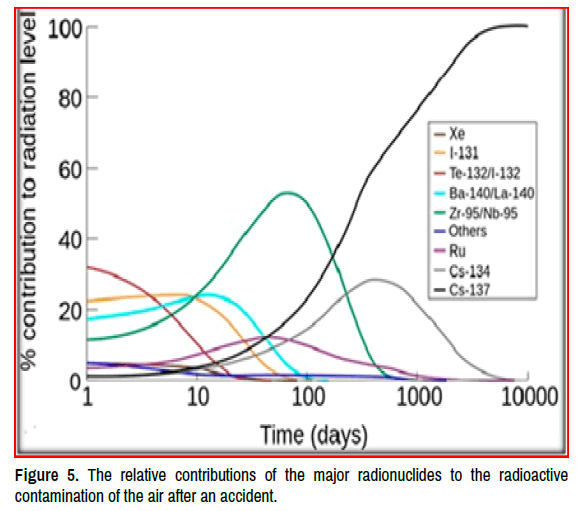
Figure 5. The relative contributions of the major radionuclides to the radioactive contamination of the air after an accident.
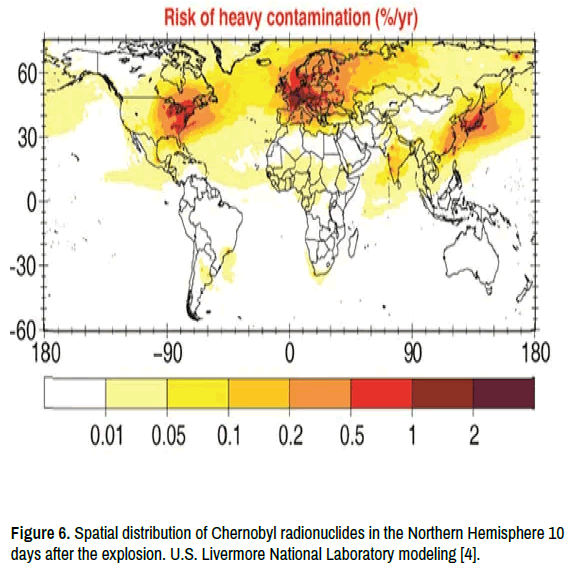
Figure 6. Spatial distribution of Chernobyl radionuclides in the Northern Hemisphere 10 days after the explosion. U.S. Livermore National Laboratory modeling [4].
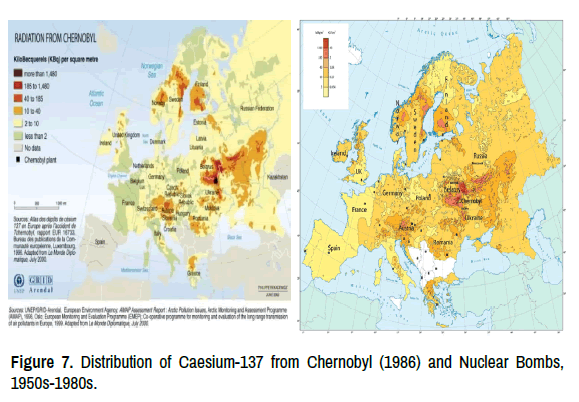
Figure 7. Distribution of Caesium-137 from Chernobyl (1986) and Nuclear Bombs, 1950s-1980s.
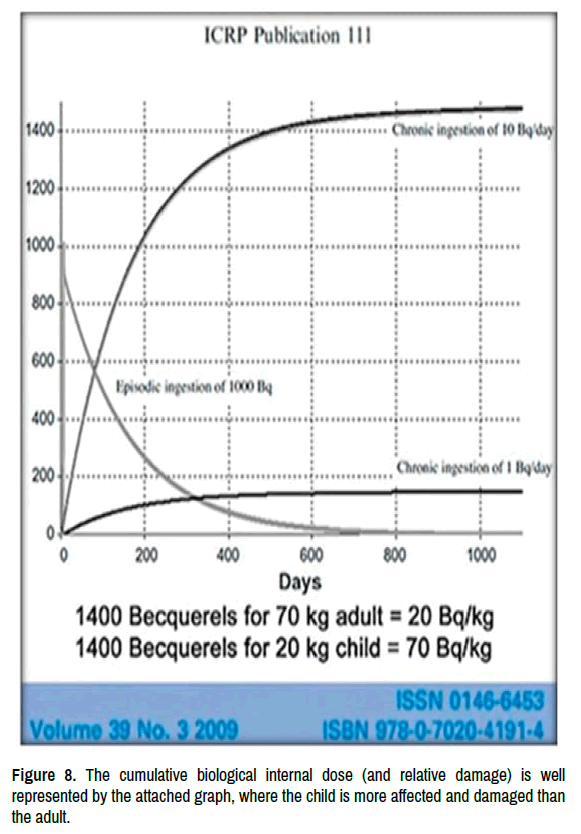
Figure 8. The cumulative biological internal dose (and relative damage) is well represented by the attached graph, where the child is more affected and damaged than the adult.
• High but single dose (e.g., 1000 Bq) bioaccumulation, or short half-life radionuclide (such as iodine-131, which has a half-life of 8 days),
• Low but continuous dose (e.g., 10 or 1 Bq/day), or long half-life radionuclide (such as cesium-137, with half-life=30.2 years, or cesium-134, with half-life=2 years). Iodine-131 may give a higher initial dose, but its short half-life of 8 days ensures that it will soon be gone. Iodine-131 remains in the environment for about only 100 days (19,21). Cesium-137 decay by gamma and beta (electron) emissions produces highly ionizing radiation (Figures 9 and 10).
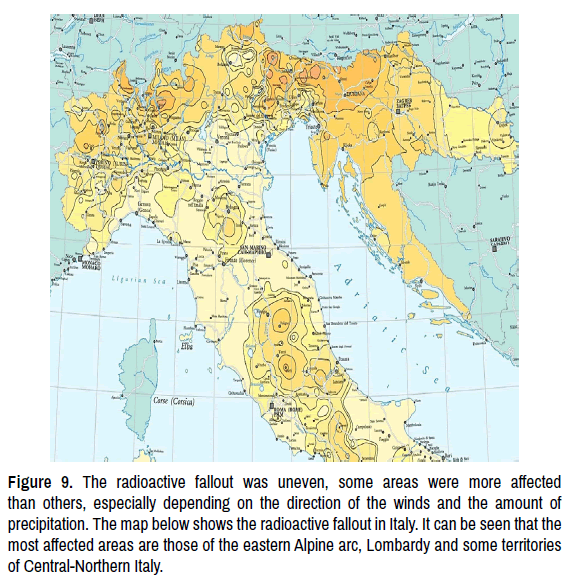
Figure 9. The radioactive fallout was uneven, some areas were more affected than others, especially depending on the direction of the winds and the amount of precipitation. The map below shows the radioactive fallout in Italy. It can be seen that the most affected areas are those of the eastern Alpine arc, Lombardy and some territories of Central-Northern Italy.
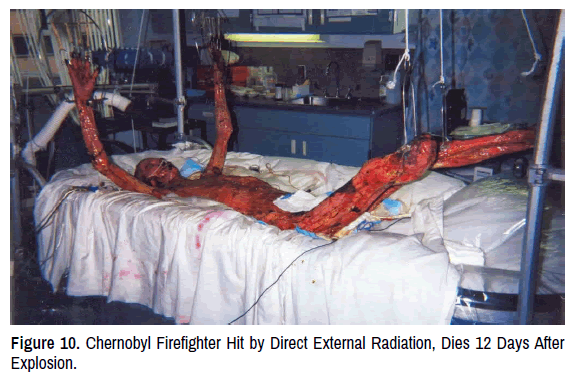
Figure 10. Chernobyl Firefighter Hit by Direct External Radiation, Dies 12 Days After Explosion.
Corriere Brescia. Radioactive dust from the Arvedi steelworks in Sardinia: "Values 40 times the detection limit, not dangerous for health" Meeting at the Prefecture in Cremona: in the company there would be other containers with dust containing traces of Cesium 137 but there are no values of. Doctors worry that iodine deficiency a dietary problem from the past is coming back in the USA. The 13-year-old boy came to the clinic with a rapidly ballooning neck. Doctors were puzzled. Sequence of 123-I total-body scintiscans of a thyroidectomized woman after intravenous injection of 123-I; (from left) respectively at 1, 6 and 24 hours (Figures 11-20). It is evident the highest and most rapid concentration of radio-iodide is in oral mucosa, salivary glands, pancreas and gastric mucosa.
Figure 11. Brescia Newspaper. In Brescia 85 thousand tons of radioactive waste in nine landfills. Most contaminated by Cesium-137 arrived from the former Soviet Union in the early nineties and melted in some refineries. September 2024.
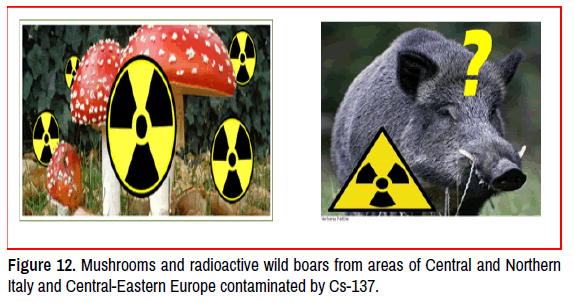
Figure 12. Mushrooms and radioactive wild boars from areas of Central and Northern Italy and Central-Eastern Europe contaminated by Cs-137.
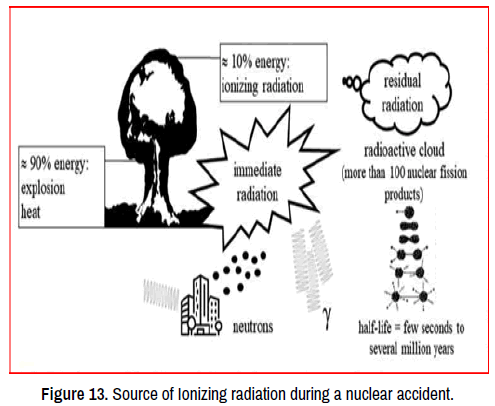
Figure 13. Source of Ionizing radiation during a nuclear accident.
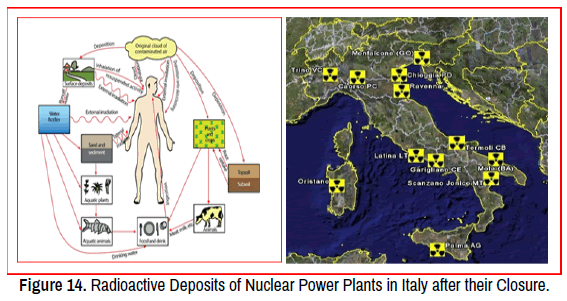
Figure 14. Radioactive Deposits of Nuclear Power Plants in Italy after their Closure.
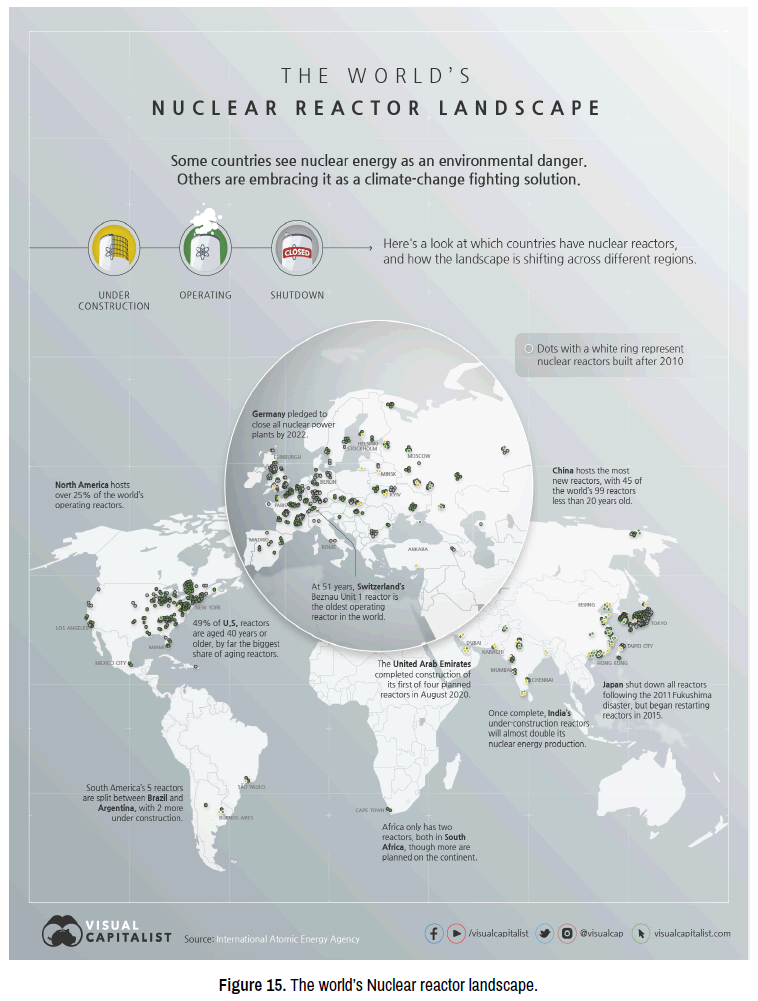
Figure 15. The world’s Nuclear reactor landscape.
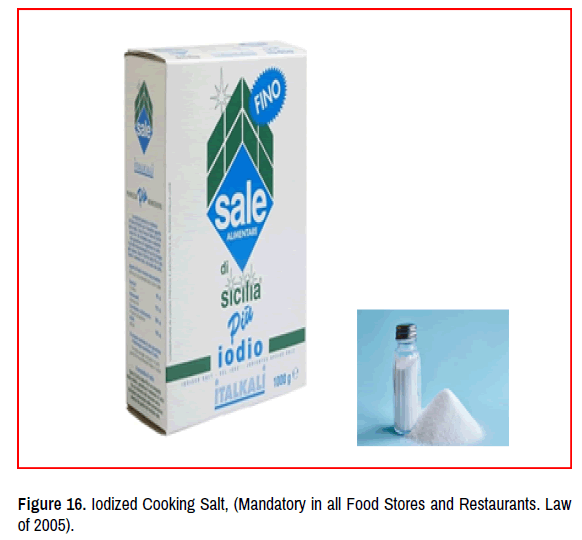
Figure 16. Iodized Cooking Salt, (Mandatory in all Food Stores and Restaurants. Law of 2005).
Figure 17. Iodized salt is displayed for a photograph in Philadelphia.
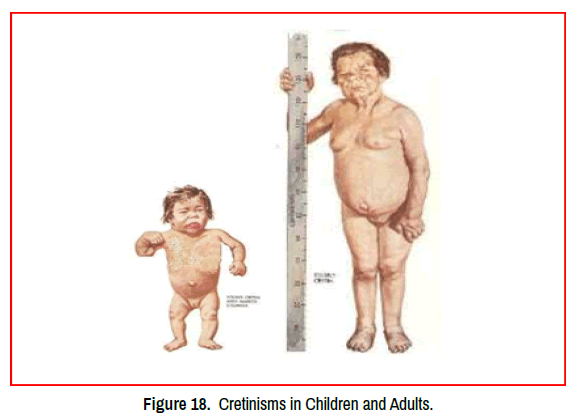
Figure 18. Cretinisms in Children and Adults.
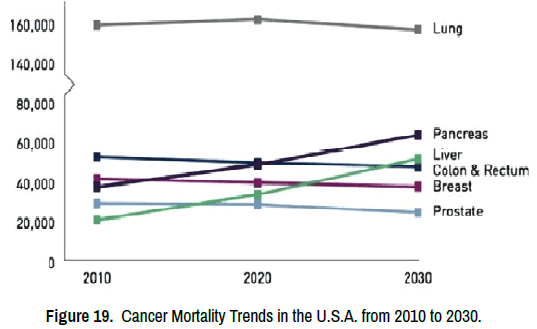
Figure 19. Cancer Mortality Trends in the U.S.A. from 2010 to 2030.
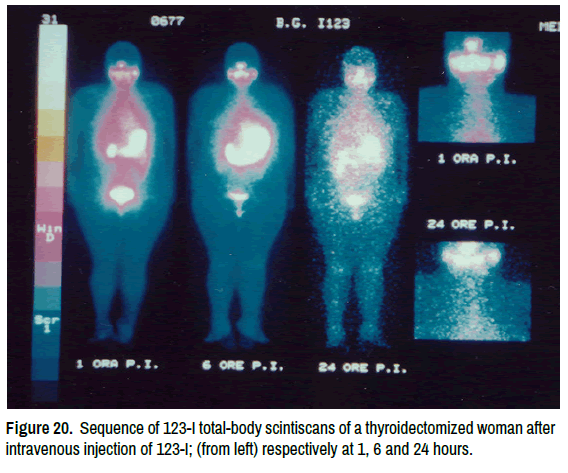
Figure 20. Sequence of 123-I total-body scintiscans of a thyroidectomized woman after intravenous injection of 123-I; (from left) respectively at 1, 6 and 24 hours.
Upper right: I-concentration in salivary glands and oral mucosa after 1 hour. I-concentration in salivary glands and oral mucosa after 2 hours. In normal thyroid, iodide-concentration is progressive, as in a reservoir [from 1% (after 30 minutes), to 5.8 % (after 48 hours) of the total injected dose [1]. The incidence of SGCs has increased within the past four decades. It is estimated that the incidence of SGC in the USA from 1975 to 2015 increased from 1.1 to 1.3 cases/100,000 individuals (Figures 21-24). Autoradiogram showing the distribution of 137-Cs in a pregnant mouse 5 min after intravenous injection. White areas correspond to high radioactivity. High uptake is present in the salivary gland and intestine. The pancreas shows the same high level of activity as the intestinal mucosa [2]. Autoradiogram showing 137-Cs distribution in a pregnant mouse 6 hours after intravenous injection. White areas correspond to high radioactivity. Uptake is high in the salivary gland, pancreas and intestine. In fetuses, concentration is significantly lower than in the mother. The radio-cesium concentration in the pancreas is significantly higher (40-45 %) than in the liver. Acute pancreatitis global incidence map: direction of change based on statistical significance of a country's average annual percent change [3]. Countries with statistically significantly increasing AAPC (Average Annual Percent Change) were further stratified by whether the increase was above or below 3% per year.
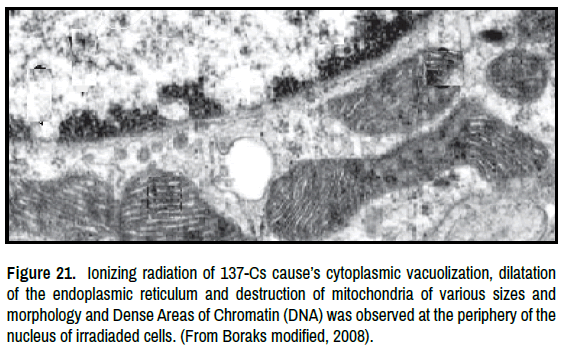
Figure 21. Ionizing radiation of 137-Cs cause’s cytoplasmic vacuolization, dilatation of the endoplasmic reticulum and destruction of mitochondria of various sizes and morphology and Dense Areas of Chromatin (DNA) was observed at the periphery of the nucleus of irradiaded cells. (From Boraks modified, 2008).
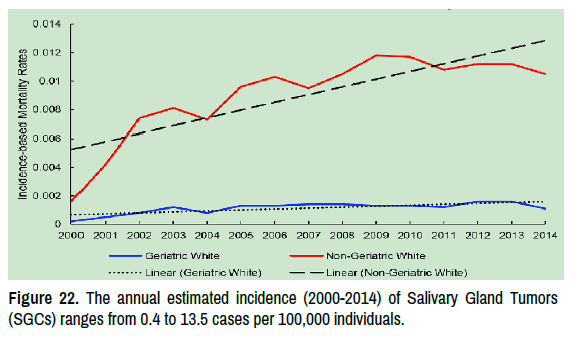
Figure 22. The annual estimated incidence (2000-2014) of Salivary Gland Tumors (SGCs) ranges from 0.4 to 13.5 cases per 100,000 individuals.
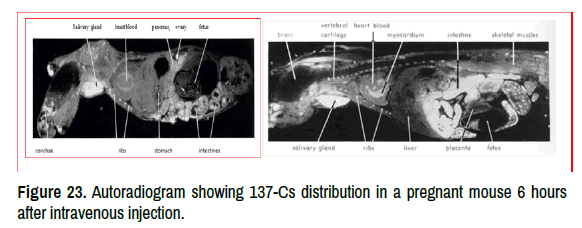
Figure 23. Autoradiogram showing 137-Cs distribution in a pregnant mouse 6 hours after intravenous injection.
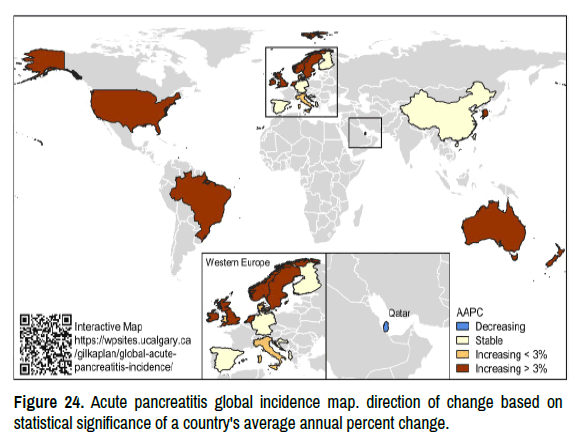
Figure 24. Acute pancreatitis global incidence map. direction of change based on statistical significance of a country's average annual percent change.
An unprecedented mechanism of radiation-induced pancreatic carcinogenesis has been highlighted through the concentration and elimination of radiocesium in pancreatic duct and juice. Studies by Venturi S [1] and others, have reported that pancreatic cells have a very high capacity to concentrate the carcinogenic radioactive Cesium in experimental scintigraphies with Cs-137 and in environments polluted by radioactive fallout in mammals (mice, dogs and humans) and also in birds and fish (chickens and carp). Ionizing radiation of 137-Cs causes cytoplasmic vacuolization, dilatation of the endoplasmic reticulum and destruction of mitochondria of various sizes and morphology and Dense Areas of Chromatin (DNA) at the periphery of the nucleus of pancreatic, thyroidal and salivary cells. "Because the IAEA reports directly to the Security Council of the UN and we all specialized agencies report to the Economic and Development Council. The organization which reports to the Security Council--not hierarchically, we are all equal but for atomic affairs, military use and civil use, peaceful or civil use they have the authority. They command. "
Dr. Sebastiano Venturi is widely regarded as one of the important researchers in these fields, both in Italy and internationally. His extensive work on iodine, cesium-137, stomach and pancreatic cancer, evolution and antioxidants has made significant contributions to the scientific community [4].
1. "Role of iodine in evolution and carcinogenesis of thyroid, breast and stomach"- This study explores the impact of iodine on the evolution and development of thyroid, breast and stomach cancers.
2. "Is there a role for iodine in breast diseases?" - This research investigates the potential role of iodine in breast diseases.
3. "Iodine in evolution of salivary glands and in oral health" - This study examines the role of iodine in the evolution and health of salivary glands.
4. "Iodide, thyroid and stomach carcinogenesis: evolutionary story of a primitive antioxidant?"- This research delves into the evolutionary aspects of iodine as an antioxidant and its role in thyroid and stomach carcinogenesis.
5. "Environmental iodine deficiency: A challenge to the evolution of terrestrial life?"- This study discusses the impact of iodine deficiency on the evolution of terrestrial life.
6. "Cesium in biology, pancreatic cancer and controversy in high and low radiation exposure damage scientific, environmental, geopolitical and economic aspects"- This research explores the effects of cesium on pancreatic cancer and the broader implications of radiation exposure.
These works highlight Dr. Venturi's extensive contributions to understanding the roles of iodine and cesium in various health conditions and evolutionary processes.
None.
There are no conflicts of interest by author.
Google Scholar, Cross Ref, Indexed at
Journal of Environmental Hazards received 51 citations as per Google Scholar report