Short Communication - (2025) Volume 10, Issue 3
Received: 02-Jun-2025, Manuscript No. jomp-26-185093;
Editor assigned: 04-Jun-2025, Pre QC No. P-185093;
Reviewed: 18-Jun-2025, QC No. Q-185093;
Revised: 23-Jun-2025, Manuscript No. R-185093;
Published:
30-Jun-2025
, DOI: 10.37421/2576-3857.2025.10.311
Citation: Conti, Marco. ”Novel Anti-Angiogenic Therapies Advance Renal Cell Carcinoma Treatment.” J Oncol Med and Pract 10 (2025):311.
Copyright: © 2025 Conti M. This is an open-access article distributed under the terms of the Creative Commons Attribution License, which permits unrestricted use, distribution and reproduction in any medium, provided the original author and source are credited.
The landscape of renal cell carcinoma (RCC) treatment is being significantly reshaped by novel anti-angiogenic therapies, moving beyond conventional approaches and offering new hope for patients with advanced disease [1].
These advancements represent a crucial evolution in our understanding and management of RCC, targeting the complex mechanisms that drive tumor growth and metastasis. Recent research has delved into the intricate workings of angiogenesis inhibitors, exploring their mechanisms of action and their potential to overcome the limitations of older treatments [2].
This exploration extends to agents that target specific pro-angiogenic pathways, moving beyond broad VEGF inhibition and opening doors to more precise therapeutic strategies. The development of these novel inhibitors is also intertwined with an increased focus on combination therapies, particularly the synergy observed between anti-angiogenic agents and immunotherapies [4].
This dual approach aims to harness the power of the immune system while simultaneously disrupting the tumor's blood supply, a critical component for its survival and proliferation. Furthermore, the modulation of the tumor microenvironment (TME) has emerged as a key area of investigation. Novel angiogenesis inhibitors are being studied for their ability to alter the TME, making it less hospitable for tumor cells and potentially enhancing the efficacy of other treatments [6].
This represents a paradigm shift towards understanding the tumor as a complex ecosystem rather than just a collection of malignant cells. The challenge of treatment resistance remains a significant hurdle in RCC management. Consequently, considerable effort is being directed towards identifying the mechanisms by which tumors evade anti-angiogenic therapies and developing strategies to overcome this resistance [5].
This includes exploring new therapeutic targets and combination regimens designed to restore sensitivity. Understanding the molecular underpinnings of angiogenesis in RCC is paramount to developing effective next-generation inhibitors. Research into pathways beyond VEGF, such as angiopoietins and Tie receptors, is crucial for advancing the field and offering more targeted interventions [3].
The clinical validation of these novel agents is an ongoing process, with numerous preclinical models and early-phase clinical trials providing valuable insights into their potential efficacy [2].
These studies are essential for paving the way for wider clinical adoption and improved patient outcomes. As the field progresses, there is a growing emphasis on personalized treatment approaches. The heterogeneity of RCC necessitates tailored strategies, and novel angiogenesis inhibitors are being investigated for their subtype-specific efficacy, with biomarker identification playing a key role in predicting response [8].
This movement towards personalized medicine is further exemplified by the integration of genomic profiling and biomarker analysis to guide the use of novel angiogenesis inhibitors [9].
Identifying patient populations most likely to benefit is critical for optimizing treatment and improving the success rates of these targeted therapies. Finally, ensuring the successful application of these new agents requires meticulous attention to the management of treatment-related toxicities. Proactive strategies for preventing and managing adverse events are essential for maintaining patient quality of life and treatment adherence [10].
The ongoing evolution of anti-angiogenic therapy for metastatic renal cell carcinoma (RCC) is characterized by the development and validation of novel agents designed to target specific components of the angiogenic cascade, thereby moving beyond the limitations of broad VEGF inhibition [2].
These advancements are crucial for improving outcomes in a disease known for its complexity and propensity for resistance. Research into novel angiogenesis inhibitors for RCC has illuminated their potential to disrupt tumor growth by interfering with the formation of new blood vessels, a process vital for tumor survival and expansion [1].
This has led to a deeper exploration of their mechanisms of action, clinical efficacy, and the emergence of innovative therapeutic strategies aimed at enhancing their impact. Beyond traditional VEGF inhibitors, emerging therapeutic strategies are focusing on agents that target alternative pro-angiogenic pathways. This shift allows for a more refined approach to inhibiting angiogenesis, potentially leading to greater efficacy and fewer off-target effects in RCC treatment [1].
The combination of immunotherapy with novel angiogenesis inhibitors has shown significant promise in treating advanced RCC. This synergistic approach aims to enhance anti-tumor immunity and overcome immune evasion, representing a critical step forward in the management of this challenging malignancy [4].
The tumor microenvironment (TME) in RCC is profoundly influenced by angiogenesis. Novel angiogenesis inhibitors are being investigated for their capacity to modulate the TME, impacting immune cell infiltration and stromal components, thereby creating a less favorable environment for tumor progression [6].
Addressing treatment resistance is a central theme in the current research on anti-angiogenic therapies for RCC. Efforts are focused on identifying the underlying mechanisms of resistance to both existing and emerging inhibitors, as well as on developing strategies to overcome these challenges and restore therapeutic sensitivity [5].
The role of angiogenesis in RCC progression and metastasis underscores the importance of developing next-generation inhibitors. Research is exploring agents that target pathways such as angiopoietins and Tie receptors, offering new avenues to combat the disease and overcome resistance to established treatments [3].
Significant efforts are dedicated to the clinical development of these novel anti-angiogenic agents. This includes synthesizing data from ongoing clinical trials for agents targeting specific signaling pathways beyond VEGF, such as the fibroblast growth factor (FGF) and platelet-derived growth factor (PDGF) pathways, to define their role in treatment algorithms [7].
The inherent heterogeneity of RCC presents a challenge for targeted therapies. Novel angiogenesis inhibitors are being studied for their potential to target specific RCC subtypes, with a focus on their impact on disease subtypes possessing distinct molecular profiles and the identification of biomarkers to predict response [8].
Precision medicine is increasingly guiding the application of novel angiogenesis inhibitors in RCC. This approach involves integrating genomic profiling and biomarker analysis to identify patient populations most likely to benefit from these targeted therapies, while also addressing the challenges of clinical implementation [9].
Finally, the successful and safe application of novel angiogenesis inhibitors in RCC management hinges on the early detection and effective management of treatment-related toxicities. Strategies for preventing and managing common and emerging adverse events are crucial for improving patient quality of life and ensuring treatment adherence [10].
This compilation of research highlights significant advancements in the treatment of renal cell carcinoma (RCC) through novel anti-angiogenic therapies. The focus has shifted from broad VEGF inhibition to targeting specific pro-angiogenic pathways, offering more precise therapeutic strategies. Combination therapies, particularly with immunotherapy, are showing promising synergistic effects. The modulation of the tumor microenvironment and overcoming treatment resistance are key areas of investigation. Furthermore, precision medicine approaches, integrating genomic profiling and biomarker analysis, are guiding personalized treatment strategies. The clinical development and management of adverse events associated with these new agents are also critical aspects discussed, aiming to improve patient outcomes and quality of life.
None
None
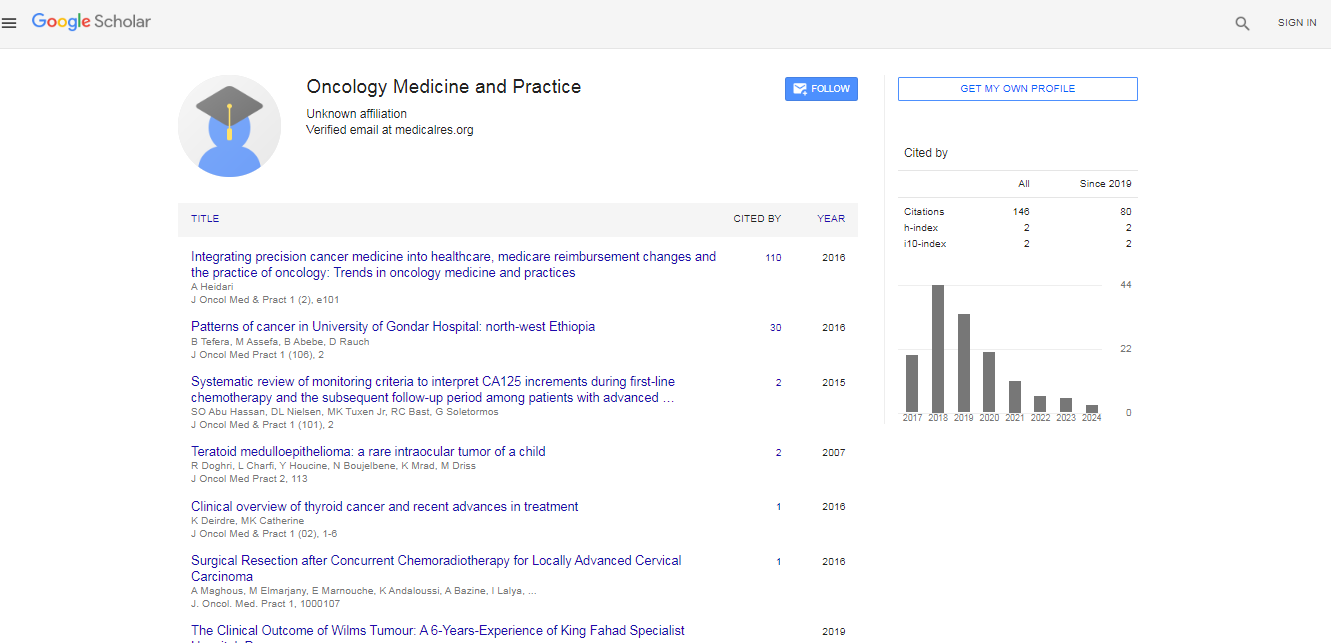
Journal of Oncology Medicine & Practice received 142 citations as per Google Scholar report