Brief Report - (2025) Volume 14, Issue 6
Received: 01-Nov-2025, Manuscript No. pbt-25-178155;
Editor assigned: 03-Nov-2025, Pre QC No. P-178155;
Reviewed: 17-Nov-2025, QC No. Q-178155;
Revised: 24-Nov-2025, Manuscript No. R-178155;
Published:
29-Nov-2025
, DOI: 10.37421/2167-7689.2025.14.512
Citation: El-Sayed, Ahmed. ”Navigating The Drug Approval: Data, Strategy, and Safety.” Pharmaceut Reg Affairs 14 (2025):512.
Copyright: © 2025 El-Sayed A. This is an open-access article distributed under the terms of the Creative Commons Attribution License, which permits unrestricted use, distribution and reproduction in any medium, provided the original author and source are credited.
The New Drug Application (NDA) represents a crucial submission to regulatory bodies such as the FDA, encompassing preclinical and clinical data to substantiate a drug's safety and efficacy for its intended therapeutic purpose. This extensive dossier necessitates meticulous preparation, strict adherence to established guidelines, and a profound grasp of regulatory science. Successfully navigating the NDA process is fundamentally important for introducing novel therapies to patients in need. [1] Understanding the standardized structure of the Common Technical Document (CTD) is vital for an effective New Drug Application. The CTD offers a uniform format for organizing and presenting regulatory information, thereby facilitating reviews by global health authorities and simplifying international submissions. [2] The quality and integrity of preclinical data serve as the bedrock for a successful New Drug Application. Rigorous non-clinical studies, including detailed toxicology and pharmacology assessments, provide the initial evidence regarding a drug candidate's safety profile and its mechanism of action. [3] Clinical trial design and execution are central to the generation of data required for a New Drug Application. Phases I, II, and III trials systematically evaluate a drug's safety, optimal dosage, and efficacy in human subjects, delivering the critical evidence needed for regulatory approval. [4] Regulatory strategy constitutes a key element of a successful New Drug Application. Proactive engagement with regulatory agencies, a thorough understanding of evolving guidelines, and strategic planning are indispensable for overcoming potential challenges and expediting the review process. [5] The chemistry, manufacturing, and controls (CMC) section of an NDA plays a critical role in demonstrating the drug product's consistent quality and attributes. This section includes comprehensive details on synthesis pathways, formulation development, stability studies, and manufacturing processes. [6] Post-marketing surveillance and pharmacovigilance remain integral components of the drug lifecycle, continuing even after New Drug Application approval. Ongoing monitoring is essential for ensuring sustained drug safety and for identifying rare adverse events that may emerge in broader populations. [7] The data integrity and quality requirements for New Drug Applications are notably stringent. Ensuring the accuracy, completeness, and reliability of all data submitted is paramount for achieving regulatory acceptance and maintaining public trust in pharmaceutical products. [8] Expedited pathways for New Drug Applications, including Fast Track, Breakthrough Therapy, and Priority Review designations, are specifically designed to accelerate the development and review timelines for drugs intended for serious conditions with significant unmet medical needs. [9] Real-world evidence (RWE) is increasingly being incorporated to support New Drug Applications and subsequent post-approval studies. RWE, gathered from a variety of sources, can offer invaluable insights into a drug's effectiveness and safety within routine clinical practice settings. [10]
The New Drug Application (NDA) is a pivotal submission to regulatory authorities like the FDA, requiring detailed preclinical and clinical data to confirm a drug's safety and efficacy for its intended use. This comprehensive dossier demands meticulous preparation, strict adherence to specific guidelines, and a deep understanding of regulatory science. Successful navigation of the NDA process is essential for bringing innovative therapies to patients. [1] Understanding the Common Technical Document (CTD) format is indispensable for an effective New Drug Application. The CTD provides a standardized framework for organizing and presenting regulatory information, which facilitates reviews by global health authorities and streamlines international submissions. [2] The quality and integrity of preclinical data are fundamental to the success of a New Drug Application. Robust non-clinical studies, encompassing toxicology and pharmacology, furnish the initial evidence of a drug candidate's safety profile and its mechanism of action. [3] Clinical trial design and execution are central to generating the necessary data for a New Drug Application. Phase I, II, and III trials systematically assess a drug's safety, appropriate dosage, and efficacy in human subjects, providing the critical evidence required for regulatory approval. [4] Regulatory strategy represents a key element in the successful submission of a New Drug Application. Proactive engagement with regulatory agencies, a clear understanding of evolving guidelines, and well-defined strategic planning are vital for overcoming hurdles and expediting the review process. [5] The chemistry, manufacturing, and controls (CMC) section of an NDA is critically important for demonstrating the drug product's quality and consistency. This includes providing detailed information on synthesis, formulation, stability, and all manufacturing processes. [6] Post-marketing surveillance and pharmacovigilance are integral to the drug lifecycle, even following New Drug Application approval. Continuous monitoring ensures ongoing safety and enables the identification of rare adverse events that may appear in the broader patient population. [7] The data integrity and quality standards for New Drug Applications are exceptionally high. Ensuring the accuracy, completeness, and reliability of all submitted data is paramount for achieving regulatory acceptance and fostering public trust. [8] Expedited pathways for New Drug Applications, such as Fast Track, Breakthrough Therapy, and Priority Review, are established to accelerate the development and review of drugs for serious conditions where there are unmet medical needs. [9] Real-world evidence (RWE) is increasingly being utilized to support New Drug Applications and post-approval studies. RWE, derived from diverse sources, can offer valuable insights into a drug's effectiveness and safety in everyday clinical practice. [10]
The New Drug Application (NDA) process is a critical submission to regulatory agencies like the FDA, requiring comprehensive preclinical and clinical data to prove a drug's safety and efficacy. Navigating this process demands meticulous preparation, adherence to guidelines, and expertise in regulatory science. The Common Technical Document (CTD) provides a standardized format for organizing information globally. Preclinical studies are foundational, establishing initial safety and mechanism of action. Clinical trials (Phases I-III) systematically gather data on safety, dosage, and efficacy in humans. A robust regulatory strategy, including proactive engagement with agencies, is vital. The Chemistry, Manufacturing, and Controls (CMC) section ensures product quality and consistency. Post-marketing surveillance and pharmacovigilance are ongoing safety measures after approval. Data integrity is paramount, ensuring accuracy and reliability. Expedited pathways exist for drugs addressing serious unmet needs. Real-world evidence is also increasingly used to support submissions.
None
None
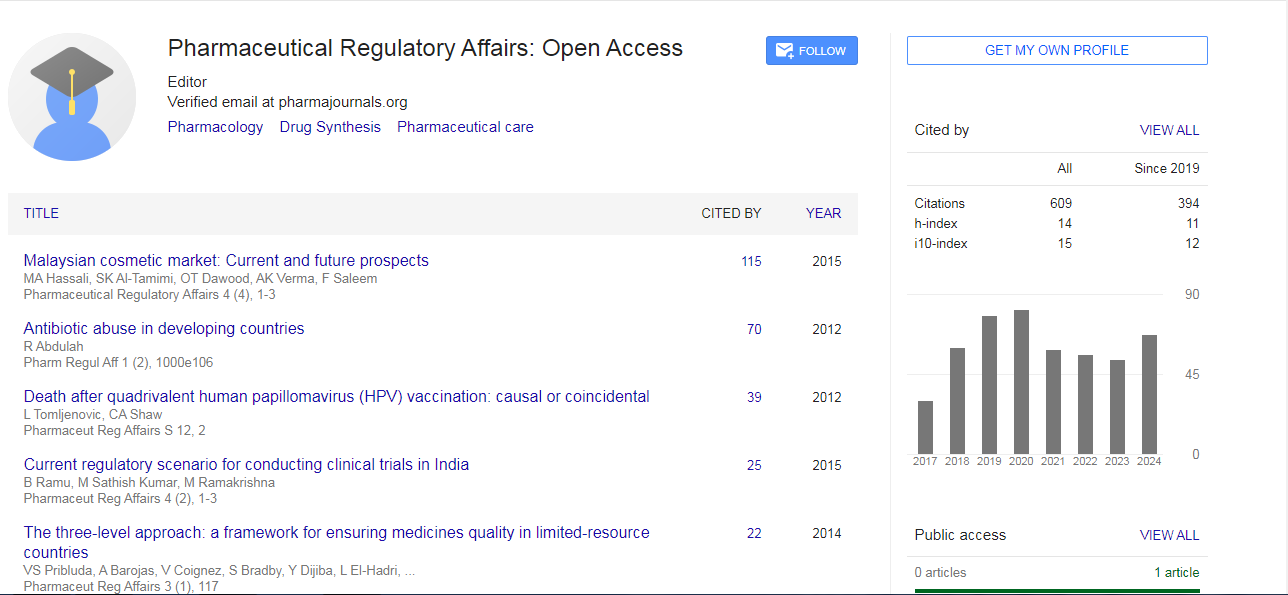
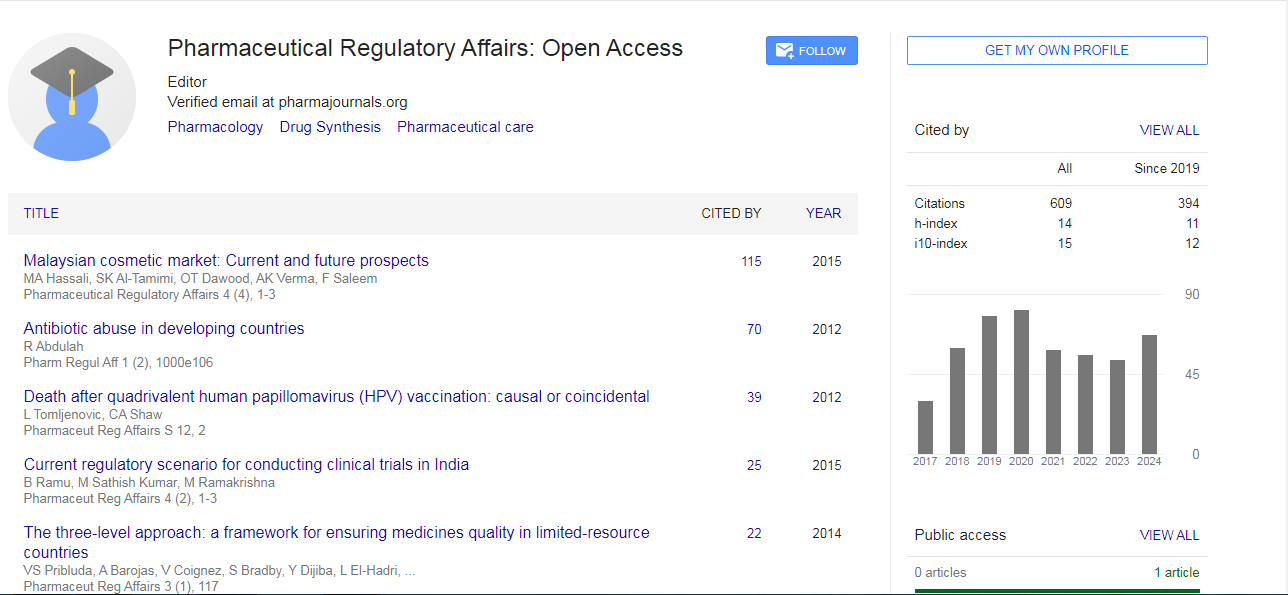
Pharmaceutical Regulatory Affairs: Open Access received 533 citations as per Google Scholar report