Opinion - (2025) Volume 14, Issue 6
Received: 31-Oct-2025, Manuscript No. jio-26-184837;
Editor assigned: 03-Nov-2025, Pre QC No. P-184837;
Reviewed: 17-Nov-2025, QC No. Q-184837;
Revised: 21-Nov-2025, Manuscript No. R-184837;
Published:
28-Nov-2025
, DOI: 10.37421/2329-6771.2025.14.586
Citation: Ibanez, Carlos. ”Navigating Integrative Oncology Trial Design: Innovation and Ethics.” J Integr Onco 14 (2025):586.
Copyright: © 2025 Ibanez C. This is an open-access article distributed under the terms of the Creative Commons Attribution License, which permits unrestricted use, distribution and reproduction in any medium, provided the original author and source are credited.
Designing clinical trials in integrative oncology presents a unique set of challenges that necessitate a careful and multifaceted approach. This field seeks to harmonize the rigorous empirical methodologies of conventional cancer research with the holistic principles inherent in integrative care. A primary hurdle involves the precise definition of appropriate endpoints, which must adequately capture not only traditional oncological outcomes but also crucial patient-reported quality of life metrics. Furthermore, the standardization of a wide array of diverse integrative interventions poses a significant logistical and scientific challenge. Recruiting adequately diverse patient populations that reflect the heterogeneity of cancer patients is also a critical consideration. Innovative trial designs, such as adaptive trials and pragmatic trials, are increasingly recognized as essential for effectively evaluating the real-world effectiveness and implementation of integrative strategies. Successful trial design also relies heavily on robust patient engagement throughout the research process. A clear understanding of the potential synergistic interactions between conventional and integrative therapies is fundamental. The integration of mind-body therapies into cancer care, for instance, demands well-designed trials to rigorously demonstrate their efficacy and safety. This requires specific considerations for incorporating practices like meditation, yoga, and acupuncture into the clinical research framework. It is paramount to select appropriate outcome measures that reflect improvements in psychological well-being and symptom management alongside standard oncological outcomes. The inherent challenges of blinding participants and researchers, standardizing complex interventions, and ensuring adequate sample sizes to detect meaningful effects in diverse cancer populations must be addressed. Pragmatic clinical trials are becoming indispensable tools for assessing the real-world effectiveness of integrative oncology interventions. These designs are particularly valuable for evaluating the impact of modalities such as nutritional counseling and exercise programs on the quality of life and treatment outcomes of cancer survivors. The advantages of pragmatic trials, including enhanced generalizability and potentially reduced costs, are significant, though they also present challenges in maintaining scientific rigor and controlling for confounding factors within community-based settings. Patient-reported outcome measures (PROMs) are foundational to assessing the impact of integrative oncology interventions, particularly concerning quality of life and symptom burden. Careful selection and implementation of validated PROMs are essential, ensuring they are sensitive to change and relevant to the lived experiences of cancer patients. PROMs can profoundly inform trial design by helping to define primary and secondary endpoints and facilitating the development of personalized treatment approaches. Adaptive trial designs offer a flexible and efficient paradigm for evaluating multiple integrative oncology interventions simultaneously or sequentially. Principles like sample size re-estimation and response-adaptive randomization are key to their application in complex research settings. These designs hold the promise of accelerating the identification of effective treatments and optimizing resource allocation, ultimately leading to faster dissemination of beneficial therapies. Ethical considerations within integrative oncology clinical trials are complex, arising from the nature of novel interventions and the patient populations involved. Issues such as obtaining informed consent for experimental therapies, managing potential conflicts of interest, and ensuring the equitable distribution of benefits and risks are paramount. Establishing robust ethical frameworks that uphold patient autonomy and promote justice in research is critical. Biomarkers are increasingly vital for stratifying patients, predicting treatment responses, and evaluating intervention efficacy in oncology. In integrative oncology, the identification of reliable biomarkers for the effects of complementary therapies on physiological and psychological parameters represents a significant research frontier. This research aims to leverage molecular, physiological, and psychological markers to refine the design and interpretation of integrative oncology trials, paving the way for more precise and personalized care. The design of clinical trials focused on palliative care interventions within integrative oncology must prioritize symptom management and quality of life as primary endpoints. Challenges in measuring subjective patient experiences and the importance of validated instruments are key considerations. Integrating novel palliative care approaches into existing clinical trial frameworks is essential to maximize patient benefit throughout survivorship and end-of-life care. Finally, incorporating patient preferences and values into the very fabric of integrative oncology trial design is crucial for ensuring relevance and improving patient adherence. Shared decision-making models and robust patient engagement strategies can significantly enhance trial design. By actively involving patients in the planning process, researchers can develop trials that more accurately reflect patient needs and yield more meaningful and impactful results [1][2][3][4][5][6][7][8][9][10].
The intricate process of designing clinical trials in integrative oncology demands a sophisticated balance between conventional research rigor and holistic care principles. Key challenges include establishing precise endpoints that encompass both oncological outcomes and patient-reported quality of life, alongside the complex task of standardizing diverse integrative interventions. Recruiting a broad spectrum of patient populations is another critical factor for generalizability. Consequently, innovative trial designs such as adaptive and pragmatic trials are vital for assessing the effectiveness and real-world implementation of integrative strategies. Robust patient engagement and a deep understanding of potential synergistic effects between conventional and integrative therapies are essential for successful design [1].
The integration of mind-body therapies into cancer care necessitates well-conceived trials to confirm their efficacy. Specific considerations for incorporating practices like meditation, yoga, and acupuncture into clinical research are crucial. This involves selecting outcome measures that reflect psychological well-being and symptom management in conjunction with oncological outcomes. Challenges related to blinding, intervention standardization, and adequate sample sizes for diverse populations must be meticulously addressed [2].
Pragmatic clinical trials are increasingly recognized as essential for evaluating the real-world effectiveness of integrative oncology interventions. This framework is particularly useful for assessing the impact of nutritional counseling and exercise programs on the quality of life and treatment outcomes of cancer survivors. Pragmatic designs offer advantages in generalizability and cost-effectiveness, though they also present challenges in maintaining rigor and controlling for confounding factors in community settings [3].
Patient-reported outcome measures (PROMs) are indispensable for evaluating the impact of integrative oncology interventions on quality of life and symptom burden. The selection and implementation of validated PROMs that are sensitive to change and relevant to patient experiences are paramount. PROMs can significantly inform trial design by guiding the definition of primary and secondary endpoints and enabling personalized treatment approaches [4].
Adaptive trial designs provide flexibility and efficiency for evaluating multiple integrative oncology interventions concurrently or sequentially. Principles such as sample size re-estimation and response-adaptive randomization are key to their application in complex research. These designs can accelerate the identification of effective treatments and optimize resource allocation, leading to faster implementation of beneficial therapies [5].
Ethical considerations in integrative oncology clinical trials are multifaceted, involving issues such as informed consent for novel therapies, potential conflicts of interest, and equitable distribution of risks and benefits. Developing ethical frameworks that respect patient autonomy and promote justice is critical for responsible research conduct [6].
Biomarkers are essential for stratifying patients, predicting treatment response, and assessing intervention efficacy in oncology. In integrative oncology, identifying reliable biomarkers for the effects of complementary therapies on physiological and psychological parameters is a significant research area. This involves utilizing molecular, physiological, and psychological markers to inform the design and interpretation of trials, aiming for precision and personalized care [7].
Clinical trial design for palliative care interventions within integrative oncology must focus on symptom management and quality of life as primary endpoints. Challenges in measuring subjective experiences and the importance of validated instruments are central. Integrating novel palliative care approaches into existing trial frameworks is crucial for maximizing patient benefit during survivorship and end-of-life care [8].
Incorporating patient preferences and values into the design of integrative oncology trials is vital for ensuring relevance and adherence. Shared decision-making models and patient engagement strategies can enhance trial design by involving patients in the planning process, leading to trials that better reflect patient needs and yield more meaningful results [9].
The evolving landscape of integrative oncology necessitates innovative and adaptable clinical trial designs. This includes advancements in personalized medicine, digital health integration, and the evaluation of complex interventions. The authors emphasize the need for multidisciplinary collaboration and the adoption of novel statistical approaches to tackle the unique challenges inherent in this field of research [10].
Designing clinical trials in integrative oncology requires balancing conventional research with holistic principles. Key challenges include defining endpoints, standardizing interventions, and recruiting diverse populations. Innovative designs like adaptive and pragmatic trials are crucial for real-world evaluation. Patient-reported outcomes and biomarkers are essential tools for measuring impact and personalizing care. Ethical considerations and patient engagement are paramount for successful and patient-centered research. The field is rapidly evolving, demanding innovative methodologies to address complex interventions and integrate digital health solutions.
None
None
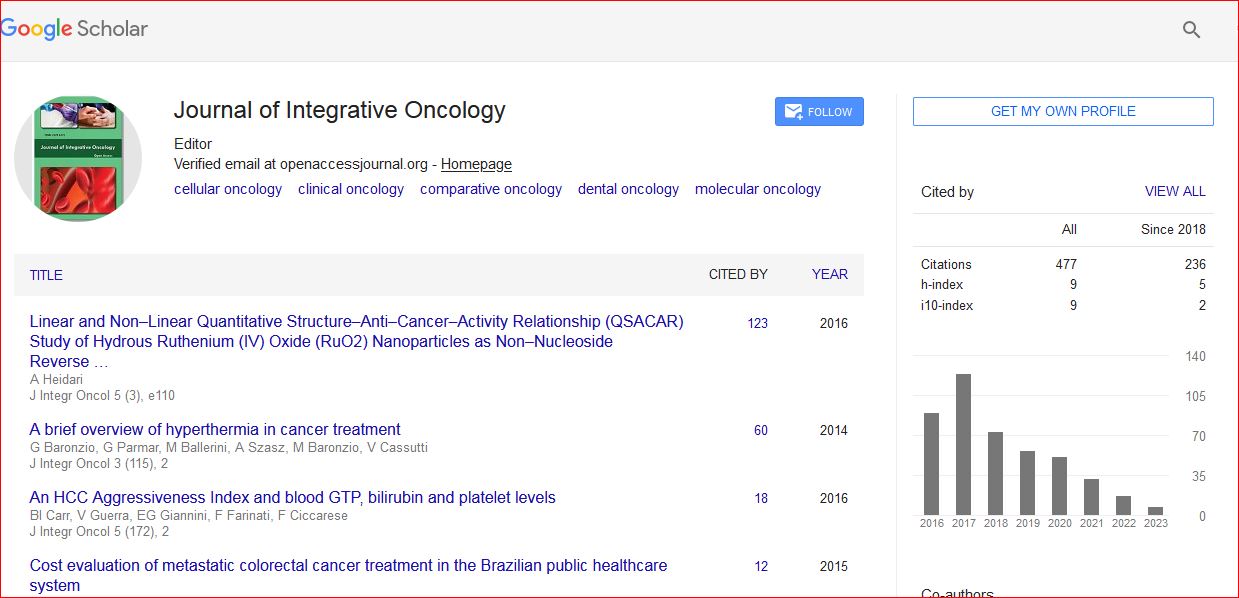
Journal of Integrative Oncology received 495 citations as per Google Scholar report