Perspective - (2025) Volume 10, Issue 4
Received: 01-Aug-2025, Manuscript No. jcct-26-183227;
Editor assigned: 04-Aug-2025, Pre QC No. P-183227;
Reviewed: 18-Aug-2025, QC No. Q-183227;
Revised: 22-Aug-2025, Manuscript No. R-183227;
Published:
29-Aug-2025
, DOI: 10.37421/2577-0535.2025.9.325
Citation: Svensson, Erik. ”Navigating Global Cancer Trials: Regulatory Harmonization is Key.” J Cancer Clin Trials 10 (2025):325.
Copyright: © 2025 Svensson E. This is an open-access article distributed under the terms of the Creative Commons Attribution License, which permits unrestricted use, distribution and reproduction in any medium, provided the original author and source are credited.
Navigating the complex regulatory landscape presents a significant hurdle in conducting global cancer clinical trials. Harmonizing differing national requirements for trial design, data collection, ethical review, and drug approval poses substantial challenges, often leading to delays, increased costs, and difficulties in patient recruitment, ultimately impacting the timely development and accessibility of novel cancer therapies worldwide [1].
Differences in regulatory requirements across various countries, particularly concerning Good Clinical Practice (GCP) standards, data privacy laws, and local ethical committee approvals, create a fragmented environment for multinational cancer trials. Addressing these disparities requires proactive engagement with regulatory bodies and a commitment to adaptive trial designs that can accommodate regional variations [2].
The increasing complexity of cancer therapies, including immunotherapies and targeted agents, necessitates robust and adaptable regulatory frameworks. Challenges arise in defining appropriate endpoints, managing advanced toxicity profiles, and ensuring real-world data integration. Regulatory agencies are continuously evolving to address these complexities, but the pace of innovation often outstrips regulatory updates [3].
Ensuring patient safety and data integrity across diverse regulatory jurisdictions is paramount. Differences in pharmacovigilance reporting requirements, investigational product handling, and local adverse event monitoring can complicate trial oversight. Collaborative efforts between sponsors, CROs, and regulatory authorities are crucial for maintaining high standards of patient protection and data reliability [4].
The adoption of decentralized clinical trials (DCTs) and innovative technologies, such as wearables and telemedicine, introduces new regulatory considerations. While these approaches offer potential benefits for patient access and data collection, their implementation requires clear regulatory guidance and adaptation of existing frameworks to ensure compliance and maintain trial integrity [5].
Reimbursement policies and drug pricing regulations can significantly influence the feasibility and uptake of global cancer clinical trials. Harmonizing these financial and access-related aspects across different healthcare systems and national drug approval processes adds another layer of complexity, impacting trial recruitment and the equitable distribution of new treatments [6].
The challenge of obtaining timely ethical approvals from diverse Institutional Review Boards (IRBs) or Ethics Committees (ECs) across multiple countries often causes significant trial initiation delays. Variations in ethical review processes, requirements for local investigator qualifications, and review timelines necessitate careful planning and early engagement with these bodies [7].
The regulatory burden associated with importing investigational medicinal products (IMPs) and managing their supply chain across international borders is substantial. Customs clearance, temperature-controlled logistics, and adherence to varied national import/export regulations pose significant operational challenges, impacting trial timelines and cost-effectiveness [8].
Adapting to the evolving regulatory expectations for real-world evidence (RWE) in oncology trials is a growing concern. While RWE can augment traditional clinical trial data, its acceptance by regulatory bodies requires adherence to strict data quality standards, methodological rigor, and transparent reporting, which can vary globally [9].
The increasing use of companion diagnostics and biomarker-driven trial designs adds another layer of regulatory complexity. Ensuring that these diagnostic tests are approved and available in all participating countries, and that their use aligns with local regulations for both the diagnostic and the associated therapy, is critical for successful global implementation [10].
The intricate regulatory landscape significantly impedes the progress of global cancer clinical trials. Harmonizing diverse national requirements for trial design, data collection, ethical review, and drug approval leads to considerable challenges, often resulting in delays, increased costs, and difficulties in patient recruitment, which ultimately affects the timely development and accessibility of innovative cancer therapies worldwide [1].
Variations in regulatory requirements across different countries, particularly concerning Good Clinical Practice (GCP) standards, data privacy laws, and local ethical committee approvals, contribute to a fragmented environment for multinational cancer trials. Effectively addressing these disparities necessitates proactive engagement with regulatory bodies and the adoption of adaptive trial designs capable of accommodating regional differences [2].
As cancer therapies become increasingly complex, including immunotherapies and targeted agents, there is a growing need for robust and adaptable regulatory frameworks. Key challenges involve defining appropriate endpoints, managing advanced toxicity profiles, and integrating real-world data. Regulatory agencies are continuously adapting to these complexities, though the pace of innovation frequently surpasses regulatory updates [3].
Ensuring patient safety and data integrity across various regulatory jurisdictions is of utmost importance. Discrepancies in pharmacovigilance reporting requirements, investigational product handling, and local adverse event monitoring can complicate trial oversight. Collaborative efforts among sponsors, Contract Research Organizations (CROs), and regulatory authorities are vital for upholding high standards of patient protection and data reliability [4].
The advent of decentralized clinical trials (DCTs) and innovative technologies like wearables and telemedicine introduces novel regulatory considerations. While these approaches hold the promise of improved patient access and data collection, their successful implementation requires clear regulatory guidance and the adaptation of existing frameworks to ensure compliance and preserve trial integrity [5].
Reimbursement policies and drug pricing regulations play a critical role in determining the feasibility and adoption of global cancer clinical trials. Harmonizing these financial and access-related aspects across diverse healthcare systems and national drug approval processes introduces an additional layer of complexity, affecting trial recruitment and the equitable distribution of new treatments [6].
The process of obtaining timely ethical approvals from various Institutional Review Boards (IRBs) or Ethics Committees (ECs) in multiple countries frequently results in significant delays in trial initiation. Divergences in ethical review procedures, requirements for local investigator qualifications, and review timelines underscore the need for meticulous planning and early engagement with these governing bodies [7].
The regulatory complexities associated with importing investigational medicinal products (IMPs) and managing their international supply chains are substantial. Issues such as customs clearance, temperature-controlled logistics, and compliance with varied national import/export regulations present significant operational hurdles, impacting trial timelines and cost-effectiveness [8].
Adapting to the evolving regulatory expectations for real-world evidence (RWE) in oncology trials presents an ongoing challenge. While RWE can supplement traditional clinical trial data, its acceptance by regulatory bodies hinges on adherence to stringent data quality standards, methodological rigor, and transparent reporting, all of which can differ globally [9].
The increasing utilization of companion diagnostics and biomarker-driven trial designs introduces further regulatory complexities. It is crucial to ensure that these diagnostic tests are approved and accessible in all participating countries, and that their application complies with local regulations for both the diagnostic and the corresponding therapy, for successful global implementation [10].
Global cancer clinical trials face significant challenges due to complex and fragmented regulatory landscapes across different countries. Harmonizing requirements for trial design, data collection, ethical review, drug approval, and pharmacovigilance is crucial for timely development and accessibility of novel therapies. Differences in Good Clinical Practice (GCP) standards, data privacy laws, and ethical review processes create barriers. The increasing complexity of cancer therapies and the adoption of decentralized trials and new technologies further necessitate adaptable regulatory frameworks. Ensuring patient safety, data integrity, and efficient supply chains for investigational products are paramount. Financial aspects like reimbursement policies and regulatory acceptance of real-world evidence and companion diagnostics also add layers of complexity, requiring collaborative efforts and proactive engagement with regulatory bodies to overcome these hurdles.
None
None
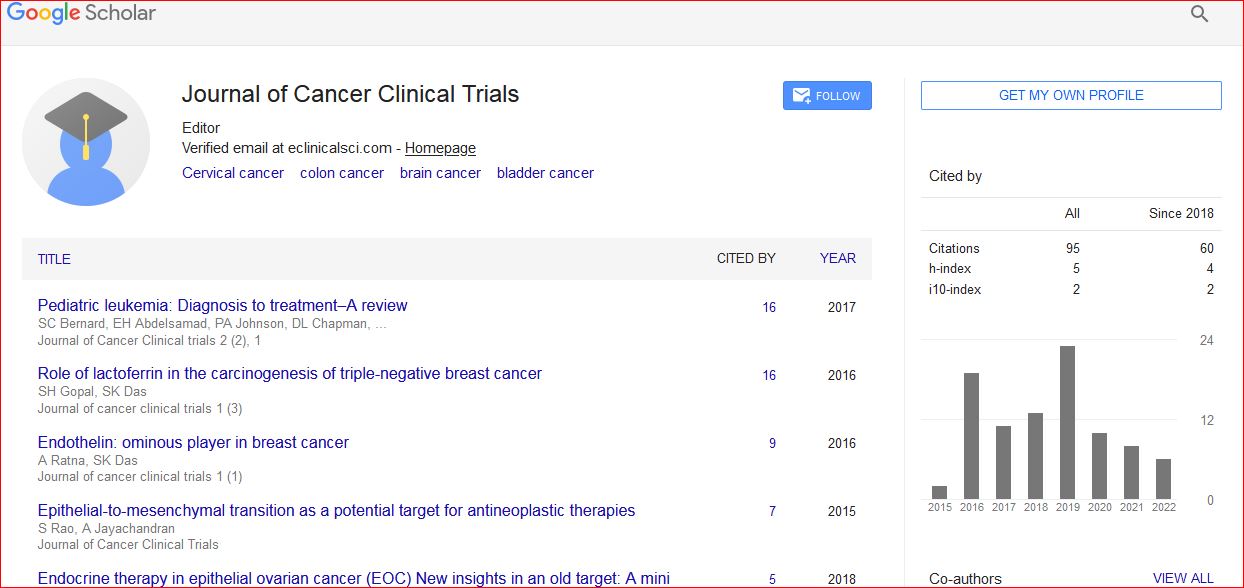
Journal of Cancer Clinical Trials received 95 citations as per Google Scholar report