Brief Report - (2025) Volume 14, Issue 6
Received: 01-Nov-2025, Manuscript No. pbt-25-178154;
Editor assigned: 03-Nov-2025, Pre QC No. P-178154;
Reviewed: 17-Nov-2025, QC No. Q-178154;
Revised: 24-Nov-2025, Manuscript No. R-178154;
Published:
29-Nov-2025
, DOI: 10.37421/2167-7689.2025.14.511
Citation: Martinez, Sofia. ”Navigating Clinical Trial Approval: Complex, Patient-centric, Digital.” Pharmaceut Reg Affairs 14 (2025):511.
Copyright: © 2025 Martinez S. This is an open-access article distributed under the terms of the Creative Commons Attribution License, which permits unrestricted use, distribution and reproduction in any medium, provided the original author and source are credited.
Navigating the complexities of clinical trial approval is a critical endeavor in the journey of bringing novel therapies to patients, demanding a thorough understanding of a multi-faceted regulatory landscape. This landscape encompasses stringent ethical considerations, the imperative of scientific rigor, and unwavering commitment to patient safety. Understanding the evolving requirements set forth by regulatory agencies such as the Food and Drug Administration (FDA) and the European Medicines Agency (EMA) is paramount for the successful initiation and progression of any clinical trial [1].
The expedited review pathways, while offering the potential to significantly shorten the time to market for certain drug candidates, are accompanied by demanding data requirements and substantial post-market surveillance obligations. These pathways are strategically designed for treatments that address critical unmet medical needs or serious conditions, thereby underscoring the delicate balance struck between facilitating rapid patient access and ensuring a robust evaluation of safety profiles [2].
Patient centricity has emerged as an increasingly influential factor in shaping clinical trial design and the subsequent approval processes. The deliberate incorporation of patient perspectives into trial protocols, the definition of outcome measures, and the methodologies for data collection can lead to studies that are not only more relevant but also more successful, ultimately enhancing the probability of achieving regulatory approval [3].
The ongoing digital transformation is profoundly reshaping the landscape of clinical trials, characterized by a growing reliance on decentralized trial models and the utilization of real-world evidence. Regulatory bodies are actively adapting to these paradigm shifts, necessitating the establishment of clear frameworks to ensure data integrity, uphold patient privacy, and rigorously validate the digital health technologies employed within trial settings [4].
Ethical review boards perform an indispensable role in safeguarding the welfare of trial participants and ensuring the ethical conduct of clinical trials from inception to completion. Their meticulous review of study protocols, the informed consent processes, and continuous monitoring mechanisms represent a non-negotiable step in the overall approval pathway for any clinical investigation [5].
The escalating complexity of biologics and advanced therapeutic modalities necessitates the development of highly tailored regulatory approaches to accommodate their unique characteristics. Regulators are actively grappling with novel manufacturing processes, distinct immunogenicity concerns, and the inherent challenges associated with ensuring adequate long-term follow-up, all of which significantly impact the review and approval timelines for these groundbreaking treatments [6].
The pursuit of global harmonization in clinical trial regulations represents an ongoing and vital effort aimed at streamlining drug development across international borders. Achieving greater alignment in regulatory requirements can significantly facilitate international drug development and, consequently, improve global patient access to new medicines, although significant regional differences persist [7].
The integration of artificial intelligence (AI) into drug discovery and development processes is rapidly gaining momentum, exerting a considerable influence on how clinical trials are conceptualized and analyzed. Regulatory agencies are proactively engaged in developing comprehensive frameworks to effectively evaluate AI-generated insights and ensure their responsible incorporation into the drug approval continuum [8].
Pharmacovigilance and post-market surveillance are fundamental components of the drug lifecycle, extending well beyond the initial regulatory approval. The establishment and maintenance of robust systems for detecting, assessing, and responding to adverse events are critical for safeguarding public health and for informing future regulatory decisions and policy development [9].
Dedicated regulatory pathways for orphan drugs are specifically designed to provide essential incentives for the development of treatments targeting rare diseases. A comprehensive understanding of the specific criteria and data requirements associated with orphan drug designation and subsequent approval is indispensable for pharmaceutical companies focused on developing therapies for these underserved patient populations [10].
The pathway to bringing novel therapies to patients is intricate, necessitating diligent navigation of clinical trial approval processes, which are inherently complex and multifaceted. This journey demands a profound appreciation of the regulatory landscape, encompassing critical ethical considerations, the fundamental principles of scientific rigor, and the paramount importance of patient safety. Consequently, a deep understanding of the ever-evolving requirements imposed by regulatory bodies like the FDA and EMA is indispensable for the successful initiation and sustained progression of clinical trials [1].
Expedited review pathways represent a significant mechanism for accelerating the market entry of certain drug candidates; however, these accelerated routes are contingent upon meeting stringent data prerequisites and adhering to rigorous post-market surveillance obligations. These pathways are strategically curated for treatments designed to address critical unmet medical needs or to manage serious health conditions, thereby reflecting a carefully calibrated balance between the urgency of patient access and the necessity of comprehensive safety evaluations [2].
An increasing emphasis on patient centricity is profoundly influencing the design of clinical trials and the overarching regulatory approval frameworks. The proactive integration of patient perspectives into the development of trial protocols, the definition of meaningful outcome measures, and the methodologies employed for data collection can foster studies that are more clinically relevant and ultimately more successful, thereby enhancing the likelihood of achieving regulatory authorization [3].
The digital transformation is fundamentally altering the conduct of clinical trials, marked by a growing adoption of decentralized trial methodologies and the increasing utilization of real-world evidence. Regulatory agencies are in the process of adapting to these dynamic changes, which requires the establishment of transparent and reliable frameworks for ensuring data integrity, protecting patient privacy, and validating the digital health technologies that are becoming integral to trial operations [4].
Ethical review boards are pivotal entities that bear the responsibility of safeguarding the well-being of trial participants and upholding the ethical standards throughout the execution of clinical trials. Their thorough scrutiny of study protocols, the informed consent procedures, and ongoing oversight mechanisms are an indispensable and non-negotiable component of the regulatory approval continuum [5].
The inherent complexity associated with biologics and advanced therapeutic agents necessitates the development of adaptive and specialized regulatory strategies. Regulatory authorities are actively confronting challenges related to novel manufacturing processes, unique immunogenicity profiles, and the difficulties in ensuring adequate long-term patient follow-up, all of which have a direct bearing on the timelines for reviewing and approving these innovative treatments [6].
The ongoing pursuit of global harmonization in clinical trial regulations remains a crucial objective aimed at streamlining the international drug development process. Greater alignment in regulatory expectations across different geographical regions has the potential to significantly facilitate global drug development efforts and expedite patient access to new medicines worldwide, although substantial regional disparities continue to exist [7].
The integration of artificial intelligence (AI) within the realms of drug discovery and development is steadily gaining prominence, impacting the very fabric of clinical trial design and analytical methodologies. Regulatory bodies are actively engaged in formulating guidelines and frameworks to ensure the proper evaluation of AI-derived insights and to promote their responsible integration into the drug approval process [8].
Pharmacovigilance and post-market surveillance are essential and continuous aspects of the drug lifecycle, extending far beyond the initial regulatory approval. The implementation and maintenance of robust systems for the timely detection, thorough assessment, and effective response to adverse events are critical for protecting public health and for informing subsequent regulatory decisions and policy updates [9].
The regulatory pathways specifically established for orphan drugs are intentionally designed to incentivize the research and development of treatments for rare diseases. A clear and comprehensive understanding of the specific eligibility criteria and the requisite data for achieving orphan drug designation and subsequent approval is therefore essential for companies aiming to serve these often-underserved patient populations [10].
Clinical trial approval is a complex process involving ethical, scientific, and safety considerations, with regulatory bodies like the FDA and EMA setting crucial requirements. Expedited pathways offer faster market access for certain drugs but demand stringent data and post-market surveillance. Patient centricity is increasingly important in trial design and approval, leading to more relevant and successful studies. Digital transformation is reshaping trials through decentralized models and real-world evidence, requiring new regulatory frameworks for data integrity and privacy. Ethical review boards are essential for participant protection and ethical conduct. The complexity of biologics and advanced therapies necessitates tailored regulatory approaches. Global harmonization of regulations aims to streamline international drug development, though challenges remain. Artificial intelligence is influencing trial design and analysis, with regulators developing frameworks for its responsible integration. Pharmacovigilance and post-market surveillance are vital for ongoing drug safety and informing future decisions. Orphan drug pathways incentivize the development of treatments for rare diseases, requiring specific designation and approval criteria.
None
None
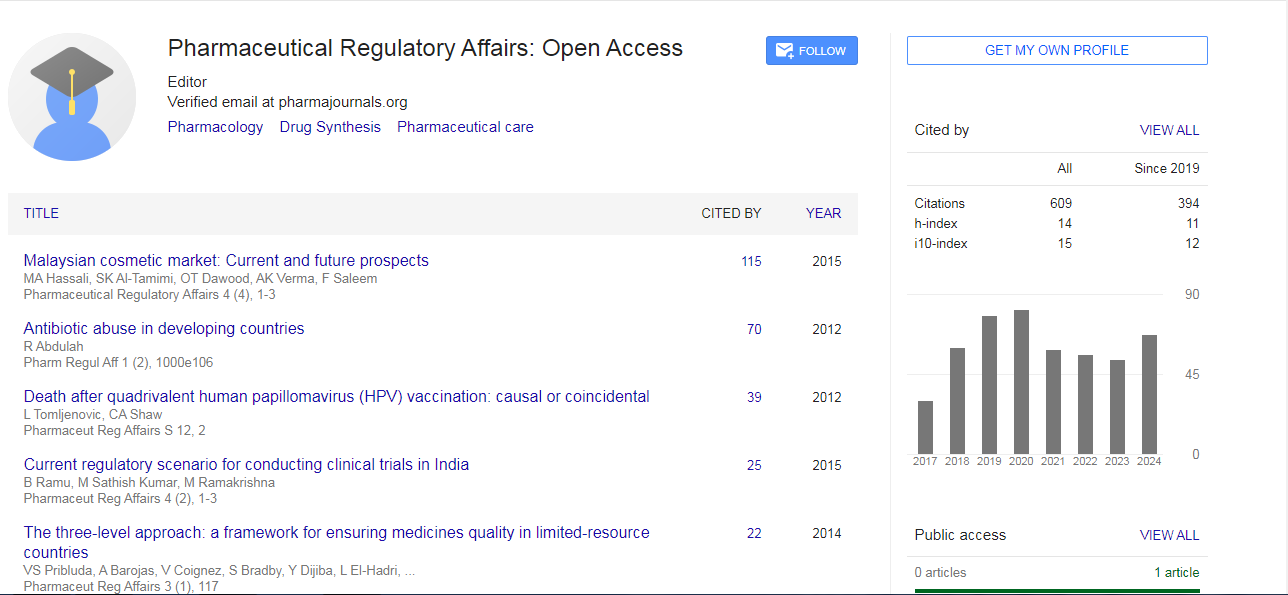
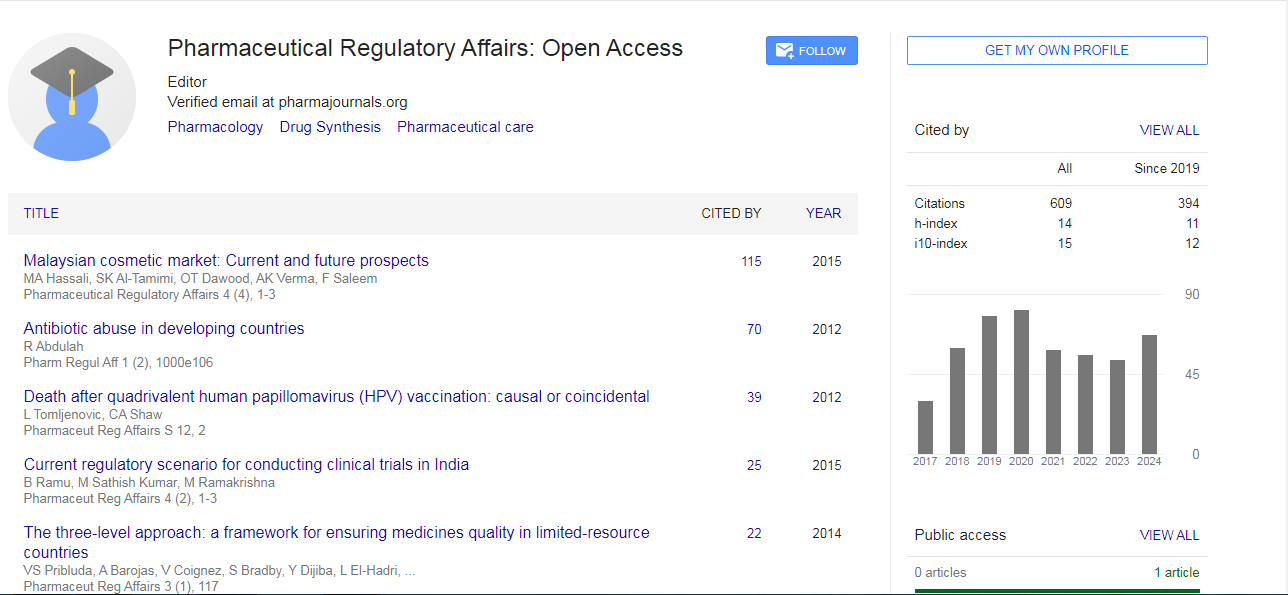
Pharmaceutical Regulatory Affairs: Open Access received 533 citations as per Google Scholar report