Commentary - (2025) Volume 16, Issue 5
Received: 01-Sep-2025, Manuscript No. assj-25-174789;
Editor assigned: 03-Sep-2025, Pre QC No. P-174789;
Reviewed: 17-Sep-2025, QC No. Q-174789;
Revised: 22-Sep-2025, Manuscript No. R-174789;
Published:
29-Sep-2025
, DOI: 10.37421/2151-6200.2025.16.683
Citation: Nunez, Abril. ”Narrative Aesthetics: Diverse Forms, Profound Impact.” Arts Social Sci J 16 (2025):683.
Copyright: © 2025 Nunez A. This is an open-access article distributed under the terms of the Creative Commons Attribution License, which permits unrestricted use, distribution and reproduction in any medium, provided the original author and source are credited
This area of research delves into the profound ways narratives, across diverse mediums, shape human experience, perception, and understanding. Literary narratives, for instance, intricately affect readers by exploring both immediate aesthetic experiences and deeper psychological impacts [1].
These well-crafted stories profoundly influence emotions, perspectives, and cognitive processes, moving beyond mere entertainment to shape our understanding of the world. Here's the thing, the intricate interplay between narrative structure, aesthetic elements, and reader reception is quite complex and consistently highlighted in current studies. Understanding the unique aesthetic qualities of interactive narratives from a cognitive viewpoint demonstrates how user influence fundamentally alters engagement and perception [2].
This creates aesthetic experiences distinct from traditional linear forms, with design choices in interactive media shaping immersion, agency, and emotional response, pointing to new forms of narrative appreciation that prioritize user involvement. What this really means is our physical and sensory experiences deeply contribute to narrative aesthetics [3].
Readers don't just intellectually process stories; they often 'embody' them, feeling sensations and movements described, which enriches the overall aesthetic experience. This interdisciplinary approach blends insights from literary theory, cognitive science, and philosophy to fully explain such embodied engagement. Even architectural spaces convey narratives, influencing our aesthetic experience in significant ways [4].
A cognitive framework helps draw direct parallels between perceiving buildings and understanding stories. Researchers argue that our interaction with architectural designs, through movement and observation, can evoke distinct narrative structures, leading to a unique form of aesthetic appreciation that extends beyond visual appeal. Think about the aesthetic implications of first-person narration in cinema, which moves beyond traditional film theory by integrating insights from cognitive science [5].
Subjective camera work and sound design create specific viewer experiences, impacting empathy, identification, and the overall aesthetic appreciation of a film's narrative. Filmmakers, as it turns out, manipulate perspective in nuanced ways to shape both emotional and intellectual responses from the audience. Here's another point: the critical intersection of narrative ethics and aesthetics, particularly concerning the moral weight and artistic presentation of truth-telling [6].
The way a story is told, its aesthetic qualities, can significantly impact its ethical reception and perceived validity. This discussion focuses on various scenarios where narrative structure and aesthetic choices influence our understanding of moral truths and responsibilities, emphasizing the power of artistic delivery. Moreover, digital storytelling within Virtual Reality (VR) environments presents emerging aesthetic principles that redefine traditional narrative bounds [7].
Immersive technologies reshape narrative experiences, focusing on the unique interplay of presence, interaction, and spatial design. The authors discuss how these specific elements contribute to a new form of narrative aesthetics, offering crucial insights into designing more compelling and impactful VR stories for a digital age. Visual narratives in art museums also profoundly influence the aesthetic experience of visitors [8].
It explores how the arrangement, context, and implied stories within exhibitions guide viewer perception and emotional responses. Understanding the narrative flow of visual elements can significantly enhance appreciation and engagement with art, moving beyond individual pieces to a cohesive aesthetic journey that captivates observers. The aesthetic dimensions of empathy, as evoked by literary narratives, are also a key area of study [9].
A cognitive-affective framework details how narrative techniques, such as characterization and perspective, are employed to foster empathic responses in readers. It's often true that the aesthetic pleasure derived from engaging with a story is deeply intertwined with our capacity to connect emotionally and imaginatively with its characters and situations, building a bridge between fiction and feeling. Finally, narrative aesthetics play a crucial role in cultivating empathy among medical students [10].
Engaging with patient stories, structured with specific aesthetic considerations, can deepen understanding and compassion beyond mere clinical facts. By appreciating the narrative qualities of illness experiences, future healthcare professionals can develop a more holistic and empathetic approach to patient care, recognizing the human experience at the core of medicine. This comprehensive body of work collectively highlights how aesthetics and narrative are not merely decorative or supplementary but fundamental to how we comprehend, interact with, and feel about the complex world around us.
This body of research offers a multifaceted exploration of narrative aesthetics and their profound impact across various domains. It begins by examining how literary narratives deeply influence readers, not just through immediate aesthetic pleasure but also via significant psychological impacts [1]. Engaging with these stories actively shapes emotions, alters perspectives, and even modifies cognitive processes, moving far beyond simple entertainment to mold our fundamental understanding of the world. The intricate interplay between narrative structure, aesthetic choices, and how readers receive these elements is a central focus, revealing how stories construct meaning and experience.
The scope expands to interactive narratives, highlighting their unique aesthetic qualities from a cognitive perspective [2]. The ability for users to directly influence a story fundamentally changes their engagement and perception, resulting in aesthetic experiences that differ markedly from traditional linear storytelling. Design decisions in interactive media play a crucial role in shaping immersion, agency, and emotional responses, thereby pioneering new forms of narrative appreciation. Furthermore, the role of physical and sensory experiences in contributing to narrative aesthetics is a compelling area of study [3]. This suggests that readers do more than intellectually process stories; they often 'embody' them, physically feeling sensations and movements described within the text, which significantly enriches their aesthetic experience. This interdisciplinary approach draws from literary theory, cognitive science, and philosophy to illuminate this embodied engagement.
Narrative aesthetics extend beyond conventional media into unexpected domains, such as architectural spaces [4]. This research investigates how buildings can convey narratives and how these implicit stories contribute to our aesthetic experience of a place. A cognitive framework is proposed, drawing clear parallels between the perception of architectural designs and the understanding of narrative structures. The argument is that our interaction with these spaces, through movement and observation, evokes narrative elements, leading to a unique and embodied form of aesthetic appreciation. Similarly, the cinematic realm offers a rich field for exploring narrative aesthetics, particularly concerning first-person narration [5]. This work re-examines the aesthetic implications of subjective camera work and sound design in film, integrating insights from cognitive science to understand how specific viewer experiences are created. It reveals how filmmakers manipulate perspective to impact empathy, identification, and the overall aesthetic appreciation of a filmâ??s story.
A crucial interdisciplinary perspective involves the intersection of narrative ethics and aesthetics, particularly in the context of truth-telling [6]. Here, the way a story is presented, its artistic qualities, profoundly influences its ethical reception and perceived validity. This discussion highlights how narrative structure and aesthetic choices can shape our understanding of moral truths and responsibilities, underscoring the powerful ethical dimensions embedded within storytelling. Parallel advancements in digital media, specifically Virtual Reality environments, are also redefining narrative aesthetics [7]. This investigation explores emerging aesthetic principles in digital storytelling, focusing on how immersive technologies reshape narrative experiences through a unique interplay of presence, interaction, and spatial design. These elements contribute to new forms of narrative aesthetics, providing valuable insights for designing more impactful Virtual Reality stories.
Visual narratives in art museums also play a significant role in shaping the aesthetic experience of visitors [8]. This research explores how the deliberate arrangement, contextualization, and implied stories within exhibitions guide viewer perception and emotional responses. It demonstrates that understanding the narrative flow of visual elements can greatly enhance appreciation and engagement with art, transforming a visit from a series of individual observations into a cohesive aesthetic journey. Further expanding on the emotional impact, the aesthetic dimensions of empathy, as evoked by literary narratives, are explored through a cognitive-affective framework [9]. This framework details how specific narrative techniques, such as characterization and perspective shifts, are strategically employed to foster empathic responses in readers. It argues that the aesthetic pleasure derived from engaging with a story is deeply intertwined with our capacity to connect emotionally and imaginatively with its characters and situations.
Finally, the practical application of narrative aesthetics is seen in fostering empathy among medical students [10]. This paper suggests that engaging with patient stories, when structured with specific aesthetic considerations, can deepen understanding and compassion beyond clinical facts alone. By appreciating the narrative qualities of illness experiences, future healthcare professionals can develop a more holistic and empathetic approach to patient care, recognizing the human experience at the core of medicine. Collectively, these studies underscore the pervasive and transformative power of narrative aesthetics across diverse human endeavors.
This collection of papers examines the diverse aesthetic and psychological impacts of narratives across various forms. Literary narratives significantly influence readers' emotions, perspectives, and cognitive processes, moving beyond simple entertainment to shape understanding. Interactive narratives, through user influence, create distinct aesthetic experiences different from traditional linear stories, impacting immersion and emotional response. The physical and sensory aspects of reading also contribute to narrative aesthetics, where readers embody stories by feeling described sensations. Beyond traditional media, architectural spaces can convey narratives, offering unique aesthetic appreciation through interaction and observation. Cinematic first-person narration utilizes camera work and sound design to shape viewer empathy and identification, redefining film aesthetics. There's a close link between narrative ethics and aesthetics, where a story's artistic presentation can affect its ethical reception and perceived truth. Digital storytelling in Virtual Reality (VR) environments explores new aesthetic principles, leveraging presence, interaction, and spatial design for compelling experiences. Similarly, visual narratives in art museums guide visitor perception and emotional responses, enhancing engagement beyond individual pieces. Literary narratives, employing characterization and perspective, are crucial for fostering empathic responses, linking aesthetic pleasure with emotional connection. Finally, narrative aesthetics in medical education, through patient stories, cultivate empathy and a more holistic approach to care among future healthcare professionals. This demonstrates the pervasive and profound influence of narrative aesthetics in shaping human experience and understanding.
None
None
Indexed at, Google Scholar, Crossref
Indexed at, Google Scholar, Crossref
Indexed at, Google Scholar, Crossref
Indexed at, Google Scholar, Crossref
Indexed at, Google Scholar, Crossref
Indexed at, Google Scholar, Crossref
Indexed at, Google Scholar, Crossref
Indexed at, Google Scholar, Crossref
Indexed at, Google Scholar, Crossref
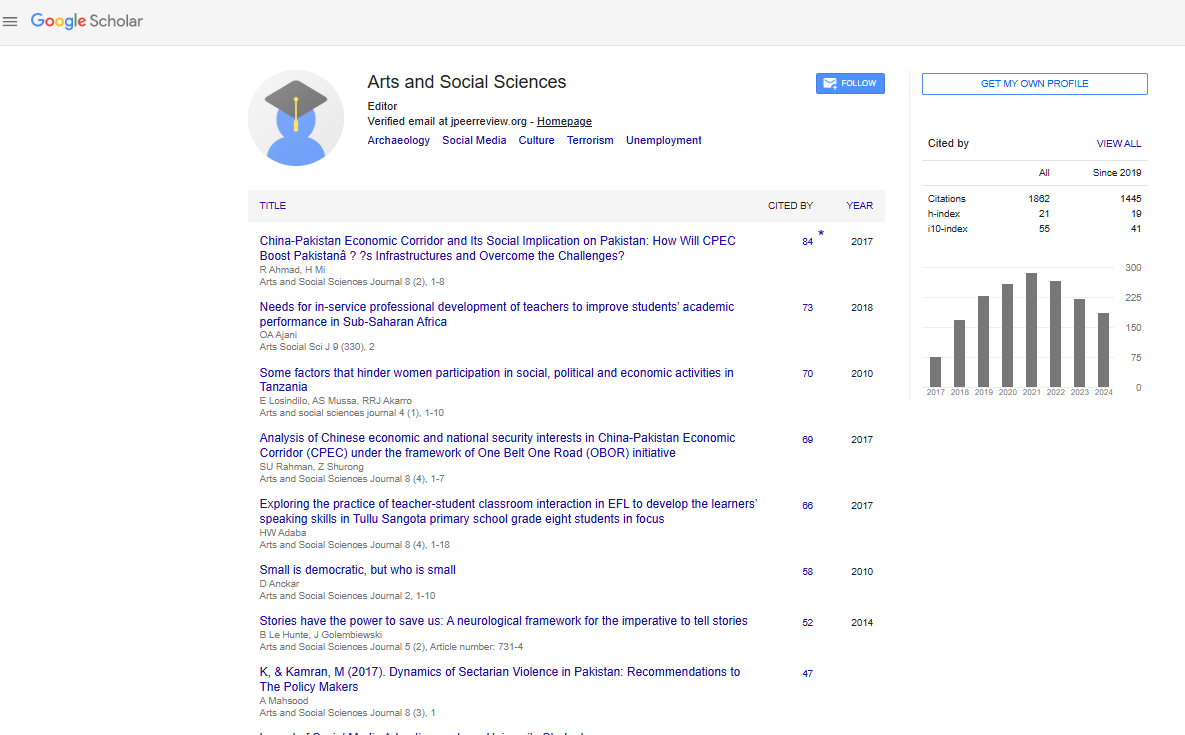
Arts and Social Sciences Journal received 1413 citations as per Google Scholar report