Perspective - (2025) Volume 10, Issue 6
Received: 01-Dec-2025, Manuscript No. jomp-26-185138;
Editor assigned: 03-Dec-2025, Pre QC No. P-185138;
Reviewed: 17-Dec-2025, QC No. Q-185138;
Revised: 22-Dec-2025, Manuscript No. R-185138;
Published:
29-Dec-2025
, DOI: 10.37421/2576-3857.2025.10.340
Citation: Johansson, Marcus. ”Nanoparticle siRNA Delivery for Pancreatic Cancer Therapy.” J Oncol Med and Pract 10 (2025):340.
Copyright: © 2025 Johansson M. This is an open-access article distributed under the terms of the Creative Commons Attribution License, which permits unrestricted use, distribution and reproduction in any medium, provided the original author and source are credited.
Nanoparticle-mediated delivery of siRNA represents a promising strategy to target and silence genes critical for pancreatic cancer progression. These systems offer enhanced stability, targeted delivery to tumor sites, and improved cellular uptake, overcoming limitations of free siRNA. Research focuses on designing biocompatible nanoparticles that can encapsulate siRNA, escape endosomal entrapment, and release their payload efficiently within cancer cells, ultimately leading to gene knockdown and therapeutic effects. This approach holds potential for overcoming treatment resistance and improving patient outcomes [1].
Lipid nanoparticles (LNPs) are emerging as a leading platform for siRNA delivery in pancreatic cancer. Their ability to form stable complexes with siRNA, protect it from degradation, and facilitate endosomal escape is crucial for therapeutic efficacy. This work reviews recent developments in LNP formulation, including the use of ionizable lipids and helper lipids, and their impact on delivery efficiency and safety. Targeted LNPs, functionalized with ligands that bind to pancreatic cancer-specific receptors, are also discussed as a means to improve tumor accumulation and reduce off-target effects [2].
Polymeric nanoparticles offer a versatile platform for siRNA delivery in pancreatic cancer, allowing for tunable properties such as size, charge, and drug loading. Cationic polymers can electrostatically complex with anionic siRNA, forming stable nanoparticles that protect the genetic material. The review highlights various biodegradable polymers, including PLGA and chitosan derivatives, employed in siRNA delivery systems. Strategies to enhance cellular uptake and endosomal escape, such as incorporating targeting ligands or pH-sensitive linkers, are explored to improve therapeutic outcomes [3].
Exosomes, naturally occurring extracellular vesicles, are being explored for siRNA delivery in pancreatic cancer due to their inherent biocompatibility and ability to cross biological barriers. Pancreatic cancer cells can be engineered to overexpress exosomal proteins or loaded with siRNA, which is then secreted within exosomes. This approach offers targeted delivery and immune evasion. This study investigates the potential of exosome-based siRNA delivery to suppress key oncogenes involved in pancreatic cancer growth and metastasis [4].
Targeting gene expression with siRNA delivered by nanoparticles can overcome resistance mechanisms in pancreatic cancer, such as the overexpression of drug efflux pumps or anti-apoptotic proteins. This research focuses on designing nanocarriers that can specifically accumulate in the tumor microenvironment and deliver siRNA to cancer cells that have developed resistance to conventional chemotherapy. The study explores how this approach can synergistically enhance the efficacy of existing treatments [5].
The tumor microenvironment (TME) presents significant challenges for effective siRNA delivery in pancreatic cancer, including dense stroma and immunosuppression. Nanoparticle-based systems are being developed to penetrate this barrier and reach cancer cells. This work examines how nanoparticles can be engineered to evade stromal components and deliver siRNA payloads that modulate the TME, potentially making it more permissive to anti-cancer therapies and immune infiltration [6].
Gold nanoparticles (AuNPs) are explored for their potential in delivering siRNA to pancreatic cancer cells, owing to their biocompatibility, ease of surface functionalization, and photothermal properties. This research investigates the conjugation of siRNA to AuNPs and their subsequent delivery. The study also examines the potential synergistic effect of combining siRNA therapy with photothermal therapy using AuNPs to enhance cancer cell death [7].
The development of stimuli-responsive nanoparticles for siRNA delivery in pancreatic cancer offers enhanced control over drug release and targeting. These nanoparticles can be designed to respond to internal cues within the tumor microenvironment, such as low pH or specific enzymes, or external stimuli like light or magnetic fields. This study explores how such responsive systems can improve the therapeutic index by minimizing off-target exposure and maximizing siRNA delivery to cancer cells [8].
Targeted delivery of siRNA using functionalized nanoparticles is a key strategy to improve the efficacy of pancreatic cancer treatment. Ligands such as antibodies, peptides, or aptamers are conjugated to the nanoparticle surface to specifically bind to receptors overexpressed on pancreatic cancer cells. This research details the design and evaluation of such targeted nanocarriers, aiming to increase tumor accumulation and intracellular uptake of siRNA, thereby achieving effective gene silencing [9].
In vivo preclinical studies are crucial for evaluating the efficacy and safety of nanoparticle-mediated siRNA delivery systems for pancreatic cancer. This paper presents results from such studies, demonstrating significant tumor growth inhibition and improved survival rates in animal models. The research highlights the importance of optimizing nanoparticle formulation, dosage, and administration route to achieve effective therapeutic outcomes and minimize systemic toxicity, paving the way for clinical translation [10].
Nanoparticle-mediated delivery of small interfering RNA (siRNA) presents a significant advancement in targeting and silencing genes crucial for pancreatic cancer progression. These sophisticated systems provide superior stability compared to free siRNA, facilitate targeted delivery to tumor sites, and enhance cellular uptake, addressing key limitations of traditional therapeutic approaches. Current research efforts are concentrated on the development of biocompatible nanoparticles capable of encapsulating siRNA, effectively evading endosomal entrapment, and efficiently releasing their therapeutic payload within cancer cells. This process ultimately leads to targeted gene knockdown and desired therapeutic effects, holding substantial promise for overcoming treatment resistance and improving patient prognoses [1].
Lipid nanoparticles (LNPs) are rapidly gaining prominence as a leading platform for siRNA delivery in the context of pancreatic cancer. The inherent ability of LNPs to form stable complexes with siRNA, shield it from degradation, and promote endosomal escape is fundamental to achieving therapeutic efficacy. This review delves into recent advancements in LNP formulation, scrutinizing the impact of ionizable and helper lipids on delivery efficiency and overall safety. Furthermore, the discussion extends to targeted LNPs, which are functionalized with specific ligands designed to bind to receptors overexpressed on pancreatic cancer cells, thereby enhancing tumor accumulation and minimizing off-target effects [2].
Polymeric nanoparticles offer a highly versatile platform for siRNA delivery within pancreatic cancer, characterized by their tunable properties such as size, surface charge, and drug-loading capacity. Cationic polymers are particularly adept at forming stable electrostatic complexes with anionic siRNA, creating nanoparticles that effectively protect the genetic material. This review highlights a diverse array of biodegradable polymers, including poly(lactic-co-glycolic acid) (PLGA) and chitosan derivatives, that have been successfully employed in the development of siRNA delivery systems. Strategies aimed at improving cellular uptake and endosomal escape, such as the incorporation of targeting ligands or pH-sensitive linkers, are thoroughly explored to optimize therapeutic outcomes [3].
Exosomes, which are naturally occurring extracellular vesicles, are drawing considerable attention for their potential in siRNA delivery for pancreatic cancer. Their inherent biocompatibility and capacity to traverse biological barriers make them an attractive option. Pancreatic cancer cells can be genetically modified to overexpress specific exosomal proteins or loaded with siRNA, which is subsequently packaged and secreted within exosomes. This unique approach facilitates targeted delivery and offers immune evasion properties. This study specifically investigates the potential of exosome-based siRNA delivery systems in suppressing key oncogenes driving pancreatic cancer growth and metastasis [4].
The application of siRNA delivered via nanoparticles offers a potent strategy to circumvent resistance mechanisms commonly observed in pancreatic cancer. These mechanisms include the overexpression of drug efflux pumps or anti-apoptotic proteins. This research is dedicated to the design of nanocarriers engineered for specific accumulation within the tumor microenvironment and for the efficient delivery of siRNA to cancer cells that have developed resistance to conventional chemotherapy. The study further investigates how this nanotechnology-driven approach can synergistically potentiate the efficacy of existing therapeutic regimens [5].
The tumor microenvironment (TME) presents formidable challenges to the effective delivery of siRNA in pancreatic cancer, primarily due to its dense stromal components and immunosuppressive characteristics. Nanoparticle-based systems are actively being developed to overcome these barriers and facilitate siRNA delivery to cancer cells. This work critically examines how nanoparticles can be meticulously engineered to navigate and evade stromal components, thereby delivering siRNA payloads that can modulate the TME. The ultimate goal is to render the TME more receptive to anti-cancer therapies and enhance immune cell infiltration [6].
Gold nanoparticles (AuNPs) are under investigation for their considerable potential in delivering siRNA to pancreatic cancer cells. This interest stems from their inherent biocompatibility, the ease with which their surfaces can be functionalized, and their useful photothermal properties. This research specifically investigates the conjugation of siRNA to AuNPs and evaluates their subsequent delivery. The study also explores the potential for synergistic therapeutic effects by combining siRNA therapy with photothermal therapy, leveraging the properties of AuNPs to enhance cancer cell death [7].
The development of stimuli-responsive nanoparticles for siRNA delivery in pancreatic cancer is a key area of innovation, offering unprecedented control over drug release kinetics and targeting specificity. These nanoparticles can be engineered to react to internal cues present within the tumor microenvironment, such as specific pH levels or the presence of certain enzymes, or to external stimuli like light or magnetic fields. This study meticulously explores how such advanced responsive systems can significantly improve the therapeutic index by minimizing off-target exposure and maximizing the delivery of siRNA specifically to cancer cells [8].
Targeted delivery of siRNA through the use of functionalized nanoparticles stands as a pivotal strategy for enhancing the efficacy of pancreatic cancer treatment. Ligands, which can include antibodies, peptides, or aptamers, are conjugated to the surface of nanoparticles to facilitate specific binding to receptors that are overexpressed on pancreatic cancer cells. This research comprehensively details the design and rigorous evaluation of such targeted nanocarriers, with the ultimate objective of increasing tumor accumulation and improving intracellular uptake of siRNA, thereby achieving highly effective gene silencing [9].
In vivo preclinical studies are indispensable for the thorough evaluation of the efficacy and safety profiles of nanoparticle-mediated siRNA delivery systems intended for pancreatic cancer treatment. This paper meticulously presents the findings from such critical studies, showcasing substantial inhibition of tumor growth and marked improvements in survival rates observed in relevant animal models. The research underscores the paramount importance of optimizing nanoparticle formulation, determining appropriate dosages, and selecting the most effective administration routes to achieve desired therapeutic outcomes while simultaneously minimizing systemic toxicity, thereby laying a crucial groundwork for subsequent clinical translation [10].
Current research focuses on nanoparticle-mediated delivery of siRNA for pancreatic cancer therapy, aiming to enhance gene silencing, overcome treatment resistance, and improve patient outcomes. Various nanoparticle platforms, including lipid nanoparticles (LNPs), polymeric nanoparticles, and exosomes, are being developed for their ability to stabilize siRNA, target tumor sites, and facilitate cellular uptake. Strategies to overcome challenges like the tumor microenvironment and chemotherapy resistance are explored, involving functionalized nanoparticles, stimuli-responsive systems, and gold nanoparticles for combined therapies. Preclinical studies demonstrate the potential of these approaches, highlighting the need for optimized formulations and delivery routes for clinical translation.
None
None
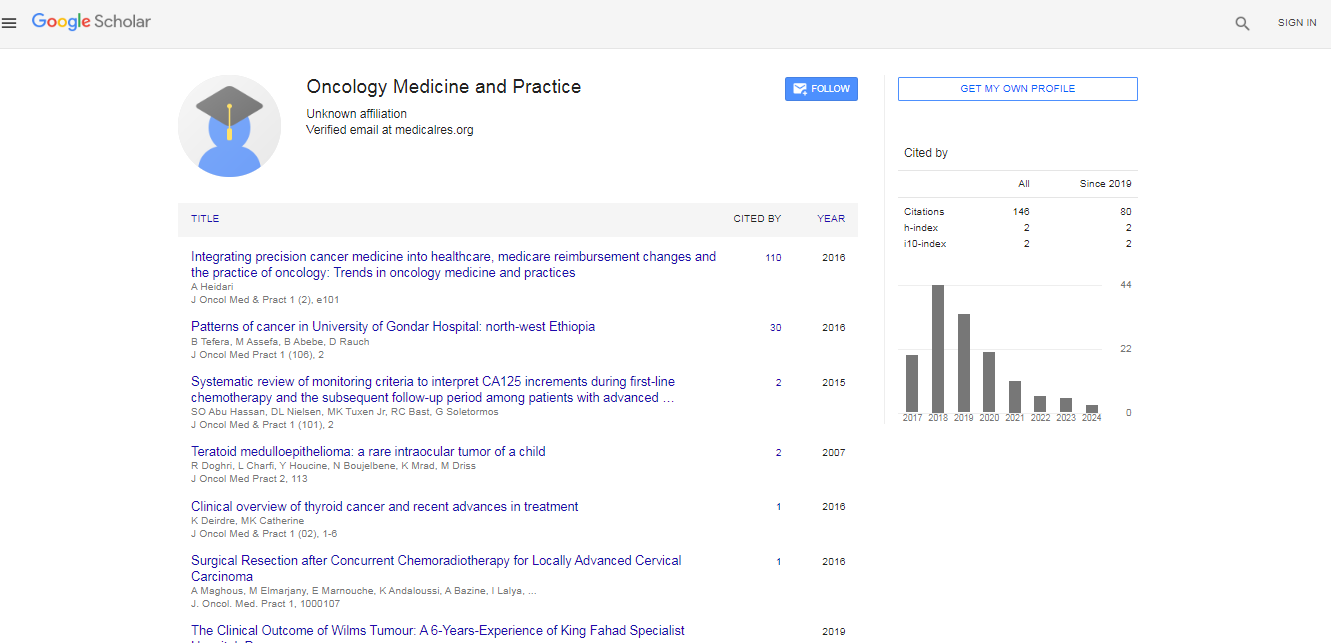
Journal of Oncology Medicine & Practice received 142 citations as per Google Scholar report