Commentary - (2025) Volume 10, Issue 4
Received: 01-Aug-2025, Manuscript No. jomp-26-185098;
Editor assigned: 04-Aug-2025, Pre QC No. P-185098;
Reviewed: 18-Aug-2025, QC No. Q-185098;
Revised: 22-Aug-2025, Manuscript No. R-185098;
Published:
29-Aug-2025
, DOI: 10.37421/2576-3857.2025.10.316
Citation: Al-Kuwari, Hana. ”Nanobodies: Promising Lung Cancer Therapeutics and Diagnostics.” J Oncol Med and Pract 10 (2025):316.
Copyright: © 2025 Al-Kuwari H. This is an open-access article distributed under the terms of the Creative Commons Attribution License, which permits unrestricted use, distribution and reproduction in any medium, provided the original author and source are credited.
Nanobodies, which are small single-domain antibodies derived from camelids, are emerging as promising therapeutic agents for lung cancer, offering a novel approach to precision medicine [1].
Their unique characteristics, including high affinity, remarkable stability, and ease of engineering, enable a wide array of versatile applications such as direct tumor targeting, effective drug delivery, and advanced diagnostic imaging [1].
Recent scientific advancements have predominantly focused on the development of specialized nanobodies designed to inhibit specific oncogenic pathways or, alternatively, to significantly enhance the immune system's response against lung tumors [1].
This review specifically highlights the immense potential of bispecific nanobodies in overcoming the complex resistance mechanisms that are frequently observed in lung cancer [2].
By intelligently engaging multiple targets simultaneously within the tumor microenvironment, these meticulously engineered nanobodies can effectively disrupt critical tumor cell signaling pathways, robustly block tumor angiogenesis, and potentiate a more effective anti-tumor immune response [2].
The inherent modular nature of nanobodies greatly facilitates their design for dual or even multi-specific activity, thereby offering a sophisticated and highly adaptable approach to addressing the intricate complexities of cancer biology [2].
The development of nanobody-based immunotherapies for lung cancer is steadily gaining significant traction within the oncology research community [3].
Nanobodies possess the unique capability to be engineered to effectively redirect T cells directly to tumor cells, thus acting as a powerful and precise tool to harness the patient's own immune system against malignant cells [3].
This innovative therapeutic approach offers a novel and highly promising strategy to treat patients who may unfortunately not respond adequately to conventional immunotherapies [3].
Targeting specific receptor tyrosine kinases (RTKs) that are frequently overexpressed in lung cancer represents a key strategic direction for the development of novel nanobody therapeutics [4].
This particular area of research meticulously reviews nanobodies that have demonstrated the ability to inhibit critical RTKs such as EGFR, HER2, and MET, thereby showcasing their profound potential to effectively block tumor growth and metastasis [4].
Their remarkably small size is a significant advantage, allowing for substantially better tumor penetration compared to conventional, larger monoclonal antibodies [4].
The exploration into the use of nanobodies for the highly targeted delivery of cytotoxic drugs directly to lung cancer cells is an active and promising field of study [5].
By precisely conjugating potent chemotherapeutic agents to these specialized nanobodies, researchers are developing a highly targeted delivery system that significantly minimizes systemic toxicity while simultaneously maximizing drug concentration specifically at the tumor site [5].
This targeted approach not only enhances overall therapeutic efficacy but also substantially improves the patient's quality of life by reducing debilitating side effects [5].
Furthermore, the diagnostic applications of nanobodies in the comprehensive management of lung cancer are being increasingly presented and explored [6].
Nanobodies that have been meticulously engineered for utilization in advanced imaging modalities such as Positron Emission Tomography (PET) and Single-Photon Emission Computed Tomography (SPECT) can provide crucial early and accurate detection of tumors, as well as enable precise monitoring of treatment response [6].
Their inherently favorable pharmacokinetic properties contribute significantly to improvements in both diagnostic sensitivity and specificity [6].
The crucial safety and tolerability profiles of nanobody-based therapeutics specifically designed for lung cancer are a subject of ongoing discussion and rigorous investigation [7].
While these agents are generally well-tolerated due to their small size and the potential for reduced off-target effects, continuous and in-depth research is critically important to fully understand their long-term safety and potential immunogenicity within clinical settings [7].
Engineered nanobodies are also actively being developed with the specific goal of targeting various components within the tumor microenvironment (TME) in lung cancer [8].
This strategic approach includes the development of nanobodies that possess the ability to modulate immune-suppressive cells or to effectively inhibit pro-angiogenic factors that are prevalent within the tumor milieu, all with the ultimate aim of creating a more permissive and favorable environment for the efficacy of anti-cancer therapies [8].
The clinical translation of nanobody-based therapies specifically for lung cancer is steadily progressing, with several promising candidates now actively entering various phases of clinical trials [9].
This section of ongoing research endeavors summarizes the current status of these important clinical trials, meticulously highlighting promising early results and simultaneously acknowledging the significant challenges that still remain in the complex process of bringing these novel and potentially groundbreaking agents to patients [9].
Finally, the strategic combination of nanobodies with existing, established lung cancer treatments, such as conventional chemotherapy and existing immunotherapies, represents a particularly active and dynamic area of current research [10].
Synergistic therapeutic effects are strongly anticipated by combining nanobody-mediated targeting or immune modulation with the direct anti-cancer activity of conventional therapies, thereby potentially leading to significantly enhanced and more robust treatment outcomes [10].
Nanobodies, small single-domain antibodies derived from camelids, are gaining recognition as promising therapeutic agents for lung cancer due to their distinct advantages [1].
These advantages include high binding affinity to specific targets, enhanced stability under various physiological conditions, and a remarkable ease of engineering, which allows for a broad spectrum of versatile applications. These applications span direct tumor targeting, sophisticated drug delivery systems, and advanced diagnostic imaging [1].
Recent scientific endeavors have concentrated on developing specialized nanobodies capable of inhibiting key oncogenic pathways implicated in lung cancer progression or, alternatively, augmenting the host immune system's inherent capacity to combat lung tumors [1].
This comprehensive review specifically emphasizes the significant potential of bispecific nanobodies as a strategy to surmount the formidable resistance mechanisms frequently encountered in lung cancer [2].
By virtue of their ability to simultaneously engage multiple targets, these precisely engineered nanobodies can effectively disrupt critical tumor cell signaling cascades, inhibit tumor angiogenesis essential for growth, and bolster the anti-tumor immune response [2].
The inherent modular design of nanobodies greatly facilitates the creation of molecules with dual or even multi-specific activity, presenting a sophisticated approach to tackling the multifaceted nature of cancer biology [2].
The development and application of nanobody-based immunotherapies for lung cancer are witnessing a notable surge in interest and research activity [3].
Nanobodies can be strategically engineered to redirect cytotoxic T cells directly towards tumor cells, serving as a potent instrument to activate and direct the patient's own immune system against malignant growths [3].
This innovative therapeutic paradigm offers a novel avenue for treating patients who may exhibit inadequate responses to conventional immunotherapy regimens [3].
A primary strategy in the development of nanobody therapeutics for lung cancer involves targeting specific receptor tyrosine kinases (RTKs) that are characteristically overexpressed on cancer cells [4].
This area of research specifically reviews nanobodies designed to inhibit RTKs such as the epidermal growth factor receptor (EGFR), human epidermal growth factor receptor 2 (HER2), and mesenchymal-epithelial transition factor (MET). These nanobodies demonstrate a considerable potential to impede tumor proliferation and metastasis [4].
Their diminutive size offers a significant advantage in terms of tumor penetration compared to larger, conventional monoclonal antibodies [4].
The utilization of nanobodies for the targeted delivery of cytotoxic chemotherapy agents to lung cancer cells is an area of intensive investigation [5].
By conjugating potent chemotherapeutic compounds to nanobodies, a highly specific delivery system is created. This system aims to minimize systemic toxicity, a common drawback of conventional chemotherapy, while maximizing the concentration of the drug precisely at the tumor site [5].
Such targeted delivery not only enhances the overall therapeutic efficacy but also contributes to an improved quality of life for patients by reducing adverse side effects [5].
In addition to therapeutic applications, the diagnostic utility of nanobodies in the management of lung cancer is also being actively explored [6].
Nanobodies engineered for use in advanced medical imaging techniques, such as Positron Emission Tomography (PET) and Single-Photon Emission Computed Tomography (SPECT), can facilitate early and accurate detection of lung tumors and provide valuable insights into treatment response [6].
Their favorable pharmacokinetic profiles, including rapid clearance and good tissue penetration, contribute to enhanced diagnostic sensitivity and specificity [6].
The safety and tolerability of nanobody-based therapeutics for lung cancer patients are critical considerations under ongoing scrutiny [7].
Although nanobodies are generally perceived to be well-tolerated, owing to their small molecular size and potential for reduced off-target interactions, continued research is essential to comprehensively ascertain their long-term safety profiles and potential immunogenicity in diverse clinical settings [7].
Engineered nanobodies are also being developed to specifically target various components within the tumor microenvironment (TME) of lung cancer [8].
This strategic development includes nanobodies designed to modulate immunosuppressive cells within the TME or to inhibit pro-angiogenic factors that promote tumor growth and vascularization. The overarching goal is to remodel the TME into a more permissive milieu for the action of anti-cancer therapies [8].
The progression of nanobody-based therapies from preclinical research to clinical application in lung cancer is marked by several candidates advancing into clinical trials [9].
This phase of development involves summarizing the current standing of these trials, highlighting encouraging preliminary findings, and addressing the persistent challenges inherent in translating these novel therapeutic agents into effective patient treatments [9].
Furthermore, the combination of nanobodies with established lung cancer treatments, such as conventional chemotherapy and existing immunotherapies, represents a burgeoning area of research [10].
The anticipation is that by synergistically combining the targeted action or immune-modulating capabilities of nanobodies with the direct cytotoxic effects of standard therapies, significantly enhanced treatment outcomes can be achieved, offering new hope for patients [10].
Nanobodies are emerging as versatile therapeutic and diagnostic tools for lung cancer, leveraging their unique properties like high affinity and stability. Their applications range from direct tumor targeting and drug delivery to enhancing immunotherapy and improving diagnostic imaging. Bispecific nanobodies are being developed to overcome drug resistance by engaging multiple targets simultaneously. Targeting receptor tyrosine kinases and modifying the tumor microenvironment are key strategies. Nanobody-drug conjugates offer targeted chemotherapy with reduced systemic toxicity. Clinical trials are underway, showing promise, and combinations with existing therapies are being explored to improve treatment outcomes. Safety and tolerability are under ongoing investigation.
None
None
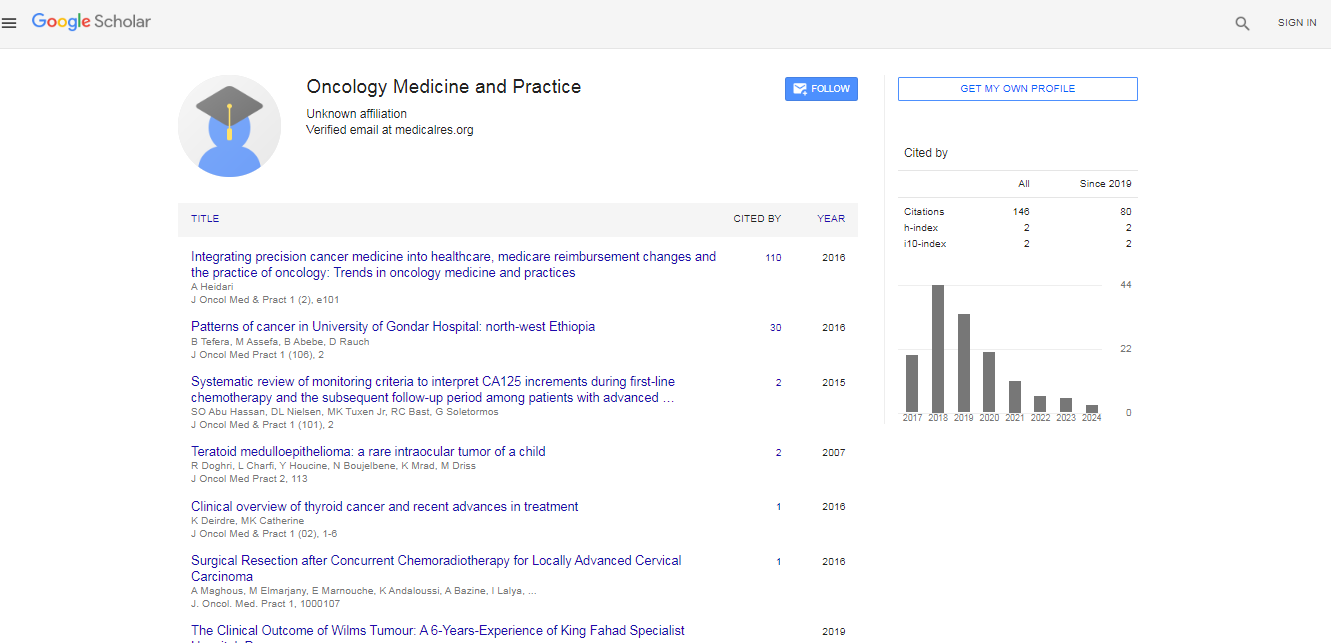
Journal of Oncology Medicine & Practice received 142 citations as per Google Scholar report