Short Communication - (2025) Volume 14, Issue 4
Received: 01-Aug-2025, Manuscript No. jhoa-26-187831;
Editor assigned: 04-Aug-2025, Pre QC No. P-187831;
Reviewed: 18-Aug-2025, QC No. Q-187831;
Revised: 22-Aug-2025, Manuscript No. R-187831;
Published:
29-Aug-2025
, DOI: 10.37421/2167-1095.2025.14.533
Citation: Brown, Laura. ”Multifaceted Strategy For Hypertension Prevention.” J Hypertens 14 (2025):533
Copyright: © 2025 Brown L. This is an open-access article distributed under the terms of the Creative Commons Attribution License, which permits unrestricted use, distribution and reproduction in any medium, provided the original author and source are credited
Preventing hypertension is a critical public health objective, necessitating comprehensive strategies that address a multitude of risk factors at the population level. A multi-pronged approach, as outlined in recent research, is essential for effectively combating this widespread cardiovascular threat. Such strategies encompass a broad spectrum of interventions, from dietary modifications and increased physical activity to policy-level changes and technological advancements. Public health interventions targeting population-level risk factors form the bedrock of hypertension prevention, involving a multi-faceted approach. Key interventions focus on promoting healthy diets characterized by abundant fruits, vegetables, and whole grains, while simultaneously advocating for reduced intake of sodium and saturated fats. Encouraging regular physical activity across all age demographics is also recognized as a pivotal component in this endeavor. Furthermore, public health efforts extend to actively reducing excessive alcohol consumption, championing smoking cessation initiatives, and implementing effective stress management techniques. Policy-level interventions, including the implementation of taxes on unhealthy food and beverage options, and the creation of environments that inherently support healthy choices, such as walkable communities and readily available healthy food options, are vital for achieving sustained impact. Early detection and prompt management, facilitated through regular blood pressure screening, represent indispensable elements of a robust and comprehensive prevention strategy. Community-based programs are instrumental in the realm of hypertension prevention, fostering empowerment among individuals and communities to embrace healthier lifestyles. These initiatives frequently integrate educational modules focused on nutrition and exercise, offer organized opportunities for group physical activities, and cultivate supportive social networks. The efficacy and reach of these interventions are significantly enhanced when they are thoughtfully tailored to specific cultural and socioeconomic contexts. Moreover, the active engagement of community leaders and healthcare providers is paramount for the successful implementation and long-term sustainability of such programs. Policy and environmental changes are critically important for shaping settings that actively promote hypertension prevention. This involves the enactment of policies designed to improve access to nutritious foods, such as providing subsidies for fruits and vegetables and regulating the marketing of unhealthy products directed at children. Establishing environments that encourage physical activity, including the development of safe walking paths and easily accessible recreational facilities, is equally crucial. Workplace wellness programs and school-based health initiatives contribute significantly to fostering a broader societal shift towards healthier behaviors. Nutritional interventions stand as a foundational pillar in the prevention of hypertension. A primary focus is the reduction of sodium intake, a common constituent of many processed foods. Encouraging a dietary pattern rich in potassium, magnesium, and calcium, typically found in fruits, vegetables, and dairy products, can aid in regulating blood pressure. Established dietary approaches, such as the DASH (Dietary Approaches to Stop Hypertension) diet, have demonstrated considerable effectiveness in lowering blood pressure levels and preventing the onset of hypertension. Physical activity is an indispensable element of public health strategies aimed at hypertension prevention. Engaging in regular moderate-to-vigorous aerobic exercise, encompassing activities like brisk walking, jogging, or swimming, can lead to a significant reduction in blood pressure. Resistance training also offers valuable health benefits. Public health initiatives are geared towards increasing physical activity levels across all age groups through educational outreach, ensuring access to appropriate facilities, and promoting active transportation methods. Equally important is the effort to reduce sedentary behavior. Addressing lifestyle factors such as excessive alcohol consumption and smoking is of paramount importance in the prevention of hypertension. Inordinate alcohol intake is a well-recognized contributor to elevated blood pressure. Public health campaigns that emphasize moderate consumption and provide accessible resources for alcohol cessation are therefore essential. Similarly, smoking cessation programs are crucial, given that nicotine has a direct detrimental impact on blood pressure and overall cardiovascular health. The establishment of smoke-free environments further reinforces these preventive efforts. Stress management, while sometimes overlooked, represents a significant aspect of hypertension prevention. Chronic stress can contribute to elevated blood pressure through complex hormonal and behavioral pathways. Public health initiatives can effectively integrate stress-reduction techniques, including mindfulness, meditation, and the promotion of work-life balance, into their broader health promotion strategies. Educating individuals on adopting and utilizing effective coping mechanisms is a key component of this approach. Screening and early detection are vital and indispensable components within comprehensive hypertension prevention strategies. Consistent monitoring of blood pressure, particularly for individuals who possess known risk factors, enables the timely identification of elevated readings. Public health endeavors should prioritize increasing public awareness regarding the importance of regular medical check-ups and ensuring the availability of accessible screening opportunities across diverse settings, such as primary care facilities, pharmacies, and community gatherings. The integration of technology and digital health solutions is increasingly becoming a prominent feature of public health approaches to hypertension prevention. The utilization of mobile applications designed for tracking dietary intake and exercise routines, wearable devices capable of continuous blood pressure monitoring, and the provision of telehealth services can all contribute to enhanced patient engagement and the delivery of personalized feedback. These innovative tools hold significant potential for supporting sustained behavior change and improving adherence to recommended healthy lifestyle practices. Addressing the socioeconomic determinants of health is absolutely critical for ensuring equitable outcomes in hypertension prevention efforts. Disparities in access to healthy food options, safe environments conducive to physical activity, and essential healthcare services disproportionately impact certain segments of the population. Public health interventions must be meticulously designed to mitigate these inequities by strategically directing resources to underserved communities and actively advocating for policies that uphold social justice and actively reduce health disparities.
Preventing hypertension through public health strategies involves a multi-pronged approach targeting population-level risk factors. Key interventions include promoting healthy diets rich in fruits, vegetables, and whole grains while reducing sodium and saturated fat intake. Encouraging regular physical activity across all age groups is also crucial. Public health efforts also focus on reducing alcohol consumption, promoting smoking cessation, and managing stress. Policy-level changes, such as taxes on unhealthy foods and beverages, and creating environments that support healthy choices (e.g., walkable communities, access to healthy food options) are vital for sustained impact. Early detection and management through regular blood pressure screening are essential components of a comprehensive prevention strategy [1].
Community-based programs play a significant role in preventing hypertension by empowering individuals and communities to adopt healthier lifestyles. These programs often integrate educational components on nutrition and exercise, provide opportunities for group physical activity, and facilitate social support networks. Tailoring interventions to specific cultural and socioeconomic contexts enhances their effectiveness and reach. Engaging community leaders and healthcare providers is essential for successful implementation and sustainability [2].
Policy and environmental changes are critical for creating settings that support hypertension prevention. This includes implementing policies that promote access to healthy foods, such as subsidizing fruits and vegetables and regulating marketing of unhealthy products to children. Creating environments that encourage physical activity, like safe walking paths and accessible recreational facilities, is also key. Workplace wellness programs and school-based health initiatives contribute to a broader societal shift towards healthier behaviors [3].
Nutritional interventions are foundational to hypertension prevention. A cornerstone is reducing sodium intake, which is often found in processed foods. Shifting towards a diet rich in potassium, magnesium, and calcium, commonly found in fruits, vegetables, and dairy products, can help regulate blood pressure. Dietary approaches like the DASH (Dietary Approaches to Stop Hypertension) diet have demonstrated significant efficacy in lowering blood pressure levels and preventing hypertension [4].
Physical activity is a cornerstone of public health approaches to hypertension prevention. Regular moderate-to-vigorous aerobic exercise, such as brisk walking, jogging, or swimming, can significantly lower blood pressure. Resistance training also offers benefits. Public health initiatives aim to increase physical activity levels across all age groups through education, access to facilities, and promoting active transportation. Sedentary behavior reduction is equally important [5].
Addressing lifestyle factors like alcohol consumption and smoking is paramount in hypertension prevention. Excessive alcohol intake is a known contributor to elevated blood pressure. Public health campaigns focusing on moderate consumption and providing resources for alcohol cessation are essential. Similarly, smoking cessation programs are crucial, as nicotine directly impacts blood pressure and cardiovascular health. Creating smoke-free environments further supports these efforts [6].
Stress management is an often-overlooked yet important aspect of hypertension prevention. Chronic stress can contribute to elevated blood pressure through hormonal and behavioral pathways. Public health initiatives can incorporate stress-reduction techniques, such as mindfulness, meditation, and promoting work-life balance, into their broader health promotion strategies. Educating individuals on effective coping mechanisms is key [7].
Screening and early detection are vital components of hypertension prevention strategies. Regular blood pressure monitoring, especially for individuals with risk factors, allows for timely identification of elevated readings. Public health efforts should aim to increase awareness of the importance of regular check-ups and provide accessible screening opportunities in various settings, including primary care, pharmacies, and community events [8].
Technology and digital health solutions are increasingly being integrated into public health approaches for hypertension prevention. Mobile applications for tracking diet and exercise, wearable devices for continuous blood pressure monitoring, and telehealth services can enhance engagement and provide personalized feedback. These tools can support behavior change and improve adherence to healthy lifestyle recommendations [9].
Addressing socioeconomic determinants of health is critical for equitable hypertension prevention. Disparities in access to healthy foods, safe environments for physical activity, and healthcare services disproportionately affect certain populations. Public health interventions must be designed to mitigate these inequities by targeting resources to underserved communities and advocating for policies that promote social justice and reduce health disparities [10].
Preventing hypertension requires a multifaceted public health strategy. This includes promoting healthy diets rich in fruits and vegetables while limiting sodium and saturated fats, alongside encouraging regular physical activity for all ages. Reducing alcohol consumption, promoting smoking cessation, and managing stress are also key components. Policy changes, such as taxes on unhealthy foods and creating supportive environments for healthy choices, are vital for lasting impact. Early detection through regular blood pressure screening is essential. Community-based programs empower individuals and communities through education, physical activity opportunities, and social support, with interventions tailored to cultural contexts. Policy and environmental changes, like promoting access to healthy foods and safe spaces for exercise, are critical. Nutritional interventions, particularly reducing sodium and adopting diets like DASH, are foundational. Physical activity, from aerobic to resistance training, is paramount. Addressing lifestyle factors such as alcohol and smoking is crucial, as is stress management. Screening and early detection facilitate timely intervention. Technological and digital health solutions are enhancing engagement and personalized feedback. Finally, addressing socioeconomic determinants of health is vital for equitable prevention, ensuring resources reach underserved communities and advocating for social justice.
None
None
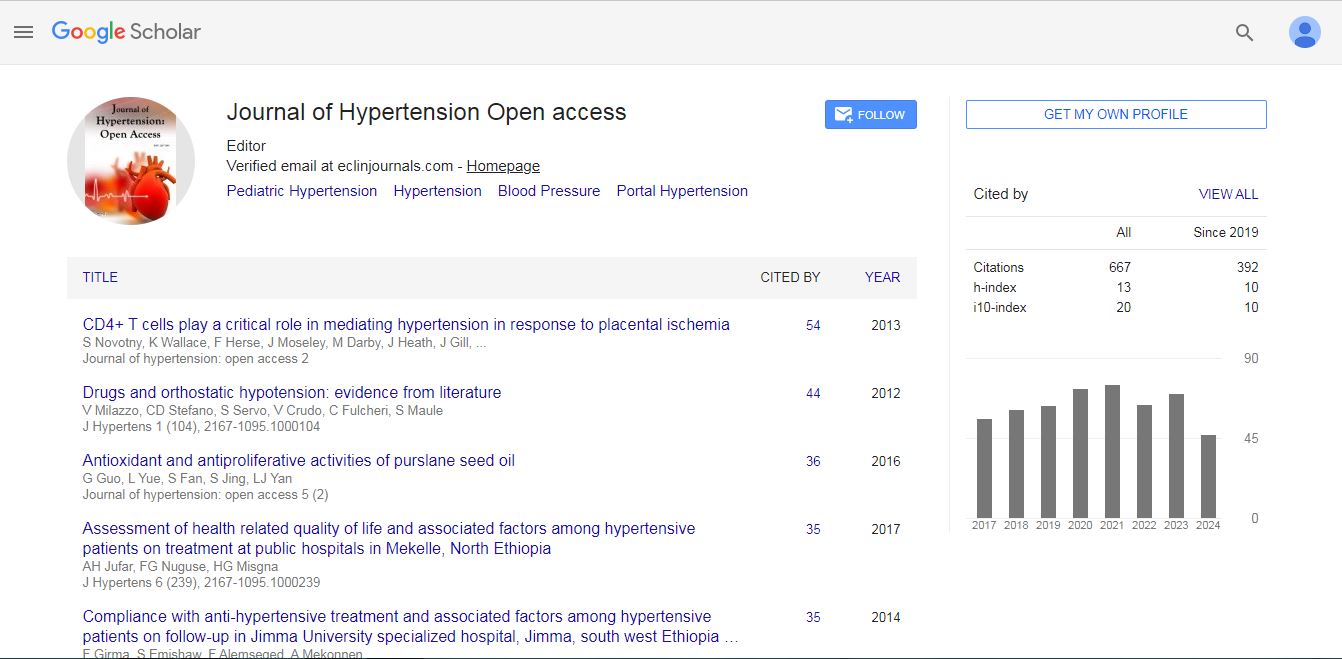
Journal of Hypertension: Open Access received 614 citations as per Google Scholar report