Commentary - (2025) Volume 14, Issue 4
Received: 01-Jul-2025, Manuscript No. jtm-26-186017;
Editor assigned: 03-Jul-2025, Pre QC No. P-186017;
Reviewed: 17-Jul-2025, QC No. Q-186017;
Revised: 22-Jul-2025, Manuscript No. R-186017;
Published:
29-Jul-2025
, DOI: 10.37421/2167-1222.2025.14.690
Citation: Huang, Wei-Lun. ”Multidisciplinary Rehabilitation: Restoring Independence, Enhancing Life Quality.” J Trauma Treat 14 (2025):690.
Copyright: © 2025 Huang W. This is an open-access article distributed under the terms of the Creative Commons Attribution License, which permits unrestricted use,
distribution and reproduction in any medium, provided the original author and source are credited.
The journey of recovery following severe traumatic injury is a complex and multifaceted process, demanding a comprehensive and integrated approach to rehabilitation. This endeavor aims not only to mend the physical damages but also to restore a sense of normalcy and enhance the overall quality of life for survivors. The foundational principles of rehabilitation pathways involve the prompt identification of individual needs, paving the way for tailored interventions. These pathways typically encompass intensive physical and occupational therapy, crucial for regaining lost motor functions and daily living skills. Beyond the physical, psychological support plays a pivotal role, addressing the emotional and mental toll that such severe injuries can inflict. Emerging research continually refines these approaches, highlighting the growing importance of patient-centered goal setting, where individuals actively participate in shaping their recovery journey. Furthermore, the integration of innovative technologies, such as virtual reality, is proving instrumental in creating more engaging and effective therapeutic experiences, thereby improving patient outcomes. Crucially, the management and optimization of neurovascular health post-trauma are paramount to ensuring a robust recovery and minimizing long-term complications. Advanced technological solutions are increasingly being recognized for their potential to accelerate and enhance the rehabilitation process for individuals with severe traumatic injuries. The exploration of these technologies, including robotic systems and immersive virtual reality environments, offers promising avenues for providing more dynamic and intensive therapeutic sessions. These tools can significantly boost patient engagement and motivation, which are vital components of a successful rehabilitation program. The systematic review of such advancements underscores their capacity to yield superior functional gains compared to traditional methods. The integration of these cutting-edge technologies into established rehabilitation protocols is viewed as a critical next step, poised to revolutionize the standard of care. Particular emphasis is placed on their application in improving outcomes in areas such as gait training, a fundamental aspect of regaining mobility, and enhancing upper limb functionality, essential for independence in daily activities. The profound psychological impact of severe traumatic injury cannot be overstated, as it significantly influences an individual's mental health and their ability to engage with rehabilitation. The spectrum of psychological sequelae can range from post-traumatic stress disorder to depression and pervasive anxiety, all of which can act as substantial barriers to recovery. Therefore, a thorough review of current therapeutic strategies is essential to effectively address these mental health challenges in trauma survivors. The proactive identification and management of these psychological issues are critical for fostering resilience and promoting a positive outlook throughout the recovery process. This article emphasizes the fundamental necessity of providing early and continuous psychological support as an indispensable element of comprehensive rehabilitation. Such support not only aids in symptom management but also empowers individuals to navigate the emotional complexities of their recovery journey. Optimizing neurovascular recovery subsequent to severe traumatic brain injury (TBI) represents a critical frontier in the field of rehabilitation. This vital aspect of care focuses on mitigating the secondary effects of the initial injury and promoting neurological healing. The paper delves into the most recent and promising approaches for managing a range of vascular complications that can arise, including vasospasm and hemorrhagic transformation. These complications, if left unaddressed, can lead to significant neurological deterioration and impede functional recovery. The emphasis on advanced neuroimaging techniques is crucial, as these tools provide detailed insights into the brain's vascular status, allowing for timely and accurate diagnoses. Furthermore, the application of targeted pharmacological interventions is highlighted as a key strategy for improving neurological outcomes and preventing further damage. The ultimate goal is to enhance the brain's capacity for repair and minimize the extent of secondary injury. Patient-centered goal setting stands as a cornerstone in the effective guidance of rehabilitation programs for individuals who have experienced severe traumatic injuries. This approach shifts the focus from a one-size-fits-all model to a personalized strategy that respects the unique aspirations and priorities of each patient. The research meticulously examines the intricate process of collaborative goal setting, a dynamic interaction involving patients, their families, and the dedicated rehabilitation teams. This collaborative framework ensures that goals are not only clinically relevant but also personally meaningful and achievable for the individual. By fostering an environment of shared decision-making, this methodology significantly enhances patient engagement in their own recovery. Moreover, it cultivates a stronger sense of ownership and commitment, which directly translates to improved adherence to therapeutic regimens and, ultimately, the successful achievement of functional outcomes that truly matter to the patient. Long-term functional and psychosocial outcomes for survivors of severe traumatic injuries present a distinct set of challenges that extend far beyond the initial period of acute care and rehabilitation. This review thoughtfully explores the complex hurdles that individuals face as they strive to reintegrate into their communities and the workforce. The transition from a structured rehabilitation environment back to everyday life often requires sustained support services to address ongoing physical, cognitive, and emotional needs. The study also delves into the critical influence of injury severity and the specific type of trauma sustained on the trajectories of long-term recovery. Understanding these variables is essential for developing effective and ongoing support systems that can adapt to the evolving needs of survivors. The goal is to ensure that individuals can not only regain independence but also thrive in their post-injury lives. The management of pain in individuals who have sustained severe traumatic injuries is a particularly intricate challenge, wielding a significant influence over their rehabilitation progress and overall quality of life. This article undertakes a comprehensive examination of multimodal pain management strategies, acknowledging that a singular approach is rarely sufficient. It encompasses a broad spectrum of interventions, including pharmacological treatments aimed at alleviating pain, interventional procedures for targeted pain relief, and psychological approaches designed to help patients cope with and manage chronic pain. The critical importance of tailoring these strategies to the unique circumstances of each trauma survivor is emphasized, recognizing the highly individualized nature of pain perception and response. Ultimately, the focus is on developing and implementing a comprehensive and individualized pain treatment plan that prioritizes the patient's well-being and functional recovery. Early mobilization is universally recognized as a cornerstone of effective rehabilitation following severe traumatic injury, serving the dual purpose of preventing the onset of secondary complications and actively promoting functional recovery. This proactive approach aims to counteract the detrimental effects of prolonged immobility, which can lead to a cascade of adverse physiological responses. The study meticulously investigates the safety and efficacy of initiating early mobilization protocols within the intensive care unit (ICU) setting specifically for trauma patients. This critical period often involves patients who are critically ill and require close monitoring. The findings consistently suggest that the implementation of early, progressive mobilization can yield substantial benefits. These benefits include a reduction in the duration of mechanical ventilation, a crucial step in weaning patients off life support, and a decrease in the overall length of hospital stay, thereby optimizing resource utilization and accelerating the patient's return to a less acute care setting. The role of optimal nutrition in bolstering recovery and facilitating healing after severe traumatic injury is an aspect that is frequently underestimated in the broader rehabilitation discourse. This paper meticulously reviews the existing body of evidence that supports the implementation of well-defined nutritional support strategies. These strategies encompass critical considerations such as ensuring adequate protein intake, which is vital for tissue repair and regeneration, and the judicious use of micronutrient supplementation to address specific deficiencies that can impede the healing process. The findings strongly highlight the undeniable link between maintaining appropriate nutritional status and a reduction in the incidence of infectious complications, which are a common and serious concern for trauma patients. Furthermore, adequate nutrition is shown to significantly improve the rate and quality of wound healing, a fundamental aspect of physical recovery. Addressing the pervasive cognitive impairments that frequently follow severe traumatic injury is an absolutely critical component of a successful and holistic rehabilitation program. These impairments can profoundly affect an individual's ability to function in their daily life, impacting everything from memory and attention to problem-solving and decision-making. This article meticulously outlines the essential assessment tools that are necessary for accurately identifying the specific nature and extent of these cognitive deficits. It also details a range of effective intervention strategies designed to manage common issues such as attention deficits, persistent memory problems, and executive dysfunction. The overarching emphasis is placed on the vital importance of seamlessly integrating cognitive rehabilitation into the broader, comprehensive recovery plan. This integrated approach is essential for maximizing functional outcomes and enabling individuals to navigate the complexities of everyday life with greater success and independence.
Severe traumatic injury necessitates a comprehensive, multidisciplinary approach to rehabilitation, focusing on the restoration of functional independence and the enhancement of life quality. The established pathways for recovery typically commence with the early identification of individual needs, followed by intensive physical and occupational therapy regimens. Crucially, psychological support is integrated to address the profound emotional and mental impact of these injuries. Emerging research consistently underscores the significance of patient-centered goal setting, empowering individuals to actively participate in their recovery. The integration of advanced technologies, such as virtual reality, is also highlighted for its potential to elevate therapeutic outcomes and engagement. Furthermore, specialized attention is dedicated to addressing neurovascular disorders that may arise post-trauma, recognizing their critical role in optimizing the overall recovery trajectory. This study systematically explores the application of advanced rehabilitation technologies, including robotics and virtual reality, with the aim of accelerating functional recovery following severe traumatic injuries. The research highlights how these innovative tools can facilitate more engaging and intensive therapy sessions, leading to demonstrably better functional gains and increased patient motivation. The authors discuss the critical importance of integrating these technologies into standard rehabilitation protocols as a necessary next step for improving patient outcomes. Particular attention is paid to their efficacy in improving specific functional areas, such as gait training, a vital component of mobility restoration, and enhancing upper limb function, which is essential for performing daily tasks and maintaining independence. The psychological ramifications of severe traumatic injury are often profound, exerting a significant influence on an individual's mental health and their adherence to rehabilitation programs. This article provides a comprehensive review of the current therapeutic strategies employed to manage common psychological sequelae, including post-traumatic stress disorder (PTSD), depression, and anxiety, among trauma survivors. The research strongly emphasizes the necessity of providing early and ongoing psychological support as an integral and non-negotiable component of any comprehensive rehabilitation plan. This holistic approach acknowledges that emotional well-being is inextricably linked to physical recovery and overall functional improvement. Optimizing neurovascular recovery is a critical aspect of the rehabilitation process for individuals who have sustained severe traumatic brain injury (TBI). This paper critically discusses the latest advancements and emerging perspectives in the management of vascular complications that can complicate TBI recovery, such as vasospasm and hemorrhagic transformation. It places a significant emphasis on the indispensable role of advanced neuroimaging techniques in providing accurate diagnoses and monitoring treatment efficacy. Moreover, the paper highlights the importance of employing targeted pharmacological interventions to improve neurological outcomes and effectively prevent the occurrence of secondary brain injury, which can exacerbate initial damage. Patient-centered goal setting is recognized as a paramount factor in effectively guiding the rehabilitation process for individuals recovering from severe traumatic injuries. This research meticulously examines the collaborative process of setting goals, emphasizing the dynamic interaction between patients, their families, and the multidisciplinary rehabilitation teams. The findings highlight how this shared decision-making approach can significantly enhance patient engagement and adherence to treatment plans. Ultimately, this collaborative method is shown to be instrumental in improving the likelihood of achieving meaningful and personally relevant functional outcomes that align with the patient's life aspirations. This review meticulously focuses on the long-term functional and psychosocial outcomes experienced by survivors of severe traumatic injuries, extending beyond the initial recovery period. It critically explores the significant challenges that individuals encounter when attempting to reintegrate into their communities and the workforce, underscoring the persistent need for sustained support services. The study also investigates the nuanced impact of injury severity and the specific type of trauma sustained on the diverse trajectories of long-term recovery. Understanding these factors is essential for developing comprehensive and enduring support systems. The management of pain in patients with severe traumatic injuries presents a complex clinical issue that substantially impacts their rehabilitation trajectory and overall quality of life. This article offers an in-depth examination of multimodal pain management strategies, advocating for a tailored approach that integrates various therapeutic modalities. These strategies include pharmacological interventions, interventional pain management techniques, and psychological approaches specifically designed for trauma survivors. The paper underscores the profound importance of developing and implementing a comprehensive and individualized pain treatment plan that addresses the multifaceted nature of pain in this population. Early mobilization is widely considered a critical component of the rehabilitation process following severe traumatic injury, serving the vital purpose of preventing secondary complications and actively promoting functional recovery. This study rigorously investigates the safety and efficacy of implementing early mobilization protocols within the intensive care unit (ICU) setting for trauma patients. The findings provide compelling evidence that early, progressive mobilization can lead to significant positive outcomes, including a reduction in the duration of mechanical ventilation and a decrease in the overall length of hospital stay, thereby optimizing patient recovery and resource utilization. The crucial role of nutrition in optimizing recovery and facilitating wound healing subsequent to severe traumatic injury is an aspect that is often underestimated. This paper reviews the current evidence supporting the implementation of evidence-based nutritional support strategies for trauma patients. These strategies encompass vital considerations such as appropriate protein requirements and the judicious use of micronutrient supplementation. The findings highlight a direct correlation between adequate nutritional support and a reduction in infectious complications, as well as improved wound healing, both of which are essential for successful rehabilitation. Addressing cognitive impairments following severe traumatic injury is a critical and often overlooked aspect of the comprehensive rehabilitation process. This article systematically outlines the essential assessment tools used to identify cognitive deficits and details effective intervention strategies for managing common impairments such as attention deficits, memory problems, and executive dysfunction. It strongly emphasizes the importance of integrating cognitive rehabilitation into the overarching recovery plan to significantly improve functional outcomes in daily life and enhance the patient's overall quality of life.
Rehabilitation after severe traumatic injury requires a multidisciplinary approach focusing on restoring independence and improving life quality. Key elements include early need identification, intensive physical and occupational therapy, and psychological support. Emerging strategies emphasize patient-centered goal setting and the integration of technologies like virtual reality to enhance outcomes. Addressing neurovascular complications is also crucial for optimal recovery. Advanced technologies such as robotics and VR can accelerate recovery by providing more engaging therapy. Psychological well-being is vital, requiring early and ongoing support to manage conditions like PTSD, depression, and anxiety. Neurovascular management in TBI focuses on preventing secondary injury through advanced imaging and targeted treatments. Collaborative goal setting improves patient engagement and adherence, leading to more meaningful functional outcomes. Long-term reintegration into the community and workforce presents challenges, necessitating sustained support. Effective pain management involves multimodal strategies tailored to individual needs. Early mobilization in ICUs prevents complications and promotes recovery, reducing ventilation time and hospital stays. Optimal nutrition is essential for healing and preventing infections. Cognitive rehabilitation is critical for managing attention, memory, and executive function deficits, improving daily life outcomes.
None
None
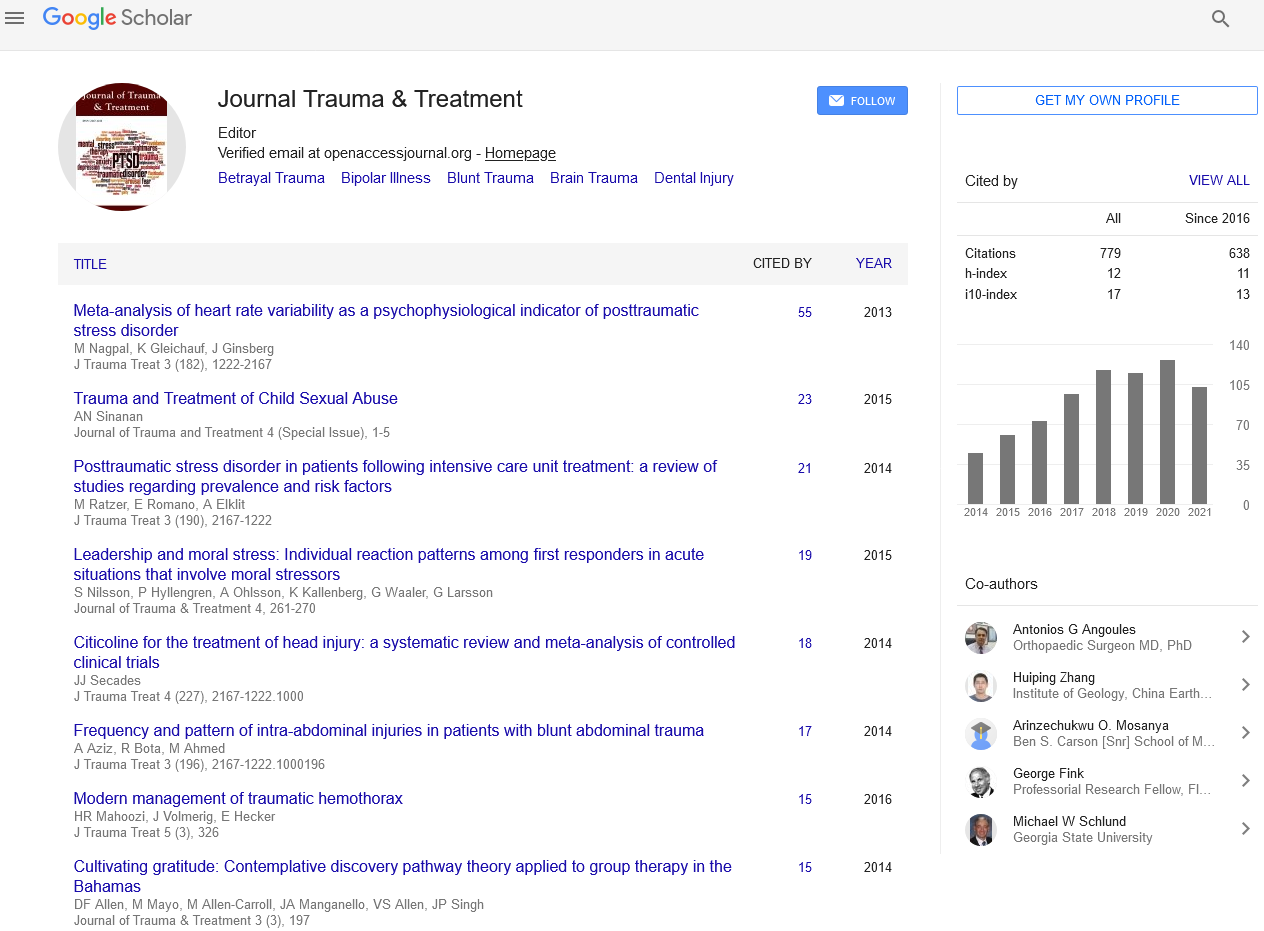
Journal of Trauma & Treatment received 1048 citations as per Google Scholar report