Perspective - (2025) Volume 13, Issue 6
Received: 01-Dec-2025, Manuscript No. jcdd-25-177701;
Editor assigned: 03-Dec-2025, Pre QC No. P-177701;
Reviewed: 17-Dec-2025, QC No. Q-177701;
Revised: 22-Dec-2025, Manuscript No. R-177701;
Published:
29-Dec-2025
, DOI: 10.37421/2329-9517.2025.13.706
Citation: Ethan Brown. ”Multidisciplinary Cardiac Care in Pregnancy.”
J Cardiovasc Dis Diagn 13 (2025):706.
Copyright: © 2025 B. Ethan This is an open-access article distributed under the terms of the Creative Commons Attribution License, which permits unrestricted use, distribution
and reproduction in any medium, provided the original author and source are credited.
Managing cardiac disease during pregnancy demands a multidisciplinary approach, focusing on risk stratification and individualized care. This seminar highlights the complexities and essential strategies for optimizing maternal and fetal outcomes, emphasizing the need for specialized cardio-obstetric teams to navigate the physiological changes of pregnancy on pre-existing or new-onset heart conditions [1].
Peripartum cardiomyopathy, a severe form of heart failure, occurs late in pregnancy or early postpartum. This paper reviews the updated diagnostic criteria, current treatment guidelines, and the importance of early detection to prevent adverse outcomes. It underscores how critical swift intervention and ongoing management are for mothers affected by this condition, particularly regarding future pregnancies [2].
Women with congenital heart disease face unique cardiovascular challenges during and after pregnancy. This scientific statement provides comprehensive guidance on pre-conception counseling, risk assessment, and management strategies. It emphasizes a collaborative approach between cardiology and obstetrics to optimize maternal health and minimize risks to the developing fetus [3].
Hypertensive disorders of pregnancy, like preeclampsia, significantly increase a woman's long-term risk for cardiovascular disease. This statement highlights the importance of recognizing these disorders as markers for future health risks and advocates for ongoing cardiovascular surveillance and lifestyle modifications postpartum to mitigate these risks and improve maternal health outcomes [4].
Valvular heart disease presents complex management challenges during pregnancy, influenced by hemodynamic changes. This seminar explores specific considerations for various valvular lesions, outlining diagnostic approaches, medical management, and the role of interventional or surgical procedures, all aimed at ensuring safe pregnancy outcomes for both mother and baby [5].
Pregnancy significantly impacts the cardiovascular system, particularly for women with aortic disease, increasing their risk of complications such as dissection. This article discusses the pathophysiology of aortic changes during gestation, highlights crucial clinical manifestations, and outlines tailored management strategies, including surveillance and interventions, to protect maternal health [6].
Pulmonary hypertension in pregnancy is a condition with extremely high maternal and fetal mortality rates. This review underscores the critical importance of specialized, multidisciplinary care, including advanced medical therapies and careful hemodynamic monitoring, to improve outcomes in this challenging patient population. It also stresses the need for pre-pregnancy counseling [7].
Cardiac arrhythmias are common in pregnancy, ranging from benign to life-threatening. This review offers a comprehensive overview of the physiological changes contributing to arrhythmias, diagnostic approaches, and management strategies, emphasizing the safety of antiarrhythmic medications and interventions for both mother and fetus. It points to a nuanced risk-benefit assessment in treatment decisions [8].
Women with pre-existing heart disease who undergo pregnancy face an elevated long-term risk of cardiovascular complications, extending well beyond the peripartum period. This article discusses the critical need for continued specialized follow-up care for these women to monitor for and manage potential future cardiovascular events, supporting their sustained health [9].
The management of cardiovascular disease during pregnancy is continuously evolving, with new guidelines offering updated recommendations. This review synthesizes current clinical practice guidelines, providing a clear framework for clinicians to assess and manage various cardiac conditions in pregnant women, ensuring evidence-based care and optimal outcomes [10].
Managing cardiac disease during pregnancy demands a multidisciplinary approach, focusing on risk stratification and individualized care. This highlights the complexities and essential strategies for optimizing maternal and fetal outcomes, emphasizing the need for specialized cardio-obstetric teams to navigate the physiological changes of pregnancy on pre-existing or new-onset heart conditions [1]. The management of cardiovascular disease during pregnancy is continuously evolving, with new guidelines offering updated recommendations. These synthesize current clinical practice guidelines, providing a clear framework for clinicians to assess and manage various cardiac conditions in pregnant women, ensuring evidence-based care and optimal outcomes [10]. Pulmonary hypertension in pregnancy, for instance, represents a condition with extremely high maternal and fetal mortality rates, underscoring the critical importance of specialized, multidisciplinary care, advanced medical therapies, careful hemodynamic monitoring, and pre-pregnancy counseling to improve outcomes in this challenging patient population [7]. Women with congenital heart disease also benefit from a collaborative approach between cardiology and obstetrics, optimizing maternal health and minimizing risks to the developing fetus [3].
Peripartum cardiomyopathy, a severe form of heart failure, occurs late in pregnancy or early postpartum. This condition requires a review of updated diagnostic criteria, current treatment guidelines, and emphasizes the importance of early detection to prevent adverse outcomes. Swift intervention and ongoing management are critical for affected mothers, particularly regarding future pregnancies [2]. Similarly, valvular heart disease presents complex management challenges during pregnancy, significantly influenced by hemodynamic changes. Specific considerations for various valvular lesions are explored, outlining diagnostic approaches, medical management, and the role of interventional or surgical procedures, all aimed at ensuring safe pregnancy outcomes for both mother and baby [5].
Pregnancy profoundly impacts the cardiovascular system, especially for women with aortic disease, increasing their risk of complications such as dissection. This involves understanding the pathophysiology of aortic changes during gestation, identifying crucial clinical manifestations, and outlining tailored management strategies, including surveillance and interventions, to protect maternal health [6]. Cardiac arrhythmias are common in pregnancy, ranging from benign to life-threatening. A comprehensive overview of the physiological changes contributing to arrhythmias, diagnostic approaches, and management strategies is available, emphasizing the safety of antiarrhythmic medications and interventions for both mother and fetus. A nuanced risk-benefit assessment is key in treatment decisions for these conditions [8].
Women with congenital heart disease face unique cardiovascular challenges during and after pregnancy. Comprehensive guidance covers pre-conception counseling, risk assessment, and management strategies, emphasizing a collaborative approach to optimize maternal health and minimize risks to the developing fetus [3]. Hypertensive disorders of pregnancy, such as preeclampsia, significantly increase a woman's long-term risk for cardiovascular disease. It is crucial to recognize these disorders as markers for future health risks and to advocate for ongoing cardiovascular surveillance and lifestyle modifications postpartum. This approach mitigates these risks and improves maternal health outcomes [4].
Women with pre-existing heart disease who undergo pregnancy face an elevated long-term risk of cardiovascular complications, extending well beyond the peripartum period. This highlights the critical need for continued specialized follow-up care for these women to monitor for and manage potential future cardiovascular events, supporting their sustained health [9]. The continuously evolving management of cardiovascular disease in pregnancy means new guidelines consistently offer updated recommendations, synthesizing current clinical practice to ensure evidence-based care and optimal outcomes for a diverse range of cardiac conditions [10].
Cardiac disease in pregnancy demands a specialized, multidisciplinary approach to ensure optimal outcomes for both mother and fetus. The physiological changes of gestation pose unique challenges, necessitating risk stratification and individualized care for various pre-existing or new-onset heart conditions. Conditions like peripartum cardiomyopathy, valvular heart disease, and aortic disease require specific diagnostic and management strategies, often involving swift intervention and ongoing monitoring. Women with congenital heart disease face particular cardiovascular challenges, emphasizing the need for comprehensive guidance on pre-conception counseling and collaborative care between cardiology and obstetrics. Furthermore, hypertensive disorders of pregnancy, such as preeclampsia, serve as critical markers for increased long-term maternal cardiovascular disease risk, advocating for sustained postpartum surveillance and lifestyle adjustments. High-risk conditions like pulmonary hypertension highlight the vital role of advanced therapies and meticulous hemodynamic monitoring. Even common issues like cardiac arrhythmias in pregnancy call for careful risk-benefit assessments for treatment. Importantly, the cardiovascular risks for women with heart disease extend long after delivery, stressing the necessity for continued specialized follow-up care. The field is constantly evolving, with new clinical practice guidelines regularly synthesizing evidence-based recommendations to guide clinicians in managing these complex cases and improving overall maternal cardiovascular health.
Indexed at, Google Scholar, Crossref
Indexed at, Google Scholar, Crossref
Indexed at, Google Scholar, Crossref
Indexed at, Google Scholar, Crossref
Indexed at, Google Scholar, Crossref
Indexed at, Google Scholar, Crossref
Indexed at, Google Scholar, Crossref
Indexed at, Google Scholar, Crossref
Indexed at, Google Scholar, Crossref
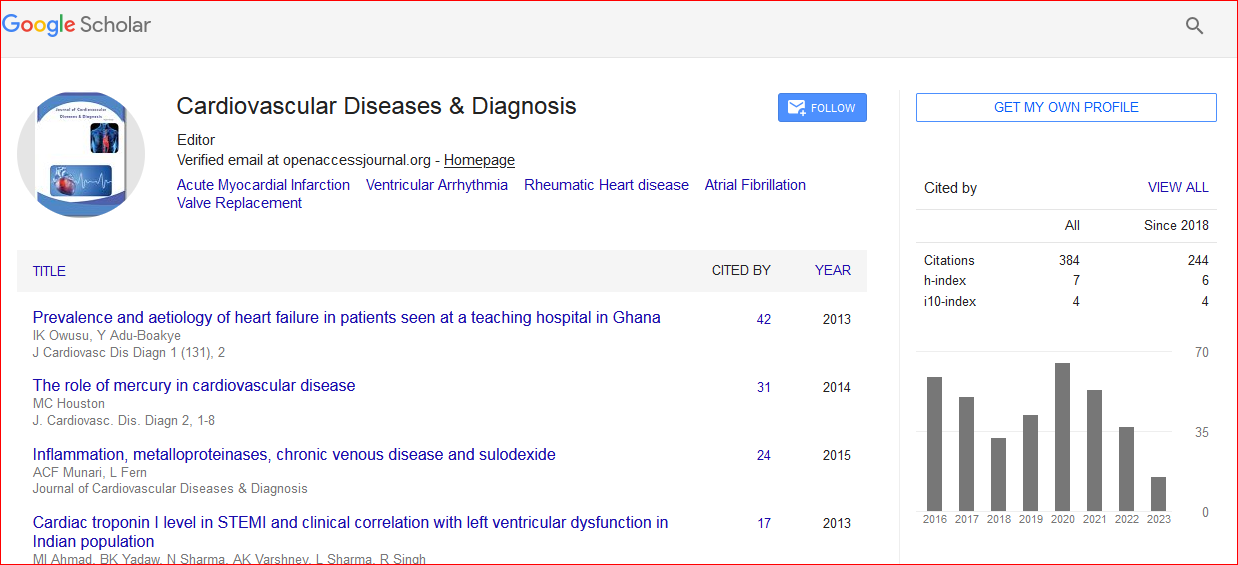
Cardiovascular Diseases & Diagnosis received 427 citations as per Google Scholar report