Opinion - (2025) Volume 10, Issue 5
Received: 01-Sep-2025, Manuscript No. JPNM-26-185756;
Editor assigned: 03-Sep-2025, Pre QC No. P-185756;
Reviewed: 17-Sep-2025, QC No. Q-185756;
Revised: 22-Sep-2025, Manuscript No. R-185756;
Published:
29-Sep-2025
, DOI: 10.37421/2472-100X.2025.10.368
Citation: Hassan, Fatima. ”Multidisciplinary Ataxia Care: Tailored Rehabilitation and Support.” J Pediatr Neurol Med 10 (2025):368.
Copyright: © 2025 Hassan F. This is an open-access article distributed under the terms of the Creative Commons Attribution License, which permits unrestricted use, distribution and reproduction in any medium, provided the original author and source are credited.
The management of childhood ataxia necessitates a comprehensive, multidisciplinary strategy, integrating meticulous clinical assessment, precise diagnosis, and precisely tailored rehabilitation interventions. This comprehensive approach is critical for addressing the multifaceted challenges presented by this condition. A fundamental step involves the accurate identification of the underlying etiology, which can range from genetic predispositions to acquired factors or idiopathic origins, thereby guiding subsequent therapeutic decisions. The core objective of these interventions is to systematically improve the child's motor control, enhance their balance, and foster greater functional independence in their daily lives. Rehabilitation strategies are diverse and often involve a coordinated effort from various therapy disciplines. Physiotherapy plays a pivotal role, focusing on targeted exercises designed to build strength, refine coordination, and improve gait patterns. Occupational therapy further supports functional independence by addressing activities of daily living and adapting the child's environment. Speech therapy is equally crucial, particularly for addressing communication and swallowing difficulties common in children with ataxia. Genetic factors are recognized as a substantial contributor to the spectrum of childhood ataxias. A deep understanding of the specific genetic mutations involved is increasingly important, as it allows for more precise management strategies and can significantly inform the prognostic outlook for the affected child. This genomic understanding is becoming a cornerstone of personalized medicine in this field. Genetic counseling is an indispensable component of care for families affected by childhood ataxias. The rapidly evolving landscape of genetic testing is continually improving diagnostic capabilities, offering clearer insights into the specific genetic underpinnings of the condition and paving the way for more targeted interventions. The potential for genetic therapies is a growing area of research. Physiotherapy emerges as a cornerstone in the management of childhood ataxia. The development and implementation of highly individualized exercise programs are paramount. These programs are meticulously designed to enhance motor skills, improve coordination, and stabilize balance, thereby yielding significant improvements in a child's overall functional capacity and quality of life. Early intervention is universally acknowledged as key. Maximizing potential gains and proactively preventing the onset of secondary complications are critical considerations in the therapeutic journey for children with ataxia. Innovations within the field of physiotherapy, including the integration of advanced technologies such as virtual reality and robotic-assisted therapies, are demonstrating considerable promise. These novel approaches are showing effectiveness in boosting patient engagement and amplifying treatment efficacy. Occupational therapy occupies a vital position in empowering children with ataxia to navigate the demands of daily living. It encompasses the development of essential skills for self-care routines, the enhancement of fine motor tasks crucial for school and play, and the strategic adaptation of home and school environments to foster maximum independence. Sensory integration techniques are also often employed. Speech and swallowing difficulties frequently present significant challenges for children diagnosed with ataxia, impacting their ability to communicate effectively and maintain adequate nutrition. Speech therapy interventions are specifically designed to target improvements in articulation, enhance fluency, and refine oral motor skills, addressing these critical functional deficits. Strategies to manage dysphagia are paramount. Assistive technology offers a powerful avenue to significantly enhance the overall quality of life for children affected by ataxia. This broad category includes essential mobility aids such as walkers and wheelchairs, advanced communication devices, and a range of adaptive equipment designed to support participation in daily tasks. Careful assessment is key. The collaboration of a multidisciplinary team is indispensable for the effective and comprehensive management of childhood ataxia. This collaborative model ensures that a holistic care plan is developed, encompassing neurological, genetic, rehabilitative, and psychosocial support, all tailored to the unique needs of the child and their family, fostering optimal outcomes and well-being.
The management of childhood ataxia is increasingly recognized as requiring a comprehensive, multidisciplinary approach that seamlessly integrates clinical evaluation, diagnostic procedures, and targeted rehabilitation efforts. This holistic strategy is essential for addressing the complex needs of affected children and aims to optimize their functional outcomes and overall quality of life. A pivotal first step in this process involves the accurate identification of the specific underlying cause of the ataxia, whether it stems from genetic mutations, acquired conditions, or remains idiopathic. This etiological understanding is fundamental in tailoring subsequent interventions effectively. The primary goal of these multidisciplinary interventions is to systematically enhance the child's motor control, improve their postural stability and balance, and foster a greater degree of functional independence in their everyday activities. The rehabilitation components are diverse and often involve a coordinated effort from various therapeutic disciplines. Physiotherapy, for instance, focuses on structured exercise programs designed to build muscular strength, improve coordination, and refine gait patterns. Occupational therapy further contributes by addressing daily living skills and adapting the child's environment to promote independence. Genetic factors are acknowledged as significant contributors to the diverse landscape of childhood ataxias. Understanding the precise genetic mutation responsible for an individual's ataxia is becoming increasingly important, as it facilitates more accurate and personalized management plans and can provide crucial insights into the potential prognosis. The rapid advancements in genetic testing technologies are significantly enhancing diagnostic capabilities, leading to earlier and more precise diagnoses. Genetic counseling plays a vital role in supporting families who have a child with ataxia. The ability to identify specific genetic markers not only aids in diagnosis and prognosis but also opens doors for potential targeted therapies, where available. As research progresses, the field of genetics offers hope for revolutionary treatment approaches for certain genetic forms of ataxia, underscoring the importance of ongoing genetic investigation and support. The role of physiotherapy is paramount in the rehabilitation of children with ataxia. The implementation of carefully designed, individualized exercise programs is crucial for improving motor skills, coordination, and balance. These interventions aim to significantly enhance a child's functional capacity and their ability to participate in daily activities. The principle of early intervention is consistently emphasized as being critical for maximizing therapeutic benefits and preventing the development of secondary complications. Innovations in physiotherapy are continuously emerging, with promising results being observed from the integration of advanced technologies. Tools such as virtual reality and robotic assistance are being explored for their potential to enhance patient engagement and increase the effectiveness of rehabilitation sessions. These technological advancements represent a significant step forward in the therapeutic armamentarium for childhood ataxia. Occupational therapy plays an essential role in equipping children with ataxia with the necessary skills for independent living. This therapeutic discipline focuses on developing capabilities in self-care, improving performance in fine motor tasks required for education and leisure, and implementing adaptive strategies for the home and school environments. Sensory integration techniques are also frequently utilized to address potential sensory processing challenges. Speech and swallowing difficulties are common comorbidities in children with ataxia, presenting challenges to communication and nutrition. Speech therapy interventions are specifically tailored to improve articulation, enhance fluency, and refine oral motor skills. Furthermore, strategies for managing dysphagia, such as modifications to diet and specialized feeding techniques, are critical for ensuring the child's safety and overall well-being. Assistive technology provides a powerful means to significantly enhance the quality of life for children with ataxia. This encompasses a wide array of devices, including mobility aids like walkers and wheelchairs, communication devices that facilitate expression, and adaptive equipment for various daily tasks. A thorough assessment process is vital to ensure the selection of appropriate technologies that meet individual needs and promote autonomy. Finally, the collaborative efforts of a multidisciplinary team are essential for the comprehensive and holistic management of childhood ataxia. This collaborative model ensures that all aspects of the child's and family's needs are addressed, fostering optimal care and support throughout their journey. The coordinated expertise of various specialists is key to success.
Childhood ataxia management requires a multidisciplinary approach involving clinical assessment, diagnosis, and tailored rehabilitation. This includes physiotherapy, occupational therapy, and speech therapy to improve motor control, balance, and functional independence. Genetic factors are significant contributors, and understanding specific mutations aids precise management. Early intervention and innovative therapies are crucial. Occupational therapy focuses on daily living skills and environmental adaptations, while speech therapy addresses communication and swallowing difficulties. Assistive technology enhances independence. Psychosocial support and continuous monitoring are integral to optimal care. Emerging therapies and robust multidisciplinary team collaboration are vital for improving outcomes in childhood ataxia.
None
None
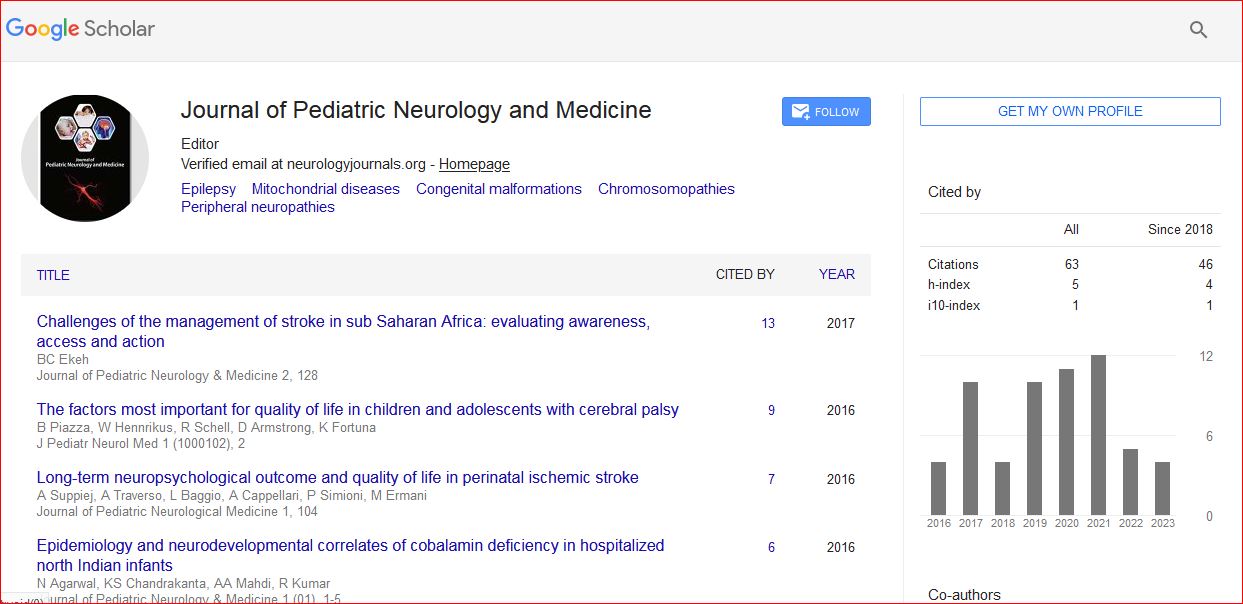
Journal of Pediatric Neurology and Medicine received 68 citations as per Google Scholar report