Commentary - (127) Volume 14, Issue 6
Received: 03-Nov-2025, Manuscript No. mcce-26-190204;
Editor assigned: 05-Nov-2025, Pre QC No. P-190204;
Reviewed: 19-Nov-2025, QC No. Q-190204;
Revised: 24-Nov-2025, Manuscript No. R-190204;
Published:
29-Nov-2025
, DOI: 10.37421/2470-6965.2025.14.438
Citation: Castillo, Rodrigo. ”Combating Malaria Drug Resistance: Surveillance and New Therapies.” Malar Contr Elimination 14 (2025):438.
Copyright: © 2025 Castillo R. This is an open-access article distributed under the terms of the Creative Commons Attribution License, which permits unrestricted use, distribution and reproduction in any medium, provided the original author and source are credited.
Drug resistance in malaria poses a significant and escalating challenge to global control efforts, underscoring the imperative for continuous monitoring of therapeutic efficacy. Robust surveillance systems are identified as critical for the early detection of emerging resistance and for informing the development and refinement of treatment guidelines. The accurate assessment of drug efficacy and the strategic guidance of malaria elimination initiatives are heavily reliant on the integration of various methodologies, including the analysis of genetic markers, the execution of in vitro assays, and the performance of in vivo studies [1].
The emergence and subsequent spread of resistance to artemisinin, a cornerstone of modern malaria treatment, within the Plasmodium falciparum parasite represent a formidable obstacle to achieving global malaria elimination. Research into this phenomenon delves into the intricate molecular mechanisms that underpin such resistance and rigorously evaluates the effectiveness of both current antimalarial drug combinations and novel therapeutic agents under development. This body of work consistently highlights the urgent necessity for updating established treatment policies and for the accelerated development of new drugs to combat this growing threat [2].
The ongoing tracking of drug resistance patterns in malaria-endemic regions is fundamentally dependent on the execution of longitudinal therapeutic efficacy studies. These studies meticulously detail the methodologies employed and present findings that frequently reveal a concerning decline in the in vivo efficacy of specific drug regimens in particular geographical areas. The outcomes from these investigations underscore the dynamic and evolving nature of drug resistance and firmly establish the necessity for adaptive and responsive malaria control programs [3].
Understanding the real-world effectiveness of antimalarial drugs and identifying the emergence of resistance requires the synergistic integration of pharmacovigilance practices with therapeutic drug monitoring. This integrated approach offers significant insights into drug performance and facilitates the timely detection of resistance. The implementation of such comprehensive surveillance systems, while presenting unique challenges, also offers substantial opportunities for enhanced malaria control, emphasizing the need for robust data sharing and collaborative interdisciplinary efforts to effectively combat drug resistance on a global scale [4].
The escalating threat of widespread drug resistance to existing antimalarial therapies makes the development of novel therapeutic agents a paramount priority in the ongoing fight against malaria. A thorough survey of the current pipeline of new antimalarial compounds, examining their diverse mechanisms of action and their potential efficacy against parasite strains that have developed resistance, is essential. This endeavor highlights the significant challenges inherent in the drug development process and stresses the critical need for sustained and increased investment in research and development [5].
The genetic underpinnings of antimalarial drug resistance are recognized as being exceptionally complex and subject to rapid evolutionary changes. Research efforts are increasingly focused on exploring and validating the utility of specific molecular markers as predictive tools for anticipating drug resistance in Plasmodium falciparum. This approach suggests that genomic surveillance can serve as a valuable complement to traditional phenotypic drug resistance studies, thereby enhancing the ability to inform and guide public health interventions more effectively [6].
The pervasive issue of therapeutic drug resistance stands as a major impediment to the successful realization of malaria elimination goals worldwide. A comprehensive overview of the current global status of drug resistance across key malaria-endemic regions is vital. This assessment examines the direct impact of resistance on treatment outcomes and critically evaluates the implications for achieving the ambitious objective of malaria-free status in affected populations [7].
The continued effectiveness of artemisinin-based combination therapies (ACTs), which are vital components of current malaria treatment strategies, is increasingly jeopardized by the emergence and spread of resistance. Investigations into this phenomenon are critically examining the changing efficacy of various ACTs in specific epidemiological settings, such as regions within Southeast Asia. These studies consistently highlight the indispensable need for ongoing, vigilant monitoring and the prompt, adaptive revision of established treatment guidelines to maintain therapeutic efficacy [8].
The sustained commitment to malaria control necessitates a constant state of vigilance against the insidious development of drug resistance. This vigilance is most effectively maintained through the consistent execution of therapeutic efficacy studies, which form the bedrock of comprehensive surveillance programs. Despite their importance, these studies frequently encounter significant challenges, including inadequate funding and complex logistical hurdles, necessitating the proactive development and implementation of innovative strategies for their long-term sustainability [9].
The observed resurgence of malaria in certain geographical areas can be partly attributed to the growing prevalence of drug resistance. This observation necessitates a thorough review of the epidemiological evidence that directly links evolving drug resistance patterns to documented treatment failures. Understanding these links is crucial for assessing the implications for the efficacy of current malaria control programs and for advocating for the strengthened implementation of surveillance measures and the rapid deployment of appropriate and effective interventions [10].
Drug resistance represents a significant and escalating threat to malaria control, making the continuous monitoring of therapeutic efficacy an absolute necessity. Robust surveillance systems play a pivotal role in the early detection of emerging resistance patterns and in providing crucial information for the adjustment of treatment guidelines. The efficacy of antimalarial drugs and the strategic direction of malaria elimination efforts are significantly informed by the accurate assessment derived from genetic markers, in vitro assays, and in vivo studies [1].
The emergence and subsequent proliferation of artemisinin resistance in Plasmodium falciparum present a substantial hurdle to global malaria elimination endeavors. This area of research is dedicated to dissecting the complex molecular mechanisms that drive resistance and to evaluating the therapeutic potential of current and novel antimalarial drug combinations. The findings consistently underscore the critical need for updated treatment policies and the proactive development of new therapeutic agents to counter this growing challenge [2].
Longitudinal therapeutic efficacy studies are indispensable for effectively tracking the dynamics of drug resistance in malaria-endemic areas. These studies meticulously document the methodologies employed and present findings that frequently indicate a decline in the in vivo effectiveness of certain drug regimens in specific locales. The results highlight the inherently dynamic nature of drug resistance and emphasize the requirement for adaptable malaria control programs [3].
For a comprehensive understanding of real-world antimalarial drug effectiveness and the identification of resistance, the integration of pharmacovigilance and therapeutic drug monitoring is paramount. This integrated approach allows for the detection of resistance and the assessment of drug performance in clinical settings. The implementation of such coordinated surveillance systems presents both challenges and opportunities, stressing the importance of data sharing and collaborative initiatives to effectively combat drug resistance [4].
In the context of widespread drug resistance, the development of novel antimalarial drugs has become a top priority. A thorough review of the current pipeline of new antimalarial compounds, including their mechanisms of action and their potential effectiveness against resistant parasite strains, is essential. This process highlights the considerable challenges associated with drug development and reinforces the critical need for sustained investment in this area [5].
The genetic basis of antimalarial drug resistance is characterized by its complexity and rapid evolutionary trajectory. Research is increasingly focused on the practical application of molecular markers for the predictive assessment of drug resistance in Plasmodium falciparum. This approach suggests that genomic surveillance can serve as a powerful complement to conventional phenotypic drug resistance studies, thereby improving the ability to inform and guide public health interventions [6].
Therapeutic drug resistance constitutes a major obstacle to the successful achievement of malaria elimination goals. An overview of the current global situation regarding drug resistance in key malaria-endemic regions is crucial for understanding the scope of the problem. This analysis examines the impact of resistance on treatment outcomes and its broader implications for achieving malaria-free status [7].
The efficacy of artemisinin-based combination therapies (ACTs), which are central to current malaria treatment strategies, is increasingly threatened by the emergence of resistance. Studies in this field investigate the changing effectiveness of various ACTs in specific geographical contexts, such as Southeast Asia. These investigations highlight the imperative for continuous monitoring and the timely adaptation of treatment guidelines to maintain therapeutic effectiveness [8].
Sustaining ongoing malaria control efforts necessitates constant vigilance against the development and spread of drug resistance. Therapeutic efficacy studies are fundamental to surveillance programs, providing essential data on drug performance. However, these studies face significant challenges, including funding limitations and logistical complexities, which necessitate the development and implementation of strategies for their long-term viability [9].
The observed resurgence of malaria in certain regions is partly attributable to the growing prevalence of drug resistance. This observation calls for a review of the evidence linking drug resistance patterns to treatment failures and an assessment of the implications for malaria control programs. The findings advocate for enhanced surveillance and the prompt implementation of effective interventions [10].
Drug resistance in malaria is a growing concern that requires continuous monitoring of treatment effectiveness. Robust surveillance systems, utilizing genetic markers, in vitro assays, and in vivo studies, are vital for detecting resistance and guiding treatment policies. The emergence of artemisinin resistance in Plasmodium falciparum poses a significant challenge, necessitating research into resistance mechanisms and the development of new drugs and combinations. Longitudinal therapeutic efficacy studies are essential for tracking resistance patterns and informing adaptive control programs. Integrating pharmacovigilance and therapeutic drug monitoring enhances the understanding of real-world drug effectiveness and aids in resistance detection. The development of novel antimalarial drugs is a priority, despite the inherent challenges in drug development. Molecular markers are being explored for predictive surveillance of drug resistance. The global landscape of antimalarial drug resistance significantly impacts elimination efforts. The efficacy of artemisinin-based combination therapies is under threat, requiring continuous monitoring and guideline adaptation. Sustaining therapeutic efficacy studies is crucial but faces challenges, necessitating strategic solutions. The resurgence of malaria is linked to drug resistance, emphasizing the need for strengthened surveillance and rapid intervention.
None
None
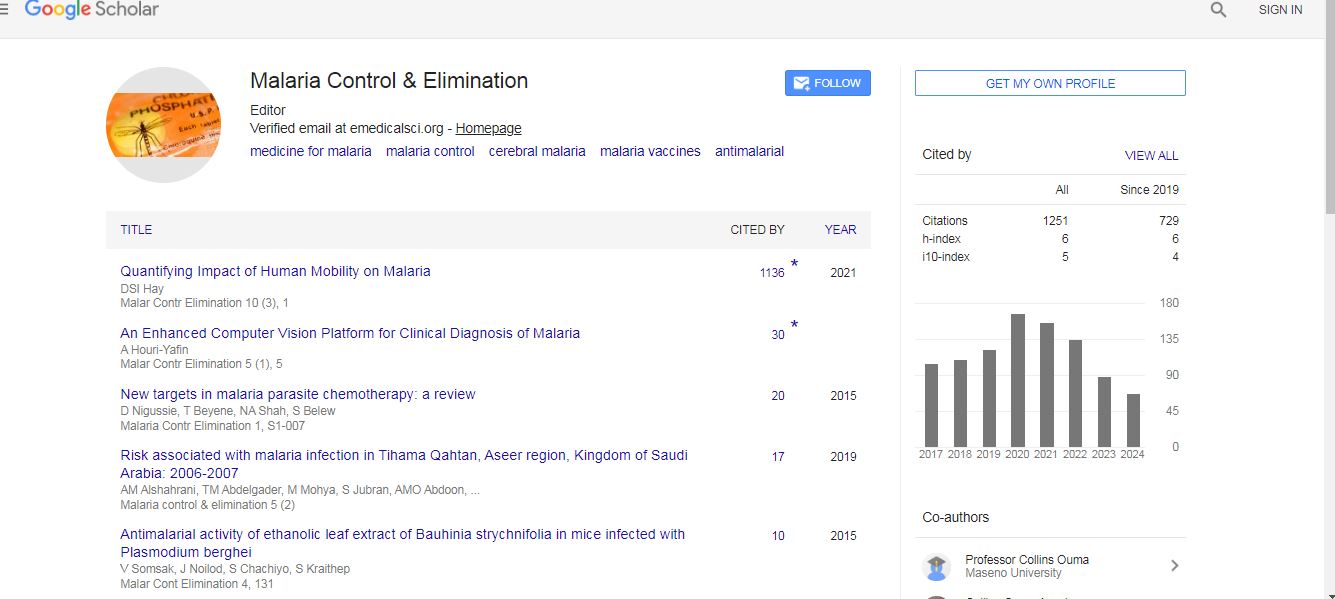
Malaria Control & Elimination received 1187 citations as per Google Scholar report