Commentary - (2026) Volume 10, Issue 1
Received: 01-Feb-2026, Manuscript No. cmcr-25-186120;
Editor assigned: 03-Feb-2026, Pre QC No. P-186120;
Reviewed: 17-Feb-2026, QC No. Q-186120;
Revised: 23-Feb-2026, Manuscript No. R-186120;
Published:
02-Mar-2025
, DOI: 10.37421/2684-4915.2025.9.417
Citation: Foster, Daniel. ”Medical Advancements: Personalized Therapies And New Treatments.” Clin Med Case Rep 10 (2026):417.
Copyright: © 2026 Foster D. This is an open-access article distributed under the terms of the Creative Commons Attribution License, which permits unrestricted use, distribution
and reproduction in any medium, provided the original author and source are credited.
The field of medical research continues to evolve, offering new insights and treatment modalities across a spectrum of diseases. Significant advancements have been made in managing chronic conditions such as type 2 diabetes, with a focus on novel pharmacotherapies aimed at improving cardiovascular and renal outcomes, thereby reshaping clinical guidelines and personalizing patient care [1].
Concurrently, the management of complex infections, like infective endocarditis, in vulnerable populations, such as immunocompromised individuals, demands a robust, multidisciplinary approach encompassing early diagnosis and advanced imaging techniques to ensure optimal outcomes [2].
In critical care settings, acute kidney injury (AKI) presents a substantial challenge, with ongoing research emphasizing early detection and proactive nephroprotective strategies to mitigate long-term renal damage [3].
Oncology has witnessed breakthroughs with the development of new immunotherapies, demonstrating promising efficacy in treating advanced non-small cell lung cancer and offering novel therapeutic avenues for patients [4].
Furthermore, the intricate management of heart failure with preserved ejection fraction (HFpEF) remains a critical area of study, with recent reviews synthesizing evidence on diagnostic challenges and exploring emerging therapeutic targets to enhance patient prognoses [5].
In the realm of cardiovascular medicine, the development and evaluation of new anticoagulant agents are crucial for patients undergoing interventional procedures, with ongoing trials assessing their safety and effectiveness in preventing thrombotic events while minimizing bleeding risks [6].
Inflammatory bowel disease (IBD) management is also seeing dynamic changes, driven by the advent of biologics and small molecule inhibitors, prompting a re-evaluation of treatment paradigms to achieve sustained remission and improved patient quality of life [7].
Emerging research is shedding light on the intricate relationship between the gut microbiota and autoimmune diseases, such as rheumatoid arthritis, identifying specific microbial profiles associated with disease activity and treatment responsiveness, opening doors for novel therapeutic interventions [8].
The neurological landscape is similarly advancing, with new antiepileptic drugs and non-pharmacological interventions offering improved management strategies for epilepsy, emphasizing the need for individualized treatment plans tailored to specific epilepsy syndromes [9].
Finally, the utility of liquid biopsies, particularly circulating tumor DNA (ctDNA) analysis, is transforming cancer care by enabling earlier detection, precise monitoring of treatment response, and guiding therapeutic decisions across various malignancies [10].
The evolving landscape of type 2 diabetes management is characterized by the introduction of novel pharmacotherapies that not only address glycemic control but also significantly impact cardiovascular and renal outcomes. This shift necessitates an update in treatment guidelines to incorporate personalized approaches, ensuring that patient care is tailored to individual needs and risk profiles [1].
The successful treatment of complex infective endocarditis, particularly in immunocompromised patients, highlights the critical importance of a coordinated, multidisciplinary strategy. This includes prompt diagnosis, advanced imaging for accurate assessment, and often, timely surgical intervention to manage the infection effectively [2].
Within the critical care environment, acute kidney injury (AKI) remains a significant concern. Current management strategies focus intensely on early recognition of renal dysfunction, judicious fluid management, and the implementation of nephroprotective measures to preserve kidney function and reduce the burden of chronic kidney disease in survivors [3].
In the field of oncology, a novel immunotherapy has shown substantial promise in clinical trials for advanced non-small cell lung cancer. Its efficacy, measured by progression-free and overall survival, positions it as a valuable new option for a patient population with limited treatment alternatives [4].
The complex condition of heart failure with preserved ejection fraction (HFpEF) continues to be a focus of research. Comprehensive reviews are essential for understanding the diagnostic challenges and for exploring new therapeutic targets and strategies that aim to improve the quality of life and clinical outcomes for affected individuals [5].
For patients with atrial fibrillation undergoing percutaneous coronary intervention, the development of new anticoagulant agents is a critical advancement. Studies are evaluating their effectiveness in balancing the prevention of dangerous blood clots with the risk of bleeding complications, providing crucial data for clinical practice [6].
The management of inflammatory bowel disease (IBD) is being revolutionized by the integration of advanced therapies like biologics and small molecule inhibitors. These treatments offer new possibilities for achieving and maintaining remission, prompting a reassessment of current treatment paradigms and future research directions [7].
The intricate connection between the gut microbiota and the pathogenesis of rheumatoid arthritis is an emerging area of investigation. Research is identifying specific microbial signatures that correlate with disease activity and response to treatment, suggesting the microbiota as a potential target for future therapeutic interventions [8].
For individuals with epilepsy, advancements in diagnostic tools and therapeutic options, including new antiepileptic drugs and non-pharmacological approaches, are enhancing management. The emphasis is increasingly on personalized treatment strategies that consider the specific type of epilepsy and individual patient characteristics [9].
The clinical utility of liquid biopsies is rapidly expanding, particularly for early cancer detection and monitoring. The analysis of circulating tumor DNA (ctDNA) is proving invaluable across various cancer types, aiding in treatment selection and the assessment of therapeutic efficacy [10].
This compilation of research highlights significant advancements across various medical disciplines. It covers new pharmacotherapies for type 2 diabetes with positive cardiovascular and renal impacts, multidisciplinary approaches to complex infective endocarditis, and strategies for managing acute kidney injury in critically ill patients. The data also details promising new immunotherapies for lung cancer, evolving treatments for heart failure with preserved ejection fraction, and the evaluation of novel anticoagulants for atrial fibrillation patients. Furthermore, it explores updated management paradigms for inflammatory bowel disease, the role of gut microbiota in rheumatoid arthritis, advances in epilepsy diagnosis and treatment, and the growing utility of liquid biopsies in cancer detection and monitoring. These studies collectively underscore a trend towards personalized medicine and the development of targeted therapies.
None
None
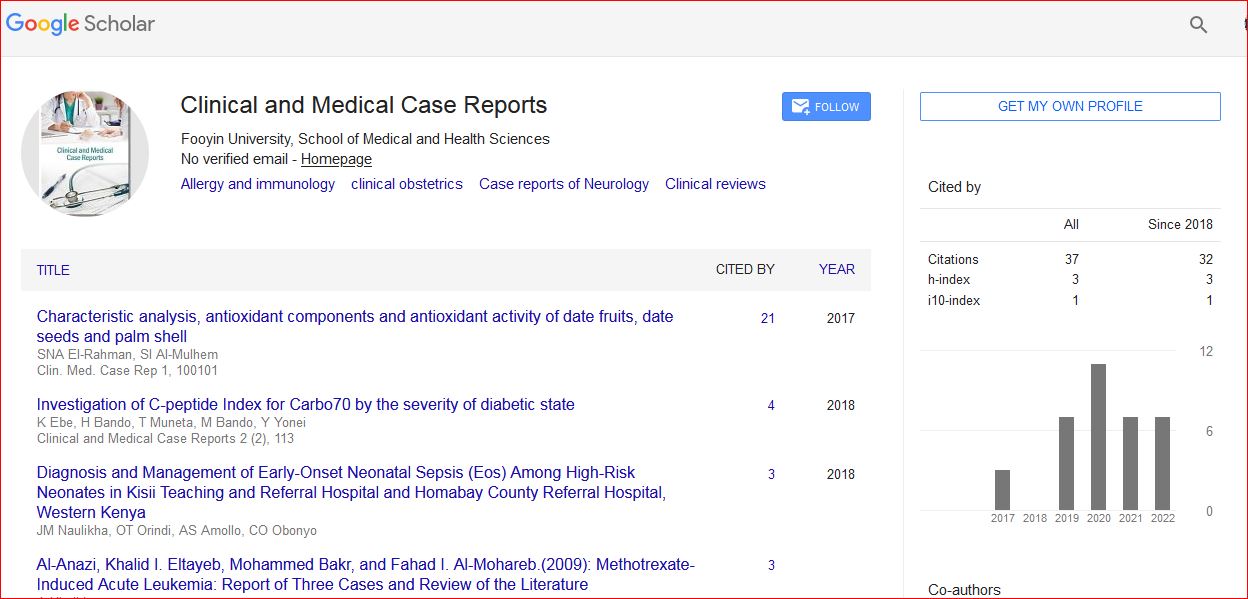
Clinical and Medical Case Reports received 53 citations as per Google Scholar report