Brief Report - (2025) Volume 14, Issue 6
Received: 03-Nov-2025, Manuscript No. mcce-26-190205;
Editor assigned: 05-Nov-2025, Pre QC No. P-190205;
Reviewed: 19-Nov-2025, QC No. Q-190205;
Revised: 24-Nov-2025, Manuscript No. R-190205;
Published:
29-Nov-2025
, DOI: 10.37421/2470-6965.2025.14.439
Citation: Hussein, Farida. ”Mass Drug Administration: Challenges, Opportunities, And Success.” Malar Contr Elimination 14 (2025):439.
Copyright: © 2025 Hussein F. This is an open-access article distributed under the terms of the Creative Commons Attribution License, which permits unrestricted use, distribution and reproduction in any medium, provided the original author and source are credited.
Mass Drug Administration (MDA) stands as a fundamental strategy for the control and eventual elimination of neglected tropical diseases (NTDs), with a particular emphasis on malaria. This method involves the systematic distribution of antiparasitic medications to entire populations residing in endemic areas, aiming to significantly reduce disease burden, interrupt transmission cycles, and prevent the onset of morbidity. The efficacy of MDA in achieving these objectives is well-documented and strongly supported by scientific evidence [1].
In sub-Saharan Africa, the application of Seasonal Malaria Chemoprevention (SMC) through mass drug administration has proven to be particularly effective in curtailing malaria incidence among young children. Systematic reviews and meta-analyses confirm its substantial impact in diminishing both clinical malaria episodes and instances of severe malaria, underscoring its critical role in pediatric malaria control [2].
However, the pervasive threat of drug resistance presents a formidable challenge to the sustained success of malaria control interventions, including MDA programs. Understanding the intricate mechanisms by which antimalarial drugs develop resistance and analyzing their implications for MDA is paramount. This necessitates robust surveillance systems to detect emerging resistance patterns and facilitate timely adaptations in treatment strategies [3].
Community engagement emerges as a pivotal determinant for the successful implementation and long-term sustainability of mass drug administration programs. Research highlights the critical influence of factors such as trust, transparent communication, and the fostering of local ownership in encouraging community participation in MDA for malaria and other NTDs [4].
The logistical complexities associated with delivering mass drug administration, especially in remote and underserved regions, pose significant operational hurdles. Analyzing supply chain management and delivery strategies is crucial for identifying common bottlenecks, including transportation issues, drug stockouts, and workforce limitations, to improve reach and coverage [5].
Integrating mass drug administration with other complementary health interventions, such as vector control and diagnostic tools, offers the potential to amplify its overall impact and enhance program efficiency. These integrated approaches can address diverse transmission pathways and improve population-wide coverage, leading to more comprehensive malaria control strategies [6].
Reaching mobile and migrant populations with malaria MDA interventions poses unique difficulties in achieving adequate coverage and ensuring equity. Strategies must be adapted to address the barriers faced by these groups, such as frequent relocation and lack of fixed residences, to prevent them from being excluded from elimination efforts [7].
Effective monitoring and evaluation (M&E) are indispensable for accurately assessing the impact and overall effectiveness of mass drug administration campaigns. Establishing a comprehensive M&E framework, encompassing data collection, analysis, and reporting, is essential for understanding program outcomes and identifying areas for improvement [8].
The economic implications of implementing mass drug administration for malaria control and eventual elimination are substantial. While initial investments may be considerable, successful MDA programs can yield significant long-term benefits, including reduced healthcare expenditures, increased economic productivity, and improved overall development in endemic regions [9].
Crucially, the long-term success and sustainability of mass drug administration programs are deeply intertwined with political commitment and supportive policy frameworks. Sustained political will is a vital catalyst for securing necessary resources, facilitating program implementation, and ultimately achieving national malaria elimination goals [10].
Mass Drug Administration (MDA) serves as a cornerstone strategy for the control and elimination of neglected tropical diseases (NTDs), notably malaria. This approach entails the periodic distribution of antiparasitic medicines to entire populations within endemic areas, supported by strong evidence of its effectiveness in reducing disease burden, interrupting transmission, and preventing morbidity. Nevertheless, successful MDA implementation is confronted by considerable challenges, including the necessity of high treatment coverage, the management of drug resistance, effective outreach to mobile and migrant populations, sustained community engagement, and overcoming logistical obstacles in resource-limited settings. Opportunities for enhancement exist in integrating MDA with other interventions such as vector control, utilizing innovative delivery platforms, strengthening surveillance for early detection of resurgence, and optimizing drug selection and regimens. Addressing these challenges and capitalizing on available opportunities are essential for the attainment and sustained achievement of malaria elimination [1].
Seasonal Malaria Chemoprevention (SMC), delivered via mass drug administration, plays a pivotal role in reducing malaria incidence among young children in sub-Saharan Africa. This systematic review and meta-analysis highlights the significant impact of SMC in decreasing clinical malaria episodes and severe malaria. Key challenges include ensuring high adherence across multiple treatment cycles and guaranteeing equitable access for diverse populations. Opportunities for optimizing SMC lie in the development of improved community-based delivery models and exploring combination therapies to combat drug resistance [2].
Antimalarial drug resistance poses a significant threat to the long-term viability of malaria control initiatives, including mass drug administration. This article delves into the mechanisms of antimalarial drug resistance and its ramifications for MDA programs, emphasizing the critical need for robust surveillance systems to detect emerging resistance and adapt treatment strategies accordingly. Opportunities are presented by the development and deployment of novel antimalarial drugs and the strategic application of combination therapies to delay or overcome resistance [3].
Community engagement is recognized as a critical factor in the success of mass drug administration programs. Research in this area investigates the elements that influence community participation in MDA for malaria and other NTDs, underscoring the importance of trust, clear communication, and local ownership. Challenges encompass maintaining sustained engagement and addressing socio-cultural barriers. Opportunities include empowering community health workers and involving local leaders to foster buy-in and enhance treatment coverage [4].
The logistics involved in delivering mass drug administration to remote and underserved areas present substantial operational challenges. This study provides an analysis of supply chain management and delivery strategies for MDA, focusing on factors affecting reach and coverage. It identifies common bottlenecks, such as transportation difficulties, stockouts, and workforce limitations. Opportunities for improvement include the adoption of digital tools for tracking drug distribution, innovative last-mile delivery solutions, and strengthening the capacity of local health systems [5].
Integrating mass drug administration with other health interventions, such as vector control and diagnostics, can significantly amplify its overall impact and efficiency. This review explores the synergistic benefits of combining MDA with other malaria control tools, demonstrating how such integrated approaches can effectively address multiple transmission pathways and improve population coverage. Despite challenges in coordination and resource allocation across different programs, the opportunities for establishing a more comprehensive and sustainable malaria control strategy are substantial [6].
The presence of mobile and migrant populations within malaria MDA programs introduces unique challenges to achieving adequate coverage and equity. This study investigates effective strategies for delivering antimalarial treatment to these mobile groups, discussing barriers like frequent relocation, lack of fixed addresses, and varied healthcare access. Opportunities involve adapting delivery mechanisms to suit mobile populations, utilizing outreach teams and targeted interventions at transit points to ensure their inclusion in elimination efforts [7].
Monitoring and evaluation (M&E) are fundamental for assessing the impact and effectiveness of mass drug administration campaigns. This paper outlines the essential components of an M&E framework for malaria MDA, covering data collection, analysis, and reporting. Common challenges in M&E often arise from data quality issues, resource constraints, and the difficulty of attributing changes solely to MDA. Opportunities exist in leveraging digital data collection tools, real-time monitoring systems, and robust impact evaluation methodologies [8].
The economic implications of mass drug administration for malaria control and elimination are considerable. This study evaluates the cost-effectiveness of MDA interventions, factoring in both direct medical costs and broader societal benefits. It emphasizes that while initial investments can be substantial, successful MDA can lead to reduced healthcare expenditures, increased productivity, and enhanced economic development in endemic regions. Challenges include accurately quantifying these long-term benefits, while opportunities lie in demonstrating the economic rationale for sustained investment in MDA programs [9].
The role of political commitment and supportive policy frameworks is crucial for the successful implementation and sustainability of mass drug administration programs for malaria. Strong political will is identified as a key driver for resource allocation, program execution, and the achievement of national elimination goals. Challenges can include the sustainability of political commitment, especially during economic instability or when competing health priorities arise. Opportunities for strengthening policy environments involve advocating for long-term malaria control strategies and ensuring MDA remains a central component of national health agendas [10].
Mass Drug Administration (MDA) is a critical strategy for controlling neglected tropical diseases like malaria, involving periodic drug distribution to entire populations. While proven effective in reducing disease burden and transmission, it faces challenges such as achieving high coverage, managing drug resistance, reaching mobile populations, and logistical hurdles. Opportunities lie in integrating MDA with other interventions, using innovative delivery methods, enhancing surveillance, and optimizing drug regimens. Seasonal Malaria Chemoprevention (SMC) via MDA is vital for reducing malaria in children. Drug resistance is a major threat, requiring robust surveillance and new drug development. Community engagement is crucial for MDA success, alongside efficient logistics in remote areas. Integrating MDA with vector control and diagnostics can improve outcomes. Reaching mobile populations and robust monitoring and evaluation are essential. MDA also offers significant economic benefits and requires strong political commitment and supportive policies for long-term success.
None
None
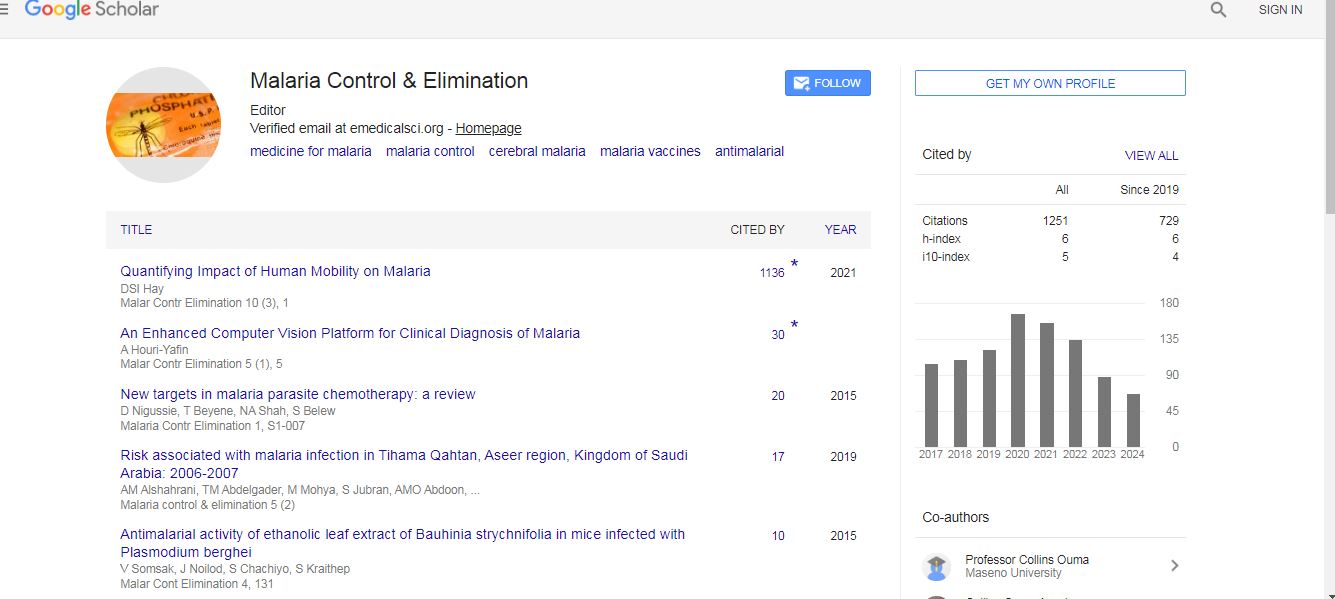
Malaria Control & Elimination received 1187 citations as per Google Scholar report