Commentary - (2025) Volume 10, Issue 4
Received: 01-Jul-2025, Manuscript No. PE-26-179295;
Editor assigned: 03-Jul-2025, Pre QC No. P-179295;
Reviewed: 17-Jul-2025, QC No. Q-179295;
Revised: 22-Jul-2025, Manuscript No. R-179295;
Published:
29-Jul-2025
, DOI: 10.37421/2472-1042.2025.10.297
Citation: Papadakis, George. ”Managing Polypharmacy: Reducing Costs, Improving Outcomes.” Pharmacoeconomics 10 (2025):297.
Copyright: © 2025 Papadakis G. This is an open-access article distributed under the terms of the Creative Commons Attribution License, which permits unrestricted use, distribution and reproduction in any medium, provided the original author and source are credited.
Polypharmacy in the elderly represents a significant challenge to healthcare systems, manifesting in increased costs due to elevated hospitalizations, frequent emergency department visits, and a higher incidence of medication-related adverse events. This complex situation underscores the critical need for pharmacoeconomic evaluations to identify strategies that can optimize medication use, curtail unnecessary expenditures, and ultimately enhance patient outcomes [1].
Identifying and intervening in cases of inappropriate medication prescribing for elderly patients holds the potential for substantial pharmacoeconomic benefits. Strategies such as comprehensive medication reviews and targeted deprescribing programs are instrumental in reducing adverse drug events and the associated healthcare utilization, thereby proving to be cost-effective interventions [2].
The economic ramifications of polypharmacy are not limited to adverse events; they also encompass the direct costs associated with the medications themselves. This often involves managing multiple prescriptions with varying price points. Pharmacoeconomic models are therefore indispensable for assessing the value of different drug regimens and for effectively optimizing formulary management within elderly care settings [3].
Adverse drug events (ADEs) stand out as a primary contributor to the pharmacoeconomic burden imposed by polypharmacy. A thorough quantification of the costs linked to ADEs, including healthcare resource utilization and losses in productivity, vividly illustrates the financial imperative for implementing improved medication management practices in the elderly population [4].
Interprofessional collaboration among physicians, pharmacists, and nurses is a vital component in effectively mitigating the economic impact of polypharmacy. Coordinated care models that prioritize medication reconciliation and robust patient education have demonstrated a capacity for improving patient outcomes while simultaneously reducing overall healthcare expenditures [5].
Technological advancements, such as the implementation of electronic prescribing systems and clinical decision support tools, are poised to play a pivotal role in curbing polypharmacy and its associated economic consequences. These tools are adept at identifying potential drug interactions and inappropriate prescriptions, thereby contributing to significant cost savings [6].
Empowering patients and caregivers with comprehensive education on medication management presents a cost-effective avenue for reducing polypharmacy and its detrimental effects. When individuals are well-informed about their medications, they are more likely to adhere to treatment plans and experience fewer medication-related problems, leading to lower healthcare costs [7].
The economic burden associated with polypharmacy is further amplified by issues of medication non-adherence, which can precipitate treatment failures and escalate healthcare utilization. Consequently, pharmacoeconomic evaluations must thoughtfully incorporate the costs attributable to non-adherence and actively explore interventions aimed at improving it [8].
The development and diligent implementation of evidence-based guidelines for medication prescribing, specifically tailored for elderly populations, are paramount for effectively managing polypharmacy and its economic repercussions. Guidelines that advocate for deprescribing and the selection of appropriate medications can lead to substantial cost savings [9].
Fragmented care across different healthcare providers contributes significantly to the prevalence of polypharmacy and its resultant economic burden in the elderly. Conversely, integrated care models that foster enhanced communication and coordination of medication management can lead to more efficient resource allocation and improved patient outcomes [10].
The pervasive issue of polypharmacy among the elderly imposes a substantial financial strain on healthcare systems, driven by increased hospitalizations, emergency department visits, and medication-related adverse events. This necessitates rigorous pharmacoeconomic evaluations to pinpoint strategies that optimize medication regimens, minimize wasteful spending, and elevate patient well-being [1].
Proactive identification and intervention in instances of inappropriate medication prescribing for elderly individuals can unlock considerable pharmacoeconomic advantages. Implementing measures such as systematic medication reviews and structured deprescribing programs helps reduce adverse drug reactions and the subsequent demand on healthcare resources, establishing them as economically sound interventions [2].
The financial implications of polypharmacy extend beyond adverse events to include the direct costs of multiple medications, which often vary in price. Pharmacoeconomic models are thus essential for evaluating the comparative value of different pharmaceutical approaches and for refining formulary management practices in geriatric care settings [3].
Adverse drug events (ADEs) are a principal driver of the pharmacoeconomic burden associated with polypharmacy. Quantifying the financial toll of ADEs, encompassing healthcare resource utilization and lost productivity, underscores the critical economic incentive for enhanced medication management in older adults [4].
Effective mitigation of polypharmacy's economic impact hinges on interprofessional collaboration among physicians, pharmacists, and nurses. Coordinated care strategies focused on medication reconciliation and patient education have demonstrated efficacy in improving health outcomes and curtailing healthcare expenditures [5].
Technological solutions, including electronic prescribing systems and clinical decision support tools, are instrumental in reducing polypharmacy and its attendant economic consequences. These systems facilitate the identification of potential drug interactions and prescribing errors, ultimately leading to cost savings [6].
Educating patients and their caregivers about effective medication management offers a cost-effective approach to alleviating polypharmacy and its negative repercussions. Empowering individuals with knowledge about their medications promotes better adherence and reduces medication-related issues, thereby lowering overall healthcare costs [7].
Medication non-adherence significantly exacerbates the economic burden of polypharmacy by leading to treatment failures and increased healthcare utilization. Therefore, pharmacoeconomic assessments must account for the costs associated with non-adherence and investigate interventions to improve it [8].
Establishing and disseminating evidence-based guidelines for prescribing medications to elderly populations is crucial for managing polypharmacy and its economic effects. Guidelines that encourage deprescribing and the selection of appropriate drugs can yield substantial cost reductions [9].
Care fragmentation across diverse healthcare providers contributes to the incidence of polypharmacy and its economic burden in the elderly. Conversely, integrated care models that enhance communication and coordination of medication management can optimize resource allocation and improve patient outcomes [10].
Polypharmacy in older adults poses a significant economic burden on healthcare systems due to increased hospitalizations, emergency visits, and adverse drug events. Pharmacoeconomic evaluations are crucial for optimizing medication use, reducing costs, and improving patient outcomes. Strategies like medication reviews, deprescribing, interprofessional collaboration, patient education, and the use of technology such as electronic prescribing systems can effectively manage polypharmacy. Addressing medication non-adherence and implementing evidence-based guidelines are also key. Integrated care models that improve communication and coordination among providers can lead to more efficient resource allocation and better patient outcomes. These interventions aim to reduce unnecessary expenditures and enhance the quality of care for elderly patients with multiple medications.
None
None
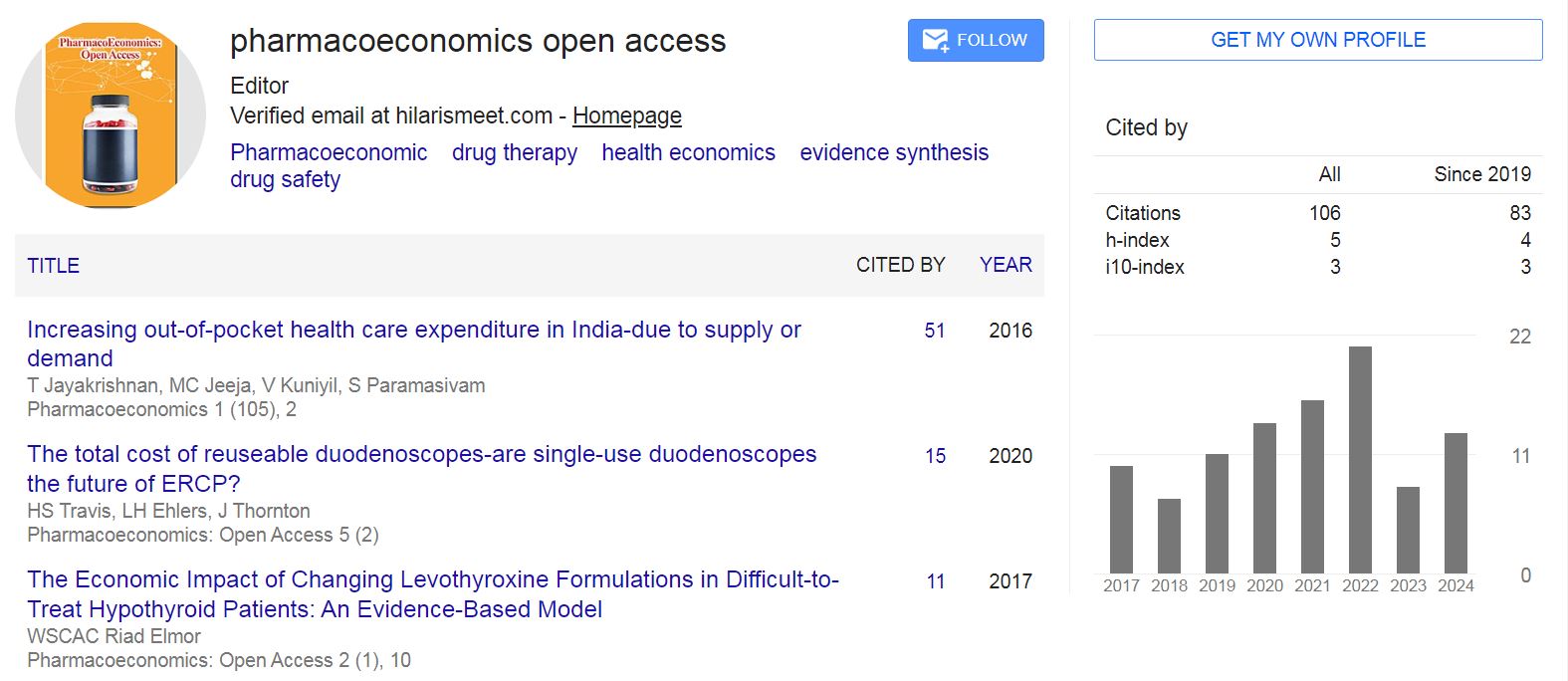
Pharmacoeconomics: Open Access received 106 citations as per Google Scholar report