Opinion - (2025) Volume 9, Issue 4
Received: 01-Jul-2025, Manuscript No. hps-26-184469;
Editor assigned: 03-Jul-2025, Pre QC No. P-184469;
Reviewed: 17-Jul-2025, QC No. Q-184469;
Revised: 22-Jul-2025, Manuscript No. R-184469;
Published:
29-Jul-2025
, DOI: 10.37421/2573-4563.2025.9.358
Citation: Torres, Rafael G.. ”Liver Fibrosis: Key Players, Pathways, and Therapies.” J Hepatol Pancreat Sci 09 (2025):358.
Copyright: © 2025 Torres G. Rafael This is an open-access article distributed under the terms of the Creative Commons Attribution License, which permits unrestricted use, distribution and reproduction in any medium, provided the original author and source are credited.
Liver fibrogenesis, a pathological process characterized by the excessive accumulation of scar tissue in the liver, represents a critical challenge in hepatology and a precursor to liver failure [1].
The intricate cellular and molecular mechanisms underpinning this process have been the subject of intense research, with a growing emphasis on the potential for fibrosis reversal [1].
Hepatic stellate cells (HSCs) emerge as central protagonists in this narrative, with their activation pathways being key targets for therapeutic intervention [1].
Non-parenchymal cells, particularly hepatic stellate cells and Kupffer cells, play a pivotal role in the pathogenesis of liver fibrosis [2].
Their activation in response to liver injury initiates a cascade leading to excessive extracellular matrix deposition, a hallmark of fibrotic disease [2].
The complex signaling networks that govern hepatic stellate cell activation and proliferation are crucial to understanding fibrotic progression [3].
Pathways such as TGF-β, PDGF, and Wnt signaling, when dysregulated, contribute significantly to the fibrotic process [3].
Extracellular matrix (ECM) remodeling is another critical component of liver fibrosis, involving a delicate balance between ECM production and degradation [4].
Enzymes like matrix metalloproteinases (MMPs) and their inhibitors (TIMPs) play a significant role in this dynamic, and their dysregulation contributes to fibrotic tissue accumulation [4].
Emerging therapeutic strategies are increasingly exploring the modulation of microRNAs (miRNAs) for their potential to impact liver fibrosis [5].
Specific miRNAs can regulate genes involved in HSC activation and ECM production, offering a novel therapeutic avenue [5].
Inflammation acts as a potent driver of liver fibrosis, with cytokines and chemokines orchestrating the process [6].
Activated immune cells release pro-fibrotic mediators, promoting HSC activation and ECM deposition, thus creating a vicious cycle [6].
The gut-liver axis presents a promising therapeutic target for liver fibrosis [7].
Alterations in the gut microbiome and intestinal barrier integrity can exacerbate liver inflammation and fibrosis, suggesting interventions aimed at modulating these factors [7].
Targeting fibrosis-associated signaling pathways, such as the central regulator TGF-β, is a major focus in fibrosis research [8].
Inhibitors of this pathway aim to block fibrogenesis and promote resolution, although challenges in selectivity and sustained inhibition persist [8].
Cell death pathways, including apoptosis and necroptosis, are increasingly recognized for their role in modulating liver fibrosis [9].
Controlling the balance of cell death and survival in key liver cells can influence the fibrotic response and offers therapeutic possibilities [9].
Cellular senescence has emerged as a novel player in fibrogenesis, with senescent cells secreting pro-inflammatory and pro-fibrotic factors (SASP) that contribute to scar tissue formation [10].
Strategies to eliminate these cells are being investigated for their potential to reverse liver fibrosis [10].
The cellular and molecular mechanisms driving liver fibrogenesis are intricate, with a particular focus on hepatic stellate cells (HSCs) and their activation pathways [1].
These cells are critical players in the process of scar tissue accumulation in the liver, and research is exploring the potential for fibrosis reversal by targeting their activation [1].
Non-parenchymal cells, specifically hepatic stellate cells and Kupffer cells, are central to the pathogenesis of liver fibrosis [2].
These cells, when activated by liver injury, contribute to excessive extracellular matrix deposition and foster a pro-fibrotic microenvironment through crosstalk with hepatocytes [2].
Molecular mechanisms governing hepatic stellate cell activation and proliferation are crucial for understanding liver fibrosis [3].
Dysregulation of signaling pathways like TGF-β, PDGF, and Wnt significantly contributes to the fibrotic process, and targeting these pathways holds therapeutic promise for inhibiting fibrosis and promoting liver regeneration [3].
Extracellular matrix (ECM) remodeling plays a pivotal role in liver fibrosis, highlighting the delicate balance between ECM production and degradation [4].
The enzymes involved, such as matrix metalloproteinases (MMPs) and their inhibitors (TIMPs), are critical, and their dysregulation directly impacts fibrotic tissue accumulation and liver function [4].
MicroRNAs (miRNAs) are gaining attention for their therapeutic potential in liver fibrosis [5].
Specific miRNAs can effectively modulate gene expression involved in HSC activation, ECM production, and inflammatory responses, presenting a promising avenue for fibrosis reversal therapies [5].
Inflammation is a key driver of liver fibrosis, mediated by cytokines and chemokines [6].
Activated immune cells release pro-fibrotic mediators that stimulate HSC activation and extracellular matrix deposition, establishing a vicious cycle that perpetuates liver damage [6].
The gut-liver axis is emerging as a significant therapeutic target for liver fibrosis [7].
Disruptions in the gut microbiome and intestinal barrier integrity can exacerbate liver inflammation and fibrosis, suggesting that modulating these factors can promote fibrosis reversal [7].
Targeting fibrosis-associated signaling pathways, particularly the TGF-β pathway, which is a central regulator of fibrogenesis, is a key therapeutic strategy [8].
Efforts are focused on developing inhibitors and antibodies to block TGF-β signaling, aiming to resolve liver fibrosis, though achieving selective and sustained inhibition remains a challenge [8].
Cell death pathways, including apoptosis and necroptosis, are being investigated for their role in modulating liver fibrosis [9].
Manipulating the balance of cell death and survival in hepatocytes and stellate cells can influence the fibrotic response, offering potential therapeutic applications [9].
Cellular senescence has been identified as a novel contributor to liver fibrosis [10].
Senescent cells secrete pro-inflammatory and pro-fibrotic factors (SASP), and strategies to eliminate these cells or inhibit their signaling are being explored as potential therapeutic interventions for fibrosis reversal [10].
This collection of research highlights the multifaceted nature of liver fibrosis, a condition characterized by the accumulation of scar tissue. Hepatic stellate cells (HSCs) are identified as central players, with their activation pathways and signaling networks being key targets for therapeutic intervention. The review emphasizes the roles of non-parenchymal cells, extracellular matrix remodeling, inflammation, and the gut-liver axis in the progression of fibrosis. Emerging therapeutic strategies focus on modulating microRNAs, targeting specific signaling pathways like TGF-β, and influencing cell death and senescence. The potential for fibrosis reversal through these targeted approaches is a significant area of ongoing research and clinical development.
None
None
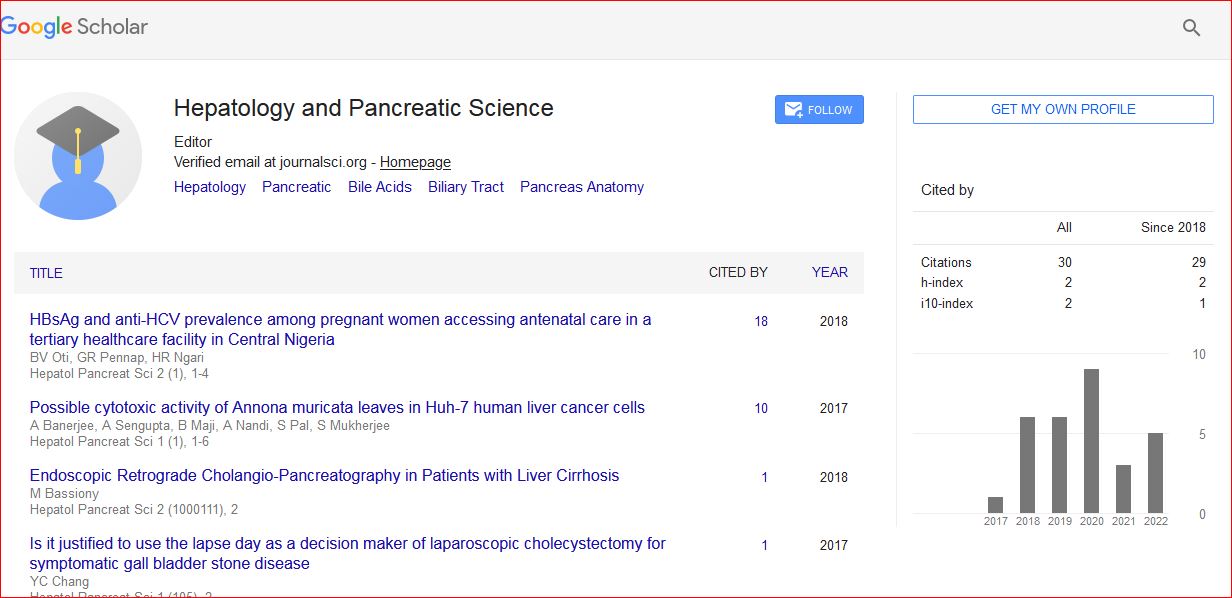
Hepatology and Pancreatic Science received 34 citations as per Google Scholar report