Opinion - (2025) Volume 10, Issue 6
Received: 03-Nov-2025, Manuscript No. jncr-26-190113;
Editor assigned: 05-Nov-2025, Pre QC No. P-190113;
Reviewed: 19-Nov-2025, QC No. Q-190113;
Revised: 24-Nov-2025, Manuscript No. R-190113;
Published:
29-Nov-2025
, DOI: 10.37421/2572-0813.2025.10.327
Citation: Dubois, Claire. ”Lipid Nanoparticles: Delivery Of Nucleic Acids And Gene Editing.” J Nanosci Curr Res 10 (2025):327.
Copyright: © 2025 Dubois C. This is an open-access article distributed under the terms of the Creative Commons Attribution License, which permits unrestricted use, distribution and reproduction in any medium, provided the original author and source are credited.
Lipid nanoparticles (LNPs) have emerged as indispensable tools for the effective delivery of messenger RNA (mRNA) therapeutics and CRISPR gene editing systems. Their crucial role lies in their ability to shield sensitive nucleic acids from enzymatic degradation within the body and to facilitate their efficient uptake into target cells. Recent research efforts have been intensely focused on refining the composition of these nanoparticles. This includes optimizing the selection and ratios of key components such as ionizable lipids, helper lipids, cholesterol, and PEGylated lipids. The overarching goals of these optimizations are to significantly enhance delivery efficiency, minimize unwanted immune responses (immunogenicity), and achieve precise targeting to specific tissues or cell types within the body. The remarkable progress in LNP technology has been a pivotal factor in the successful clinical translation of groundbreaking mRNA vaccines and sophisticated gene editing therapies, opening new avenues for treating a wide range of diseases [1].
The strategic design of ionizable lipids represents a critical determinant of LNP performance. These specialized lipids possess the unique characteristic of being positively charged under acidic conditions, such as those found within cellular endosomes. This pH-dependent charge facilitates the release of the encapsulated nucleic acid payload into the cytoplasm. Conversely, at physiological pH, these lipids remain neutral, thereby mitigating potential cellular toxicity. Current investigations are actively exploring novel ionizable lipid structures. The aim is to develop compounds that exhibit enhanced transfection capabilities, meaning they can more effectively deliver genetic material, while simultaneously reducing the occurrence of off-target effects, which could lead to unintended genetic modifications [2].
The implementation of PEGylation strategies in LNP formulations serves a dual purpose. Firstly, it enhances the colloidal stability of the nanoparticles, preventing their aggregation and maintaining their structural integrity. Secondly, it acts as a protective shield, effectively masking the LNPs from recognition and clearance by the host immune system. This immune evasion prolongs the circulation time of the LNPs in the bloodstream, increasing the probability that they will reach their intended targets. However, a significant challenge known as the "PEG dilemma" has been identified. This refers to the observation that excessive or prolonged PEGylation can sometimes impede cellular uptake and hinder the critical process of endosomal escape, where the nanoparticle releases its cargo into the cell. To circumvent this limitation, researchers are actively developing innovative approaches, such as cleavable PEG linkers that can be removed once inside the cell, or exploring alternative stealth polymers that offer similar protective benefits without compromising cellular entry [3].
The incorporation of cholesterol into LNP formulations is a fundamental requirement for achieving optimal structural integrity and membrane fluidity. This component plays a vital role in facilitating the efficient encapsulation of nucleic acid payloads and their subsequent release. Subtle variations in the cholesterol content within the LNP structure can have a substantial impact on the overall stability of the nanoparticle and its performance in vivo, i.e., within a living organism. Current research is exploring the potential of modified sterols, which are structurally related to cholesterol, with the expectation that they may lead to further enhancements in LNP properties and therapeutic efficacy [4].
Achieving targeted delivery of LNPs to specific organs or cell types remains a paramount objective in the field of nanomedicine. This is being actively pursued through the functionalization of the LNP surface. This involves conjugating specific ligands, such as antibodies or peptides, to the nanoparticle. These ligands are designed to selectively bind to receptors that are overexpressed on the surface of target cells. This targeted approach holds significant promise for substantially improving the therapeutic efficacy of LNP-based treatments by concentrating the delivery of the therapeutic agent to the affected site, while concurrently reducing the potential for systemic side effects that can arise from non-specific distribution throughout the body [5].
The manufacturing process for LNPs, encompassing techniques like microfluidics and ethanol-drop methods, exerts a profound influence on critical particle characteristics such as size, the narrowness of the size distribution (polydispersity), and the efficiency with which the therapeutic payload is encapsulated. Among these methods, continuous flow microfluidic systems have garnered considerable attention. These systems offer an unprecedented level of precise control over the mixing of components and the rapid self-assembly of nanoparticles. This meticulous control leads to LNP production that is not only highly reproducible but also readily scalable, making them suitable for large-scale therapeutic applications [6].
CRISPR-Cas gene editing systems, when delivered using LNPs, represent a therapeutic modality with immense potential for treating a wide spectrum of genetic disorders. However, several challenges must be addressed to fully realize this potential. These include ensuring the efficient delivery of both the Cas protein or its mRNA and the guide RNA (gRNA) to the appropriate target cells. Furthermore, it is crucial to minimize the occurrence of off-target edits, which could lead to unintended genetic alterations, and to reduce any associated immunogenicity. Current research efforts are intensely focused on refining LNP designs to enable the co-delivery of these essential CRISPR-Cas components and to significantly improve the precision and specificity of the gene editing process [7].
The immunogenicity of the LNPs themselves presents a significant concern, particularly for therapeutic applications that necessitate repeated administration of the nanoparticles. Strategies are being developed to effectively mitigate these immune responses. These include modifying the surface chemistry of the LNPs, carefully optimizing the lipid composition to dampen inflammatory reactions, and exploring the development of alternative delivery vehicles that may elicit a less pronounced immune response. A comprehensive understanding of the intricate interactions between LNPs and the immune system is absolutely crucial for the successful and safe long-term application of these therapeutic platforms [8].
The inclusion of specific helper lipids, such as distearoylphosphatidylcholine (DSPC), is fundamental to ensuring the structural integrity and appropriate rigidity of LNPs. These helper lipids contribute significantly to the overall stability of the nanoparticles and are essential for the efficient encapsulation of their nucleic acid payloads. Furthermore, the selection of different helper lipids can influence the phase behavior and the fusion properties of the LNP membrane. This, in turn, impacts how the LNP interacts with cellular membranes, facilitating its entry and cargo release within the cell [9].
While LNPs are currently at the forefront of lipid-based nanoparticle delivery, it is important to acknowledge alternative lipid-based systems. Solid lipid nanoparticles (SLNs) and nanostructured lipid carriers (NLCs) represent two such classes of nanoparticles that also hold promise for nucleic acid delivery. Although they are distinct in their composition and structure from LNPs, they share certain fundamental formulation principles. For specific applications, SLNs and NLCs may offer potential advantages related to enhanced stability and improved drug loading capacities, broadening the landscape of lipid-based delivery technologies [10].
Lipid nanoparticles (LNPs) are currently the cornerstone for the successful delivery of both mRNA therapeutics and CRISPR gene editing systems. Their primary function is to provide a protective barrier for sensitive nucleic acids, safeguarding them from degradation by endogenous nucleases, and to facilitate their entry into target cells. Significant advancements in the field are concentrated on the meticulous optimization of LNP composition. This involves fine-tuning the proportions and types of ionizable lipids, helper lipids, cholesterol, and PEGylated lipids. The overarching objectives of these design modifications are to enhance the efficiency with which LNPs deliver their therapeutic cargo, to diminish any inflammatory or immune responses they might elicit, and to direct them specifically to desired tissues. The development and refinement of LNPs have undeniably been a major catalyst in bringing mRNA vaccines and gene editing therapies from the laboratory bench to clinical application [1].
The precise engineering of ionizable lipids is paramount for maximizing the efficacy of LNPs. These lipids are designed to be positively charged under the acidic conditions prevalent within cellular endosomes, which is a crucial step in promoting the release of the nucleic acid payload. Importantly, they are neutral at physiological pH, a characteristic that minimizes their potential to induce cellular toxicity. Ongoing research is dedicated to the exploration of novel ionizable lipid structures that possess superior transfection capabilities and a reduced propensity for causing off-target genetic modifications [2].
The strategy of PEGylation, or the attachment of polyethylene glycol (PEG) chains, to LNPs serves a dual purpose: it not only stabilizes the nanoparticles against aggregation but also acts as a stealth mechanism, shielding them from recognition by the immune system and thereby extending their circulation time in the body. However, a persistent challenge, often referred to as the "PEG dilemma," is the potential for PEGylation to inadvertently impede cellular uptake and the subsequent endosomal escape required for cargo release. To overcome this limitation, researchers are actively pursuing innovative solutions, including the development of cleavable PEG linkers that can be detached after cellular entry, or the investigation of alternative stealth polymers that can provide similar protective benefits without compromising cellular internalization [3].
Cholesterol is an essential component in LNP formulations, contributing significantly to the structural integrity and fluidity of the nanoparticle's lipid bilayer. This structural role is critical for both the efficient encapsulation of nucleic acid payloads and their subsequent release into the target cell. Variations in the concentration of cholesterol can profoundly influence the stability of the LNP and its performance within a living organism. Current research is actively investigating the use of modified sterols, which may offer further improvements in LNP characteristics and therapeutic potential [4].
A major focus of current research in LNP technology is the development of targeted delivery strategies. This aims to direct LNPs to specific organs or cell types, thereby increasing therapeutic efficacy and reducing off-target toxicity. Targeted delivery is achieved by functionalizing the surface of the LNPs with specific ligands, such as antibodies or peptides. These ligands are designed to bind to receptors that are characteristically overexpressed on the surface of the target cells. This approach holds significant promise for enhancing the therapeutic index of LNP-based treatments [5].
The formulation process for LNPs plays a critical role in determining their physicochemical properties, including particle size, the uniformity of particle size distribution (polydispersity), and the efficiency of encapsulation. Methods such as microfluidics and ethanol-drop techniques are commonly employed. Continuous flow microfluidic systems, in particular, offer precise control over the mixing of formulation components and the rapid self-assembly of nanoparticles. This level of control leads to LNP production that is highly reproducible and scalable, which is essential for manufacturing sufficient quantities for therapeutic use [6].
When LNPs are employed for the delivery of CRISPR-Cas gene editing systems, they offer immense therapeutic potential for treating genetic diseases. However, several key challenges must be addressed. These include ensuring the efficient delivery of both the CRISPR-Cas machinery (e.g., Cas protein or mRNA) and the guide RNA (gRNA) to the intended target cells. Additionally, minimizing off-target editing events and reducing the immunogenicity of the delivery system are critical considerations. Ongoing research is focused on designing LNPs that can effectively co-deliver these essential components and enhance the precision of gene editing [7].
A significant concern for the clinical application of LNPs, especially for therapies requiring repeated administration, is their inherent immunogenicity. Strategies to mitigate these immune responses are actively being explored. These include modifying the surface properties of the LNPs, optimizing the lipid composition to reduce inflammatory signaling, and investigating alternative delivery vehicles. A thorough understanding of the complex interactions between LNPs and the host immune system is vital for the safe and effective long-term use of these nanocarriers in therapeutic settings [8].
The inclusion of helper lipids, such as DSPC, is crucial for maintaining the structural integrity and rigidity of LNPs, which directly impacts their stability and the efficiency of payload encapsulation. The choice of helper lipid can also influence the phase behavior and membrane fusion properties of the LNP, thereby affecting its interaction with cellular membranes and subsequent cellular uptake [9].
While LNPs are currently a dominant technology, other lipid-based nanoparticle systems exist for nucleic acid delivery. Solid lipid nanoparticles (SLNs) and nanostructured lipid carriers (NLCs) are alternative formulations that share some formulation principles with LNPs. These systems may offer distinct advantages in terms of stability and drug loading for specific therapeutic applications, expanding the repertoire of lipid-based delivery vehicles [10].
Lipid nanoparticles (LNPs) are crucial for delivering mRNA therapeutics and CRISPR gene editing systems, protecting nucleic acids and aiding cellular uptake. Advancements focus on optimizing LNP composition, including ionizable lipids, helper lipids, cholesterol, and PEGylated lipids, to improve delivery efficiency, reduce immunogenicity, and enable targeted delivery. Ionizable lipids are key for pH-dependent nucleic acid release and minimizing toxicity. PEGylation provides stability and immune evasion but can hinder cellular uptake, leading to research into cleavable linkers and alternative polymers. Cholesterol ensures structural integrity and fluidity. Targeted delivery is achieved via surface functionalization with ligands. Formulation processes like microfluidics enable reproducible and scalable LNP production. Delivering CRISPR-Cas systems via LNPs holds therapeutic promise but faces challenges in co-delivery, off-target editing, and immunogenicity. LNP immunogenicity requires mitigation strategies for repeated administration. Helper lipids are essential for structural integrity and payload encapsulation. Alternative systems like SLNs and NLCs also exist for nucleic acid delivery.
None
None
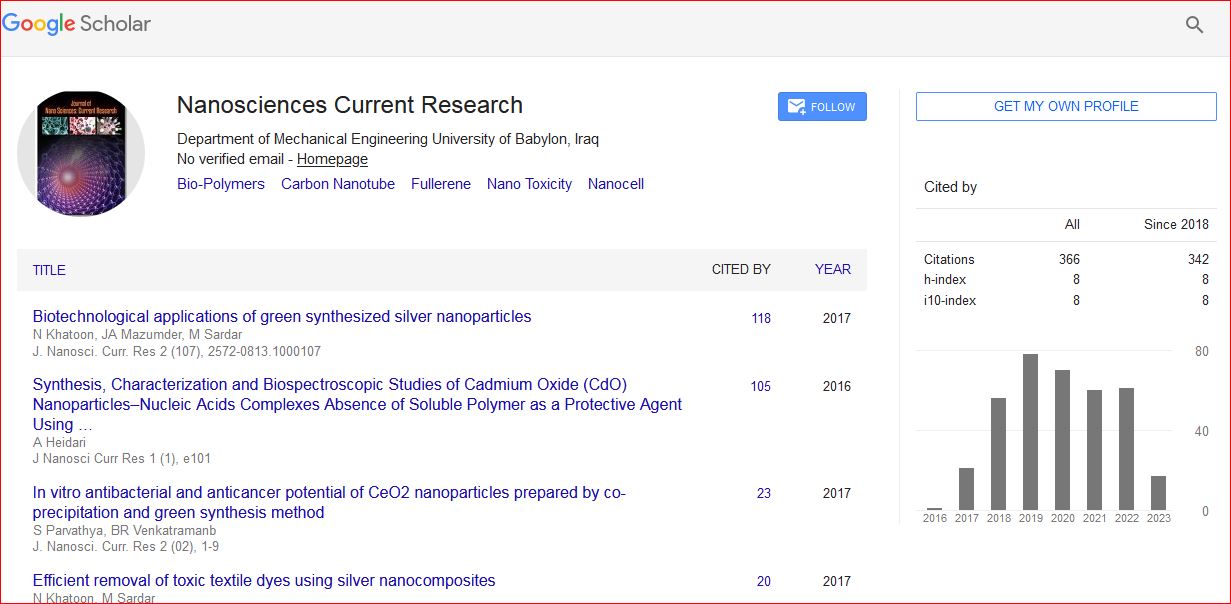
Journal of Nanosciences: Current Research received 387 citations as per Google Scholar report