Opinion - (2025) Volume 14, Issue 6
Received: 31-Oct-2025, Manuscript No. jio-26-184836;
Editor assigned: 03-Nov-2025, Pre QC No. P-184836;
Reviewed: 17-Nov-2025, QC No. Q-184836;
Revised: 21-Nov-2025, Manuscript No. R-184836;
Published:
28-Nov-2025
, DOI: 10.37421/2329-6771.2025.14.585
Citation: Vogel, Stefanie. ”Lifestyle Interventions Reshape Epigenome for Cancer.” J Integr Onco 14 (2025):585.
Copyright: © 2025 Vogel S. This is an open-access article distributed under the terms of the Creative Commons Attribution License, which permits unrestricted use, distribution and reproduction in any medium, provided the original author and source are credited.
The intricate interplay between lifestyle choices and epigenetic modifications represents a burgeoning frontier in cancer research, offering novel avenues for prevention and treatment. Lifestyle interventions, encompassing dietary adjustments and physical activity, have demonstrated a profound capacity to influence the epigenome, thereby modulating cancer development and progression. These interventions target fundamental epigenetic mechanisms, including DNA methylation and histone modifications, which are crucial in regulating gene expression without altering the underlying DNA sequence. Understanding these molecular underpinnings is paramount for developing effective strategies to combat cancer. [1] Physical activity, in particular, has emerged as a potent modulator of the epigenome within the context of cancer. Exercise can dynamically alter DNA methylation patterns and histone acetylation levels, influencing the expression of genes critical for cellular homeostasis and cancer suppression. This suggests that regular physical activity may serve as a vital component of integrative oncology approaches, complementing traditional treatments. [2] Dietary components, especially those rich in polyphenols found in fruits and vegetables, play a significant role in shaping the epigenetic landscape relevant to cancer. Specific dietary patterns have been shown to reverse or prevent aberrant epigenetic changes associated with oncogenesis. This highlights the critical influence of nutrition on cancer epigenetics and underscores the potential for dietary interventions in cancer prevention. [3] Beyond diet and exercise, other lifestyle factors also hold potential for impacting cancer epigenetics. Interventions aimed at improving mental well-being, such as stress reduction techniques and ensuring adequate sleep, can influence epigenetic landscapes. Such modifications may contribute to enhanced treatment outcomes and a reduced risk of cancer recurrence, suggesting a holistic approach to cancer management. [4] Environmental exposures and lifestyle choices collectively contribute to the complex modulation of the epigenome, influencing an individual's susceptibility to cancer. Factors like air pollution, dietary habits, and physical activity levels interact to alter epigenetic marks, affecting cellular functions that are critical in cancer initiation and progression. A comprehensive understanding of these interactions is essential for personalized cancer prevention strategies. [5] Weight management interventions, particularly bariatric surgery and substantial weight loss, have been observed to induce significant epigenetic changes in cancer patients. These changes, including alterations in DNA methylation and gene expression, are often associated with improved cancer prognosis, underscoring the link between metabolic health and epigenetic regulation in the context of cancer. [6] Physical activity's influence extends to the epigenetic regulation of genes involved in metabolic processes and cancer pathways. Exercise can modulate histone modifications and DNA methylation patterns, thereby impacting cellular mechanisms fundamental to cancer prevention and treatment. This broad impact emphasizes the multifaceted role of physical activity in cancer biology. [7] The Mediterranean diet, known for its health-promoting properties, has also been shown to exert epigenetic effects relevant to cancer prevention. This dietary pattern can influence DNA methylation and microRNA expression, contributing to its observed anti-cancer benefits. Understanding these specific epigenetic mechanisms can further elucidate the protective effects of such diets. [8] MicroRNAs act as critical epigenetic regulators whose expression profiles can be altered by lifestyle interventions. Both diet and exercise have been demonstrated to impact microRNA expression, thereby influencing cancer-related pathways. This highlights the significance of microRNAs as key mediators in lifestyle-driven cancer prevention and therapy. [9] Interventions focused on improving mental well-being, including mindfulness-based practices and stress reduction techniques, are gaining attention for their potential to influence the epigenome in cancer patients. These therapies may modify epigenetic marks associated with stress and cancer, offering complementary approaches to conventional cancer care and potentially improving patient outcomes. [10]
The profound impact of lifestyle interventions on epigenetic mechanisms involved in cancer prevention and progression is a rapidly evolving area of research. Diet and exercise, two cornerstone lifestyle modifications, have been shown to epigenetically influence cancer development. Specifically, they can alter DNA methylation patterns and histone modifications, which are key epigenetic marks that regulate gene expression. These molecular changes offer promising avenues for novel preventative and therapeutic strategies in oncology. [1] Physical activity's role in cancer epigenetics is particularly noteworthy. Review articles highlight how exercise can modulate the epigenome by affecting DNA methylation and histone acetylation. These modifications can lead to changes in gene expression that are associated with reduced cancer risk and may improve the efficacy of cancer treatments, positioning exercise as an integral part of modern cancer care. [2] Dietary components, such as polyphenols abundant in fruits and vegetables, are recognized for their ability to act as epigenetic modulators in cancer prevention. Research indicates that specific dietary patterns can not only prevent but also reverse aberrant epigenetic changes that contribute to cancer. This underscores the potent influence of nutrition on epigenetic regulation in the context of cancer. [3] The broader implications of lifestyle interventions for cancer therapy are being explored, extending beyond diet and exercise. Practices like stress reduction and improved sleep hygiene can also impact the epigenetic landscape. These interventions may contribute to better treatment outcomes and reduced rates of cancer recurrence by influencing epigenetic marks. [4] Environmental factors and lifestyle choices are increasingly understood to interact and collectively shape the epigenome, thereby influencing cancer risk. A comprehensive view considers how elements such as air pollution, diet, and physical activity converge to modulate epigenetic marks, impacting cellular functions pertinent to cancer development. This complex interplay necessitates a holistic approach to understanding cancer etiology. [5] Weight management, particularly through significant weight loss achieved via bariatric surgery, has demonstrated a direct impact on the epigenome in cancer patients. Studies show that such interventions can lead to measurable changes in DNA methylation and gene expression, which are subsequently linked to improved cancer prognoses. This highlights the connection between metabolic state and epigenetic alterations in cancer. [6] Physical activity's influence on epigenetic regulation is further detailed in its capacity to modulate genes involved in metabolism and cancer-related pathways. By influencing histone modifications and DNA methylation, exercise impacts cellular processes crucial for both preventing the onset of cancer and aiding in its treatment. [7] The Mediterranean diet serves as another example of how dietary patterns can exert epigenetic control in cancer prevention. Its influence extends to modifying DNA methylation and microRNA expression, which are mechanisms contributing to its protective effects against cancer. This emphasizes the importance of adhering to healthy dietary patterns for epigenetic health. [8] MicroRNAs are emerging as key players in the epigenetic regulation influenced by lifestyle. Both dietary intake and physical activity can alter microRNA expression profiles, which in turn affect various cancer-related pathways. This makes microRNAs potential targets for therapeutic strategies aimed at leveraging lifestyle changes. [9] Finally, interventions targeting mental well-being, such as mindfulness and stress reduction, are being investigated for their epigenetic effects in cancer patients. These approaches may help modify epigenetic marks associated with stress and cancer, potentially offering a valuable adjunct to traditional cancer therapies and improving the overall well-being of patients. [10]
Lifestyle interventions, including diet and exercise, significantly influence the epigenome, impacting cancer development and progression. These interventions target mechanisms like DNA methylation and histone modification, offering new preventative and therapeutic possibilities. Exercise can modulate DNA methylation and histone acetylation, while dietary polyphenols can reverse aberrant epigenetic changes. Other lifestyle factors, such as stress reduction and sleep, also affect epigenetic landscapes, potentially improving treatment outcomes. Environmental factors interact with lifestyle choices to shape the epigenome and cancer risk. Weight management interventions, like bariatric surgery, induce epigenetic changes linked to better cancer prognoses. Physical activity influences genes involved in metabolism and cancer by modulating histone modifications and DNA methylation. The Mediterranean diet impacts DNA methylation and microRNA expression, contributing to its anti-cancer effects. MicroRNAs are crucial epigenetic regulators affected by diet and exercise, influencing cancer pathways. Mental well-being interventions may modify epigenetic marks associated with stress and cancer.
None
None
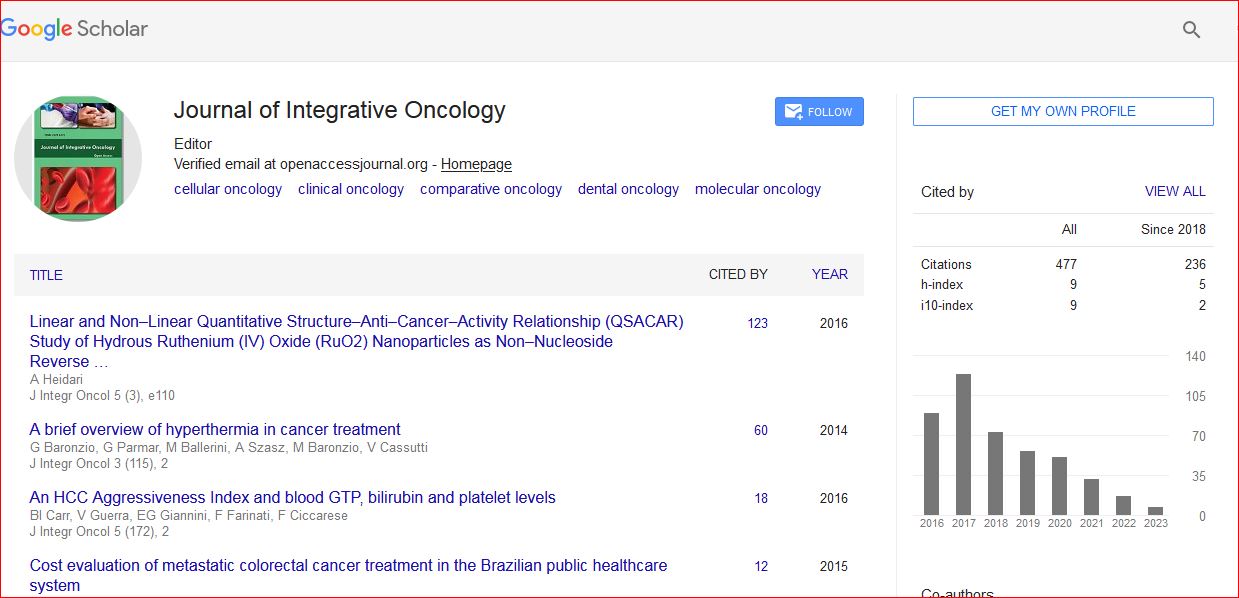
Journal of Integrative Oncology received 495 citations as per Google Scholar report