Commentary - (2025) Volume 14, Issue 4
Received: 01-Jul-2025, Manuscript No. jio-26-184819;
Editor assigned: 03-Jul-2025, Pre QC No. P-184819;
Reviewed: 17-Jul-2025, QC No. Q-184819;
Revised: 22-Jul-2025, Manuscript No. R-184819;
Published:
29-Jul-2025
, DOI: 10.37421/2329-6771.2025.14.568
Citation: Petrova, Elena. ”Lifestyle Changes Enhance Cancer Outcomes Significantly.” J Integr Onco 14 (2025):568.
Copyright: © 2025 Petrova E. This is an open-access article distributed under the terms of the Creative Commons Attribution License, which permits unrestricted use, distribution and reproduction in any medium, provided the original author and source are credited.
Lifestyle modifications represent a cornerstone in the comprehensive management of cancer, offering significant potential to reduce recurrence risk across diverse cancer types. Evidence underscores the profound impact that patient-driven strategies, encompassing dietary adjustments, regular physical activity, and effective stress management, can have on improving survival rates and decreasing the likelihood of cancer returning. These interventions are increasingly recognized for their role in fostering a more favorable internal environment, potentially by modulating biological pathways critical to cancer progression and remission. The Department of Integrative Clinical Oncology actively promotes these empowering approaches as integral components of survivorship care, aiming to enhance both the quality of life and the long-term prognosis for individuals who have undergone cancer treatment. Dietary patterns that emphasize a high intake of fruits, vegetables, and whole grains, while concurrently limiting the consumption of processed and red meats, have demonstrated a statistically significant association with a reduced risk of cancer recurrence. This is particularly noteworthy in survivors of colorectal and breast cancers, where specific nutritional guidance plays a crucial role. Such findings reinforce the growing understanding of personalized nutrition as a vital element within the framework of integrative oncology, tailoring recommendations to individual patient needs and circumstances. Engaging in consistent physical activity, even at moderate intensities, has been shown to confer a protective effect against cancer recurrence and mortality. Exercise interventions are not only beneficial for improving quality of life and mitigating debilitating fatigue but also for positively influencing key metabolic and immune markers in cancer survivors. This highlights the importance of integrating structured exercise programs into standard survivorship care protocols, acknowledging its multifaceted benefits. The maintenance of a healthy body weight is recognized as a critical factor in minimizing the risk of recurrence for a spectrum of cancer types, including breast, prostate, and endometrial cancers. Obesity, in particular, is frequently linked to heightened levels of chronic inflammation and altered hormonal profiles, both of which can inadvertently facilitate cancer progression and increase the probability of recurrence. Consequently, weight management is a key focus in supportive oncology. Furthermore, the implementation of stress management techniques, such as mindfulness-based practices and meditation, is emerging as a potentially valuable strategy for mitigating cancer recurrence. These approaches may exert their beneficial effects by influencing the complex interplay of the psycho-neuro-endocrine-immune axis, a critical system for maintaining homeostasis. While research in this area is continuously evolving, these methods are gaining acceptance in integrative oncology for their positive impact on overall well-being and their potential influence on disease outcomes. The intricate relationship between the gut microbiota, dietary habits, and cancer recurrence risk represents a burgeoning field of scientific inquiry. Emerging research suggests that targeted modulation of the gut microbiome, achievable through specific dietary interventions and the judicious use of probiotics, could offer novel therapeutic strategies. These strategies aim to positively influence immune responses, thereby potentially reducing the risk of cancer recurrence. Sleep quality and duration are also emerging as significant factors that can impact immune function and inflammatory processes, thereby potentially influencing the likelihood of cancer recurrence. Consequently, interventions focused on improving sleep hygiene are being explored for their potential benefits for cancer survivors, aiming to optimize physiological recovery and resilience. The role of specific micronutrients and antioxidants in cancer prevention and recurrence is a subject of ongoing investigation, characterized by considerable complexity. While a well-balanced diet remains the cornerstone of optimal nutritional status, the practice of excessive supplementation warrants careful consideration, particularly within the context of active cancer treatment, where potential interactions can arise. Smoking cessation stands out as a fundamental and profoundly impactful lifestyle modification, offering substantial benefits in reducing cancer risk and enhancing outcomes for cancer survivors. Conversely, the persistence of smoking behavior is unequivocally linked to an elevated risk of cancer recurrence and a poorer overall survival prognosis, underscoring the urgency of cessation efforts. Finally, alcohol consumption is a well-established risk factor for the development of several types of cancer, and its intake may also exert an influence on cancer recurrence. Therefore, the recommendation to reduce or abstain from alcohol consumption is considered a key component of post-treatment care for cancer survivors, contributing to overall health and potentially reducing long-term risks.
Lifestyle modifications have a demonstrably significant impact on reducing the risk of cancer recurrence, a crucial concern for survivors and their healthcare providers. These interventions, which empower patients to take an active role in their recovery, encompass a range of behavioral changes including dietary adjustments, regular physical activity, and effective stress management techniques. The cumulative evidence suggests that adopting these healthier habits can lead to improved survival rates and a decreased likelihood of the cancer returning across a variety of cancer types. The underlying mechanisms by which these lifestyle changes exert their protective effects are thought to involve a reduction in chronic inflammation, enhancement of immune function, and modulation of hormonal pathways that can influence cancer cell growth and proliferation. Recognizing the critical importance of these patient-empowered strategies, the Department of Integrative Clinical Oncology has prioritized their integration into comprehensive cancer care plans. Specific dietary patterns have been identified as particularly influential in the context of cancer recurrence. Research indicates that diets rich in fruits, vegetables, and whole grains, coupled with a deliberate reduction in the consumption of processed meats and red meat, are associated with a lower risk of recurrence. This association has been observed across various cancer types, with notable findings in survivors of colorectal and breast cancer. These findings underscore the significance of providing personalized nutrition advice within the scope of integrative oncology, tailoring dietary recommendations to the unique needs and circumstances of each patient. Regular engagement in physical activity, even at moderate intensities, plays a protective role in mitigating the risk of cancer recurrence and improving overall mortality rates. Exercise interventions have been shown to contribute positively to the quality of life for cancer survivors by reducing fatigue and positively influencing various metabolic and immune markers. This reinforces the imperative to integrate structured exercise programs into survivorship care, acknowledging their multifaceted benefits for physical and psychological well-being. Maintaining a healthy body weight is a critical factor in reducing the risk of recurrence for several prevalent cancer types, including breast, prostate, and endometrial cancers. Obesity is consistently linked to an increase in chronic inflammation and an imbalance in hormonal profiles, both of which are known to promote cancer progression and increase the likelihood of recurrence. Therefore, effective weight management strategies are a vital component of survivorship care. Furthermore, the application of stress management techniques, such as mindfulness and meditation, is gaining recognition for its potential role in influencing the psycho-neuro-endocrine-immune axis and consequently, mitigating cancer recurrence. While research in this area is ongoing and continues to evolve, these mind-body approaches are increasingly being adopted within integrative oncology settings to enhance the overall well-being of patients and potentially impact disease outcomes positively. An emerging area of significant research interest is the complex interplay between the gut microbiota, dietary choices, and the risk of cancer recurrence. Preliminary findings suggest that targeted modulation of the gut microbiome, which can be achieved through specific dietary interventions and the use of probiotics, may offer novel strategies for influencing immune responses and consequently reducing the risk of cancer recurrence. Sleep quality and duration have also been identified as factors that can influence immune function and inflammatory processes, potentially playing a role in cancer recurrence. As such, interventions designed to improve sleep hygiene are being investigated for their potential benefits to cancer survivors, aiming to support their recovery and overall health. The influence of specific micronutrients and antioxidants on cancer prevention and recurrence is a subject of considerable complexity and ongoing investigation. While a balanced dietary intake is fundamental, the administration of excessive supplementation should be approached with caution, particularly when patients are undergoing active cancer treatment, due to potential interactions and unintended consequences. Smoking cessation stands out as a fundamental lifestyle modification with profound benefits for reducing cancer risk and improving outcomes for cancer survivors. Continued smoking is strongly associated with a higher risk of recurrence and poorer survival rates, emphasizing the critical need for robust cessation support programs. Lastly, alcohol consumption is a well-established risk factor for several types of cancer and may also influence the risk of recurrence. Consequently, reducing or abstaining from alcohol intake is a key recommendation for cancer survivors, contributing to their overall health and potentially lowering the risk of disease progression.
Lifestyle modifications including diet, exercise, weight management, and stress reduction significantly impact cancer recurrence risk and survival rates. A plant-rich diet, regular physical activity, and maintaining a healthy weight are associated with better outcomes. These interventions work by reducing inflammation, improving immune function, and modulating hormonal pathways. Specific dietary patterns rich in fruits, vegetables, and whole grains, alongside reduced intake of processed and red meats, are linked to lower recurrence risk, particularly in colorectal and breast cancer survivors. Regular exercise improves quality of life and influences metabolic and immune markers. Maintaining a healthy weight is crucial as obesity promotes inflammation and altered hormonal profiles. Stress management techniques like mindfulness may positively influence outcomes by affecting the psycho-neuro-endocrine-immune axis. Emerging research explores the gut microbiota's role and the impact of sleep quality. Smoking cessation is vital for reducing recurrence risk, while alcohol consumption is a recognized risk factor that should be moderated. Integrative oncology emphasizes these patient-empowered strategies for comprehensive cancer care.
None
None
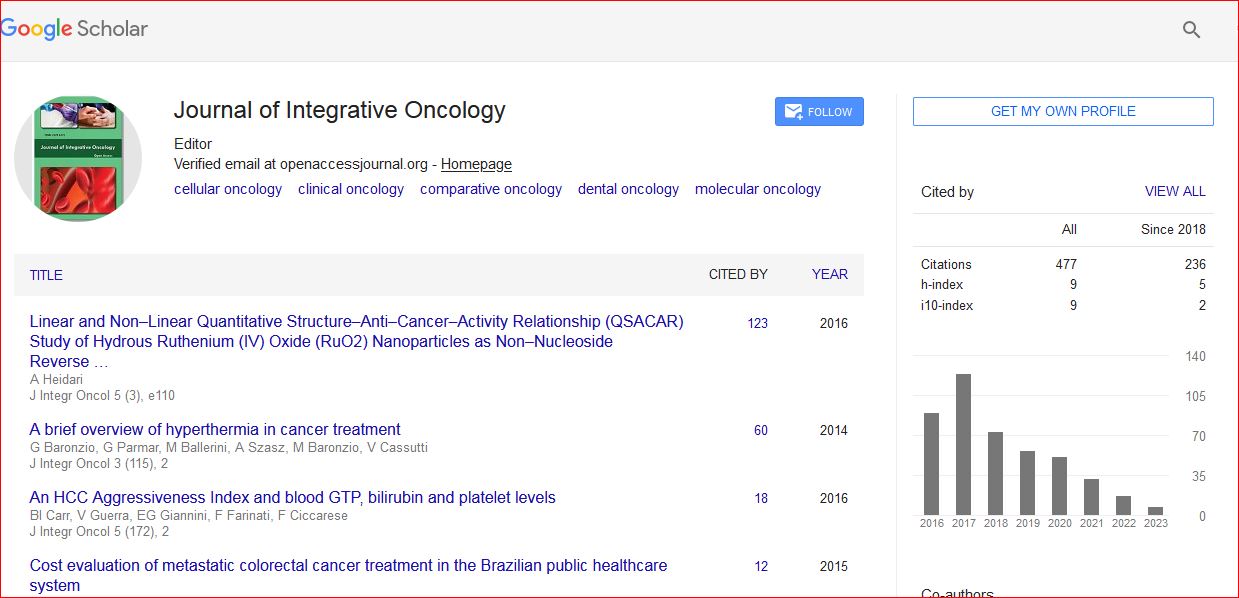
Journal of Integrative Oncology received 495 citations as per Google Scholar report