Opinion - (2025) Volume 11, Issue 4
Received: 01-Aug-2025, Manuscript No. elj-25-174923;
Editor assigned: 04-Aug-2025, Pre QC No. P-174923;
Reviewed: 18-Aug-2025, QC No. Q-174923;
Revised: 22-Aug-2025, Manuscript No. R-174923;
Published:
29-Aug-2025
, DOI: 10.37421/2472-0895.2025.11.328
Citation: Kobayashi, Haruto. ”Ion Channelopathies: Genes, Mechanisms, Therapies.” Epilepsy J 11 (2025):328.
Copyright: © 2025 Kobayashi H. This is an open-access article distributed under the terms of the Creative Commons Attribution License, which permits unrestricted use, distribution and reproduction in any medium, provided the original author and source are credited.
Ion channelopathies represent a significant and diverse class of genetic disorders, fundamentally linked to mutations in ion channel genes that consequently disrupt normal physiological functions across the human body [1].
These disruptions lead to a wide spectrum of complex clinical manifestations, impacting various organ systems with profound consequences for patient health. For instance, in the realm of cardiovascular health, inherited cardiac ion channelopathies, such as the well-known Long QT syndrome and Brugada syndrome, have witnessed substantial advancements in diagnostic approaches. These improvements now include sophisticated genetic testing and refined risk stratification techniques, which are crucial for early identification and management [2].
Beyond the critical cardiovascular system, the central nervous system is also heavily affected, giving rise to neurological channelopathies that encompass a broad range of debilitating conditions, from intractable epilepsy and chronic migraine to various forms of ataxia [3].
In these cases, mutations in neuronal ion channels lead to profound alterations in neuronal excitability and widespread dysfunction, driving much of the contemporary research into both traditional and highly innovative therapeutic targets. This area, in particular, increasingly emphasizes precision medicine approaches to tailor treatments to individual genetic profiles [3].
The intricate and strong connection between genetic epilepsies and ion channelopathies is particularly well-documented, illustrating how specific gene mutations affecting neuronal ion channels directly cause hyperexcitability and recurrent seizures [8].
This active research domain explores a diverse genetic landscape, delves into intricate pathogenic mechanisms, and investigates current as well as emerging therapeutic strategies, including advanced gene therapy and highly personalized precision medicine initiatives [8].
The widespread impact of ion channel dysfunctions even extends significantly to chronic and neuropathic pain conditions [4].
Here, gain- or loss-of-function mutations in various ion channels, particularly voltage-gated sodium channels, are identified as critical contributors to abnormal neuronal excitability and problematic pain signaling [4].
This deeper understanding offers valuable and actionable insights for developing highly targeted analgesics, aiming to provide more effective pain relief [4].
Furthermore, the often-overlooked yet vital role of Transient Receptor Potential (TRP) channels in various peripheral nervous system channelopathies is increasingly gaining scientific attention [9].
Dysfunctions in these polymodal sensory channels are directly implicated in conditions such as neuropathic pain, various inflammatory responses, and challenging thermosensory disorders, thereby underscoring their critical importance as promising therapeutic targets [9].
Skeletal muscle channelopathies, a group of disorders covering conditions like periodic paralysis and myotonia, similarly benefit immensely from updated genetic findings and a more profound understanding of their underlying pathogenic mechanisms [5].
These critical insights are fundamental for the development of both current standard treatments and investigational therapeutic approaches, including the highly promising avenue of gene therapy, which could offer long-term solutions [5].
Cystic fibrosis, often recognized as a systemic and multi-organ ion channelopathy, primarily stems from debilitating mutations in the CFTR channel [7].
The resulting impaired chloride and bicarbonate transport leads to widespread multi-organ manifestations, but the transformative impact of CFTR modulator therapies on disease progression and patient outcomes now serves as a significant beacon of hope and a model for other channelopathies [7].
Considering the broader therapeutic landscape, ion channels themselves are increasingly recognized for their significant potential as direct drug targets across a wide array of diseases, including the channelopathies [6].
The field of ion channel drug discovery faces inherent challenges but also presents numerous opportunities, largely driven by advanced screening technologies and the focused development of highly selective modulators [6].
This intensive work provides a clear and actionable roadmap for future pharmaceutical interventions, aiming to create more effective and safer drugs [6].
The ongoing and rapid progress in applying precision medicine to the treatment of ion channelopathies is truly transformative [10].
Genetic sequencing now plays a pivotal role, directly informing individualized therapeutic strategies, which include gene-specific drugs and innovative gene therapies [10].
This sophisticated approach promises to move treatment paradigms beyond mere symptomatic management towards potentially curative interventions that are meticulously tailored to each patient's unique molecular profile. This represents a major stride in the advancement of medical science, offering personalized hope [10].
The entire path, from the initial genetic discovery to the eventual development of potential treatments for these complex and often severe disorders, is continuously evolving, consistently promising better and more targeted outcomes for affected individuals worldwide [1].
Ion channelopathies encompass a wide array of inherited and acquired disorders characterized by dysfunctional ion channels, which are critical for cellular excitability and function [1]. The genetic basis of these conditions is a central focus of research, detailing how specific mutations disrupt normal physiological roles, leading to diverse molecular mechanisms of disease. This understanding is key to identifying potential therapeutic targets and developing treatments [1].
One major area of focus is cardiac ion channelopathies, which include life-threatening conditions such as Long QT syndrome and Brugada syndrome [2]. Significant advancements have been made in their diagnosis and management, leveraging sophisticated genetic testing to pinpoint specific mutations and improve risk stratification for patients [2]. New therapeutic options for these cardiac disorders now encompass a range of pharmacological agents, advanced device therapies like implantable cardioverter-defibrillators, and increasingly, emerging gene-targeted approaches that aim to correct the underlying genetic defects [2].
Neurological channelopathies present another complex challenge, affecting conditions like epilepsy, migraine, and various ataxias [3]. Research delves into how mutations in neuronal ion channels lead to altered excitability and synaptic dysfunction, which are hallmarks of these disorders [3]. The exploration of both conventional and novel therapeutic targets is ongoing, with a strong emphasis on precision medicine strategies to provide individualized care [3]. This includes an in-depth look at genetic epilepsies, where specific gene mutations affecting neuronal ion channels cause hyperexcitability and seizures. The field is actively developing new therapeutic strategies, including gene therapy, to address these complex neurological conditions [8]. Furthermore, the role of Transient Receptor Potential (TRP) channels in peripheral nervous system channelopathies is being clarified [9]. Dysfunctions in these critical sensory channels contribute to conditions such as neuropathic pain, inflammatory responses, and thermosensory disorders, highlighting their significance as therapeutic targets [9].
Ion channel dysfunctions also play a crucial role in chronic and neuropathic pain [4]. Studies show that gain- or loss-of-function mutations in various ion channels, particularly voltage-gated sodium channels, contribute directly to abnormal neuronal excitability and the signaling pathways associated with pain [4]. This detailed understanding is providing crucial insights for the development of targeted analgesics, aiming to offer more effective relief for persistent pain conditions [4]. Similarly, skeletal muscle channelopathies, which include periodic paralysis and myotonia, are subjects of ongoing investigation [5]. An update on genetic findings, the pathogenic mechanisms causing muscle excitability defects, and current as well as investigational therapeutic approaches, including gene therapy, are crucial for improving patient outcomes [5].
A prominent example of a systemic ion channelopathy is cystic fibrosis, caused by mutations in the CFTR channel [7]. This leads to impaired chloride and bicarbonate transport, manifesting as a multi-organ disease [7]. The introduction of CFTR modulator therapies has been transformative, significantly improving disease progression and patient quality of life [7]. This success story provides a blueprint for developing modulator therapies for other ion channel disorders.
The broader implications for drug discovery are substantial, with ion channels recognized as promising therapeutic targets across numerous diseases, not just channelopathies [6]. Researchers are actively addressing challenges and seizing opportunities in ion channel drug discovery, leveraging advanced screening technologies and focusing on the development of selective modulators to create more effective and safer drugs [6]. Ultimately, the field is moving towards precision medicine for ion channelopathies, where genetic sequencing informs highly individualized therapeutic strategies [10]. This includes the development of gene-specific drugs and targeted gene therapies, aiming to shift treatment paradigms from symptomatic relief to curative approaches tailored to each patient's molecular profile [10]. The continuous advances from genetic discovery to potential treatments are shaping the future of care for individuals living with these challenging conditions [1].
Ion channelopathies are a varied set of genetic disorders caused by mutations in ion channel genes, which disrupt normal bodily functions. These conditions can affect many systems, including the heart, brain, muscles, and peripheral nerves. Scientists investigate the many ways these molecular changes lead to diseases, such as altered electrical activity in neurological issues like epilepsy and migraine, or problems with chloride and bicarbonate transport in cystic fibrosis. There's been significant progress in diagnosing and managing these disorders, using better genetic tests and ways to assess risk. New treatments include specific drugs, medical devices, and targeted gene therapies. Research also explores how faulty ion channels contribute to chronic pain, suggesting new ways to relieve it. The entire field sees ion channels as vital targets for new drug development, using advanced screening methods to find precise modulators. This work is moving from initial genetic discoveries toward creating personalized, possibly curative treatments for patients. Updates frequently detail specific conditions like skeletal muscle channelopathies, covering periodic paralysis and myotonia, and the major positive effects of CFTR modulator therapies for cystic fibrosis.
None
None
Indexed at, Google Scholar, Crossref
Indexed at, Google Scholar, Crossref
Indexed at, Google Scholar, Crossref
Indexed at, Google Scholar, Crossref
Indexed at, Google Scholar, Crossref
Indexed at, Google Scholar, Crossref
Indexed at, Google Scholar, Crossref
Indexed at, Google Scholar, Crossref
Indexed at, Google Scholar, Crossref
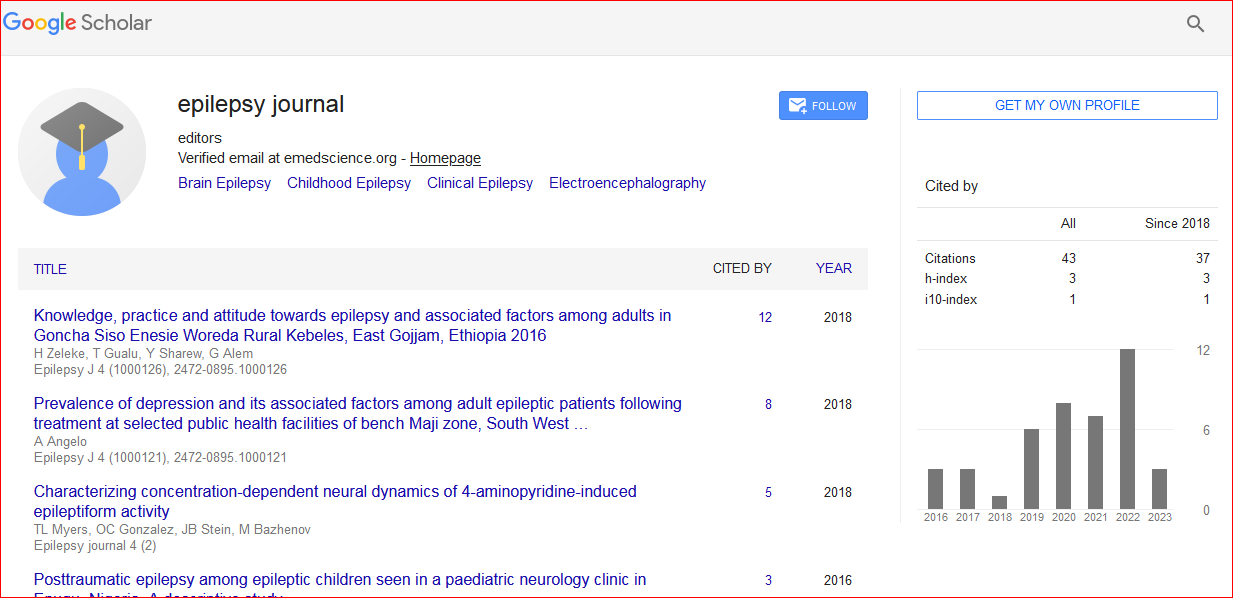
Epilepsy Journal received 41 citations as per Google Scholar report