Short Communication - (2025) Volume 14, Issue 4
Received: 01-Jul-2025, Manuscript No. jtsm-26-179556;
Editor assigned: 03-Jul-2025, Pre QC No. P-179556;
Reviewed: 17-Jul-2025, QC No. Q-179556;
Revised: 22-Jul-2025, Manuscript No. R-179556;
Published:
29-Jul-2025
, DOI: 10.37421/2167-0919.2025.14.506
Citation: Klein, Robert. âIntelligent Telecommunication Network Management: AI and Data.â J Telecommun Syst Manage 14 (2025):506.
Copyright: © 2025 Klein R. This is an open-access article distributed under the terms of the Creative Commons Attribution License, which permits unrestricted use, distribution
and reproduction in any medium, provided the original author and source are credited.
The telecommunication industry is undergoing a rapid transformation, driven by an ever-increasing demand for data and connectivity. To meet these escalating requirements, the effective monitoring and management of network performance have become paramount. Advanced analytical techniques are emerging as critical tools in this domain, enabling operators to gain deeper insights into their network operations. This research explores the application of data analytics in monitoring telecommunication network performance, highlighting how advanced techniques, including machine learning and big data processing, can identify performance bottlenecks, predict failures, and optimize resource allocation. The study emphasizes the role of real-time data streams and the development of intelligent dashboards for proactive network management, ultimately improving service quality and customer satisfaction [1].
The complexity of modern cellular networks necessitates sophisticated approaches to fault detection and diagnosis. Traditional methods often struggle to keep pace with the dynamic nature of network issues. Therefore, the practical implementation of data analytics for fault detection and diagnosis in cellular networks is gaining traction. This involves presenting a framework that utilizes historical performance data and real-time traffic patterns to pinpoint the root causes of network degradation. The authors showcase how anomaly detection algorithms can identify deviations from normal behavior, enabling swift corrective actions and minimizing service interruptions [2].
Capacity planning and resource optimization are crucial for ensuring the smooth operation of telecommunication infrastructure, especially with the continuous growth in data traffic. Predictive analytics offers a powerful solution to forecast future demands by analyzing historical data. This paper focuses on the use of predictive analytics for capacity planning and optimization in telecommunication infrastructure, examining how analyzing historical traffic data, user behavior, and network load can forecast future demands. The research proposes models that help operators proactively scale resources, preventing congestion and ensuring high-quality service delivery during peak times [3].
The proliferation of sophisticated cyber threats and the sheer volume of network traffic present significant challenges for traditional anomaly detection methods. Deep learning techniques have emerged as a promising avenue for addressing these complexities. This study investigates the application of deep learning techniques for anomaly detection in network traffic, exploring how convolutional neural networks (CNNs) and recurrent neural networks (RNNs) can effectively identify complex patterns indicative of network anomalies, such as distributed denial-of-service (DDoS) attacks or performance degradations. The research highlights the improved accuracy and efficiency compared to traditional methods [4].
The advent of 5G technology has introduced unprecedented levels of data generation, demanding robust solutions for real-time performance monitoring. The high volume and velocity of data generated by 5G infrastructure pose unique challenges. This paper presents a framework for real-time performance monitoring and analysis of 5G networks using big data analytics, discussing the challenges posed by the high volume and velocity of data generated by 5G infrastructure and proposing a scalable architecture for data ingestion, processing, and visualization. The authors emphasize the benefits for network slicing, edge computing, and quality of service assurance [5].
Network downtime can have significant economic and operational consequences for telecommunication service providers. Predicting and preventing these failures is a critical objective. The research focuses on the application of machine learning for predicting network failures in telecommunication systems, examining various algorithms, including support vector machines (SVMs) and random forests, to analyze historical failure data and identify precursor patterns. The goal is to enable proactive maintenance and reduce downtime, thereby improving network reliability and service availability [6].
Intelligent network management is becoming increasingly vital in navigating the complexities of modern telecommunication networks. The integration of artificial intelligence (AI) and data analytics offers a pathway to achieve this. This article discusses the integration of artificial intelligence (AI) and data analytics for intelligent network management in modern telecommunication networks, exploring how AI-driven insights can optimize network operations, enhance security, and personalize user experiences. The study highlights the transition from reactive to proactive and predictive network management strategies [7].
The performance of wireless communication networks is critical for delivering seamless mobile experiences. Optimizing these networks requires a data-driven approach. The paper examines the use of data analytics for optimizing the performance of wireless communication networks, focusing on analyzing key performance indicators (KPIs) such as signal strength, data throughput, and latency to identify areas for improvement. The research proposes data-driven strategies for enhancing network coverage, capacity, and user experience in mobile environments [8].
Understanding the intricate structure and interdependencies within telecommunication networks is essential for effective monitoring and analysis. Graph-based data analytics provides a powerful framework for this purpose. This study explores the application of graph-based data analytics for monitoring and analyzing the topology and performance of telecommunication networks, leveraging graph theory to represent network entities and their relationships, enabling the identification of critical nodes, paths, and potential points of failure. The research offers insights into network resilience and anomaly propagation [9].
Ensuring a high Quality of Service (QoS) is a fundamental requirement for telecommunication operators. Data analytics plays a crucial role in achieving this by providing the insights needed to monitor and optimize QoS. The article focuses on the development and evaluation of a data analytics platform for optimizing Quality of Service (QoS) in telecommunication networks, detailing how the platform collects and analyzes various QoS metrics to identify performance degradation and predict potential issues. The research presents methods for improving network performance through data-driven adjustments and proactive interventions [10].
The telecommunication industry's evolution towards greater data utilization and connectivity necessitates robust methodologies for network performance oversight. Advanced data analytics techniques are instrumental in this context, offering profound insights into network operations. Specifically, this research delves into the application of data analytics for monitoring telecommunication network performance. It elucidates how sophisticated analytical approaches, encompassing machine learning and big data processing, can effectively identify performance bottlenecks, anticipate failures, and optimize the allocation of resources. A key emphasis is placed on the significance of real-time data streams and the creation of intelligent dashboards to facilitate proactive network management, ultimately leading to enhanced service quality and increased customer satisfaction [1].
Modern cellular networks present a considerable level of complexity, demanding advanced strategies for fault detection and diagnosis. Conventional methods often fall short in addressing the rapidly changing nature of network issues. Consequently, the practical implementation of data analytics for fault detection and diagnosis within cellular networks is becoming increasingly significant. This involves the presentation of a structured framework that leverages both historical performance data and current traffic patterns to precisely identify the underlying causes of network degradation. The authors demonstrate how anomaly detection algorithms can effectively recognize deviations from typical behavior, thereby enabling prompt remedial actions and minimizing service interruptions [2].
Effective capacity planning and resource optimization are indispensable for the continuous and efficient operation of telecommunication infrastructure, particularly in light of persistent growth in data traffic. Predictive analytics provides a potent tool for forecasting future demands by meticulously analyzing historical data. This paper concentrates on the utilization of predictive analytics for the purpose of capacity planning and optimization within telecommunication infrastructure. It investigates how the analysis of historical traffic data, user behavior patterns, and overall network load can facilitate accurate forecasting of future demands. The research proposes specific models designed to assist operators in proactively adjusting resource allocation, thereby preventing network congestion and ensuring the delivery of high-quality services during periods of peak demand [3].
The increasing prevalence of complex cyber threats, coupled with the sheer volume of network traffic, poses substantial challenges for traditional anomaly detection systems. Deep learning techniques have emerged as a highly promising area for addressing these intricate issues. This study undertakes an investigation into the application of deep learning techniques specifically for anomaly detection within network traffic. It explores the capabilities of convolutional neural networks (CNNs) and recurrent neural networks (RNNs) in effectively identifying complex patterns that are indicative of network anomalies, such as distributed denial-of-service (DDoS) attacks or significant performance degradations. The research highlights the superior accuracy and enhanced efficiency achieved when compared to conventional methodologies [4].
The introduction of 5G technology has led to an unprecedented surge in data generation, necessitating the development of robust solutions for real-time performance monitoring. The high volume and velocity of data generated by 5G infrastructure present distinct and significant challenges. This paper introduces a comprehensive framework designed for the real-time performance monitoring and analysis of 5G networks, utilizing the power of big data analytics. It thoroughly discusses the inherent challenges associated with the substantial volume and velocity of data generated by 5G infrastructure and proposes a scalable architectural design for efficient data ingestion, processing, and visualization. The authors underscore the profound benefits this approach offers for critical areas such as network slicing, edge computing, and the assurance of quality of service [5].
Network outages can result in substantial economic losses and operational disruptions for telecommunication service providers. The ability to predict and prevent these failures is a paramount objective. This research is specifically focused on the application of machine learning techniques for the purpose of predicting network failures within telecommunication systems. It systematically examines a variety of algorithms, including support vector machines (SVMs) and random forests, to analyze historical failure data and identify crucial precursor patterns. The overarching objective is to enable proactive maintenance strategies and significantly reduce overall downtime, thereby enhancing both network reliability and service availability [6].
Achieving intelligent network management is becoming increasingly crucial for effectively navigating the complexities inherent in modern telecommunication networks. The synergistic integration of artificial intelligence (AI) and data analytics offers a clear pathway to attain this objective. This article engages in a detailed discussion regarding the integration of AI and data analytics for the purpose of enabling intelligent network management within contemporary telecommunication networks. It explores the ways in which AI-driven insights can be leveraged to optimize network operations, bolster security measures, and deliver personalized user experiences. The study thoughtfully highlights the ongoing transition from reactive management paradigms to more proactive and predictive network management strategies [7].
The performance quality of wireless communication networks is of critical importance for ensuring uninterrupted and seamless mobile user experiences. The optimization of these networks fundamentally relies on adopting a data-driven approach. This paper undertakes an examination of the application of data analytics for the specific purpose of optimizing the performance of wireless communication networks. It directs its focus towards the meticulous analysis of key performance indicators (KPIs), such as signal strength, data throughput, and latency, with the explicit aim of identifying specific areas where improvements can be made. The research proposes practical data-driven strategies that are designed to enhance network coverage, increase capacity, and elevate the overall user experience within mobile environments [8].
Comprehending the intricate structural organization and the complex interdependencies that exist within telecommunication networks is absolutely essential for conducting effective monitoring and comprehensive analysis. Graph-based data analytics provides a highly powerful and versatile framework specifically designed for this purpose. This study embarks on an exploration into the application of graph-based data analytics for the dual purposes of monitoring and analyzing both the topology and the performance characteristics of telecommunication networks. It effectively leverages the principles of graph theory to meticulously represent network entities and their intricate relationships, thereby enabling the precise identification of critical network nodes, crucial communication paths, and potential points of failure. The research offers valuable insights into network resilience and the mechanisms of anomaly propagation [9].
Maintaining a high standard of Quality of Service (QoS) represents a fundamental and non-negotiable requirement for telecommunication operators. Data analytics plays an indispensable and pivotal role in the successful attainment of this objective by furnishing the essential insights required for both monitoring and optimizing QoS. The article is specifically centered on the development and rigorous evaluation of a dedicated data analytics platform engineered for the explicit purpose of optimizing Quality of Service (QoS) within telecommunication networks. It provides a detailed account of how the platform systematically collects and analyzes a diverse range of QoS metrics to accurately identify instances of performance degradation and to proactively predict potential future issues. The research presents well-defined methods for achieving significant improvements in network performance through the implementation of data-driven adjustments and strategic, proactive interventions [10].
This collection of research highlights the transformative impact of data analytics, machine learning, and artificial intelligence on telecommunication network management. Studies cover applications ranging from performance monitoring and fault detection to capacity planning and security. Key themes include the use of real-time data streams, advanced algorithms like deep learning for anomaly detection, and the development of intelligent dashboards for proactive operations. The research emphasizes improved service quality, reduced downtime, and enhanced user experiences through data-driven strategies. Specific focus is given to the challenges and opportunities presented by emerging technologies like 5G, and the optimization of wireless networks. The overarching goal is a shift towards more intelligent, predictive, and efficient network management, ensuring reliability and high performance.
None
None
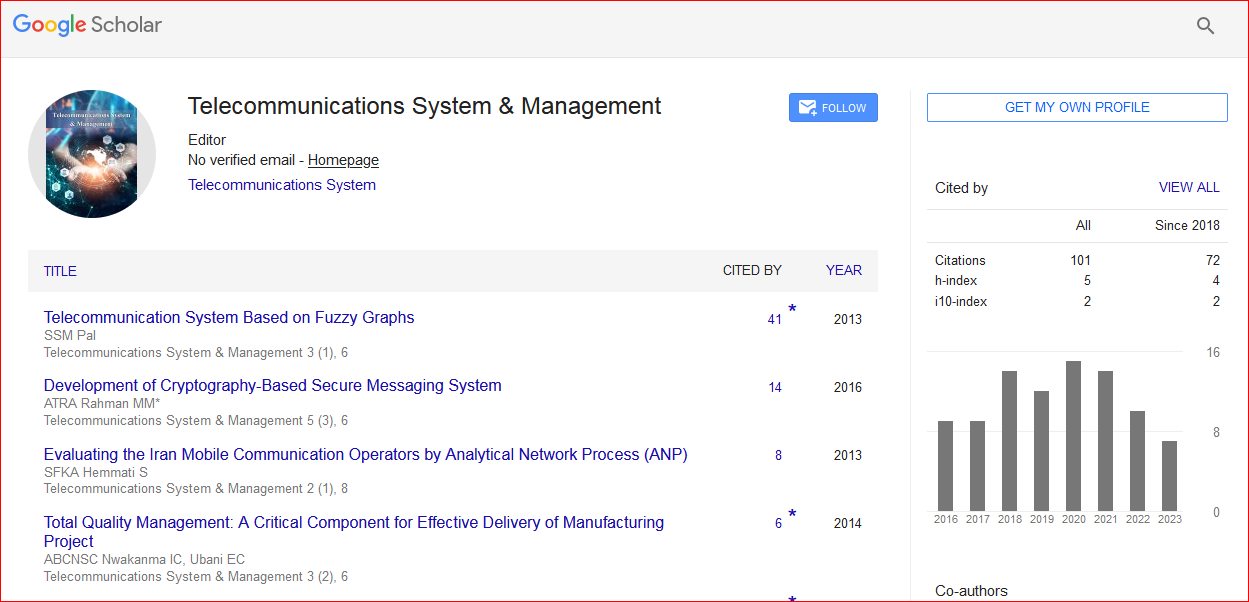
Telecommunications System & Management received 109 citations as per Google Scholar report