Brief Report - (2025) Volume 14, Issue 3
Received: 01-May-2025, Manuscript No. jio-26-184802;
Editor assigned: 05-May-2025, Pre QC No. P-184802;
Reviewed: 19-May-2025, QC No. Q-184802;
Revised: 22-May-2025, Manuscript No. R-184802;
Published:
29-May-2025
, DOI: DOI: 10.37421/2329-6771.2025.14.554
Citation: Chen, Maya L.. ”Integrative Oncology: Holistic Care for Enhanced Well-being.” J Integr Onco 14 (2025):554.
Copyright: © 2025 Chen L. Maya This is an open-access article distributed under the terms of the Creative Commons Attribution License, which permits unrestricted use, distribution and reproduction in any medium, provided the original author and source are credited.
Integrative oncology represents a significant evolution in cancer care, moving beyond a singular focus on disease eradication to embrace a holistic approach that encompasses the entire patient experience. This paradigm shift involves the careful integration of conventional cancer treatments, such as chemotherapy and radiation therapy, with a wide array of complementary therapies. These complementary modalities are selected for their potential to enhance quality of life, mitigate the adverse effects of standard treatments, and potentially bolster overall treatment efficacy by addressing the multifaceted needs of individuals battling cancer. The growing body of evidence supporting the benefits of specific complementary therapies in managing symptoms and promoting well-being underscores the importance of this evolving field [1].
Among the most studied complementary interventions is mindfulness-based stress reduction (MBSR). Research consistently demonstrates MBSR's capacity to significantly alleviate distress, anxiety, and depression among cancer patients undergoing treatment. By fostering improved psychological well-being and equipping patients with enhanced coping mechanisms, MBSR emerges as a valuable component within the comprehensive framework of integrative oncology, offering a crucial avenue for mental and emotional support during challenging times [2].
Acupuncture is another complementary therapy that has garnered increasing attention for its therapeutic potential in managing common and debilitating side effects of cancer treatment. Specifically, it shows promise in alleviating chemotherapy-induced nausea and vomiting (CINV) and providing relief from cancer-related pain. Emerging research suggests that acupuncture can serve as a safe and effective adjunctive treatment, offering a valuable alternative or complement to pharmacological approaches for symptom control in cancer care settings [3].
Nutritional interventions are recognized as a cornerstone of supportive care for individuals undergoing cancer treatment. Personalized dietary plans are increasingly supported by evidence for their role in helping patients maintain strength, prevent malnutrition, and facilitate recovery processes. This highlights the critical importance of an integrated approach to cancer nutrition, ensuring that dietary needs are met comprehensively throughout the treatment journey and beyond [4].
Exercise therapy has become an established and integral component of supportive care in oncology. Its benefits extend to improving common issues such as fatigue, enhancing physical function, and positively impacting the mental health of cancer survivors. Tailored exercise programs are instrumental in mitigating the residual side effects of cancer treatments and contributing to an improved long-term quality of life for those who have navigated the complexities of cancer survivorship [5].
The integration of robust psychological support, including counseling and various forms of psychotherapy, is paramount in addressing the profound emotional and mental health challenges that cancer patients and their families often encounter. A dedicated focus on psychosocial well-being is not merely an add-on but a fundamental element of delivering truly comprehensive and integrative cancer care that acknowledges the psychological toll of the disease and its treatment [6].
While herbal medicine can offer potential benefits for symptom management in cancer patients, its use necessitates careful consideration due to the risk of interactions with conventional therapies. Although some herbs have shown promise, the establishment of strong scientific evidence and well-defined safety profiles is essential before they can be safely integrated into treatment plans. Physician guidance remains critical to ensure patient safety and efficacy when considering herbal remedies [7].
A patient-centered approach forms the very foundation of effective integrative oncology practice. This philosophy emphasizes a deep understanding of each individual's unique needs, personal preferences, and deeply held values. By actively involving patients in co-creating their care plans, integrative oncology aims to develop strategies that not only target the disease but also profoundly support the patient's overall well-being and enhance their quality of life [8].
Cannabinoids, including compounds like CBD and THC, are subjects of intense investigation for their potential to manage a range of cancer-related symptoms. These symptoms often include pain, nausea, and anxiety, which can significantly impair a patient's quality of life. The role of cannabinoids in integrative oncology is still being elucidated, with ongoing research focused on determining optimal dosing, effective formulations, and ensuring robust safety profiles for therapeutic use [9].
The successful implementation of integrative oncology hinges on effective interdisciplinary collaboration among a diverse team of healthcare professionals. This includes oncologists, nurses, allied health practitioners, and specialists in complementary therapies. Open communication channels and a commitment to shared decision-making are indispensable elements for delivering truly holistic and patient-centered cancer care that addresses all dimensions of a patient's health [10].
Integrative oncology is defined by its paradigm-shifting approach, which synergistically combines established conventional cancer treatments, such as chemotherapy and radiation, with a diverse range of complementary therapies. These therapies can include practices like acupuncture, mindfulness meditation, and specialized nutritional guidance. The overarching goal of this integrated strategy is to elevate the patient's quality of life, provide effective management for treatment-related side effects, and potentially augment treatment outcomes by adopting a holistic perspective that addresses the individual as a whole, rather than focusing solely on the disease itself. The accumulating evidence supporting the efficacy of specific complementary therapies in symptom alleviation and the enhancement of overall well-being solidifies its growing importance in contemporary cancer care [1].
Mindfulness-based stress reduction (MBSR) has consistently shown significant positive impacts on the psychological well-being of cancer patients undergoing treatment. Its efficacy in reducing distress, anxiety, and depression is well-documented. Studies exploring MBSR highlight its critical role in improving patients' psychological resilience and strengthening their coping mechanisms, thereby underscoring its substantial value as a complementary intervention within the comprehensive domain of integrative oncology [2].
Acupuncture is increasingly recognized for its potential benefits in managing challenging side effects associated with cancer treatment, notably chemotherapy-induced nausea and vomiting (CINV) and persistent cancer pain. The body of research suggests that acupuncture can be both a safe and highly effective adjunct therapy. It offers a valuable alternative or complementary option to traditional pharmacological interventions, providing patients with additional avenues for symptom control within their cancer care regimen [3].
Nutritional interventions are critically important for supporting cancer patients throughout their treatment journey. Current evidence strongly advocates for the implementation of personalized dietary plans. These plans are designed to help patients maintain their strength, prevent the debilitating effects of malnutrition, and promote more effective recovery. This emphasis underscores the vital role of an integrative approach in optimizing cancer nutrition and supporting overall patient health [4].
Exercise therapy has become a firmly established component of supportive care within the field of oncology. Its benefits are multifaceted, contributing to improved management of fatigue, enhanced physical function, and positive effects on the mental health of cancer survivors. The development and application of tailored exercise programs are crucial for mitigating the long-term side effects associated with cancer treatments and significantly improving the quality of life for individuals navigating survivorship [5].
The inclusion of comprehensive psychological support, encompassing both counseling and psychotherapy, is indispensable for addressing the significant emotional and mental health challenges that cancer patients and their families frequently confront. This dedicated focus on psychosocial well-being is not merely an adjunct but a fundamental pillar of truly comprehensive and integrative cancer care, acknowledging the profound impact of cancer on an individual's mental and emotional state [6].
The utilization of herbal medicines in the care of cancer patients demands a cautious and informed approach due to the potential for adverse interactions with conventional therapies. While certain herbs have demonstrated promise in alleviating symptoms, the requirement for robust scientific evidence and well-established safety profiles is paramount for their responsible integration. Consequently, close physician guidance is essential when considering the use of herbal remedies [7].
The patient-centered approach is fundamental to the philosophy and practice of integrative oncology. This approach necessitates a thorough understanding of each patient's individual needs, personal preferences, and deeply held values. The ultimate aim is to collaboratively develop a care plan that not only targets the cancer effectively but also comprehensively supports the patient's overall well-being and enhances their quality of life [8].
Cannabinoids, particularly compounds like CBD and THC, are currently undergoing extensive investigation for their potential therapeutic applications in managing common cancer-related symptoms. These symptoms frequently include pain, nausea, and anxiety, all of which can severely impact a patient's daily life. The exact role of cannabinoids within integrative oncology remains a complex area of research, with ongoing studies prioritizing the determination of optimal dosing strategies, effective formulations, and rigorous safety assessments [9].
The effective implementation of integrative oncology practices is heavily reliant on seamless interdisciplinary collaboration. This collaboration must involve a diverse range of healthcare professionals, including oncologists, nurses, various allied health professionals, and practitioners of complementary therapies. Open communication, trust, and a commitment to shared decision-making are critical elements for the successful delivery of holistic and patient-centered cancer care [10].
Integrative oncology merges conventional cancer treatments with complementary therapies to enhance patient quality of life, manage side effects, and improve outcomes. Key complementary approaches include mindfulness-based stress reduction (MBSR) for psychological well-being, acupuncture for symptom management like nausea and pain, and nutritional interventions for strength and recovery. Exercise therapy is vital for fatigue and physical function, while psychological support addresses emotional challenges. The use of herbal medicines and cannabinoids requires careful consideration due to potential interactions and the need for more research. A patient-centered approach and interdisciplinary collaboration are fundamental to delivering holistic care.
None
None
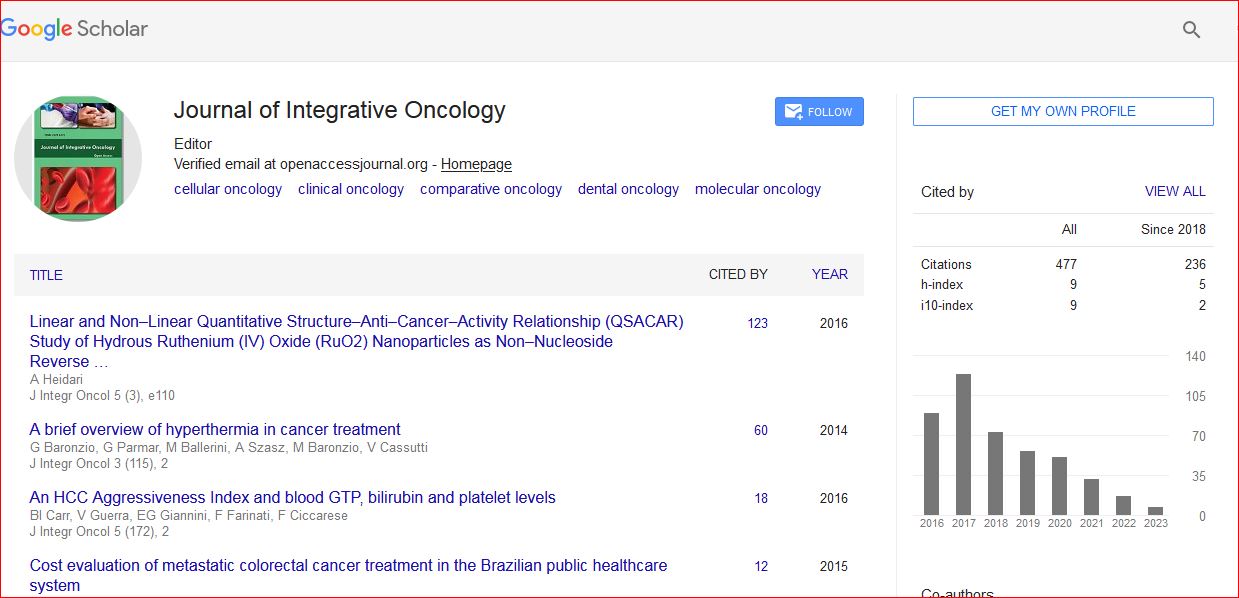
Journal of Integrative Oncology received 495 citations as per Google Scholar report