Brief Report - (2025) Volume 14, Issue 3
Received: 01-May-2025, Manuscript No. jio-26-184803;
Editor assigned: 05-May-2025, Pre QC No. P-184803;
Reviewed: 19-May-2025, QC No. Q-184803;
Revised: 22-May-2025, Manuscript No. R-184803;
Published:
29-May-2025
, DOI: 10.37421/2329-6771.2025.14.555
Citation: Deshpande, Rahul. "Integrative Oncology: Holistic Care for Better Outcomes." J Integr Onco 14 (2025):555.
Copyright: © 2025 Deshpande R. This is an open-access article distributed under the terms of the Creative Commons Attribution License, which permits unrestricted use, distribution and reproduction in any medium, provided the original author and source are credited.
The integration of complementary and alternative medicine (CAM) into conventional cancer care is gaining significant traction, driven by a growing body of evidence supporting its potential to enhance patient well-being and treatment outcomes. This paradigm shift, often referred to as integrative oncology, seeks to harmonize standard oncological treatments with evidence-based supportive therapies, aiming to address the multifaceted needs of cancer patients beyond disease eradication [1].
Acupuncture has emerged as a prominent modality within integrative oncology, particularly for managing common and distressing side effects of chemotherapy. Systematic reviews and meta-analyses have provided robust evidence for its efficacy in alleviating chemotherapy-induced nausea and vomiting (CINV), suggesting it can be a valuable adjunct to standard antiemetic regimens [2].
Mindfulness-based stress reduction (MBSR) is another therapeutic avenue being explored for its impact on the psychological well-being of cancer patients. Studies have demonstrated that MBSR interventions can significantly mitigate cancer-related distress, including anxiety, depression, and fatigue, while simultaneously promoting improved sleep quality, a crucial aspect of recovery and quality of life [3].
Nutritional interventions also play a vital role in integrative cancer care. Research into specific dietary patterns, such as the Mediterranean diet, has indicated a potential association with improved outcomes in cancer survivorship, including reduced recurrence rates and better management of comorbidities like cardiovascular disease [4].
Yoga, a practice encompassing physical postures, breath control, and meditation, is being increasingly recognized for its therapeutic benefits in cancer care. Evidence suggests that yoga can effectively address cancer-related fatigue, pain, and psychological distress, contributing to an overall enhancement of patients' quality of life [5].
Herbal medicine represents a complex area within integrative oncology, with certain botanicals showing promise in preclinical and early clinical studies. Agents like curcumin and ginger are being investigated for their anti-inflammatory and potential anti-cancer properties, though rigorous evaluation of efficacy, safety, and drug interactions remains paramount [6].
Art therapy offers a unique non-pharmacological approach to supporting the emotional and psychological needs of cancer patients. Its capacity to facilitate emotional expression, reduce stress, and foster self-esteem can significantly contribute to a patient's coping mechanisms and overall therapeutic experience [7].
Medical cannabis is also under scrutiny for its role in symptom management for cancer patients. While research suggests potential benefits for pain, nausea, and appetite stimulation, the variability in study designs and outcomes underscores the need for more comprehensive and rigorous clinical trials to establish clear guidelines for its use [8].
Exercise oncology is a rapidly evolving field that highlights the significant benefits of structured physical activity during and after cancer treatment. Evidence points to improvements in physical function, reduction in fatigue, and positive psychological outcomes, advocating for exercise to be a standard component of cancer rehabilitation [9].
Dietary supplements, ranging from vitamins to antioxidants, are frequently used by cancer patients. However, their role requires careful consideration, with a critical review of existing literature essential to understand potential benefits, risks, and crucial interactions with conventional therapies, emphasizing evidence-based selection and supervised use [10].
The field of integrative oncology seeks to provide a holistic approach to cancer care by merging conventional medical treatments with evidence-based complementary therapies. This approach aims to optimize patient outcomes by addressing the physical, emotional, and psychological aspects of cancer and its treatment. The growing body of research underscores the importance of personalized care strategies that incorporate a variety of supportive modalities to improve quality of life and potentially enhance treatment efficacy [1].
Acupuncture is increasingly recognized as a valuable adjunct in managing the challenging side effects associated with cancer chemotherapy. Its effectiveness in mitigating nausea and vomiting, commonly experienced by patients, has been substantiated through meta-analyses, suggesting its integration into supportive care protocols is a logical and beneficial step for enhancing patient comfort and compliance with treatment [2].
Mindfulness-based stress reduction (MBSR) has demonstrated significant utility in addressing the psychological burden of cancer. By equipping patients with tools to manage stress, anxiety, and depression, MBSR interventions contribute to improved emotional regulation and overall psychological resilience, which are critical for navigating the complexities of cancer treatment and recovery [3].
Nutritional science plays a critical role in supporting cancer patients throughout their journey. The Mediterranean diet, characterized by its emphasis on fruits, vegetables, whole grains, and healthy fats, has shown promise in promoting better health outcomes for cancer survivors, highlighting the profound impact of dietary patterns on long-term well-being and survivorship [4].
The practice of yoga has been widely adopted as a complementary therapy in cancer care due to its multifaceted benefits. Beyond physical exertion, yoga's focus on breath and mindfulness aids in reducing fatigue, managing pain, and improving mood, thereby contributing to a more positive and empowering patient experience [5].
Herbal medicines offer a complex yet intriguing dimension to integrative oncology, with certain plant-derived compounds being explored for their therapeutic potential. While preclinical data may suggest beneficial properties, the critical need for robust clinical trials to ascertain safety, efficacy, and potential interactions with standard cancer therapies cannot be overstated [6].
Art therapy provides a creative outlet for cancer patients to process their experiences and emotions. The act of creating art can serve as a powerful tool for self-expression, stress reduction, and boosting self-esteem, thereby fostering a greater sense of agency and improving psychological well-being during challenging times [7].
Medical cannabis has garnered attention for its potential to alleviate cancer-related symptoms such as chronic pain and appetite loss. However, the current evidence base is marked by considerable heterogeneity in study designs and findings, necessitating further rigorous research to clarify its precise role and optimal application in symptom management [8].
Exercise oncology champions the role of structured physical activity as an integral part of cancer care. Its benefits extend to improving physical functioning, combating treatment-induced fatigue, and bolstering psychological health, making it a vital component of comprehensive cancer rehabilitation and recovery programs [9].
Dietary supplements are commonly used by individuals with cancer, yet their efficacy and safety require careful evaluation. A critical review of the literature is essential to guide patients and clinicians in making informed decisions about supplement use, ensuring that potential benefits are weighed against risks and interactions with conventional treatments [10].
Integrative oncology combines conventional cancer treatments with evidence-based complementary therapies to improve patient well-being and treatment outcomes. Key areas of focus include acupuncture for managing chemotherapy side effects like nausea and vomiting, mindfulness-based stress reduction for psychological distress, and specific dietary patterns such as the Mediterranean diet for survivorship. Yoga and art therapy are recognized for their benefits in reducing fatigue, pain, and improving emotional health. Herbal medicines and dietary supplements are being investigated, but require careful evaluation for efficacy, safety, and potential drug interactions. Exercise oncology and medical cannabis are also explored for symptom management and rehabilitation, with a call for more robust research. The overarching goal is to provide comprehensive, personalized care that addresses the holistic needs of cancer patients.
None
None
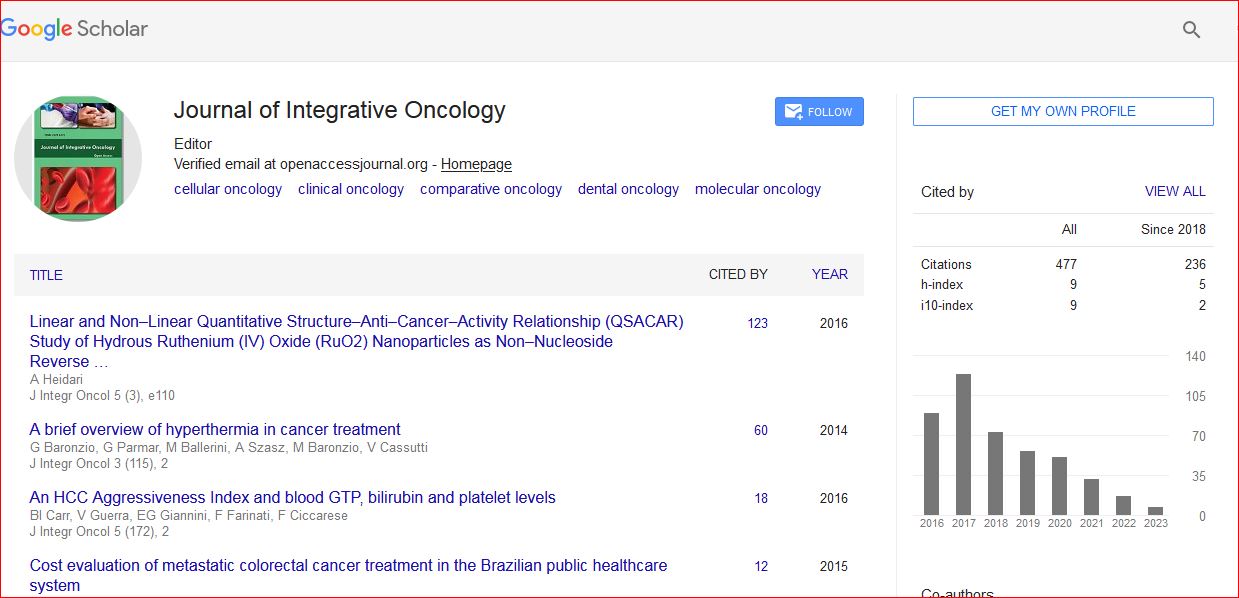
Journal of Integrative Oncology received 495 citations as per Google Scholar report