Opinion - (2025) Volume 14, Issue 3
Received: 01-May-2025, Manuscript No. jio-26-184806;
Editor assigned: 05-May-2025, Pre QC No. P-184806;
Reviewed: 19-May-2025, QC No. Q-184806;
Revised: 22-May-2025, Manuscript No. R-184806;
Published:
29-May-2025
, DOI: 10.37421/2329-6771.2025.14.557
Citation: Miller, Thomas K.. ”Integrative Medicine: Evidence for Cancer Symptom Management.” J Integr Onco 14 (2025):557.
Copyright: © 2025 Miller K. Thomas This is an open-access article distributed under the terms of the Creative Commons Attribution License, which permits unrestricted use, distribution and reproduction in any medium, provided the original author and source are credited.
The field of oncology is increasingly embracing complementary and integrative medicine to enhance patient care and well-being during and after cancer treatment. These therapeutic approaches, often used in conjunction with conventional medical interventions, aim to manage treatment-related side effects, improve quality of life, and support the overall recovery process for cancer patients. Complementary therapies have garnered significant interest due to their potential to address the multifaceted challenges faced by individuals battling cancer, ranging from physical discomfort to emotional distress. Research in this area is crucial for establishing evidence-based guidelines and ensuring safe integration into standard care protocols. This review synthesizes current evidence on the safety and efficacy of various complementary therapies. It highlights the growing acceptance and application of these approaches, which are often sought by patients seeking holistic support to complement their primary medical treatment. Numerous studies have explored specific modalities, including acupuncture, mindfulness-based interventions, and nutritional strategies, evaluating their potential benefits and risks. The need for rigorous scientific investigation remains paramount to validate their clinical utility and inform clinical decision-making. Complementary medicine endeavors to provide a more comprehensive and patient-centered approach to cancer care, focusing on improving symptom management and fostering a sense of well-being. This holistic perspective recognizes the interconnectedness of physical, emotional, and spiritual health. The growing body of literature underscores the importance of a multidisciplinary approach, where conventional treatments are augmented by therapies that can alleviate common side effects such as nausea, fatigue, and pain. Specific attention has been paid to interventions like acupuncture, which has shown promise in managing chemotherapy-induced side effects, thereby improving patient tolerance and adherence to treatment regimens. Mindfulness-based stress reduction techniques have also emerged as valuable tools for addressing the psychological burden of cancer, helping survivors cope with anxiety and depression and enhance their emotional resilience. Nutritional interventions, when guided by evidence-based principles, play a vital role in supporting patient health and potentially modulating cancer risk, emphasizing personalized advice over generalized dietary fads. Ultimately, the integration of complementary and integrative medicine into oncology represents a significant shift towards a more holistic and patient-empowering model of care, aiming to optimize outcomes and improve the overall patient experience.
The current landscape of cancer care is evolving to incorporate a wider range of supportive and adjunctive therapies, aiming to improve patient outcomes and quality of life. Complementary and integrative medicine (CIM) has become a focal point in this evolution, with a growing body of research investigating its role alongside conventional treatments. One area of significant interest is acupuncture, which has been systematically reviewed for its efficacy in managing chemotherapy-induced nausea and vomiting (CINV). Studies suggest that acupuncture can be a safe and effective option for reducing the severity and incidence of CINV, offering specific acupoint combinations and stimulation techniques that have demonstrated promise as an adjunct therapy. Mindfulness-based stress reduction (MBSR) is another key intervention explored for its impact on psychological distress and quality of life in cancer survivors. Randomized controlled trials have indicated that MBSR can significantly reduce symptoms of anxiety and depression while enhancing emotional well-being, positioning it as a valuable non-pharmacological tool for long-term recovery. Dietary interventions are also critically appraised, with a focus on the role of antioxidants, phytochemicals, and specific dietary patterns like the Mediterranean diet in cancer prevention and supportive care. This research stresses the importance of personalized nutritional advice, cautioning against unproven dietary trends and identifying areas requiring further investigation. Herbal medicines have been evaluated for their safety and potential benefits as complementary therapies in oncology. A systematic review of common herbal preparations examines their mechanisms of action and known interactions with conventional cancer treatments, emphasizing careful patient selection, monitoring for adverse effects, and open communication with healthcare providers for safe integration. Yoga has been assessed for its effectiveness in managing cancer-related fatigue and improving the quality of life for patients undergoing treatment. Findings suggest that yoga can significantly reduce fatigue, enhance sleep quality, and improve psychological well-being, with discussions around various yoga styles and their applicability in an oncology setting. Massage therapy is another modality reviewed for its benefits in managing pain, anxiety, and lymphedema in cancer patients. Clinical trials highlight the safety profiles and therapeutic advantages of different massage techniques, underscoring the necessity of trained therapists and individualized treatment plans. Music therapy has been investigated through systematic reviews and meta-analyses for its role in enhancing the psychological well-being of cancer patients. It has been found to effectively reduce anxiety, depression, and pain, while improving mood and quality of life, offering insights into therapeutic mechanisms and best practices. Aromatherapy is examined for its utility in managing cancer-related symptoms such as nausea, pain, and anxiety. The available literature on essential oils commonly used in palliative care is reviewed, highlighting potential benefits alongside the importance of proper administration and understanding contraindications. Finally, mind-body therapies, including meditation and guided imagery, are assessed for their ability to improve the well-being of cancer patients. These interventions have shown effectiveness in reducing stress, anxiety, and depression, and enhancing coping mechanisms, with a call for standardized protocols and further research to solidify their role in integrative oncology.
This collection of research synthesizes evidence on complementary and integrative medicine for cancer patients. Studies explore the efficacy and safety of therapies such as acupuncture for nausea, mindfulness for psychological distress, and yoga for fatigue. Dietary patterns, herbal medicines, massage, music therapy, aromatherapy, and mind-body techniques are also reviewed for their potential to manage symptoms and improve quality of life. The findings consistently highlight the need for evidence-based guidelines, careful patient selection, and open communication between patients and healthcare providers to ensure safe and effective integration of these therapies into cancer care.
None
None
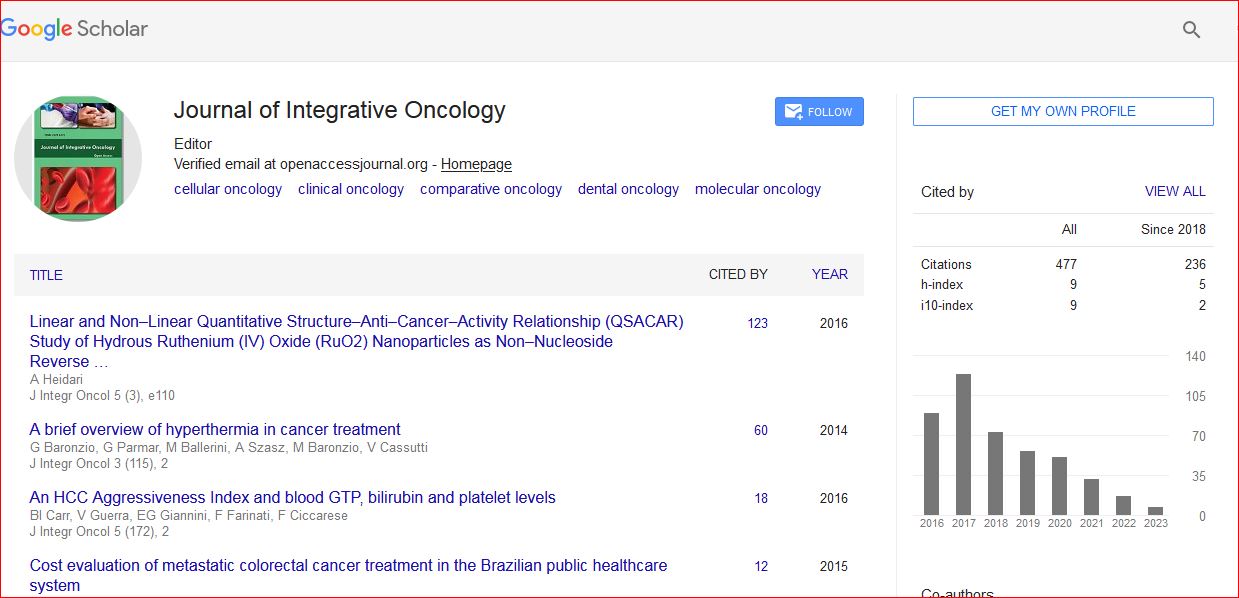
Journal of Integrative Oncology received 495 citations as per Google Scholar report