Opinion - (2025) Volume 14, Issue 5
Received: 01-Sep-2025, Manuscript No. jio-26-184826;
Editor assigned: 03-Sep-2025, Pre QC No. P-184826;
Reviewed: 17-Sep-2025, QC No. Q-184826;
Revised: 22-Sep-2025, Manuscript No. R-184826;
Published:
29-Sep-2025
, DOI: 10.37421/2329-6771.2025.14.575
Citation: Park, Sung-Ho. ”Integrating Complementary Cancer Care: A Holistic Approach.” J Integr Onco 14 (2025):575.
Copyright: © 2025 Park S. This is an open-access article distributed under the terms of the Creative Commons Attribution License, which permits unrestricted use, distribution and reproduction in any medium, provided the original author and source are credited.
The field of oncology is increasingly embracing a more holistic approach to patient care, recognizing the significant benefits that traditional and complementary medicine can offer alongside conventional treatments. This integration aims to enhance the overall well-being of cancer patients by addressing various aspects of their physical and emotional health throughout their treatment journey [1].
One prominent area of interest is the role of herbal medicine as an adjunct therapy. Research is exploring specific botanical agents that may possess immunomodulatory and anti-inflammatory properties, potentially supporting patients undergoing chemotherapy. However, rigorous scientific investigation is crucial to validate efficacy and safety, particularly regarding potential interactions with conventional drugs [2].
Acupuncture has emerged as a valuable non-pharmacological option, particularly for managing common and debilitating side effects of chemotherapy. Studies have indicated that acupuncture, and specifically electroacupuncture, can significantly reduce the incidence and severity of chemotherapy-induced nausea and vomiting, offering patients much-needed relief [3].
Mind-body therapies, including meditation and yoga, are also gaining traction for their ability to improve the psychological well-being and resilience of cancer patients. These practices have been shown to effectively reduce stress, anxiety, and depression, thereby empowering patients to better cope with their diagnosis and treatment [4].
Traditional dietary interventions, spanning various cultures, are being examined for their potential role in both cancer prevention and management. Diets such as the Mediterranean diet and plant-based eating patterns are being studied for their scientific rationale and their influence on cancer risk and treatment outcomes [5].
The principles of Ayurvedic medicine are being explored for their holistic approach to supportive cancer care. Ayurvedic therapies are being investigated for their potential to manage treatment-related fatigue, improve sleep quality, and promote overall well-being in individuals battling cancer [6].
Traditional Chinese Medicine (TCM) is also being considered in conjunction with conventional therapies. Research is evaluating TCM's role in enhancing immune function and mitigating treatment side effects, with specific attention paid to evidence supporting the use of certain herbs and acupuncture protocols in oncology [7].
Mindfulness-based stress reduction (MBSR) is another therapeutic approach showing promise for cancer survivors. This technique has demonstrated efficacy in reducing chronic pain, anxiety, and improving sleep quality for individuals navigating the challenges post-treatment [8].
Naturopathic medicine offers a framework that includes lifestyle interventions, nutritional support, and botanical medicine within an oncology setting. The emphasis is on personalized care plans and the collaborative role of naturopathic doctors in integrative oncology [9].
Finally, art therapy is being recognized for its capacity to support the emotional and psychological well-being of cancer patients. Creative expression through art has been shown to help patients process trauma, reduce stress, and foster a greater sense of self-efficacy during and after treatment [10].
The integration of traditional and complementary medicine into conventional cancer care represents a significant paradigm shift, aiming to provide a more comprehensive and patient-centered approach to treatment. This movement acknowledges that while conventional therapies are the cornerstone of cancer treatment, addressing the holistic needs of the patient can profoundly impact their experience and outcomes [1].
Herbal medicine, in particular, is being scrutinized for its potential supportive role. The focus is on identifying and validating specific herbal compounds that can offer therapeutic benefits without compromising the efficacy of standard treatments or posing undue risks. Careful consideration of drug interactions remains paramount in this line of research [2].
Acupuncture's efficacy in managing treatment-induced side effects, such as nausea and vomiting, has been a key area of investigation. Its non-pharmacological nature makes it an attractive option for patients seeking to alleviate the discomfort associated with chemotherapy, thereby improving their tolerance for treatment [3].
The psychological impact of cancer is profound, and mind-body therapies offer a valuable avenue for support. Practices like meditation and yoga equip patients with tools to manage emotional distress, enhance their coping mechanisms, and foster a greater sense of control and resilience during a challenging time [4].
Dietary approaches are being recognized not only for their role in prevention but also for their potential to influence the course of cancer and recovery. Understanding the cultural and scientific basis of traditional dietary patterns can inform personalized nutritional strategies for cancer patients [5].
Ayurvedic principles, with their emphasis on balance and natural healing, are being explored for their application in supportive cancer care. The holistic perspective of Ayurveda seeks to address the physical, mental, and spiritual well-being of patients, complementing Western medical interventions [6].
Traditional Chinese Medicine offers a wealth of knowledge regarding the body's intricate systems and its capacity for self-healing. Its application in oncology aims to harmonize bodily functions, boost immunity, and alleviate the adverse effects of aggressive cancer treatments [7].
Mindfulness-based stress reduction techniques are proving to be instrumental in helping cancer survivors navigate the long-term physical and emotional sequelae of their disease. By fostering present-moment awareness, MBSR can mitigate chronic pain and improve overall quality of life [8].
Naturopathic medicine advocates for a personalized and collaborative approach, integrating lifestyle, nutrition, and targeted therapies to support patients throughout their cancer journey. This model emphasizes empowering patients and working in partnership with conventional oncologists [9].
Art therapy provides a unique channel for patients to express emotions and experiences that may be difficult to articulate verbally. This creative process can be profoundly healing, aiding in the reduction of stress and the restoration of emotional equilibrium [10].
This collection of research explores the integration of traditional and complementary medicine within conventional cancer care. It highlights the benefits of approaches such as acupuncture for managing side effects like nausea, herbal medicine for potential immune support, and mind-body therapies like meditation and yoga for psychological well-being. Dietary patterns, Ayurvedic principles, Traditional Chinese Medicine, naturopathic medicine, and art therapy are also discussed for their roles in enhancing patient quality of life, managing symptoms, and promoting holistic healing. The emphasis is on evidence-based integration and a multidisciplinary approach to improve patient outcomes and overall well-being.
None
None
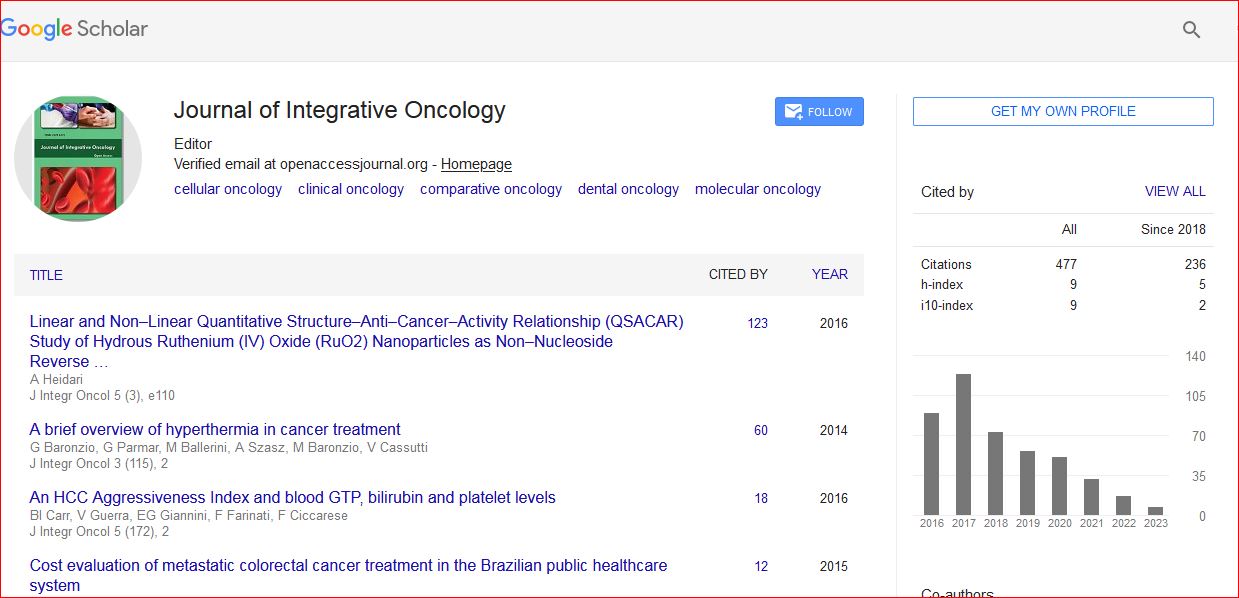
Journal of Integrative Oncology received 495 citations as per Google Scholar report