Perspective - (2025) Volume 8, Issue 3
Received: 01-Sep-2025, Manuscript No. pollution-25-176607;
Editor assigned: 03-Sep-2025, Pre QC No. P-176607;
Reviewed: 17-Sep-2025, QC No. Q-176607;
Revised: 22-Sep-2025, Manuscript No. R-176607;
Published:
29-Sep-2025
, DOI: 10.37421/2684-4958.2025.8.386
Citation: Al-Fayez, Khalid. ”Industrial Pollution: Impacts, Solutions, Environmental Justice.” Pollution 08 (2025):386.
Copyright: © 2025 Al-Fayez K. This is an open-access article distributed under the terms of the Creative Commons Attribution License, which permits unrestricted use,
distribution and reproduction in any medium, provided the original author and source are credited.
This study comprehensively examines the pervasive issue of industrial wastewater discharge from manufacturing plants, tracing its detrimental effects on aquatic ecosystems. It reveals significant contamination by heavy metals and persistent organic pollutants, emphasizing the urgent need for advanced treatment technologies and stricter regulatory enforcement to protect water resources and biodiversity [1].
This research investigates the direct correlation between factory air emissions and the prevalence of respiratory illnesses in surrounding communities. Findings indicate that elevated levels of particulate matter and sulfur dioxide, originating from industrial processes, significantly contribute to asthma and chronic obstructive pulmonary disease, underscoring the critical need for improved emission control technologies and health-focused policy interventions [2].
This study explores innovative bio-remediation techniques for neutralizing industrial soil contamination, particularly focusing on heavy metals and organic solvents from legacy factory sites. The findings demonstrate the efficacy of certain microbial consortia and phytoremediation strategies in significantly reducing contaminant levels, offering a sustainable alternative to conventional cleanup methods for polluted industrial lands [3].
This article evaluates the lifecycle environmental impact of various manufacturing processes, from raw material extraction to waste disposal, identifying key pollution hotspots. It emphasizes that a holistic approach, encompassing cleaner production techniques, resource efficiency, and circular economy principles, is crucial for minimizing the overall ecological footprint of industrial activities [4].
This paper explores the role of advanced sensing technologies and IoT in real-time monitoring of factory emissions. It demonstrates how continuous data collection and predictive analytics can significantly improve compliance with environmental regulations and enable proactive pollution control measures, thereby enhancing both operational efficiency and ecological responsibility [5].
This research investigates the effectiveness of policy instruments and economic incentives in driving industries towards adopting cleaner production technologies and reducing their environmental footprint. It analyzes case studies from various regions, highlighting that a combination of stringent regulations, financial support for green innovation, and public awareness campaigns leads to significant reductions in factory pollution [6].
This study assesses the long-term health implications of exposure to factory-emitted heavy metals, particularly lead and cadmium, in children living near industrial zones. The findings reveal a disturbing association with neurodevelopmental issues and reduced cognitive function, underscoring the severe intergenerational consequences of unchecked industrial pollution and the urgent need for protective measures [7].
This paper delves into the challenges and opportunities for industrial symbiosis and waste valorization as strategies to mitigate factory pollution. It illustrates how converting industrial by-products into valuable resources for other industries can significantly reduce waste generation and raw material consumption, fostering a more sustainable and resource-efficient industrial ecosystem [8].
This research evaluates the efficacy of carbon capture and storage (CCS) technologies in mitigating greenhouse gas emissions from heavy industries, a major contributor to factory pollution. The study assesses the economic feasibility and environmental benefits of implementing CCS at scale, concluding that while promising, widespread adoption requires significant policy support and technological advancements to overcome current barriers [9].
This paper investigates the often-overlooked environmental justice implications of factory pollution, demonstrating how industrial facilities are disproportionately located near marginalized communities. It highlights the resulting health disparities and advocates for stronger environmental regulations, community involvement in planning, and equitable enforcement to address these systemic injustices [10].
The pervasive issue of industrial wastewater discharge from manufacturing plants traces its detrimental effects on aquatic ecosystems [1]. Factory air emissions are directly correlated with the prevalence of respiratory illnesses in surrounding communities. The significant contamination by heavy metals and persistent organic pollutants from wastewater impacts aquatic ecosystems, while elevated levels of particulate matter and sulfur dioxide contribute to respiratory illnesses like asthma and chronic obstructive pulmonary disease in urban populations [2]. There's also a disturbing association between heavy metal exposure and neurodevelopmental issues and reduced cognitive function in children, underscoring severe intergenerational consequences of unchecked industrial pollution [7].
Innovative bio-remediation techniques are explored for neutralizing industrial soil contamination, focusing on heavy metals and organic solvents from legacy factory sites. The efficacy of microbial consortia and phytoremediation strategies in reducing contaminant levels offers a sustainable alternative to conventional cleanup methods for polluted industrial lands [3]. Beyond specific pollutants, evaluating the lifecycle environmental impact of manufacturing processes, from raw material extraction to waste disposal, helps identify key pollution hotspots. A holistic approach, integrating cleaner production, resource efficiency, and circular economy principles, is vital for minimizing the overall ecological footprint of industrial activities [4].
Advanced sensing technologies and IoT are crucial for real-time monitoring of factory emissions. Continuous data collection and predictive analytics significantly improve compliance with environmental regulations and enable proactive pollution control measures, enhancing both operational efficiency and ecological responsibility [5]. The effectiveness of policy instruments and economic incentives in driving industries towards cleaner production technologies and reducing their environmental footprint has been investigated. Case studies show that stringent regulations, financial support for green innovation, and public awareness campaigns lead to substantial reductions in factory pollution [6].
Industrial symbiosis and waste valorization offer strategies to mitigate factory pollution. Converting industrial by-products into valuable resources for other industries significantly reduces waste generation and raw material consumption, fostering a sustainable and resource-efficient industrial ecosystem [8]. Furthermore, carbon capture and storage (CCS) technologies are evaluated for mitigating greenhouse gas emissions from heavy industries, which are major contributors to factory pollution. While promising, widespread CCS adoption requires significant policy support and technological advancements to overcome current barriers [9].
The often-overlooked environmental justice implications of factory pollution highlight how industrial facilities are disproportionately located near marginalized communities. This leads to resulting health disparities, advocating for stronger environmental regulations, community involvement in planning, and equitable enforcement to address these systemic injustices [10].
Industrial pollution presents a multifaceted global challenge, impacting water, air, and soil, alongside significant human health consequences. Wastewater discharge, laden with heavy metals and organic pollutants, severely degrades aquatic ecosystems, necessitating advanced treatment and robust regulations. Concurrently, factory air emissions, particularly particulate matter and sulfur dioxide, are directly linked to elevated rates of respiratory illnesses in nearby communities, emphasizing the demand for superior emission controls. Soil contamination from industrial legacy sites, involving heavy metals and organic solvents, finds promising solutions in bioremediation and phytoremediation techniques. Addressing this complex issue requires a holistic approach, including lifecycle assessments to pinpoint pollution hotspots and promote cleaner production methods, resource efficiency, and circular economy principles. Technological advancements like IoT and advanced sensors facilitate real-time monitoring of emissions, improving regulatory compliance and enabling proactive pollution management. Furthermore, policy instruments and economic incentives are vital in encouraging industries to adopt sustainable practices and reduce their environmental footprint. The adverse effects extend to vulnerable populations, with studies revealing neurodevelopmental issues in children exposed to industrial heavy metal pollution. Innovative strategies such as industrial symbiosis and waste valorization offer pathways to reduce waste and foster resource-efficient industrial ecosystems. Efforts to mitigate greenhouse gas emissions through carbon capture and storage technologies are also being explored. Critically, industrial pollution often carries environmental justice implications, disproportionately affecting marginalized communities and highlighting the urgent need for equitable environmental policies and enforcement.
None
None
Indexed at, Google Scholar, Crossref
Indexed at, Google Scholar, Crossref
Indexed at, Google Scholar, Crossref
Indexed at, Google Scholar, Crossref
Indexed at, Google Scholar, Crossref
Indexed at, Google Scholar, Crossref
Indexed at, Google Scholar, Crossref
Indexed at, Google Scholar, Crossref
Indexed at, Google Scholar, Crossref
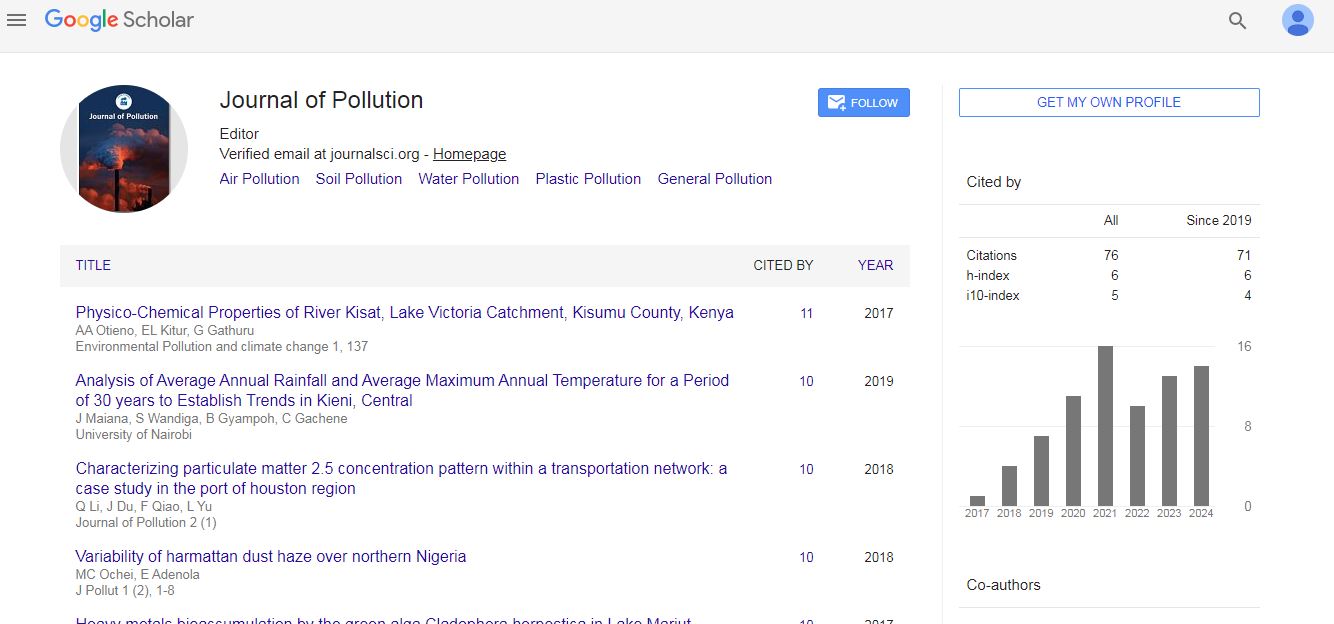
Journal of Pollution received 64 citations as per Google Scholar report