Research Article - (2025) Volume 14, Issue 2
Received: 13-Sep-2024, Manuscript No. IJEMS-24-147914;
Editor assigned: 16-Sep-2024, Pre QC No. IJEMS-24-147914 (PQ);
Reviewed: 01-Oct-2024, QC No. IJEMS-24-147914;
Revised: 14-Apr-2025, Manuscript No. IJEMS-24-147914 (R);
Published:
21-Apr-2025
, DOI: 10.37421/2162-6359.2025.14.780
Citation: Madan, Ritika, and Monika Goel. "Unveiling the Paradox: A Study of Women's Empowerment through Microfinance in Gurugram District
and Policy Perspectives." Int J Econ Manag Sci 14 (2025): 780.
Copyright: © 2025 Madan R, et al. This is an open-access article distributed under the terms of the creative commons attribution license which permits unrestricted use, distribution and reproduction in any medium, provided the original author and source are credited.
Microfinance schemes aim to empower women, but their impact is debated. While some studies show positive outcomes, others find negatives or neutrals. Research often quantifies empowerment through outcome-based metrics, like access to credit, yielding positive results. However, viewing empowerment as a process, such as credit usage and repayment, reveals contradictions. For instance, increased income may not always signify empowerment if women lose control over loans or bear sole responsibility for repayment. Our study, based on 2022-23 data from Gurugram, stresses the need to consider both outcomes and processes in assessing empowerment. Analysing data from 300 women households in Gurugram, we find that the impact of microfinance on women's empowerment remains contentious despite its role in household crises management. Comparing 150 microcredit participants with 150 non-participants, the study analysed "household susceptivity" and "empowerment" using contextual indicators. While microfinance helps households in crises, it falls short in directly empowering women. Indicators of susceptivity and empowerment vary across cultures, necessitating context-specific assessments. Women often allocate credits to household needs, but lack of co-ownership disempowers them. Policy implications include addressing patriarchal control over assets and promoting entrepreneurial ventures through co-ownership, monitoring, and training.
Microfinance • Self-help groups • Women empowerment • Households • Susceptivity
Historical background
Microfinance programs are crucial for empowering women globally, addressing gender discrimination entrenched in societal structures. Encouraged by initiatives like the UN Summit 2000, microfinance aims to promote gender equality and alleviate poverty. Studies indicate that loaning credits to women benefits families, fostering financial independence and enhancing their roles within households. While research often emphasizes positive outcomes such as increased decision-making power and self-confidence, contrasting views highlight challenges such as spousal control over credits leading to dependency and domestic violence [1]. Despite the dichotomy in findings, efforts to reconcile them remain limited. Kabeer attributes variations in results to methodological disparities and differing interpretations of intra-household power dynamics. Ganle, Afriyie and Segbefia underscore the influence of socio-cultural contexts on microfinance's impact, highlighting both advantages and drawbacks depending on circumstances. Overall, understanding these complexities is essential for effective empowerment strategies [2].
Also, a consensus on the empowering capacity of microfinance for women remains elusive, leading to what we term the "impact enigma" or "dichotomy." This study delves into this issue by separately evaluating the effects of microcredit on "beneficiary households" and individual "women" in Gurugram. While findings indicate that women's access to credit benefits households, it falls short in directly empowering the women, mainly due to the absence of asset coownership. Microfinance exacerbates resource disparities between women and their families [3]. The analysis unfolds in three phases: firstly, assessing microfinance's impact on households; secondly, examining its influence on women's empowerment; and thirdly, delving into credit usage and repayment data to gain a nuanced understanding of the outcomes achieved.
Measurement of women empowerment: Addressing the dichotomy of microfinance impact studies on the empowerment levels of women
The study aims to address the conflicting findings regarding the impact of microfinance on women's empowerment levels, exploring the underlying reasons for this disparity and examining how empowerment is measured within microfinance literature.
In general, research on microfinance and women's empowerment either views empowerment as outcomes associated with access to loans or as processes related to credit usage and repayment. Outcome-based measures typically include factors such as increased financial independence, enhanced decision-making power, and improved confidence. On the other hand, process-based measures focus on how women utilize credit and handle repayment responsibilities. The underlying premise is that women's active involvement in these processes contributes to their empowerment [4].
While studies emphasizing outcome-based measures often report positive impacts of microfinance on women's empowerment, those focusing on process-based measures paint a different picture. For instance, Aruna and Jyothirmayi found that microfinance led to enhanced decision-making power, economic status, and self-worth among women participants. Conversely, Garikipati observed that loans were primarily used for household purposes, leading to women's struggles with repayment and a decline in their societal status.
The current study seeks to examine this dichotomy by analysing both outcomes and processes of women's empowerment within the context of microfinance. Utilizing primary and secondary data, along with testimonial evidence, we aim to assess the appropriateness of outcome versus process-based measures in capturing women's empowerment. Additionally, statistical tests, such as t-tests are applied, to provide empirical support to the analysis.
Measuring empowerment proves challenging due to its multifaceted nature and sensitivity to cultural and social contexts. Relying solely on outcome-based measures can be insufficient and misleading. Women's empowerment is context-specific and influenced by gender dynamics within households and communities. Thus, it's essential to consider both outcomes and processes in assessing women's empowerment within microfinance programs.
The current research reveals that what initially appeared as positive changes often turn out to be negative or neutral. For instance, while increased income may seem beneficial, it's essential to consider how women utilize loans. If women lose control over the loan or are compelled to repay it through exploitative means, their empowerment is compromised. Thus, the current study underscores the importance of considering both outcomes and processes in assessing women's empowerment within microfinance programs. By examining process-based indicators, such as control over loans and work-time allocation, we aim to contribute to a better understanding of how microfinance programs can effectively empower women and promote gender equality.
Also, researchers acknowledge that lending to women has increased household incomes, aiding in emergencies and livelihood diversification [5]. However, women often lack control over credit, depends on their husbands or family for repayment [6]. Thus, the current study addresses the dichotomy” or "impact enigma" surrounding microfinance's effect on women's empowerment. It examines microcredit's impact on both households and individual women in Gurugram. Findings suggest that while women's credit benefits households, it fails to empower women due to limited asset co-ownership, exacerbating resource division.
Throughout the literature review, it was evident that the majority of studies demonstrated a positive correlation between microfinance and household incomes and overall prosperity. Households have been definitely benefitted by the schemes of microfinance. However, the effectiveness of microfinance in promoting women's empowerment remained uncertain. In fact, there is a notable lack of consensus regarding the empowerment efficacy of such programs, with studies frequently presenting sharply divergent claims. While the majority of studies emphasize the positive impact of credit on women's empowerment, arguing that it fosters financial independence, enhances their influence in household decisionmaking, encourages savings, empowers them, and boosts their selfconfidence, there is another perspective to consider. Some research suggests that increased access to credit can exacerbate women's situations, as the credit often remains under the control of their husbands, leading to heightened dependency. This reliance on their spouses can lead to difficulties in repayment, sometimes resulting in domestic violence. Some of the notable work are mentioned below.
Zaman, Mosley and Rock have widely accepted that lending to women does indeed improve household incomes and is associated with various benefits. These include expanded livelihood diversification, greater participation in the labour market, enhanced access to education, and improved health outcomes.
Aruna and Jyothirmayi, Shivaprasad and Anilkumar, Yeboah et al. have also confirmed that extending credit to women substantially aids households in dealing with emergencies, enlarged their income source activity, and improved their overall family welfare.
Kabeer, Pitt, Khandker and Cartwright have also acknowledged that microcredit has enabled women to enhance their income-earning potential, resulting in heightened confidence and improved capacity to overcome cultural disparities.
However, Leach and Sitaraman, Johnson, Waelde, Rooyen and Stewart have concluded that women have limited control over credit decisions, with the authority often resting with their husbands or other family members. Consequently, this dynamic can create a reliance on these women for the final repayment [7].
Garikapati also tried to study this impact-paradox and examine the reasons behind it. She concluded that although a woman's loan might be redirected towards augmenting household assets and incomes, but her limited ownership of the family's productive assets may hinder her empowerment.
The research delves further deeply into the impacts of microfinance on women's empowerment and household dynamics separately. The research is one step deeper as it lists “susceptivity” indicators in the short and long run for household’s ability to cope with emergencies and diversify from the agricultural incomes respectively. The research has also listed six “empowerment” indicators to measure the impact of microfinance on women empowerment.
Research has endeavoured to grasp the underlying dynamics of this impact paradox by utilizing testimonial evidence [8].
Hypotheses
Ho,1: No significant difference exists between SHG and control households regarding "susceptivity" variables.
Ha,1: There is a significant distinction between SHG and control households regarding "susceptivity" variables.
Ho,2: No significant difference exists between SHG and control households regarding "empowerment" variables.
Ha,2: There is a significant difference between SHG and control households regarding "empowerment" variables.
Ho,3: There is no significant contrast in empowerment levels when women utilize credit for their own enterprises compared to when funds are redirected to household needs.
Ho,3: A significant difference exists in empowerment levels when women use credit for their own enterprises compared to when funds are diverted to household needs.
To enhance the reliability of the analysis, a t-test has been employed. The t-statistic was utilized to compare the mean values of variables related to susceptivity and empowerment between SHG and non-SHG households.
Statistics were utilized to compare the mean values of variables between women who utilized credit for their own enterprises (21 out of 150 women) and those who allocated funds to other household purposes (129 out of 150 women). The t-statistic was employed at each stage and for every parameter to assess the disparity in empowerment levels between these two groups. Further discussion on this topic will be provided in subsequent points.
Description of variables
As previously mentioned, studies have indicated that providing loans to women has positively impacted their households, although the extent of women's empowerment remains a topic of debate. In this section, we aim to explore the effects of microfinance on both households and women separately within the villages of Gurugram district. Specifically, we will examine the influence on household susceptibility to emergencies and crises, as well as women's empowerment. To do so, we will compare 150 participants with 150 non-participants, utilizing four indicators for household susceptibility and six indicators for empowerment.
It's important to note that measures of susceptivity and empowerment are context-dependent and may vary across societies, regions, and nations. Thus, we have crafted a set of detailed questions tailored to the specific circumstances of the study. Each indicator comprises multiple elements, and points were assigned to women or households based on whether they met the criteria outlined in each component. Subsequently, the final score was determined by summing up all components within the variable. A cutoff point was established for each variable, with observations scoring equal to or above the cutoff considered "not-susceptive" or "empowered" and assigned a score of 1, while the remaining observations received a score of 0. Consequently, all variables were condensed into dichotomous variables with scores of 1 or 0.
Household susceptivity indicators
These factors gauge the household's capacity to address immediate crises and expand income sources beyond agricultural activities in the long term. Below are the detailed indicators:
Paucity-related vulnerability (PAUCITY): A score of 1 each was assigned if the household met all food requirements and health needs without borrowing, if no family members migrated for work, if no assets were sold during emergencies, if they expected to cope similarly in future emergencies, and if income generation plans were unaffected in the last 3 years. A score of 4 or more indicated a "better-managed" household in emergencies and was coded as "1".
Income multiplicity (MULTIPLICITY): 1 mark each was given if the household earned income from non-agricultural business, non-farm labor, livestock, had at least 3 months’ income from non-agricultural work, and was not solely dependent on one breadwinner. A score of 2 or more indicated a "varied" household and was coded as "1".
Enterprising engagement (ENTREPRENEURIAL): A score of 1 each was granted for investing in a new small-scale business, upgrading an existing setup, leasing additional land, purchasing new cattle, or investing in new farm equipment. A score of 3 or more indicated an "entrepreneurial" household and was coded as "1".
Community capital contribution (COMMUNITY): A score of 1 each was given if the household experienced positive social/community effects after receiving credit, provided childcare or cattle care for neighbours, received similar support, or invested in community assets for societal prosperity. A score of 2 or more indicated access to "community capital" and was coded as "1".
Compound non-susceptibility (NONSUS): A household was considered non-susceptible if it scored positively on 2 or more of the specified indicators.
Empowerment indicators
In rural Bharat, the concept of women's empowerment is often overshadowed by the broader idea of household welfare. Therefore, we delved deeper to understand the true essence of women's empowerment, especially in our surveyed rural areas. These indicators were developed after extensive interactions with respondents from the surveyed villages. Despite not adhering to purdah rituals, women in these areas have minimal involvement in household decision-making processes. They engage in various activities such as working on family farms, as wage laborers, or migrating seasonally to urban areas for better earnings. Interestingly, a larger proportion of women (85.1%) are engaged in farm work compared to men (14.9%). This occupational disparity is significant, as farm labor is typically strenuous, poorly remunerated, and offers limited bargaining power [9].
Ownership of family assets and earnings (Possessorship): One mark was assigned if the woman possessed a family home. An additional mark was given if she owned any other significant property. One mark was allotted if she owned livestock. Another mark was given if she owned agricultural land. Two marks were awarded if she contributed to and owned at least three months' worth of the household’s income. A woman with a score of 2 or more was considered "empowered" and coded as "1".
Work-time apportionment (Time apportionment): One point was assigned if she oversaw or assisted in managing any establishment or set-up. Another point was granted for contributing labour on the family farm. An additional point was awarded for engaging in nonfarm wage jobs, like working as labourers. One point was allotted if she maintained her previous work-time commitments. Two points were provided if she managed to carve out time for leisure and personal pursuits. A woman scoring 4 or more points was considered "empowered" and given a code of 1.
Involvement in household decision-shaping process (Decision shaping): One point was attributed if the woman played a significant role in decisions concerning their children's education. An extra point was given if she was consulted on decisions regarding agricultural land, such as leasing or crop choices. One point was assigned if she was involved in consultations prior to major decisions, such as applying for credit. Another point was awarded if she initiated financial decisions. One point was granted if she participated in decisions regarding the purchase or sale of livestock. An additional point was provided if she actively engaged in sale negotiations. A woman achieving a score of 4 or more points was labelled as "empowered" and coded as "1".
Management of significant financial matters (Significant finances): One point was awarded if she maintains authority over her earnings, one point for controlling proceeds from crop sales, one point for overseeing livestock sales, and two points if she retains control over her husband’s earnings; one point for children’s earnings. A woman with a score of 2 or more was considered "empowered" and assigned a code of 1.
Management of supplementary financial matters (Minor finances): One point if she manages sales of livestock produce, one point for poultry sales, one point if she possesses personal fixed spending funds, and one point if she has emergency funds. A woman with a score of 2 or more was classified as "empowered" and assigned a code of 1.
Division of household responsibilities and duties (Household responsibilities): One point was assigned for participating in cooking duties with family members, one for cleaning and sweeping, one for laundering clothes, one for washing utensils, one for collecting water, and one for babysitting and caregiving. A woman with a score of 3 or higher was categorized as empowered and assigned a code of 1.
Data collection and fieldwork
The research took place in 2022-23 in Gurugram district, Haryana, covering 229 villages and 1186 SHGs. The district has a population of 1,514,085, an area of 1253 sq.km., and four blocks: Farrukhnagar, Pataudi, Sohna, and Gurgaon. Data from 300 married households, 150 participating in SHG programs and 150 as the not-participating in such programs, was collected. The first phase of survey examined socio-economic aspects and post-credit changes, exploring work-time allocation, decision-making, and asset ownership. Questions were directed to husbands and family heads for balanced representation. Villages surveyed included “Langra,” “Alipur,” “Bilaspur,” “Bhora Kalan,” “Kasan,” and “Pathreri.” Households averaged 6.40 members with a 2-acre landholding. Credits were mainly used for household purposes.
In the second phase of survey, focus was only on those 150 women who participated in SHG’s. Despite not adhering to purdah rituals, these women had limited involvement in household decisionmaking. Some worked as wage labourers or managed family farms, while others migrated for better-paying jobs or ran small businesses locally. The survey focused on 20 SHGs, with participants randomly selected after completing at least one loan cycle. Emphasis was on understanding post-loan changes, assessing how microloans impacted their empowerment.
Of the 150 women surveyed, (Figures 1 and 2) who participated in SHG program, 87 (58%) used loans as working capital for family businesses, often controlled by husbands or family members. 18 (12%) purchased assets owned by others, primarily husbands. 24 (16%) allocated funds to urgent household needs, while another 21 (14%) used them for personal own businesses. This data suggests that around 86%of loans were directed towards household needs, potentially widening the gender asset ownership gap.
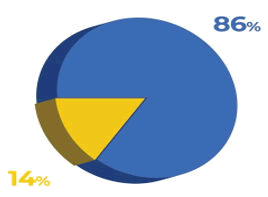
Figure 1. Pattern of credit-allocation: This pie chart illustrates the distribution of credit usage among surveyed SHG members, with 14% allocated to enterprises and 86% to households.
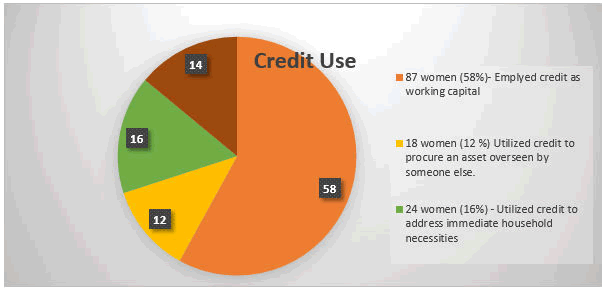
Figure 2. Credit-allocation pattern: Women allocating funds to household needs.
Description of data
Tables 1 and 2 present the descriptive statistics of the variables utilized in our study for both the SHG group (N=150) and non-SHG (N=150) members.
| Self-help group households (N=150) | Control households (N=150) | ||||
| Arithmetic mean | Standard deviation | Arithmetic mean | Standard deviation | T-statistic | |
| Dependendent variables | |||||
| Indicators of susceptivity | |||||
| Paucity | 0.453 | 0.499 | 0.247 | 0.432 | 0.00015 |
| Multiplicity | 0.453 | 0.499 | 0.246 | 0.432 | 0.00015 |
| Entrepreneurial | 0.427 | 0.496 | 0.28 | 0.451 | 0.00777 |
| Community | 0.427 | 0.496 | 0.313 | 0.465 | 0.04221 |
| Nonsusp | 0.57 | 0.5 | 0.41 | 0.49 | 0.011 |
Table 1. Descriptive statistics for the variables representing "susceptivity" indicators are summarized in the following tables.
|
SHG households (n=100) |
Control households (N=100) |
T-statistic |
|||
|
|
Mean |
Std. dev |
Mean |
Std. dev. |
|
|
Dependendent variables |
|||||
|
Possessorship |
0.373 |
0.485 |
0.286 |
0.453 |
0.111 |
|
Significant finances |
0.42 |
0.495 |
0.4 |
0.491 |
0.726 |
|
Minor finances |
0.413 |
0.494 |
0.406 |
0.492 |
0.906 |
|
Decision shaping |
0.433 |
0.497 |
0.393 |
0.492 |
0.483 |
|
Time apportionment |
0.347 |
0.477 |
0.493 |
0.501 |
0.009 |
|
Household responsibilities |
0.326 |
0.471 |
0.34 |
0.475 |
0.807 |
Table 2. Descriptive statistics for the variables representing "empowerment" indicators are summarized in the following tables.
Empirical findings
Tables 1 and 2 outline the descriptive statistics of all variables analysed in our study for both SHG (N=150) and non-SHG (N=150) households. Table 1, focusing on susceptivity indicators, reveals notable distinctions in paucity, multiplicity, entrepreneurial, community, nonsusp variables. These indicators exhibit substantial differences between non-SHG and SHG households, as evidenced by the t-statistic values [10].
Concerning paucity, SHG households demonstrate lower vulnerability to emergency situations, exhibiting better management of health and food-related needs compared to non-SHG households. The mean value for SHG households (0.453) surpasses that of non- SHG households (0.247), indicating heightened resilience. With a tstatistic value (0.00015) below 0.05, significant differences are confirmed.
Similarly, multicipity underscores significant disparities, with SHG households showing greater involvement in non-agricultural businesses and incomes than non-SHG households. The mean value for SHG households (0.453) exceeds that of non-SHG households (0.246), highlighting their broader economic engagement. The tstatistic value (0.00015) below 0.05 signifies significant divergence.
Regarding entrepreneurial indicators, SHG households exhibit more entrepreneurial activity, investing in small-scale businesses, farm equipment, and cattle. The mean value for SHG households (0.427) surpasses that of non-SHG households (0.280), indicating higher entrepreneurial engagement. With a t-statistic value (0.00777) below 0.05, significant differences are evident.
For community variables too, significant differences are observed between SHG and non-SHG households, with the t-statistic value (0.042) below 0.05.
In terms of nonsusp variables, SHG households demonstrate reduced susceptibility to emergency situations and greater long-term diversification. The mean value for SHG households (0.57) surpasses that of non-SHG households (0.41), indicating decreased vulnerability. With a t-statistic value (0.011) below 0.05, significant differences are affirmed.
In the context of empowerment indicators, the comparison between SHG households and control households in Table 2 reveals few significant distinctions regarding possessorship, significant finances, minor finances and household responsibilities. However, there is a significant divergence observed in time allocation. Let's delve into these findings with more depth.
Regarding possessorship, while women in SHG households show slightly better performance, the difference is marginal. The mean value for SHG households (0.373) is only slightly higher than that for non-SHG households (0.286). Nevertheless, the empowerment status of women across both types of households remains largely similar. Ownership of assets such as houses, property, agricultural land, or livestock (excluding poultry) remains predominantly in the hands of husbands or other family members in both groups. The t-statistic value (0.111) surpasses the significance threshold of 0.05, indicating no notable difference in women's empowerment levels between the two household types.
Similarly, for siginificant finances, the mean values are nearly indistinguishable (0.420 for SHG households and 0.400 for control households), suggesting that microfinance initiatives have had limited impact on women's involvement in major economic decisions within households. Control over significant financial matters such as property, agricultural land, or livestock remains largely vested in family members rather than women, irrespective of their SHG participation.
The mean values for minor finances also exhibit minimal disparity between SHG and control households, indicating that microfinance interventions have not significantly influenced women's participation in minor financial decision-making processes. Empowerment levels related to decision shaping and household responsibilities reflect similar trends between the two groups.
However, a significant divergence emerges in time allocation, where women in SHG households manifest lower empowerment levels compared to their counterparts in control households. Surprisingly, women in control households appear to have a more favourable time allocation. Further examination reveals that SHG participation has resulted in increased workload for women, encompassing labor-intensive tasks for loan repayments, agricultural work, and household chores. Consequently, their overall time allocation has become more burdensome. Testimonials from members corroborate these findings.
Based on Table 1, our analysis of susceptivity indicators reveals significant differences in paucity, multiplicity, entrepreneurial, community, non-susp variables between SHG and non-SHG households. The t-statistic for these variables varied notably, leading us to reject H01. Therefore, we conclude there is a significant difference in "susceptivity" variables between SHG and control households.
Regarding H02, in addition to the t-test results, we have also considered testimonies from multiple women, summarized as follows:
Based on the testimonies provided, it is evident that before obtaining loans, these women had more autonomy over their time, household roles, and decision-making. Farm work was esteemed, whereas labour market participation was viewed unfavourably, compelling them to seek additional income. Some experienced diminished trust from their families in financial matters, being solely responsible for loan repayment.
In these instances, these women were primarily perceived as "loan facilitators" for their families and sometimes endured coercion and abuse to meet debt obligations. Microfinance did not significantly contribute to their empowerment. Therefore, there is no substantial distinction between SHG and non-SHG households regarding "empowerment" indicators, confirming Ho,2. Thus we will not reject Ho,2. This suggests that the empowerment levels of women in SHG households are akin to those in non-SHG households.
Deciphering the paradox: Insights from credit utilization and repayment experiences"
In the following section, we will delve into the paradox of how lending to women benefits households while potentially leaving women's own situations unchanged.
This section delves into the paradoxical outcomes discussed earlier by examining credit utilization and repayment experiences based on data gathered from 150 SHG members. The respondents were divided into two groups: 14% directed credit towards their enterprises, while 86% used it for household purposes.
The data showed that among those who utilized credit for household expenses, 58% allocated it as working capital in businesses overseen by their husbands, 12% for purchasing assets controlled by their spouse, and 16% for managing household emergencies. This pattern underscored a significant disparity in resources between men and women. Women who directed funds towards their own ventures generally had greater control and autonomy vis-a-vis those whose credit was directed towards household needs.
We analysed “control over loan” and “repayment data” (Tables 3 and 4) to explore the consequences of credit utilization and to test HO,3. Although the overall repayment rate was 100%, our analysis uncovered specific details.
There exists a substantial difference in outcomes depending on whether women use credit for their own business or divert it to household needs, thus rejecting Ho,3. When women invest in their own enterprises, they typically exert better control and management over the funds compared to when the funds are used for household expenses (Table 3). Ownership and control over funds (control=3) are maximum (71.43%) when credit is used for her own business ventures.
|
|
Loan utilised for her own business (1) |
Loan was directed to Household requirements (2) |
Total (1)+(2) |
|
Control and management over credit |
|||
|
Control=0 (Minimum control) |
0 (0) |
27.13% (35) |
7.40% |
|
Control=1 |
0.04% (1) |
37.21% (48) |
35.80% |
|
Control=2 |
23.81% (5) |
30.23% (39) |
28.42% |
|
Control=3 (Maximum control) |
71.43% (15) |
5.4% (7) |
28.42% |
|
Total no. of cases |
21 |
129 |
150 |
|
T-test |
0.029308 |
|
|
Table 3. We analysed “control over loan” and “repayment data”.
Ironically, women who directed funds towards household expenses had to depend on their personal earnings for repayment, often involving them in labour market activities. In contrast, those investing in their own enterprises utilized their earnings to meet repayment obligations. Testimonials further shed light on these dynamics (Table 4).
| Loan use | |||
| Credit used for her Enterprise (1) | Credit diverted to household needs (2) | Total (1) +(2) | |
| Source of repayment | |||
| 1. Self-managed enterprise | 85% (18) | 0 | 12% (18) |
| 2. Own earned wages | 0 | 86% (111) | 74% (111) |
| 3. Household support | 15% (3) | 14% (18) | 14% (21) |
| Total | 21 | 129 | 100% (150) |
Table 4. Loan use.
Women who directed credit towards household expenses expressed a crucial need for enhanced control over assets and income. Individuals like PH08, LG09, BH22, BP21, LG03, and KA06 transitioned from domestic and agricultural roles to low-paying labour in order to meet loan repayments. Some were encouraged to seek wage labour due to their families' inability to contribute. This shift intensified their struggles with socially stigmatized work and modest earnings. Several desired to disengage from SHG participation to break free from this demanding cycle. Moreover, spouses became more guarded about finances, fearing that transparency would deter women from pursuing wage-based opportunities. These firsthand accounts poignantly illustrate the challenges confronted by these women.
Women who invested in self-managed businesses experienced positive changes. Earning independently boosted their confidence and eliminated the need for wage labour. They efficiently balanced personal ventures and household responsibilities, exercising substantial financial control and diversifying household income. However, challenges persisted due to limited credit and fierce competition.
In summary, our discussion highlights three key points. Firstly, it was evident that poorer households greatly relied on the credits obtained by women. In 86% of cases, these loans were used for household consumption. Without access to these credits, many households would have faced worsened conditions, potentially leading to crises.
Secondly, since women typically lacked control or ownership of household assets, they were compelled to rely on their labour wages to repay these loans. This reliance had a detrimental effect on their empowerment and status, affecting their influence over household decisions and work-time allocation.
Thirdly, if credits continue to be primarily diverted to household needs without addressing the issue of asset ownership, it will perpetuate the existing resource gap between men as asset owners and women as labourers. This dynamic will further disempower women, deepening their marginalized status.
This study delves into the paradoxical findings within microfinance research, particularly concerning the discrepancy between its positive impact on households and its limited benefits for women. Utilizing comprehensive datasets from villages in Gurugram district, we scrutinized the effects of credit programs on "household susceptibility" and "women's empowerment." Our findings corroborate existing microfinance literature, revealing that while credit assists households in managing vulnerability, it often fails to substantially empower women.
To unravel the underlying causes of this paradox, we meticulously analysed credit utilization, repayment data, and testimonials from female borrowers. Our research underscores that a significant majority (86% in our research) of the credit was allocated to household consumption or productive purposes. While this aids households in coping with emergencies, it presents challenges for women. Lacking ownership of productive assets, credit intended for household use does not translate into income for repayment. Consequently, women resort to unfavourable labour conditions to meet debt obligations, resulting in compromised work-time allocation and diminished control over household resources. Addressing women's control over resources is pivotal for microfinance to achieve genuine empowerment.
This study carries profound policy implications. Firstly, extending credit to women proves beneficial for diversifying household income and enhancing resilience against emergencies. Secondly, alongside microcredit, complementary social security programs are imperative to ensure that credit serves both household needs and entrepreneurial ventures, thereby fostering empowerment. Thirdly, empowering women through credit proves most effective when directed toward self-managed entrepreneurial activities. However, high demand for credit within households for productive purposes may limit personal benefits for women. Overcoming patriarchal control over family assets and linking loans to asset transfers favouring women could mitigate this challenge.
Moreover, integrating entrepreneurial training and promoting financial literacy constitute critical elements of effective microcredit programs. These initiatives equip women with the skills and knowledge needed for proficient financial management and successful business ventures.
Finally, establishing rigorous monitoring and evaluation frameworks is essential for ensuring transparency and accountability in achieving empowerment objectives. Regular impact assessments are indispensable for evaluating the effectiveness of microfinance policies in promoting women's empowerment.