Brief Report - (2025) Volume 14, Issue 2
Received: 01-Jun-2025, Manuscript No. jms-25-172628;
Editor assigned: 03-Jun-2025, Pre QC No. P-172628;
Reviewed: 17-Jun-2025, QC No. Q-172628;
Revised: 23-Jun-2025, Manuscript No. R-172628;
Published:
30-Jun-2025
, DOI: 10.37421/2167-0943.2024.13.400
Citation: Al-Qamar, Laila. "Incretin Therapies Revolutionize Obesity Management."J Metabolic Synd 14 (2025):400.
Copyright: © 2025 Al-Qamar L. This is an open-access article distributed under the terms of the Creative Commons Attribution License, which permits unrestricted use,
distribution and reproduction in any medium, provided the original author and source are credited.
The approach to managing obesity is experiencing a profound transformation, spearheaded by the advent of novel pharmacological interventions. New advancements in medication for obesity, particularly newer drugs like GLP-1 receptor agonists, are fundamentally changing treatment paradigms by offering significant weight loss outcomes, moving beyond older agents that often had limited success. This evolution in pharmacology deeply impacts the management of chronic obesity, with discussions focusing on their mechanisms, efficacy, and the evolving role of targeted therapies in improving patient health [1].
One significant breakthrough in this field is the demonstration that tirzepatide, a dual GIP and GLP-1 receptor agonist, leads to a substantial reduction in body weight for individuals who are obese or overweight. Pivotal trials consistently showcase the impressive efficacy of this medication across various doses, firmly positioning tirzepatide as a powerful and essential new tool within the pharmacological management toolkit for obesity [2].
Further reinforcing the effectiveness of incretin-based therapies, semaglutide, another prominent GLP-1 receptor agonist, has shown remarkable efficacy. Administered as a once-weekly injection, it facilitates sustained weight loss in adults grappling with obesity or overweight conditions. The compelling results observed, often demonstrating significant weight reduction beyond what traditional lifestyle interventions alone can achieve, establish semaglutide as a critical and valuable addition to the comprehensive array of obesity treatment options [3].
A comprehensive overview of the current and pipeline pharmacological treatments for weight management clearly illustrates this dynamic and rapid shift in therapeutic strategies. Review articles provide essential summaries of the mechanisms of action, clinical efficacy, and safety profiles of these novel agents. This vital information helps guide clinicians, enabling them to effectively integrate these advanced medications into well-rounded patient care strategies for individuals living with obesity [4].
Here's the thing, recent updates on the pharmacological management of obesity consistently emphasize the substantial progress made with incretin-based therapies. These innovative new agents are not just incremental improvements; they are fundamentally changing the entire approach to obesity treatment. This shift moves the focus from merely managing symptoms to actively facilitating and achieving substantial, sustainable weight loss, thereby improving long-term health outcomes for patients [5].
This dynamic shift in therapeutic strategies is further explored in discussions about both the current landscape and the promising future prospects of anti-obesity pharmacotherapies. These analyses offer valuable insights into the ongoing evolution of drug development, highlighting a clear progression from earlier, less effective agents to the current generation of highly potent GLP-1 receptor agonists and the even more promising emerging dual agonists, thereby showcasing a continuous and vigorous drive for innovation in the field [6].
What this really means is that a groundbreaking new strategy for obesity treatment involves simultaneously targeting both GIP and GLP-1 receptors. Reviews meticulously explain the synergistic effects observed with these dual agonists, thereby providing a deeper and more nuanced understanding of their enhanced efficacy when compared to approaches that target only a single receptor pathway. This dual action appears to offer superior results [7].
Offering a forward-looking perspective, current pharmacotherapy for obesity discussions increasingly revolve around emerging drug classes and sophisticated combination therapies. These promising new avenues are anticipated to deliver even greater weight loss results and superior metabolic benefits. This perspective strongly underpins a crucial paradigm shift in medical thinking: treating obesity as a complex chronic disease that necessitates comprehensive, long-term medical management, much like hypertension or diabetes [8].
Let's break it down: there is a pressing call to action directed at healthcare professionals. This urgency underscores the critical need to recognize and treat obesity more aggressively with all available pharmacological agents. The importance of early intervention and the benefits of these medications in reducing obesity-related complications, especially cardiovascular risks, are increasingly stressed [9].
Finally, recent reports highlight the substantial progress in developing anti-obesity drugs, focusing on the scientific breakthroughs that have led to highly effective treatments. These reports discuss the molecular targets and drug classes that have shown promise, outlining a future where obesity management is increasingly refined and personalized, offering tailored solutions for individuals [10].
The landscape of obesity management has undergone a profound transformation, primarily driven by the introduction of advanced pharmacotherapies. Newer drugs, particularly GLP-1 receptor agonists, are at the forefront, fundamentally altering treatment paradigms by facilitating significant and sustained weight loss outcomes. This evolution is marked by a deeper understanding of drug mechanisms, improved efficacy, and a crucial shift towards considering obesity as a chronic condition requiring sustained medical intervention, moving past the limitations of older therapeutic agents that offered only modest success [1].
One of the most impactful developments is the emergence of dual GIP and GLP-1 receptor agonists. For example, pivotal trials have consistently demonstrated that tirzepatide significantly reduces body weight in individuals classified as obese or overweight. These studies have meticulously detailed the impressive efficacy of tirzepatide across various dosages, firmly establishing its role as a powerful and indispensable new tool in the pharmacological management of obesity. This class of drugs represents a significant leap forward, offering a more robust approach to weight reduction by leveraging synergistic effects across multiple physiological pathways [2]. Complementing this, the effectiveness of semaglutide, a well-known GLP-1 receptor agonist, is also highly notable. Administered as a once-weekly injection, it actively promotes sustained weight loss in adults grappling with obesity or overweight conditions. The compelling clinical results observed consistently demonstrate substantial weight reduction even beyond what can be achieved with traditional lifestyle modifications alone, thereby making semaglutide a critical and invaluable addition to the expanding array of comprehensive obesity treatment options [3].
Comprehensive reviews are instrumental in providing essential insights into both existing and pipeline pharmacological treatments for weight management. These publications are invaluable for systematically summarizing the intricate mechanisms of action, robust clinical efficacy, and detailed safety profiles of these novel agents. Such reviews serve as indispensable guides for clinicians, helping them to effectively integrate these new and powerful medications into comprehensive patient care strategies for individuals living with obesity. The ongoing progress in drug development continues to refine therapeutic strategies, indicating a clear trajectory from earlier, less potent agents to current highly sophisticated GLP-1 receptor agonists and the even more promising emerging dual agonists, thus showcasing continuous innovation in this critical medical field [4, 6]. Here's the thing, these cumulative advancements signify a profound update in the pharmacological management of obesity, specifically highlighting the substantial progress seen with incretin-based therapies. These innovative new agents are fundamentally reshaping the entire philosophical approach to obesity treatment, transitioning it from mere symptomatic management to actively facilitating and achieving significant and lasting weight loss, dramatically improving long-term health outcomes for patients [5].
A truly groundbreaking strategy for obesity treatment now involves simultaneously targeting both GIP and GLP-1 receptors. This pioneering approach brilliantly capitalizes on the synergistic effects inherent in these dual agonists, providing a deeper and more nuanced understanding of their enhanced efficacy when compared to treatments focusing on a single receptor pathway [7]. This forward-looking perspective on pharmacotherapy for obesity actively discusses emerging drug classes and sophisticated combination therapies, which collectively hold the tangible promise of delivering even greater weight loss results and superior metabolic benefits. This evolving emphasis strongly underpins a fundamental paradigm shift in contemporary medical thinking: recognizing and treating obesity not merely as a lifestyle issue but as a complex chronic disease that necessitates comprehensive, long-term medical management, much akin to how conditions like hypertension or diabetes are managed [8].
Ultimately, there is a clear and increasingly urgent call to action directed at healthcare professionals globally. This imperative underscores the critical need to more aggressively recognize and treat obesity using the powerful pharmacological agents that are now readily available. The collective body of literature consistently stresses the paramount importance of early intervention and highlights the profound and far-reaching benefits these medications offer in significantly reducing a wide range of obesity-related complications, particularly the daunting cardiovascular risks that frequently accompany obesity and impose a heavy burden on public health [9]. The concerted scientific breakthroughs are unequivocally driving recent and rapid progress in anti-obesity drug development, directly leading to highly effective and impactful treatments. These developments meticulously outline a compelling future where obesity management becomes increasingly refined, personalized, and ultimately more effective in holistically addressing the diverse and complex needs of individual patients, paving the way for improved health outcomes on a population level [10].
The landscape of obesity treatment is undergoing a significant transformation due to advancements in pharmacotherapy, particularly with newer agents like GLP-1 receptor agonists and dual GIP/GLP-1 receptor agonists. These medications are fundamentally changing treatment paradigms by offering substantial and sustainable weight loss outcomes, moving beyond the limited success of older drugs. Research highlights the impressive efficacy of specific compounds like tirzepatide, a dual GIP and GLP-1 receptor agonist, which has demonstrated significant body weight reduction in pivotal trials across various doses. Similarly, semaglutide, a GLP-1 receptor agonist, has shown compelling results for sustained weight loss in adults who are obese or overweight, proving a critical addition to available treatment options. These novel agents guide clinicians on integrating advanced medications into patient care strategies, emphasizing mechanisms of action, clinical efficacy, and safety profiles. The shift in therapeutic strategies reflects an evolution in drug development, moving from earlier agents to more effective incretin-based therapies and emerging dual agonists. Targeting both GIP and GLP-1 receptors simultaneously represents a groundbreaking strategy, leveraging synergistic effects for enhanced efficacy compared to single-receptor approaches. This forward-looking perspective positions obesity as a chronic disease requiring long-term medical management, with emerging drug classes and combination therapies promising even greater weight loss and metabolic benefits. There's a clear call to action for healthcare professionals to treat obesity more aggressively, recognizing the importance of early intervention and the benefits of these medications in reducing obesity-related complications, including cardiovascular risks. Recent progress in anti-obesity drug development, driven by scientific breakthroughs, points towards a future where management is increasingly refined and personalized.
None
None
Indexed at, Google Scholar, Crossref
Indexed at, Google Scholar, Crossref
Indexed at, Google Scholar, Crossref
Indexed at, Google Scholar, Crossref
Indexed at, Google Scholar, Crossref
Indexed at, Google Scholar, Crossref
Indexed at, Google Scholar, Crossref
Indexed at, Google Scholar, Crossref
Indexed at, Google Scholar, Crossref
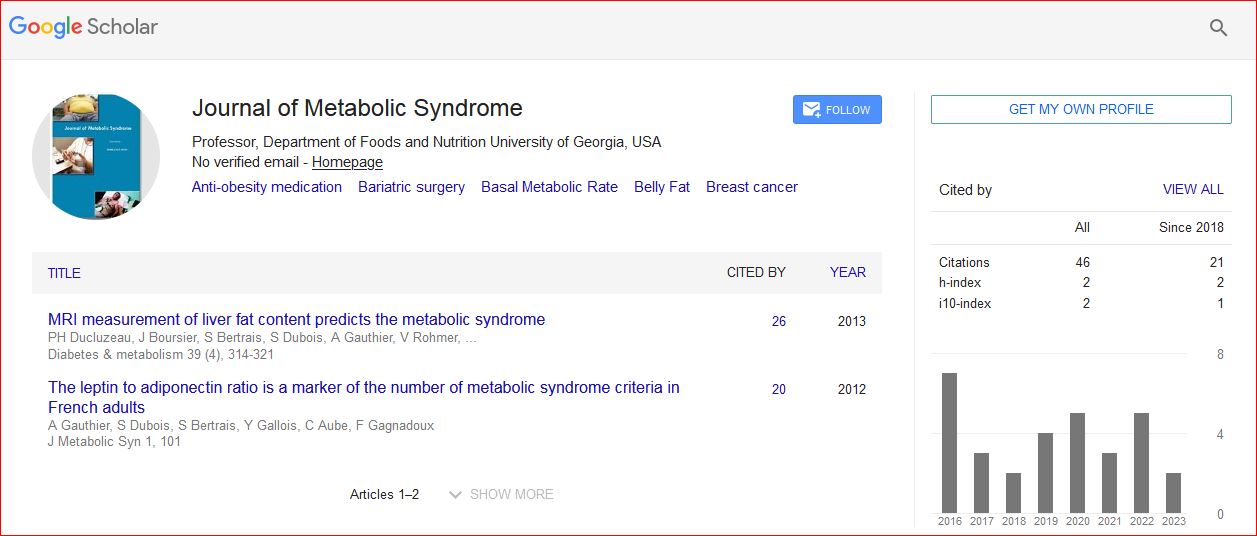
Journal of Metabolic Syndrome received 48 citations as per Google Scholar report